









Plot Explained Spoilers guaranteed!
Plot Explained

Browse by genre

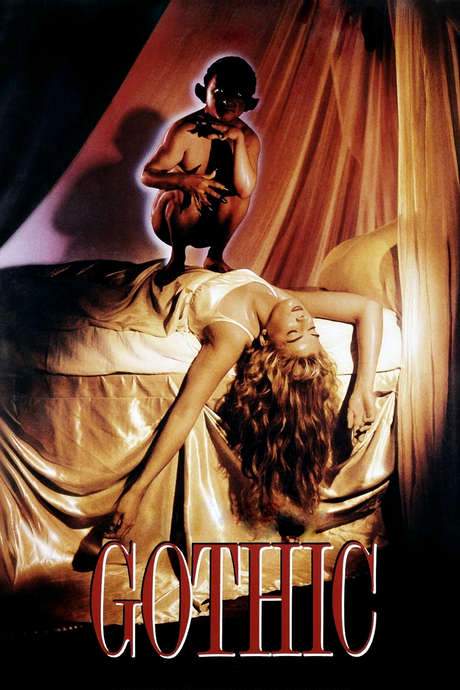
Gothic (1986) movie poster

Timeline

Gothic (1986) Timeline Explained – Every Event in Order

Release, runtime and language
1986 · 88 mins · English
JustWatch #13,473 6
Starring
Gabriel Byrne, Timothy Spall, Julian Sands, Dexter Fletcher, Natasha Richardson, Ken Russell

On an isolated estate by Lake Geneva, Lord Byron receives Percy and Mary Shelley. Joined by Byron’s lover Claire Clairmont, they experiment with hallucinogens and devise a night of macabre storytelling. As the evening unfolds, the horrors they summon blur the line between illusion and reality, making it impossible to tell specter from fact.

On this page (6)
  1. 1 Where to watch
  2. 2 Events in order (14)
  3. 3 Timeline questions answered
  4. 4 Movie threads
  5. 5 Movies like Gothic
  6. 6 Every angle

Where to watch

Where to Watch Gothic (1986)

Where can you watch Gothic? Stream, rent or buy it in the US, including on Artiflix, Eternal Family and Hoopla: current JustWatch availability with up-to-date prices.

Streaming availability powered by JustWatch

14 events in order · contains spoilers

Gothic Timeline: Events in Chronological Order

Every key event of Gothic (1986) in order, scene by scene, with when and where it takes place. Use it to untangle flashbacks, time jumps and parallel storylines, to refresh your memory before the sequel or to find the exact scene you are thinking of.

  1. Arrival at Villa Diodati

    Mary Godwin, her stepsister Claire Clairmont, and her future husband Percy Bysshe Shelley arrive at Villa Diodati in Geneva to stay with Lord Byron. They are joined by Byron’s physician friend Dr. John Polidori, and the atmosphere is electric with anticipation and creative possibility. The group settles in for a summer of intrigue and storytelling.

    When
    16 June 1816
    Where
    Villa Diodati, Lake Geneva, Switzerland
  2. Hide-and-seek and Phantasmagoria

    That evening, the five amuse themselves with a game of hide-and-seek as a storm rages outside. Later, in the parlor, Shelley speaks of his fascination with science while Polidori discusses sleepwalking and nightmares. They read excerpts from Phantasmagoria, a collection of horror stories, and the eerie atmosphere deepens their curiosity.

    When
    16 June 1816, evening
    Where
    Parlor, Villa Diodati
  3. Séance and Claire's seizure

    The group gathers for a séance around a human skull, hoping to provoke supernatural phenomena. During the ritual, Claire has an apparent seizure, and Mary recalls similar ‘horrors’ from earlier childhoods. The event unsettles everyone and foreshadows the creeping dread to come.

    When
    16 June 1816, night
    Where
    Parlor / around the skull, Villa Diodati
  4. Shadow outside the window and the barn

    Mary witnesses a shadowy apparition outside her shared window, contributing to a growing sense that something malevolent is watching them. Shelley goes to investigate a slamming barn door and encounters a grotesque creature. The night deepens with fear and unease.

    When
    16 June 1816, night
    Where
    Villa Diodati (outside window and barn)
  5. Confrontation over Claire's pregnancy

    In a tense exchange, Mary confronts Byron about Claire's pregnancy and his potential role in it. Byron suggests an abortion, sparking a heated argument that leaves their relationship strained. The conflict underscores the personal stakes behind their collaborative experiment with fear and imagination.

    When
    16 June 1816, night
    Where
    Billiard room / study, Villa Diodati
  6. Claire's miscarriage

    Byron performs an intimate act on Claire, which results in a miscarriage. The group grapples with the moral and emotional fallout of these revelations. Mary is drawn into the turmoil as fear and suspicion intensify.

    When
    16 June 1816, night
    Where
    Claire's room, Villa Diodati
  7. Paranoia, decay scent, and Polidori's wound

    Shelley grows increasingly paranoid, claiming to smell a scent of decay as events intensify. Mary consoles him while Polidori reveals a bleeding neck, claiming he was bitten by a vampire. Byron and Mary briefly suspect self-inflicted wounds, heightening fear within the group.

    When
    16 June 1816, night
    Where
    Staircase / corridor, Villa Diodati
  8. Claire disappears and transformation

    Claire goes missing from her bedroom and is later found by Shelley, where Mary witnesses an uncanny transformation as Claire’s body seems to shift unnaturally. Mary attempts to flee, crashing through a glass door in her panic. The house itself seems to be unraveling under their fears.

    When
    16 June 1816, night
    Where
    Claire's bedroom / Villa Diodati
  9. Polidori's failed suicide attempt and the figure on horseback

    Polidori attempts to hang himself in the barn but fails; he then witnesses a figure fleeing on horseback, as if the fear they’ve generated has taken on a life of its own. Byron and Shelley interpret these events as manifestations of their creation.

    When
    16 June 1816, night
    Where
    Barn, Villa Diodati
  10. The basement séance and Mary's break with Byron

    The group tries to recreate the séance in the basement to banish their ‘creation,’ but Mary resists the ritual. In a fevered confrontation, Mary crushes a skull and tries to stab Byron with a shard, only to be stopped by Shelley, who then kisses Byron. The tension culminates in Mary fleeing the house.

    When
    16 June 1816, night
    Where
    Basement, Villa Diodati
  11. Morning aftermath

    Mary awakens the next morning and joins Byron, Shelley, and Claire in the garden, trying to salvage some sense of normalcy after the night’s horrors. The group’s strained relationships and fear begin to give way to a fragile sense of calm, at least outwardly.

    When
    17 June 1816, morning
    Where
    Garden, Villa Diodati
  12. Modern-day visitors and the villa's legend

    In the present day, tourists visit the Villa Diodati and the events are retold through narration. A voice-over notes the fates of the participants: William’s death, Shelley's drowning, Byron’s death, and Polidori’s suicide. The story frames these horrors as the seed of literary legends.

    When
    Present day
    Where
    Villa Diodati, present-day
  13. Frankenstein and The Vampyre conceived

    The film explains that Mary’s obsession with reviving life inspired Frankenstein, while Polidori’s fascination with vampires gave birth to The Vampyre. These creations emerge from the characters’ fears and torments during that fateful night. The narrative ties the historical events to enduring gothic literature.

    When
    Following 1816
  14. Closing reflections

    The timeline closes by acknowledging the interwoven fates of the writers and the enduring power of fear to spark legendary stories. It emphasizes that their nightmares and desires catalyzed two of literature’s most influential works. The mood remains haunted by the shadows of that June night.

    When
    Closing moments

Last updated: October 09, 2025 at 14:15

Was this helpful?

Timeline questions answered

Gothic Timeline Explained: Your Questions Answered

When does it happen, and why in that order? The questions people ask about the chronology of Gothic (1986): time jumps, flashbacks, cause and effect between scenes and the correct order of events, each answered with spoilers.

Q1

What caused Claire's miscarriage at Villa Diodati?

Claire's miscarriage occurred during an intimate act with Lord Byron. The film suggests that Byron's physical encounter with Claire while she was pregnant resulted in her losing the child, leaving the group to grapple with the moral and emotional fallout of this traumatic event.

Foreshadowing: The tension between Byron and Claire had been building since their arrival, with flirtation and secretive behavior hinting at their relationship.

  • claire miscarriage
  • byron
  • villa diodati
  • pregnancy loss
Q2

Was Polidori's vampire bite real or self-inflicted?

The film deliberately leaves this ambiguous. Polidori claims he was bitten by a vampire in his room, but Byron suspects the wounds were self-inflicted. The narrative presents both possibilities, genuine supernatural attack or psychological break, as equally valid interpretations, reflecting the film's central theme of blurred reality.

Foreshadowing: Earlier, Polidori had discussed sleepwalking and nightmares, hinting at his psychological fragility.

  • polidori vampire bite
  • supernatural
  • self-harm
  • vampire
Q3

How did the night at Villa Diodati lead to Frankenstein?

The film reveals that Mary's obsession with resurrecting her dead child (she had a prior miscarriage) and the traumatic events of that night inspired her to write Frankenstein. The horror, grief, and supernatural dread she experienced became the creative spark for what would become one of literature's most enduring works.

Foreshadowing: Mary's vision in the basement showed her dead son William in a coffin, and she experienced a nightmare about miscarriage.

  • frankenstein
  • mary shelley
  • origin
  • creation
  • literary legacy
Q4

How did Polidori create The Vampyre?

Polidori's experiences at Villa Diodati, his fear, his suppressed homosexuality, his traumatic encounter with what he believed was a vampire, and his suicidal despair, became the foundation for The Vampyre. The film presents hisNightmares and psychological torment as the creative seed for the first modern vampire story in English literature.

Foreshadowing: Polidori's fear of damnation due to his sexuality and his obsession with the vampire encounter planted the seeds for his literary creation.

  • the vampyre
  • polidori
  • origin
  • vampire literature
  • creation
Q5

What happened to Claire when she vanished from her bedroom?

Claire disappeared from her bedroom during the night and was later found by Shelley in a disturbing state. Mary witnessed what appeared to be a metamorphosis, Claire's body seemed to shift and transform unnaturally. This uncanny event heightened the group's terror and added to the film’s atmosphere of reality dissolving into nightmare.

Foreshadowing: Claire had experienced a seizure during the earlier séance, and her pregnancy was already creating tension.

  • claire disappearance
  • transformation
  • supernatural
  • missing
Q6

How did Mary know Claire was pregnant with Byron's child?

Mary directly confronted Byron in the billiard room about Claire's pregnancy, revealing she knew about the affair. The confrontation became heated when Byron suggested an abortion, exposing the complex web of relationships and secrets among the group.

Foreshadowing: The tension between Byron and Claire had been visible during the hide-and-seek game, with flirtation and jealousy evident.

  • byron
  • mary
  • claire
  • pregnancy
  • confrontation
  • affair
Q7

Why did Polidori try to hang himself?

Polidori attempted suicide in the barn due to overwhelming despair. He feared damnation for his homosexuality, was traumatized by the vampire encounter (whether real or imagined), and struggled with the group's moral boundaries. His suicide attempt represents the psychological breaking point of someone consumed by fear, guilt, and self-loathing.

Foreshadowing: Earlier, Polidori expressed fear about his soul and damnation, showing his religious and sexual conflicts.

  • polidori suicide
  • homosexuality
  • despair
  • hanging
  • barn
Q8

Why did Mary attack Byron with a shard in the basement?

Mary's attack on Byron was the culmination of accumulated tensions: her anger over his treatment of Claire, his suggestion of abortion, his manipulations, and the psychological horror of the night. When Byron attempted to proceed with another séance in the basement, Mary refused and in a fevered state crushed the skull and lunged at him with a glass shard, only to be stopped by Shelley.

Foreshadowing: Mary had been increasingly isolated and disturbed throughout the night, witnessing visions of her dead son and miscarriage.

  • mary
  • byron
  • attack
  • basement
  • violence
  • shard
Q9

Why did Shelley intervene and then kiss Byron?

Shelley intervened to prevent Mary from stabbing Byron, physically pulling them apart. The moment took an unexpected turn when Shelley kissed Byron, suggesting complex emotional tensions and shifting alliances among the group that had been simmering beneath the surface throughout the night.

Foreshadowing: Shelley had been growing increasingly paranoid and suspicious, and the relationships among the four had been fraught with desire and jealousy.

  • shelley
  • byron
  • kiss
  • intervention
  • relationship
Q10

What was the creature Percy saw in the barn?

Percy encountered a grotesque creature in the barn while investigating a creaking door. The film never definitively explains what he saw, it could have been a hallucination brought on by the hallucinogenic substances they consumed, a manifestation of their collective fear, or something genuinely supernatural. This ambiguity is central to the film's exploration of reality versus illusion.

Foreshadowing: The group had been experimenting with hallucinogens, and the Phantasmagoria readings had stirred their imaginations.

  • percy
  • barn
  • creature
  • monster
  • hallucination
  • supernatural
Q11

What was the smell of decay that haunted Shelley?

Shelley became obsessed with a mysterious odor of decay that seemed to linger throughout the house. This smell represented the psychological rot and moral decay among the group, intensifying his paranoia. It may have been a physical presence linked to the supernatural events or a manifestation of his deteriorating mental state.

Foreshadowing: The decay theme paralleled the group's moral deterioration and the supernatural presence feeding on their fears.

  • shelley
  • decay
  • smell
  • odor
  • paranoia
  • hallucination
Q12

Did the séance actually summon anything supernatural?

The séance performed around the human skull appears to have triggered the escalating horrors that follow. However, the film leaves open whether a genuine supernatural entity was summoned or whether the group's fear, drug consumption, and psychological states manifested as tangible terrors. The line between real and imagined remains deliberately blurred throughout.

Foreshadowing: Claire had a seizure during the séance, and Mary recalled childhood experiences with unexplained phenomena.

  • séance
  • supernatural
  • summoning
  • skull
  • ritual
  • horror

Movie threads

More Movies Like Gothic, by Mood & Story

Curated lists built around what makes Gothic tick: the same mood, the same kind of story or the same emotional payoff. Each list explains why these movies belong together.

Psychological gothic terror like in Gothic

Stories where internal fears manifest into claustrophobic, nightmarish realities. If you enjoyed the mind-bending horror of Gothic, you'll find similar experiences here. These films explore the terrifying intersection of psychological breakdown and supernatural phenomena, often within confined, atmospheric settings. Discover movies like Gothic where reality is a fragile concept.

  • psychological
  • claustrophobic
  • hallucinatory
  • gothic
  • eerie
  • nightmarish
  • Tone: dark, oppressive, nightmarish
  • Pacing: steady, methodical
Why these movies?

The story pattern: Narratives in this thread typically isolate characters, often artists or intellectuals, in a single location. Through a catalyst like drugs, grief, or suggestion, their deepest fears are externalized, creating a haunting that is as much internal as external. The plot revolves around the struggle to discern truth from hallucination as the environment becomes a prison for the mind.

Why they belong together: These movies are grouped by their shared focus on psychological unraveling within a gothic, claustrophobic framework. They prioritize mood over jump scares, building an overwhelming sense of dread through atmosphere, intense internal conflict, and the blurring of reality.

Dark stories of artistic creation like in Gothic

Tormented artists who birth masterpieces from a crucible of personal suffering. Explore movies like Gothic that delve into the painful process of artistic creation. These narratives show how great art can be born from nights of terror, psychological torment, and personal tragedy. Find similar films about the heavy price paid for a creative legacy.

  • tormented
  • creative
  • melancholic
  • historical
  • intense
  • bittersweet
  • Tone: dark, bittersweet, heavy
  • Pacing: steady, contemplative
Why these movies?

The story pattern: The narrative follows a creator or group of creators as they enter a period of intense, often destructive, collaboration or isolation. Their artistic pursuit forces them to grapple with dark themes—mortality, desire, madness—mirroring the content of the art they are trying to create. The journey is transformative but leaves permanent scars, resulting in a bittersweet legacy.

Why they belong together: These films are united by the theme of art emerging from profound suffering. They share a heavy emotional weight, a dark tone, and a focus on the psychological cost of genius. The ending is rarely purely happy, instead acknowledging the sacrifice inherent in the creative act.

If you liked this

Movies Like Gothic

Similar movies to Gothic: the same genre, themes or kind of story. Each one comes with its own plot summary, timeline and ending explained.

Browse all movie summaries

Every angle

Gothic (1986) Explained: Plot, Timeline & Characters

Everything about Gothic in one place: what happens in the plot summary, the timeline in chronological order, the characters and meaning and a spoiler-free summary. What's After the Movie adds the cast, box office and post-credit scenes.

Coming soon on iOS and Android

The Plot Explained Movie Summary App

Plot summaries, endings explained and timelines on your phone. Catch up on any movie in minutes, save your favorites and never miss a twist again.

Be the first to know when we launch. Your email stays private, always.

Learn more about the app