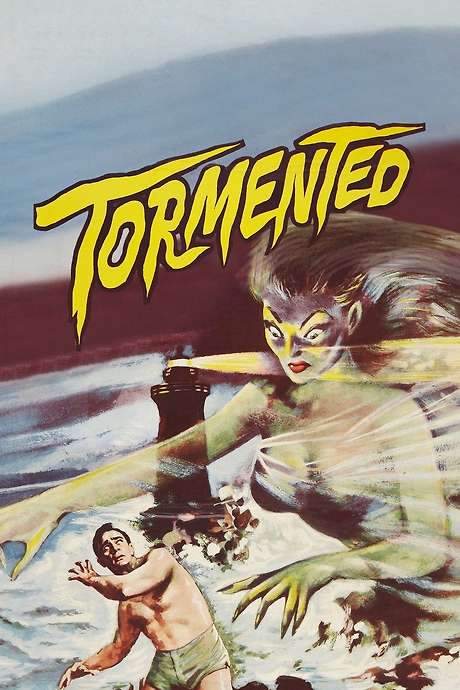
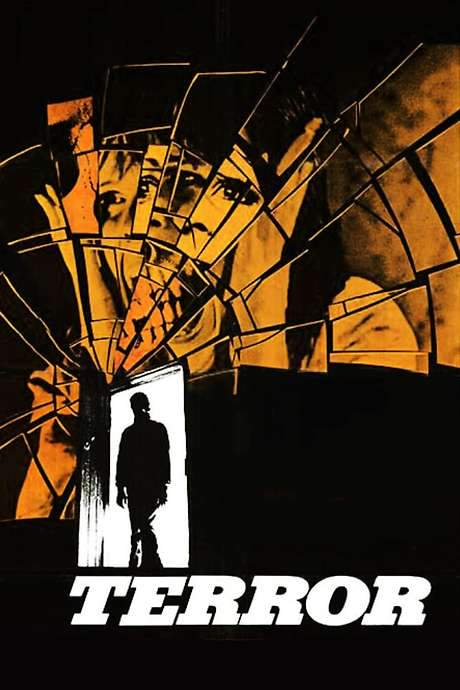
On a quiet Cape Cod island, Tom Stewart [Richard Carlson] is a talented jazz pianist on the cusp of a wedding that should seal a peaceful future with his fiancée, Meg Hubbard [Lugene Sanders]. The community is small, the rhythms of the sea and the town’s routines set a steady pace, and Tom’s life seems neatly arranged around rehearsals, gigs, and the anticipation of the ceremony. But before the vows, a storm of unease arrives in the form of Vi Mason, the former flame who still knows Tom’s every move. Vi, determined to sever Tom’s life from Meg’s, hints at a dark bargain and makes it clear she’s willing to resort to blackmail to force a confession or a withdrawal from the impending marriage.
The confrontation tops a lighthouse, where the wind bites and the night seems to hold its breath. In a desperate moment, the railing gives way, and Vi tumbles toward the dark sea below. She clings to the edge for a breath of hope, but Tom refuses to offer aid, watching as she plummets to her death. The town’s ordinary surface cracks open; the morning after brings a grim discovery: Vi’s body is found afloat, only to dissolve into seaweed as Tom drags it from the water. This double shock—her death and the inexplicable dissolving of the corpse—begins to gnaw at Tom’s conscience and sense of safety. In the aftermath, the island’s ordinary routines collide with eerie, unexplainable phenomena: Vi’s watch washes ashore, strange footprints mar the sand, and Vi’s presence seems to stalk Tom from the margins of his days.
As if the sea itself is listening to Vi, she reappears as a ghostly figure, declaring that she will haunt Tom for the rest of his life and taunting him about the truth of what happened that night. Meanwhile, a new complication unfolds when Sandy Hubbard, Meg’s younger sister, asks to see the wedding ring. A disembodied hand seizes the ring and slips away, an omen of the social tremors already rippling through the wedding party. The uncanny events escalate when a guest photographs the couple and captures Vi’s disembodied head hovering in the frame, a chilling reminder that the past refuses to stay buried.
Tom’s problems multiply as Nick Lewis, a wary ferryman who speaks in wary, Beat-era cadence, enters the scene with a debt—Vi’s five dollars for her passage to the island—that grows into a perilous web of blackmail. Tom’s attempts to placate this trouble only invite more trouble, and Nick’s persistence becomes deadly. The death that follows is not just a twist of fate but a consequence of pressures pressing inward from every side, and Sandy bears witness to the murder—though she remains quiet, torn between her loyalty to Tom and the fear of what she might reveal.
The wedding day itself becomes a stage for the haunting to bleed into reality. When the minister asks if anyone objects to the marriage, Sandy nearly speaks up, but the chapel’s doors burst open in a chilling moment that drains life from the room—flowers wilt, candles gutter, and the ceremony grinds to a halt in a hush that feels almost supernatural. That night, Tom returns to the lighthouse to tell Vi that he plans to leave the island, hoping to sever the threads binding him to a fate he cannot escape. But Sandy’s quiet vigilance—her love and admiration for him—makes him realize he is not free: she knows too much and could expose him to Meg and the superstitious town.
In a moment of panic and coercion, Tom leads Sandy toward the broken railing, intent on pushing her over to silence the truth once and for all. Before he can act, Vi’s specter swoops in, toppled by a force beyond mortal control, and Tom is driven over the edge as Sandy gasps in horror. The pursuit that began with blackmail and fear ends not with a confession but with a silent, terrible culmination: the islanders recover two bodies—Vi’s and Tom’s—and place them side by side. Strangely, Vi’s arm crosses Tom’s body, and the wedding ring that once belonged to Meg now rests on Vi’s hand, signaling a final, haunting conclusion: Tom is forever joined to Vi in death.
In the end, the quiet Cape Cod island that once seemed defined by melody and ritual becomes a stage for the inexplicable. The painterly stillness of the sea, the tremor of the wind through the salt spray, and the stubborn stubbornness of a community of neighbors all contribute to a climate where fear and fate feel inescapable. The tragedy lingers as a stark reminder that some bonds, once formed, can outlive life itself, binding the living to the dead in a way that neither time nor tide can erase.