Plot Explained Spoilers guaranteed!
Plot Explained

Browse by genre

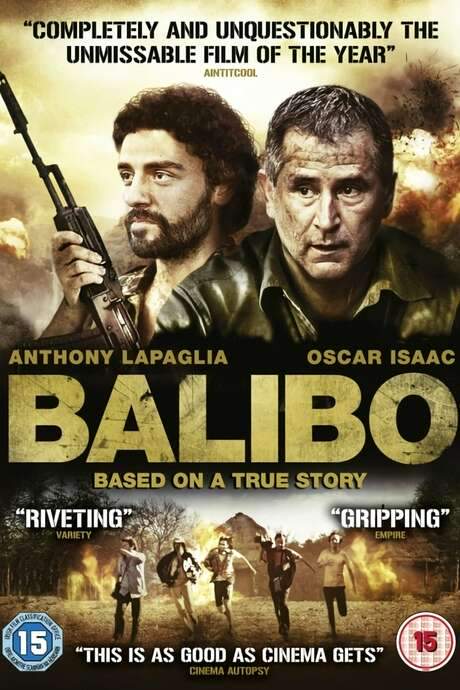
Balibo (2009) movie poster

Plot Summary

Balibo (2009) Plot Summary Explained

Release, runtime and language
2009 · 111 mins · English
Loading streaming availability…
Directed by
Robert Connolly
Starring
Katherine Slattery, Oscar Isaac, Anthony LaPaglia, Damon Gameau, Mark Leonard Winter, Nathan Phillips

As Indonesia readies an invasion of East Timor, five Australian journalists vanish. Four weeks later veteran correspondent Roger East is drawn to the nation by charismatic José Ramos‑Horta, who urges him to record his country's plight and investigate the missing reporters. East’s relentless quest intensifies as the looming invasion draws near.

On this page (6)
  1. 1 Where to watch
  2. 2 What happens: full plot
  3. 3 Plot questions answered
  4. 4 Movie threads
  5. 5 Movies like Balibo
  6. 6 Every angle
Loading streaming availability…

Full plot summary · contains spoilers

What Happens in Balibo: Full Plot Summary

The whole story of Balibo (2009) explained, from the opening scene to the final frame: every key event, every twist and what it all adds up to. Read it as a quick recap before the sequel, to check a scene you missed, or to finally understand what really happened.

The film opens in the present day with Juliana Bea Viegas, an Australian woman who recalls the harrowing moment she witnessed as a young girl: the capture and execution of Roger East by the Indonesian invasion force. Her testimony frames a broader investigation that threads through the narrative, grounding the events in a personal memory that lingers long after the killings.

We then follow Roger East Anthony LaPaglia as he pursues answers about an impending Indonesian invasion of East Timor and the fate of the Balibo Five, five Australian journalists who vanished in the chaos that followed. East’s pursuit of the truth drives the film forward, casting a wary eye on the choices that defined the journalists’ final days and the dangerous terrain they walked.

The focus shifts to the Balibo Five’s experience on the ground in East Timor. The film traces their journey from Australia to the border town, where they become embedded with a Revolutionary Front for an Independent East Timor, or FRETILIN, unit near the frontier. The tension of being in a war zone is palpable as they attempt to document a story that might change the course of history, even as danger closes in around them.

As the story interweaves, East’s investigations intersect with the Five’s on-the-ground reality, and Juliana’s memories wade in and out of the narrative. East travels alongside Jose Ramos-Horta Oscar Isaac, evading Indonesian patrols and bearing witness to villages scarred by massacres. The friendship and collaboration between East and Ramos-Horta add a human dimension to the geopolitical upheaval, highlighting the human cost behind the headlines.

The Balibo Five attempt to safeguard themselves by painting an Australian flag on a building and declining the retreat urged by their FRETILIN bodyguards. They persevere to cover the invasion, but the danger intensifies as Indonesian forces press in, driving them to a perilous corner. The tension culminates in a stark moment when one cameraman pleads for mercy, only to be shot by officer Yunus Yosfiah, after which the soldiers breach the building and kill the remaining journalists.

The narrative arc closes its circle as East’s point of view reaches its own stark conclusion when Indonesian troops invade Dili, using paratroopers and ground forces. East is captured along with East Timorese men, while a young Juliana watches the ensuing violence—men executed before her eyes, and women subjected to horrific abuses. Roger East himself is executed by the Indonesian soldiers, sealing a chapter of unresolved accountability.

The film ends with stark inscriptions noting that the murderers of the Balibo Five and Roger East were never brought to justice. The screen then shifts to scenes of José Ramos-Horta rallying support, underscoring the ongoing struggle for East Timor’s freedom, before returning to the image of a liberated people enjoying the beaches of their country. In the end, the story leaves a quiet, haunting reminder of the cost of conflict and the resilience that follows in its wake.
Last updated: October 09, 2025 at 11:07

Was this helpful?

Plot questions answered

Balibo Plot Explained: Your Questions Answered

The questions people ask most about Balibo (2009): what happens in the confusing scenes, why the characters do what they do, the twists, hidden details and what the ending means. Each answer contains spoilers.

Q1

Why did the Balibo Five refuse to retreat when their FRETILIN guards urged them to leave?

The Balibo Five chose to stay because they believed their reporting could expose the Indonesian invasion to the world and potentially influence international intervention. They were determined to document the story they had traveled so far to cover, viewing their journalistic mission as more important than their personal safety. Their commitment to telling the truth_override the warnings from their FRETILIN bodyguards, ultimately sealing their fate.

Foreshadowing: Earlier in the film, the journalists are shown packing their camera gear with conviction, establishing their dedication to documenting the crisis at any cost.

  • balibo five
  • retreat
  • fretilin
  • journalists
  • decision
Q2

Why did Roger East agree to go to East Timor despite knowing the extreme danger?

Roger East was drawn to East Timor by José Ramos-Horta, who convinced him that someone needed to document the impending Indonesian invasion and the fate of the missing journalists. East, a veteran war correspondent, felt a professional and moral obligation to bear witness and expose the truth. His relentless pursuit of justice for the Balibo Five drove him into the very danger that would ultimately claim his life.

Foreshadowing: The film opens with East's determined expression as he prepares for the journey, establishing his resolute character from the start.

  • roger east
  • jose ramos-horta
  • danger
  • investigation
  • truth
Q3

How were the Balibo Five ultimately killed?

As Indonesian forces closed in on their position in Balibo, the five journalists were cornered in a building. One cameraman pleaded with officer Yunus Yosfiah for mercy but was shot dead on the spot. The soldiers then breached the building and killed the remaining four journalists. Their deaths were swift and brutal, becoming a symbol of the extreme dangers faced by war correspondents.

Foreshadowing: The earlier scene where the Five paint the Australian flag on the building shows their futile attempt at protection, highlighting the tragedy of their fate.

  • balibo five
  • killed
  • yunus yosfiah
  • indonesian soldiers
  • execution
Q4

Who is Juliana and what is her role in the story?

Juliana is an Australian woman who appears in present-day interviews, providing testimony about what she witnessed as a child during the Indonesian invasion. She serves as a framing device for the narrative, recounting her traumatic memories of seeing Roger East and East Timorese men executed, as well as women being abused. Her testimony grounds the historical events in personal memory and gives survivors a voice in the film.

Foreshadowing: The film opens with Juliana's interview, immediately establishing that she is a survivor who witnessed the executions firsthand.

  • juliana
  • witness
  • survivor
  • testimony
  • execution
Q5

Why was Roger East executed by Indonesian forces?

Roger East was captured along with East Timorese men when Indonesian troops invaded Dili in December 1975. He was executed because he was identified as a foreign journalist who had been investigating Indonesian war crimes and the fate of the Balibo Five. His presence made him a threat to the Indonesian military's efforts to control the narrative, and he was killed to silence his testimony and prevent further exposure of the invasion.

Foreshadowing: Earlier scenes show East evading Indonesian patrols and witnessing villages scarred by massacres, building toward his inevitable capture.

  • roger east
  • executed
  • captured
  • dili
  • indonesian troops
Q6

Why did the Balibo Five paint an Australian flag on the building?

The Balibo Five painted an Australian flag on the building where they were staying in an attempt to signal their identity and hopefully gain protection as Australian journalists. They hoped the flag would identify them as neutral reporters rather than combatants, potentially deterring attacks. However, this symbol of safety proved meaningless when Indonesian forces ignored their protected status as journalists.

Foreshadowing: This moment occurs right after they embed with FRETILIN, showing their initial optimism about remaining safe.

  • australian flag
  • building
  • protection
  • balibo five
  • signal
Q7

Who is Yunus Yosfiah and what was his role in the killings?

Yunus Yosfiah was an Indonesian officer directly responsible for the murder of the Balibo Five. He was the soldier who shot one of the cameramen when the journalists were cornered, then led the assault that killed the remaining four. The film specifically names him as the perpetrator, and the subsequentInscriptions note that none of the perpetrators, including Yosfiah, were ever brought to justice for these war crimes.

Foreshadowing: The moment when the cameraman pleads for mercy directly precedes Yosfiah's decision to shoot, showing his ruthlessness.

  • yunus yosfiah
  • officer
  • killings
  • indonesian military
  • balibo five
Q8

Why was there no justice for the murders of the Balibo Five and Roger East?

The film states explicitly that the murderers of the Balibo Five and Roger East were never brought to justice. This reflects the broader historical reality of Indonesia's occupation of East Timor, where international accountability was absent for decades. The killers benefited from Indonesia's political power and the lack of international pressure at the time, allowing them to evade prosecution for these war crimes.

Foreshadowing: The closing inscription sets up this revelation, showing the film was building toward this unresolved injustice.

  • justice
  • impunity
  • indonesia
  • war crimes
  • accountability
Q9

How do Roger East's investigation and the Balibo Five's story connect in the film?

The film interweaves Roger East's investigation into the missing journalists with the actual events of the Balibo Five's final days. As East travels with José Ramos-Horta to uncover what happened, viewers see parallel footage of the Five's experiences on the ground. The two narratives converge tragically when East faces the same fate as the men he sought to help, highlighting the systemic danger facing anyone who attempted to document Indonesia's invasion.

Foreshadowing: The switching viewpoints between East and the Five from early on establishes their parallel journeys.

  • connection
  • parallel stories
  • investigation
  • convergence
  • fate
Q10

What did Juliana witness during the Indonesian invasion of Dili?

As a child watching the Indonesian invasion of Dili, Juliana witnessed horrific violence: men being executed before her eyes, including Roger East, and women being subjected to segregation and rape by Indonesian soldiers. Her traumatic testimony provides a personal account of the brutal reality faced by East Timorese civilians during the invasion, adding a human dimension to the historical events.

Foreshadowing: Juliana's nervous demeanor in her present-day interview foreshadows the traumatic content of her memories.

  • juliana
  • dili
  • invasion
  • execution
  • women
  • abuse
Q11

Why did José Ramos-Horta ask Roger East to come to East Timor?

José Ramos-Horta recruited Roger East because he needed an international journalist to document the Indonesian invasion and the plight of East Timor. Ramos-Horta believed that international exposure could rally support for East Timor's independence cause. He saw East as a way to get the world's attention on the coming crisis and hoped that recording the truth would eventually lead to justice and international intervention.

Foreshadowing: Early scenes show Ramos-Horta's charismatic personality and his passionate arguments for documenting the invasion.

  • jose ramos-horta
  • recruit
  • document
  • independence
  • international support
Q12

What was FRETILIN's role in protecting the Balibo Five?

FRETILIN was the Revolutionary Front for an Independent East Timor, the anti-Indonesian resistance group that the Balibo Five embedded with near the border. FRETILIN guards accompanied the journalists and urged them to retreat to safety as Indonesian forces advanced. When the Five refused to leave, the FRETILIN fighters were unable to protect them from the invading Indonesian military, demonstrating the overwhelming nature of the threat.

Foreshadowing: The Five's arrival and embedding with FRETILIN establishes this protective relationship and its ultimate failure.

  • fretilin
  • resistance
  • guards
  • retreat
  • indonesian military
Q13

How did the Indonesian invasion of East Timor unfold in 1975?

Indonesia launched its invasion of East Timor in October 1975, beginning with forces advancing into Balibo where the five Australian journalists were located. The invasion escalated in December 1975 with a full assault on Dili using paratroopers and ground forces. This invasion marked the beginning of a brutal 25-year occupation that resulted in widespread killings, displacement, and human rights abuses before East Timor eventually gained independence in 2002.

Foreshadowing: The mounting tension throughout the film, with villagers scarred by massacres, builds toward this full-scale invasion.

  • indonesian invasion
  • 1975
  • dili
  • occupation
  • timeline

Movie threads

More Movies Like Balibo, by Mood & Story

Curated lists built around what makes Balibo tick: the same mood, the same kind of story or the same emotional payoff. Each list explains why these movies belong together.

Political thrillers of historical injustice like Balibo

Tense stories of journalists exposing war crimes against a ticking clock. If you were gripped by Balibo's relentless investigation into a real-world massacre, explore more movies like it. This collection features tense political thrillers and journalistic procedurals that expose historical atrocities, where the search for truth is a race against time.

  • tense
  • harrowing
  • urgent
  • suspenseful
  • somber
  • historical
  • Tone: tense, harrowing, somber
  • Pacing: steady, methodical
Why these movies?

The story pattern: Stories in this thread typically center on an outsider or journalist entering a volatile political situation. Their investigation is methodical but harried, often paralleled with the perspective of the victims. The climax is usually tragic, confirming the horrors the protagonist sought to reveal, leaving a lasting impact about historical injustice.

Why they belong together: Movies are grouped here for their shared focus on a high-stakes investigation into real-world political violence. They create a specific blend of procedural tension, moral urgency, and the somber weight of historical truth, resulting in a consistently intense and thought-provoking experience.

Movies with the oppressive dread of invasion like Balibo

Films that immerse you in the escalating dread and brutality of invasion. For viewers who felt the suffocating tension of Balibo's impending invasion, this thread gathers similar films. Discover movies that masterfully build an atmosphere of oppressive dread, depicting the brutal reality and moral challenges of life in a war zone.

  • oppressive
  • suspenseful
  • chaotic
  • bleak
  • harrowing
  • war-torn
  • Tone: oppressive, suspenseful, bleak
  • Pacing: steady, building dread
Why these movies?

The story pattern: The narrative pattern involves characters, often outsiders or journalists, entering a volatile region. The story meticulously builds an atmosphere of escalating tension and inevitability. As the political situation deteriorates, the characters become trapped in the chaos, facing dire choices about survival, witness, and courage.

Why they belong together: These films are connected by their masterful creation of an oppressive, suspenseful atmosphere centered on political or military conflict. They share a high-intensity vibe defined by a sense of imminent danger, moral gravity, and a visceral, often tragic, plunge into the heart of darkness.

If you liked this

Movies Like Balibo

Similar movies to Balibo: the same genre, themes or kind of story. Each one comes with its own plot summary, timeline and ending explained.

Browse all movie summaries

Every angle

Balibo (2009) Explained: Plot, Timeline & Characters

Everything about Balibo in one place: what happens in the plot summary, the timeline in chronological order, the characters and meaning and a spoiler-free summary. What's After the Movie adds the cast, box office and post-credit scenes.

Coming soon on iOS and Android

The Plot Explained Movie Summary App

Plot summaries, endings explained and timelines on your phone. Catch up on any movie in minutes, save your favorites and never miss a twist again.

Be the first to know when we launch. Your email stays private, always.

Learn more about the app