Plot Explained Spoilers guaranteed!
Plot Explained

Browse by genre

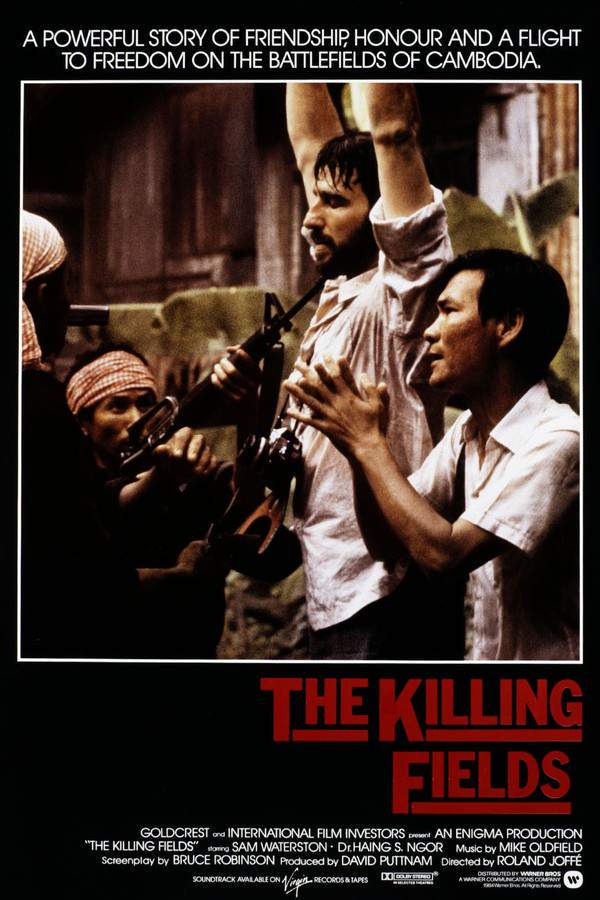
The Killing Fields (1985) movie poster

Plot Summary

The Killing Fields (1985) Plot Summary Explained

Release, runtime and language
1985 · 141 min · English
Loading streaming availability…
Directed by
Roland Joffé
Starring
Sam Waterston, Haing S. Ngor

During the Cambodian genocide, New York Times reporter Sydney Schanberg and photographer Al Rockoff form a close bond with local interpreter Dith Pran. As the Khmer Rouge seize control and the American forces withdraw, the three men face a desperate struggle for survival. Schanberg is forced to make difficult choices, confronting the moral complexities of reporting from a country descending into chaos and the agonizing decision of whether to stay or abandon those left behind.

On this page (6)
  1. 1 Where to watch
  2. 2 What happens: full plot
  3. 3 Plot questions answered
  4. 4 Movie threads
  5. 5 Movies like The Killing Fields
  6. 6 Every angle
Loading streaming availability…

Full plot summary · contains spoilers

What Happens in The Killing Fields: Full Plot Summary

The whole story of The Killing Fields (1985) explained, from the opening scene to the final frame: every key event, every twist and what it all adds up to. Read it as a quick recap before the sequel, to check a scene you missed, or to finally understand what really happened.

The film begins in May 1973 in Phnom Penh, the capital of Cambodia, where a fierce civil war rages between the Cambodian national army and the communist Khmer Rouge, sparked by the fallout from the Vietnam War. Here, Dith Pran (Haing S. Ngor), a Cambodian journalist working as an interpreter for Sydney Schanberg (Sam Waterston), eagerly awaits Schanberg's arrival at the Phnom Penh airport. However, due to unforeseen delays, Schanberg arrives three hours late and, frustrated by Pran’s absence, heads to his hotel via taxi. At the hotel, he meets photographer Al Rockoff (John Malkovich), who is clueless about Pran's whereabouts. They decide to grab a bite at a nearby café when suddenly, an explosion erupts nearby. While Al speculates that a grenade was thrown from a passing scooter, the real nature of the chaos remains obscured.

Pran finally shows up, informing Schanberg of a disastrous incident in the remote town of Neak Leung, where an American B-52 bomber reportedly attacked by mistake. After confirming the grim news with the U.S. Consul, the two rush to find transportation to the scene of devastation. Pran cunningly manages to sneak both himself and Schanberg onto a police boat headed for Neak Leung. Upon their arrival, they are confronted with horrific scenes of destruction and loss, with countless civilians—many of them women and children—tragically affected. Their attempts to capture evidence of two Khmer Rouge operatives being executed by Cambodian army officers result in their arrest. Ultimately, they are released, much to Schanberg’s ire, as he witnesses the international press arriving with the U.S. Army, only to report a heavily sanitized narrative of the tragedy.

Fast forward to April 1975, the atmosphere is tense as international embassies hastily begin evacuating in anticipation of the Khmer Rouge’s takeover of the capital. Schanberg secures evacuation documents for Pran, his wife, and their four children, but Pran insists on staying behind to assist Schanberg in his coverage of the unfolding events. As Pran’s family joins the exodus of diplomats, the Khmer Rouge march into Phnom Penh on April 17, feigning a message of peace while the reality outside reveals brutal conflicts. While attending a makeshift hospital, Schanberg and Rockoff observe the terrifying impact of warfare on civilians, only to be arrested by a group of Khmer Rouge soldiers moments later. Through a mix of courage and quick thinking, Pran manages to bribe an officer, ensuring Schanberg and his friends are released.

The group finds temporary refuge in the French embassy, waiting for the chance to escape. However, the Khmer Rouge demand the handover of all Cambodian citizens, and Rockoff and fellow photographer Swain attempt to forge a passport for Pran. Unfortunately, without a current photograph, their efforts yield a faded illusion of hope. Consequently, Pran is left no choice but to surrender to the Khmer Rouge’s totalitarian regime, as the remaining foreigners are expelled from Cambodia.

Months later, back in New York City, Schanberg embarks on a fervent search for Pran, reaching out to numerous humanitarian organizations and staying in touch with Pran's family in San Francisco. Meanwhile, in Cambodia, Pran finds himself as a forced laborer under the Khmer Rouge’s “Year Zero” policy—a horrifying regression to agrarian life. Surrounded by armed children trained to uphold the regime, Pran endures grueling days in rice fields while feigning ignorance to avoid detection as an intellectual target, especially as the regime systematically eliminates those they consider threats.

Time advances to January 1979, where Schanberg receives accolades for his courageous coverage of the Cambodian plight. While accepting an award, he acknowledges that half the recognition belongs to Pran, but his celebration is interrupted by Rockoff, who vehemently accuses him of failing to do enough to rescue Pran. This accusation deeply resonates with Schanberg, leading him to question his choices and priorities. Through the lens of self-reflection, he admits, “Pran stayed because I wanted him to stay.”

Back in Cambodia, Pran has ascended to a role where he assists a Khmer Rouge prison leader named Phat while largely aiming to protect the innocent—especially Phat's young son. The turmoil escalates when fighting erupts between the Khmer Rouge and advancing Vietnamese forces, eventually leading to chaos and violence around the compound. In the ensuing confusion, Pran seizes an opportunity to escape, aided by Phat’s son who possesses a map leading to safety. However, tragedy strikes as a mine explosion claims the life of Pran’s companion during their desperate flight to freedom, leaving him to continue his escape alone through perilous jungles.

At last, Pran emerges from the jungles to behold a Red Cross camp near the Thai border. In a moment filled with hope, Schanberg, back in New York, learns that Pran is alive and struggles to share the glad tidings with Pran's family. Shortly thereafter, he travels to Thailand to reunite with Pran, who, even amidst their trials, offers a peaceful embrace along with the heartfelt words, “Nothing to forgive, Sydney.” This reunion is beautifully underscored by the timeless melody of John Lennon’s “Imagine,” which plays over poignant images during the closing credits, including real photos of both Pran and Schanberg.
Last updated: November 07, 2024 at 23:00

Was this helpful?

Plot questions answered

The Killing Fields Plot Explained: Your Questions Answered

The questions people ask most about The Killing Fields (1985): what happens in the confusing scenes, why the characters do what they do, the twists, hidden details and what the ending means. Each answer contains spoilers.

Q1

Why did Dith Pran choose to stay in Cambodia when he had evacuation papers?

Pran chose to stay because he wanted to continue assisting Schanberg with his journalism coverage of the unfolding events. Even though he had secured evacuation documents for his wife and four children, Pran felt a deep commitment to help document the truth about what was happening in Cambodia. His decision reflected his belief in the importance of reporting the reality of the Khmer Rouge takeover, despite the grave danger it posed.

Foreshadowing: Earlier in the film, Pran eagerly awaited Schanberg's arrival at the airport, showing his dedication to the work and their partnership.

  • dith pran
  • evacuation
  • sydney schanberg
  • khmer rouge
  • decision
Q2

Why did Al Rockoff accuse Sydney Schanberg of not doing enough to rescue Pran?

Rockoff directly confronted Schanberg during his award ceremony in January 1979, accusing him of failing to do enough to save Pran from the Khmer Rouge. Rockoff believed Schanberg had the resources and connections to exert more pressure for Pran's rescue but didn't prioritize it sufficiently. This accusation haunted Schanberg, who later admitted "Pran stayed because I wanted him to stay," acknowledging his own complicity in leaving Pran behind.

Foreshadowing: Throughout their time in Cambodia, Rockoff consistently pushed back against certain decisions, showing his more uncompromising nature.

  • al rockoff
  • sydney schanberg
  • accusation
  • guilt
  • rescue
Q3

How did Dith Pran survive as an intellectual under the Khmer Rouge regime?

Pran survived by meticulously disguising his education and intelligence. Under the "Year Zero" policy, the Khmer Rouge targeted and eliminated anyone perceived as educated, including doctors, teachers, and journalists. Pran worked as a forced laborer in rice fields, deliberately performing tasks poorly and feigning ignorance to avoid detection. He also befriended prison leader Phat and helped protect Phat's young son, which provided him some measure of protection within the regime.

Foreshadowing: The film establishes early on that Pran was a journalist and interpreter, making him a prime target if his true background was discovered.

  • dith pran
  • survival
  • khmer rouge
  • intellectuals
  • year zero
  • forced labor
Q4

What was the Neak Leung bombing and why did it matter?

In May 1973, Pran informed Schanberg about a devastating incident in the remote town of Neak Leung where a U.S. B-52 bomber had mistakenly attacked civilians. They rushed to document the destruction, witnessing horrific scenes of civilian casualties, particularly women and children. This event was significant because it exposed the collateral damage of American military involvement in Cambodia and demonstrated the escalating violence that would eventually lead to the Khmer Rouge's full takeover.

Foreshadowing: The opening scenes establish the chaos of civil war and American military presence in Cambodia, setting the stage for the eventual genocide.

  • b-52 bomber
  • neak leung
  • civilians
  • airstrike
  • khmer rouge
Q5

How did Pran escape from the Khmer Rouge regime?

Pran escaped during the fighting between the Khmer Rouge and advancing Vietnamese forces in 1979. While working for prison leader Phat, Pran saw an opportunity when chaos erupted around the compound. Phat's young son provided Pran with a map leading to safety. During their desperate flight through the jungles, a mine explosion killed his companion, forcing Pran to continue alone. He eventually reached a Red Cross camp near the Thai border, where he was reunited with Schanberg.

Foreshadowing: Pran's relationship with Phat's son had been building trust throughout his captivity, providing the foundation for his escape assistance.

  • escape
  • khmer rouge
  • vietnamese
  • mine
  • red cross
  • thai border
Q6

What was the Khmer Rouge "Year Zero" policy?

"Year Zero" was the Khmer Rouge's radical policy of completely reconstructing Cambodian society. The regime forcibly evacuated cities, sending millions of people to agricultural labor camps in the countryside. They abolished money, schools, and religion, forcing everyone into collective farming. Intellectuals, professionals, and anyone deemed a threat were systematically executed. This policy resulted in the deaths of approximately 1.5 to 2 million people through execution, starvation, and overwork.

Foreshadowing: The film shows the forced evacuation of Phnom Penh on April 17, 1975, marking the beginning of this radical social experiment.

  • year zero
  • khmer rouge
  • agrarian
  • forced labor
  • genocide
  • Cambodia
Q7

Why did the Khmer Rouge arrest Sydney Schanberg and Al Rockoff?

Schanberg and Rockoff were arrested by Khmer Rouge soldiers while visiting a makeshift hospital in Phnom Penh shortly after the city's fall. As foreign journalists documenting the regime's activities, they were seen as potential spies or enemies of the state. Their arrest represented the immediate danger faced by international reporters trying to cover the Khmer Rouge's takeover. Pran managed to bribe an officer to secure their release, demonstrating the risky negotiations required to navigate the regime.

Foreshadowing: The film establishes early on that documenting Khmer Rouge atrocities was dangerous work that repeatedly put the journalists in peril.

  • arrest
  • khmer rouge
  • sydney schanberg
  • al rockoff
  • journalist
  • bribery
Q8

What does Pran mean when he says "Nothing to forgive, Sydney"?

When Pran reunited with Schanberg in Thailand, he offered this forgiveness even before Schanberg could express his guilt. Pran understood that Schanberg had not intentionally abandoned him and recognized the impossible circumstances both had faced. The phrase represents Pran's remarkable capacity for compassion and his understanding that Schanberg, too, was a victim of the brutal situation. Their reunion, set to John Lennon's "Imagine," symbolizes the enduring power of their friendship despite years of trauma.

Foreshadowing: This moment represents the emotional culmination of the guilt that Schanberg carried throughout the film since Rockoff's accusation.

  • forgiveness
  • reunion
  • sydney schanberg
  • dith pran
  • emotional
  • thailand
Q9

Why did the Khmer Rouge target and execute intellectuals?

The Khmer Rouge viewed educated people as threats to their ideological vision of an agrarian communist society. They believed intellectuals, doctors, teachers, and professionals represented the old regime and bourgeois values that needed to be eliminated. The regime systematically hunted down anyone with education, using elaborate tests and torture to extract confessions. This genocide within the genocide meant that anyone with a basic education, including those who could speak foreign languages like Pran, faced immediate execution.

Foreshadowing: Prans role as a journalist and interpreter made his survival particularly precarious once the Khmer Rouge took power.

  • intellectuals
  • khmer rouge
  • execution
  • genocide
  • education
  • targets
Q10

How did Sydney Schanberg finally find Dith Pran after the war?

After Pran disappeared into the Khmer Rouge regime, Schanberg spent years searching from New York City, contacting numerous humanitarian organizations and maintaining communication with Pran's family in San Francisco. In early 1979, after the Vietnamese overthrew the Khmer Rouge, Schanberg learned that Pran had survived and was at a Red Cross camp near the Thai border. Schanberg immediately traveled to Thailand, where the two former colleagues shared an emotional reunion.

Foreshadowing: The film shows Schanberg's persistent efforts to find Pran throughout the late 1970s, highlighting his guilt-driven search.

  • search
  • red cross
  • reunion
  • thailand
  • sydney schanberg
  • dith pran

Movie threads

More Movies Like The Killing Fields, by Mood & Story

Curated lists built around what makes The Killing Fields tick: the same mood, the same kind of story or the same emotional payoff. Each list explains why these movies belong together.

War journalism movies like The Killing Fields

Journalists confront the moral weight of truth-telling in violent conflict zones. If you were gripped by the ethical struggles of reporters in The Killing Fields, explore these similar films about war journalists. These movies delve into the moral weight of reporting from conflict zones, the bond between correspondents and their local interpreters, and the trauma of witnessing human suffering up close.

  • tense
  • urgent
  • thought-provoking
  • guilt-ridden
  • grim
  • harrowing
  • Tone: dark, urgent, guilt-ridden
  • Pacing: steady, immersive
Why these movies?

The story pattern: These narratives typically follow journalists who enter a war zone with professional detachment, only to be consumed by the human crisis around them. The plot revolves around their struggle to survive and report the truth while facing impossible moral choices, often involving the safety of their local colleagues. The arc is one of professional duty colliding with profound personal guilt and survival.

Why they belong together: They are grouped by their shared focus on the war journalism profession as a lens to examine larger moral and political issues. The experience is defined by high-stakes survival, a sense of urgent, on-the-ground reporting, and a deep exploration of the guilt and responsibility that comes with being a witness to atrocity.

Political survival dramas like The Killing Fields

Ordinary people endure the brutal chaos of a country descending into tyranny. For viewers seeking more films like The Killing Fields that depict the brutal reality of survival during political collapse. These harrowing dramas are set against real historical genocides or revolutions, focusing on the physical and moral struggle to endure in a world descending into chaos and tyranny.

  • harrowing
  • brutal
  • grim
  • somber
  • tense
  • urgent
  • Tone: dark, brutal, harrowing
  • Pacing: steady, relentless
Why these movies?

The story pattern: The narrative pattern follows a group of characters—often a mix of outsiders and locals—as a stable society rapidly disintegrates into violence and repression. The story is a linear descent into hell, focusing on day-to-day survival, impossible choices, and the loss of humanity. The journey is one of endurance against overwhelming odds, often culminating in a bittersweet or bleak resolution that underscores the immense cost of survival.

Why they belong together: These films share a specific, intense vibe: the experience of being trapped in a historical nightmare. They are united by their grim, documentary-like realism, high emotional weight, and a steady pacing that builds a suffocating sense of dread. The central theme is the human spirit tested by extreme political violence.

If you liked this

Movies Like The Killing Fields

Similar movies to The Killing Fields: the same genre, themes or kind of story. Each one comes with its own plot summary, timeline and ending explained.

Browse all movie summaries

Every angle

The Killing Fields (1985) Explained: Plot, Timeline & Characters

Everything about The Killing Fields in one place: what happens in the plot summary, the timeline in chronological order, the characters and meaning and a spoiler-free summary. What's After the Movie adds the cast, box office and post-credit scenes.

Coming soon on iOS and Android

The Plot Explained Movie Summary App

Plot summaries, endings explained and timelines on your phone. Catch up on any movie in minutes, save your favorites and never miss a twist again.

Be the first to know when we launch. Your email stays private, always.

Learn more about the app