Plot Explained Spoilers guaranteed!
Plot Explained

Browse by genre

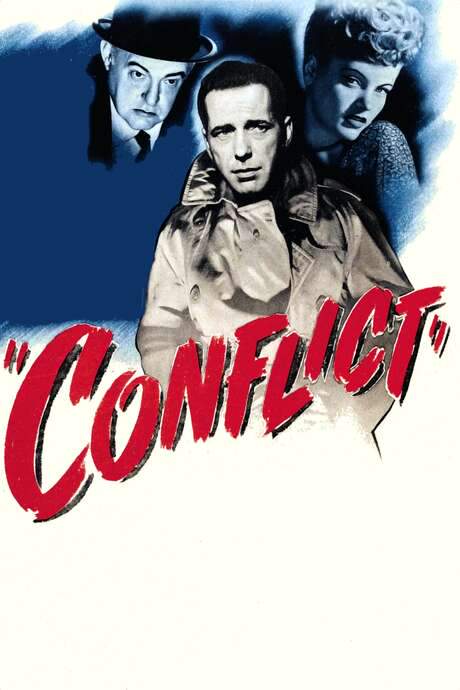
Conflict (1945) movie poster

Plot Summary

Conflict (1945) Plot Summary Explained

Release, runtime and language
1945 · 86 mins · English
Directed by
Curtis Bernhardt
Starring
Humphrey Bogart, Alexis Smith, Grant Mitchell, Sydney Greenstreet, Charles Drake, Ann Shoemaker

Driven by restless desire, unhappily married Richard Mason meticulously plots the murder of his overbearing wife, hoping to free himself to marry her sister. The scheme unfolds amid mounting suspense and suspicion, turning domestic longing into a dangerous, relentless game of deception.

On this page (6)
  1. 1 Where to watch
  2. 2 What happens: full plot
  3. 3 Plot questions answered
  4. 4 Movie threads
  5. 5 Movies like Conflict
  6. 6 Every angle

Where to watch

Where to Watch Conflict (1945)

Where can you watch Conflict? Stream, rent or buy it in the US, including on Amazon Video, Apple TV Store and Fandango At Home: current JustWatch availability with up-to-date prices.

Streaming availability powered by JustWatch

Full plot summary · contains spoilers

What Happens in Conflict: Full Plot Summary

The whole story of Conflict (1945) explained, from the opening scene to the final frame: every key event, every twist and what it all adds up to. Read it as a quick recap before the sequel, to check a scene you missed, or to finally understand what really happened.

On the surface, Richard Mason Humphrey Bogart and Kathryn Mason Rose Hobart appear to be a happily married couple. But on their fifth wedding anniversary, Kathryn accuses Richard of having fallen in love with her younger sister, Evelyn Turner Alexis Smith, who is visiting them. He does not deny it, but has resigned himself to leaving things as they are, since Kathryn certainly would not give him a divorce. Kathryn knows he knows it, and derides him further. At a party celebrating the couple's anniversary, hosted by family friend and psychologist Dr. Mark Hamilton Sydney Greenstreet, Evelyn meets with Mark's handsome young colleague, Professor Norman Holsworth [Charles Drake]. On the way home Kathryn slyly mentions to Evelyn that their mother is lonely, knowing that Evelyn will feel obligated to move back home. Angered, Richard crashes their car and suffers a broken leg.

Richard decides to take desperate action. He pretends to require a wheelchair even after his leg has healed. His puzzled physician, Dr. Grant [Grant Mitchell], diagnoses the problem as psychological, not physical, and suggests exercise, so a car trip to a mountain resort is arranged. At the last minute, Richard contrives to stay home to finish some work.

Going on ahead, Kathryn stops by Hamilton's home and asks him to check in on Richard. Resuming her journey, Kathryn comes upon an abandoned parked car blocking the narrow, deserted mountain road. Unexpectedly, Richard walks threateningly out of the fog. The audience is left to imagine him killing her. Next he pushes her car down a steep slope; it dislodges some logs which crash down and hide it. He returns home in time to set up an alibi by meeting with an employee he had summoned to finish the work. In his presence he twice phones the resort, only to be told she has not arrived. He then notifies the police that she is missing.

Subsequently, things happen to make Richard wonder if Kathryn somehow survived. First, the police find a pickpocket in possession of a cameo ring that Richard and Evelyn identify as Kathryn's; the man admits to stealing it from a woman matching Kathryn's description, after her disappearance. Then Richard smells Kathryn's perfume in their bedroom, finds her key to a home safe, and opens it: her wedding ring is inside.

Mark suggests Richard and Evelyn join him on a fishing vacation to relieve the strain. Mark also invites Holsworth, who takes the opportunity to ask Evelyn to marry him. She is undecided. When she tells Richard, he believes her hesitation is because of him. He tells her he loves her, and that she must feel the same about him, but she strongly denies it. Later, realizing his mistake, he encourages Holsworth to try again.

Then a pawn shop claim ticket is mailed to Richard, addressed in what appears to be his wife's handwriting. At the pawn shop, he finds Kathryn's locket and her signature in the register, but when he returns with the police, the register is different and there is no locket. Finally, he sees a woman on the street who looks and is dressed like his wife. He follows her to an apartment, only to find that it is vacant, with no one inside.

Unable to reconcile these occurrences any longer, Richard returns to the crime scene to see once and for all if Kathryn's body is inside the car. But Hamilton and the police are waiting for him. Kathryn's body had been found and removed long before, and now Richard is arrested. Hamilton reveals that he had been onto Richard since Richard's initial interview with the police. Since Hamilton's suspicion wouldn't be enough to secure a conviction in a court of law, Hamilton and the police worked together to stage the events that made Richard suspect Kathryn was still alive, hoping he would return to look for her body, and thus prove he had known all along what happened to her.

Last updated: October 09, 2025 at 11:04

Was this helpful?

Plot questions answered

Conflict Plot Explained: Your Questions Answered

The questions people ask most about Conflict (1945): what happens in the confusing scenes, why the characters do what they do, the twists, hidden details and what the ending means. Each answer contains spoilers.

Q1

Why did Richard Mason kill his wife?

Richard killed Kathryn because he had fallen in love with her younger sister Evelyn and wanted to be free to marry her. Since Kathryn would never consent to a divorce, Richard saw murder as his only way out of their unhappy marriage.

Foreshadowing: Early in the film, Kathryn openly accuses Richard of loving Evelyn during their anniversary dinner, confirming the motive that drives the entire crime.

  • richard mason
  • kathryn mason
  • murder
  • motive
  • evelyn
Q2

How did Richard fake his injury after the car crash?

After breaking his leg in the car crash, Richard pretended the injury was still serious enough to require a wheelchair even after it had healed. His doctor, Dr. Grant, realized the problem was psychological rather than physical and prescribed exercise, which gave Richard the opportunity to arrange the mountain resort trip.

Foreshadowing: The car crash itself was caused by Richard's anger at Kathryn's manipulation regarding Evelyn, and it provided the convenient cover for his staged weakness.

  • wheelchair
  • faked injury
  • dr grant
  • car crash
Q3

How did Dr. Hamilton trap Richard into confessing?

Hamilton suspected Richard from the first police interview but knew suspicion alone wouldn't convict him. Working with the police, he staged events that made Richard believe Kathryn might have survived, the perfume, the wedding ring in the safe, the pawn shop evidence, and the lookalike. These planted clues convinced Richard to return to the crime scene to check for her body, which proved he knew what had happened.

Foreshadowing: Hamilton agreed to check on Richard while Kathryn traveled, giving him early access to observe Richard's behavior and confirm his suspicions.

  • dr hamilton
  • trap
  • confession
  • police
  • arrest
Q4

What happened when Kathryn encountered Richard on the mountain road?

While driving to the mountain resort, Kathryn stopped at an abandoned car blocking the narrow road. Richard emerged from the fog, threatening her. The audience is left to imagine the attack, but Richard later pushed her car down a steep slope where logs hid the vehicle and her body.

Foreshadowing: Richard's elaborate scheme to stay home from the resort by pretending to have work provided the window for him to confront Kathryn on that remote road.

  • mountain road
  • murder
  • kathryn death
  • car
Q5

Why did Richard think Kathryn might still be alive?

Several planted clues made Richard doubt his crime: a pickpocket had Kathryn's cameo ring, he smelled her perfume in their bedroom, found her wedding ring in the safe, received a pawn shop claim ticket in her handwriting, saw her locket in the shop (which vanished when police returned), and spotted a lookalike on the street. Hamilton and the police deliberately staged these to manipulate Richard's psychology.

Foreshadowing: The planted evidence directly exploited Richard's guilty conscience, making him paranoid enough to return to the scene.

  • survival
  • evidence
  • paranoia
  • planted clues
Q6

Why did Mark Hamilton suggest the fishing trip?

Hamilton suggested the fishing vacation as a way to relieve tension and observe Richard closely. It was actually part of his plan, during the trip, Professor Holsworth proposed to Evelyn, giving Richard hope that she might reciprocate his feelings, which later made his return to the crime scene even more psychologically motivated.

Foreshadowing: The trip allowed Hamilton to monitor Richard's behavior while also creating the romantic context that fueled Richard's desperation.

  • fishing trip
  • mark hamilton
  • evelyn
  • holsworth
Q7

Who was the woman Richard followed to the apartment?

The woman Richard saw on the street and followed to an apartment was a lookalike arranged by Hamilton and the police. The apartment was deliberately left vacant to further convince Richard that Kathryn was alive and hiding somewhere, pushing him toward his eventual return to the crime scene.

Foreshadowing: This staged encounter was one of several psychological tricks designed to make Richard question whether his crime had succeeded.

  • lookalike
  • apartment
  • kathryn
  • staged
Q8

Why did Evelyn reject Richard's love confession?

Evelyn had no romantic feelings for Richard and was genuinely undecided about Holsworth's proposal. When Richard confessed his love, she firmly denied feeling the same way. Later, realizing his mistake, Richard even encouraged Holsworth to try again, showing he understood Evelyn's true feelings.

Foreshadowing: Evelyn's interaction with Holsworth at the anniversary party established a genuine romantic connection that was separate from Richard's obsession.

  • evelyn
  • rejection
  • love confession
  • holsworth
Q9

What was the significance of the cameo ring?

The cameo ring found on a pickpocket was planted by police to test Richard's reaction. Both Richard and Evelyn identified it as Kathryn's, but the thief claimed he stole it from a woman matching Kathryn's description after her disappearance, adding to the mystery of whether she truly died.

Foreshadowing: This early piece of evidence began Richard's spiral into paranoia about whether his plan had actually worked.

  • cameo ring
  • pickpocket
  • evidence
  • police
Q10

How did Richard construct his alibi for the murder?

Richard arranged to stay home from the resort by pretending he had urgent work to finish. He summoned an employee to his home and, in the employee's presence, made two phone calls to the resort claiming Kathryn hadn't arrived. He then reported her missing to police, establishing that he was home when she disappeared.

Foreshadowing: The alibi depended on his fake wheelchair and the convenient work excuse, both elements of his careful pre-planning.

  • alibi
  • phone calls
  • employee
  • work
Q11

Why did Kathryn tell Evelyn their mother was lonely?

Kathryn strategically mentioned their mother's loneliness to pressure Evelyn into moving back home, away from Richard. This manipulation enraged Richard and contributed to his decision to crash the car. It showed Kathryn's manipulative nature and understanding of Richard's vulnerabilities.

Foreshadowing: This moment revealed Kathryn's awareness of Richard's feelings for Evelyn and her willingness to use emotional manipulation against both women.

  • mother
  • lonely
  • manipulation
  • evelyn
  • kathryn

Movie threads

More Movies Like Conflict, by Mood & Story

Curated lists built around what makes Conflict tick: the same mood, the same kind of story or the same emotional payoff. Each list explains why these movies belong together.

Noir Entrapment Thrillers Like Conflict

Stories where a cat-and-mouse game exposes the killer through psychological manipulation. If you enjoyed the psychological cat-and-mouse game in Conflict, you'll find similar tension in these films. This list features movies where a cunning investigator or suspect uses psychological pressure and clever traps to expose a murderer, creating a taut and intellectually engaging thriller experience reminiscent of classic noir.

  • suspenseful
  • cerebral
  • paranoid
  • methodical
  • claustrophobic
  • deceptive
  • Tone: tense, paranoid, cerebral
  • Pacing: steady, methodical
Why these movies?

The story pattern: These narratives follow a clear pattern: a murder is committed, often by an overconfident protagonist. An investigator or figure of authority develops a strong suspicion but lacks concrete proof. The story then shifts to a battle of wits, where the hunter designs an elaborate psychological scheme—using gaslighting, false evidence, or staged scenarios—to provoke the killer into revealing their guilt, leading to a climactic confrontation.

Why they belong together: Movies in this thread are grouped by their shared focus on intellectual suspense and psychological manipulation. They feature a steady, methodical pace that builds tension, a dominant tense tone, and a high-stakes cerebral conflict. The satisfaction comes from watching a meticulously laid plan unfold to corner a guilty protagonist.

Dark Domestic Thrillers with Moral Collapse Like Conflict

Thrillers where intimate relationships become a prison and fuel for deadly acts. For viewers who appreciated the themes of marital strife and psychological decay in Conflict, this collection highlights similar films. Explore movies where toxic relationships and domestic settings breed paranoia and violence, resulting in grim, character-driven stories about the dark side of intimacy and the tragic consequences of betrayal.

  • claustrophobic
  • grim
  • anxious
  • relentless
  • psychological
  • dark
  • Tone: grim, tense, anxious
  • Pacing: steady, character-driven
Why these movies?

The story pattern: The narrative arc typically begins with a protagonist feeling tragically trapped in a domestic situation—a bad marriage, a controlling family—which breeds deep-seated resentment. This emotional pressure builds until it culminates in a planned, intimate act of violence. The aftermath is then explored, focusing on the psychological toll, the burden of guilt, and the inevitable exposure of the crime, often leading to a bleak or sad conclusion.

Why they belong together: These films are united by their grim exploration of domestic life as a source of intense psychological drama and violence. They share a heavy emotional weight, a tense and anxious mood, and a focus on the claustrophobic feeling of being trapped by one's own life choices and relationships. The pacing is often steady, allowing the dread to simmer and the characters' moral decay to feel inevitable.

If you liked this

Movies Like Conflict

Similar movies to Conflict: the same genre, themes or kind of story. Each one comes with its own plot summary, timeline and ending explained.

Browse all movie summaries

Every angle

Conflict (1945) Explained: Plot, Timeline & Characters

Everything about Conflict in one place: what happens in the plot summary, the timeline in chronological order, the characters and meaning and a spoiler-free summary. What's After the Movie adds the cast, box office and post-credit scenes.

Coming soon on iOS and Android

The Plot Explained Movie Summary App

Plot summaries, endings explained and timelines on your phone. Catch up on any movie in minutes, save your favorites and never miss a twist again.

Be the first to know when we launch. Your email stays private, always.

Learn more about the app