Plot Explained Spoilers guaranteed!
Plot Explained

Browse by genre

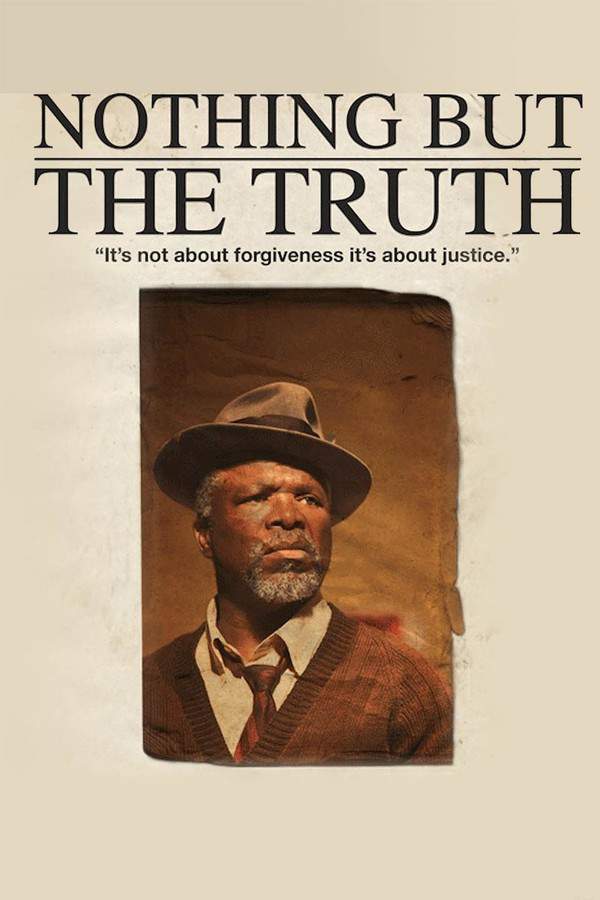
Nothing But the Truth (2008) movie poster

Plot Summary

Nothing But the Truth (2008) Plot Summary Explained

Release, runtime and language
2008 · 108 min · English
JustWatch #10,610 15
Directed by
Rod Lurie
Starring
Vera Farmiga, Kate Beckinsale, Matt Dillon

Amidst a climate of political turmoil, investigative journalist Rachel Armstrong publishes a story exposing a significant government scandal. Her refusal to reveal her confidential source leads to a legal battle and ultimately, imprisonment. Rachel must then grapple with the ethical implications of her profession as she fights to uphold her principles and defend the importance of protecting sources.

On this page (6)
  1. 1 Where to watch
  2. 2 What happens: full plot
  3. 3 Plot questions answered
  4. 4 Movie threads
  5. 5 Movies like Nothing But the Truth
  6. 6 Every angle

Where to watch

Where to Watch Nothing But the Truth (2008)

Where can you watch Nothing But the Truth? Stream, rent or buy it in the US, including on fuboTV, The CW and Fandango at Home Free: current JustWatch availability with up-to-date prices.

Streaming availability powered by JustWatch

Full plot summary · contains spoilers

What Happens in Nothing But the Truth: Full Plot Summary

The whole story of Nothing But the Truth (2008) explained, from the opening scene to the final frame: every key event, every twist and what it all adds up to. Read it as a quick recap before the sequel, to check a scene you missed, or to finally understand what really happened.

President Lyman, portrayed by Scott Williamson, becomes the target of an assassination attempt, which results in a U.S. retaliatory bombing of Venezuela, accusing the country of orchestrating the attack. In this tense atmosphere, Rachel Armstrong (Kate Beckinsale), a driven reporter for the Capital Sun-Times based in Washington D.C., is on the verge of exposing a significant story. She is set to publish allegations that the Lyman administration willfully deceived Congress and the American public by blaming Venezuela for the assassination attempt, all while ignoring a CIA report from operative Erica Van Doren (Vera Farmiga) which determined there was no connection between the country and the attack.

Rachel holds onto vital evidence: a memo written by Erica, who is deeply involved in the investigation and whose daughter, Alison, attends the same school as Rachel's son, Timmy (Preston Bailey). Refusing to disclose her source, Rachel confronts Erica at a soccer game, where Erica, while denying her CIA ties becomes agitated by what she perceives as the reckless behavior of journalists. Confident in her findings, Rachel publishes her report, which swiftly makes headlines and gains the unwavering support of her editor, Bonnie Benjamin (Angela Bassett), along with legal counsel Avril Aaronson (Noah Wyle).

However, the CIA quickly becomes aware of Rachel's impending reveal. Erica's supervisor, Merill, grows suspicious that Erica may have leaked information to Rachel, especially since she expressed frustration over being ignored by the White House after submitting her report. In an aggressive move, they decide to polygraph everyone at the agency to uncover the source of the leak. The ramifications of exposing a covert operative's identity are severe, as it could be considered treason if committed by a government official. Consequently, special prosecutor Patton Dubois (Matt Dillon) assembles a grand jury to find and prosecute the leaker. When asked about her source, Rachel staunchly declines to provide any information, leading to her imprisonment for contempt of court.

The high-profile lawyer Albert Burnside (Alan Alda), representing Rachel, underestimated the situation's gravity, exclaiming that the judge made a serious miscalculation when his client was jailed. He compares mistakes with biting remarks, saying, >“sometimes a mistake is like wearing white after Labor Day, and sometimes a mistake is invading Russia in winter.” In the following days, Burnside fights for Rachel's release on bail, but the judge sets conditions, insisting Rachel must consult her source before revealing their identity—conditions she vehemently rebuffs.

As time goes on, Erica faces pressure within the CIA, even after successfully passing a polygraph examination. Her anger boils over as she threatens to disclose confidential information, while facing the possibility of her custody battle over her daughter being manipulated against her. The tension escalates, and as weeks turn into months, Erica is tragically murdered outside her home, escalating the stakes for Rachel.

Despite facing harassment from fellow inmates and an estrangement from her husband, Ray Armstrong (David Schwimmer), and son Timmy, Rachel holds firm in her commitment to protecting her source. Over her imprisonment, the mounting fines against her newspaper reach astronomical amounts, as Dubois persuades the court to impose a daily fine for each day that Rachel refuses to disclose her source. Rachel argues to Dubois, that revealing her source post-murder could endanger others, but the situation spirals further when a White House staff member admits to leaking information about Erica—an action Rachel had already known about prior to their meeting.

With Burnside appealing all the way to the Supreme Court, he stresses that without the protection of sources, the freedom of the press and, by extension, democracy itself hangs in the balance. Unfortunately, the court sides against Rachel in a close decision. Eventually, the judge recognizes that continued incarceration serves no purpose, deciding ultimately to release Rachel, who has not been convicted of any crime. Just as she steps out, Dubois intervenes, instigating an arrest on grounds of obstruction of justice, leading Rachel to accept a plea deal that includes a two-year sentence but allows the possibility of early parole for good behavior.

As Rachel is taken to prison, she reflects on a moment spent volunteering at Timmy's school, where she recalls a conversation with Erica's daughter, Alison. In this innocent exchange, Alison inadvertently reveals that her mother worked for "the government" and had recently traveled to Venezuela for "business," shedding light on the chain of events that have led to her current predicament.
Last updated: October 27, 2024 at 21:53

Was this helpful?

Plot questions answered

Nothing But the Truth Plot Explained: Your Questions Answered

The questions people ask most about Nothing But the Truth (2008): what happens in the confusing scenes, why the characters do what they do, the twists, hidden details and what the ending means. Each answer contains spoilers.

Q1

Why does Rachel refuse to reveal her source even after being imprisoned?

Rachel refuses to reveal Erica Van Doren as her source because protecting confidential sources is a fundamental principle of journalism. She believes that if reporters cannot guarantee anonymity to their sources, whistleblowers will stop coming forward, which would undermine the entire system of investigative journalism and press freedom. This ethical stance costs her imprisonment, massive fines against her newspaper, and severe personal hardship.

Foreshadowing: Earlier in the film, Rachel tells her editor Bonnie that she knows who her source is and will protect them, establishing her unwavering commitment from the start.

  • journalistic source protection
  • press freedom
  • journalist ethics
  • confidential source
Q2

Why does the CIA suspect Erica Van Doren of leaking the memo?

The CIA suspects Erica Van Doren because she authored the CIA report that contradicted the White House's narrative about Venezuela's involvement in the assassination attempt. After submitting her report proving no connection between Venezuela and the attack, she expressed frustration that the White House ignored her findings. When Rachel's story directly cited classified information matching Erica's report, the CIA concluded that Erica must have been the leak, especially since she had access and motive to expose the cover-up.

Foreshadowing: At the soccer field confrontation, Erica becomes visibly agitated when Rachel mentions the memo, showing emotional investment in the story.

  • CIA leak
  • classified information
  • Erica Van Doren
  • internal investigation
Q3

Who kills Erica Van Doren and why?

Erica Van Doren is murdered outside her home, and the film strongly implies she was killed by elements within her own government. The CIA had suspected her of leaking, and she was facing pressure from both the agency and her custody battle over her daughter Alison. Her murder serves as a warning to Rachel and eliminates a potential witness or future leaker. The timing, after she passed a polygraph test, suggests the government could not risk her becoming a liability or potentially cooperating further.

Foreshadowing: Earlier, Erica threatens to expose confidential information, realizing her position is precarious and her custody battle could be used against her.

  • Erica Van Doren murder
  • CIA corruption
  • cover-up
  • assassination
Q4

Why does the Supreme Court rule against Rachel in her case?

The Supreme Court rules 5-4 against Rachel, upholding the lower court's contempt ruling. While the case involves press freedom, the Court determines that national security interests and the need to uncover government crimes take precedence. The majority opinion argues that the leak involved a covert operative's identity, which could constitute treason if a government official revealed it. Burnside's arguments about the danger to democracy fall short, reflecting the Court's view that Rachel must reveal her source despite journalist protections.

Foreshadowing: Burnside's legal arguments throughout the film highlight how the case tests the boundaries of First Amendment rights versus national security.

  • Supreme Court ruling
  • First Amendment
  • national security
  • journalist protections
Q5

What does the ending reveal about how Rachel actually got the information?

The ending reveals that Rachel obtained the critical information about Erica Van Doren not through a direct journalistic source, but through an innocent conversation with Alison, Erica's daughter. While volunteering at her son Timmy's school, Rachel learned from Alison that her mother worked for 'the government' and had recently traveled to Venezuela for 'business.' This means Rachel's moral stand to protect a 'source' may have been somewhat misdirected, she didn't actually receive classified information from Erica, but rather pieced together information from a child's casual remarks.

Foreshadowing: The film shows Rachel and Erica meeting at a soccer game where their children interact, establishing the connection between the two families early on.

  • Alison revelation
  • source confusion
  • ending twist
  • Venezuela trip
Q6

Why does the US government bomb Venezuela and then cover up the real reason?

The US government bombs Venezuela as retaliation for the assassination attempt on President Lyman, blaming the country for orchestrating the attack. However, the CIA report from Erica Van Doren determined there was no evidence linking Venezuela to the attack. The administration deliberately ignored this report and misled Congress and the public to justify the military action. The cover-up exists because revealing the truth would expose that the administration ordered an illegal bombing based on false intelligence, which would constitute a major scandal and potentially criminal conduct.

Foreshadowing: Rachel's investigation begins precisely because she discovers the CIA report contradicting the official narrative about Venezuela.

  • Venezuela bombing
  • government cover-up
  • false intelligence
  • congressional deception
Q7

Why does prosecutor Patton Dubois arrest Rachel immediately after her release from contempt?

Prosecutor Patton Dubois arrests Rachel for obstruction of justice the moment she is released from the contempt charges. This appears to be a deliberate move to continue persecuting her despite the judge recognizing her imprisonment served no purpose. The arrest forces Rachel into a plea deal that results in a two-year sentence. This sequence demonstrates the government's continued retaliation against Rachel for her refusal to cooperate, using additional charges to achieve what the contempt ruling could not, breaking her spiritually or forcing a concession.

Foreshadowing: Throughout the film, Dubois is portrayed as aggressive and unrelenting in his pursuit of the leak, never accepting Rachel's refusal.

  • Patton Dubois arrest
  • obstruction of justice
  • continued prosecution
  • plea deal
Q8

Why does Rachel get imprisoned for contempt of court?

Rachel Armstrong is imprisoned for contempt of court because she refuses to disclose the identity of her source when subpoenaed by a grand jury. Special prosecutor Patton Dubois assembles the grand jury specifically to find and prosecute the person who leaked classified information to Rachel. When Rachel refuses to answer questions about her source, the judge holds her in contempt and orders her incarceration. The contempt is civil, not criminal, meant to coerce her into compliance, but she remains steadfast despite the escalating consequences.

Foreshadowing: Rachel's editor Bonnie and lawyer Avril advise her on the legal risks, but Rachel chooses her principles over her freedom from the beginning.

  • contempt of court
  • grand jury subpoena
  • journalist imprisonment
  • source protection
Q9

What is the significance of the CIA memo Rachel uses as evidence?

The CIA memo Rachel possesses is significant because it contains Erica Van Doren's official report stating there is no connection between Venezuela and the assassination attempt on President Lyman. This document directly contradicts the administration's public claim that Venezuela was responsible, proving the government knowingly misled Congress and the American public to justify bombing Venezuela. When Rachel publishes this information, she exposes not just a policy failure but an intentional deception that led to military action against an innocent nation.

Foreshadowing: Erica's frustration at the soccer field stems from her professional work being ignored despite her expertise and findings.

  • CIA memo
  • classified report
  • Venezuela connection
  • evidence publication
Q10

What does Albert Burnside mean when he compares the judge's mistake to invading Russia?

When lawyer Albert Burnside says 'sometimes a mistake is like wearing white after Labor Day, and sometimes a mistake is invading Russia in winter,' he is lambasting the judge's decision to jail Rachel. The white clothing analogy refers to a minor social faux pas, while invading Russia in winter refers to Napoleon's catastrophic military error. Burnside is telling the judge that her ruling is not just wrong but catastrophically so, an extreme overreach that will be remembered as a grave legal mistake, equating it to one of history's most infamous strategic blunders.

Foreshadowing: This quote sets the tone for Burnside's aggressive legal strategy defending Rachel throughout the film.

  • Albert Burnside quote
  • judge criticism
  • legal strategy
  • Napoleon Russia analogy

Movie threads

More Movies Like Nothing But the Truth, by Mood & Story

Curated lists built around what makes Nothing But the Truth tick: the same mood, the same kind of story or the same emotional payoff. Each list explains why these movies belong together.

Movies about intense ethical battles like Nothing But the Truth

Characters pushed to their limits to defend a core principle against overwhelming power. If you were gripped by the high-stakes ethical conflict in Nothing But the Truth, you'll find similar intensity in these movies. They focus on characters facing immense pressure to betray their principles, creating a tense, morally-complex viewing experience centered on personal courage and sacrifice.

  • determined
  • tense
  • morally conflicted
  • urgent
  • courageous
  • oppressive
  • Tone: tense, morally conflicted, determined
  • Pacing: steady, mounting pressure
Why these movies?

The story pattern: Stories in this thread typically involve a clear ethical line being crossed by a powerful institution. The protagonist, armed only with their conviction, takes a stand, leading to a grueling battle of attrition. The plot escalates the personal cost of their stance, often through legal pressure, public scrutiny, or institutional retaliation, creating a steady, tension-filled progression toward a resolution that weighs moral victory against personal loss.

Why they belong together: These films are grouped together because they share a focus on internal, moral fortitude as the central conflict. They generate intensity and tension from the psychological toll of doing the 'right thing' against impossible odds, resulting in a heavy emotional weight and a pacing that feels like relentless, mounting pressure.

Claustrophobic thrillers about fighting the system like Nothing But the Truth

Stories where a vast, impersonal system methodically bears down on a lone individual. For viewers who appreciated the oppressive atmosphere of institutional power in Nothing But the Truth, this list features similar tense dramas. These movies explore the isolating experience of one person confronting a vast, unforgiving system, creating a feeling of claustrophobia and relentless legal or bureaucratic pressure.

  • oppressive
  • claustrophobic
  • anxious
  • tense
  • isolating
  • urgent
  • Tone: tense, anxious, isolating, oppressive
  • Pacing: steady, deliberate
Why these movies?

The story pattern: The narrative pattern involves an individual triggering the ire of a powerful system (government, corporation, etc.). The system responds not with brute force, but with a slow, precise, and seemingly unstoppable application of its rules and resources. The protagonist's world shrinks as they are isolated, legally entangled, and psychologically worn down, creating a plot that feels like a tightening vise.

Why they belong together: Movies in this thread share a specific atmospheric quality: a tense, anxious, and isolating mood generated by the imbalance of power between one person and a faceless institution. The pacing is steady and deliberate, mirroring the methodical nature of systemic pressure, leading to a heavy, often bittersweet emotional conclusion.

If you liked this

Movies Like Nothing But the Truth

Similar movies to Nothing But the Truth: the same genre, themes or kind of story. Each one comes with its own plot summary, timeline and ending explained.

Browse all movie summaries

Every angle

Nothing But the Truth (2008) Explained: Plot, Timeline & Characters

Everything about Nothing But the Truth in one place: what happens in the plot summary, the timeline in chronological order, the characters and meaning and a spoiler-free summary. What's After the Movie adds the cast, box office and post-credit scenes.

Coming soon on iOS and Android

The Plot Explained Movie Summary App

Plot summaries, endings explained and timelines on your phone. Catch up on any movie in minutes, save your favorites and never miss a twist again.

Be the first to know when we launch. Your email stays private, always.

Learn more about the app