Year: 1985
Runtime: 96 mins
Language: English
Director: David Drury
Reporter Mullen uncovers a scandal linking a senior MP to a KGB operative and a near‑nuclear incident involving a teenage runaway and a U.S. Air Force base. Suspecting a cover‑up, he joins veteran journalist Vernon Bayliss and the MP’s aide Nina Beckam, putting them in the crosshairs of powerful forces desperate to keep the truth hidden.
Find where to stream, rent, or buy Defence of the Realm (1985) in the US with current JustWatch availability, up-to-date pricing, and platform listings for subscription, rental, and digital purchase options.
Warning: spoilers below!
Haven’t seen Defence of the Realm yet? This summary contains major spoilers. Bookmark the page, watch the movie, and come back for the full breakdown. If you're ready, scroll on and relive the story!
Read the complete plot breakdown of Defence of the Realm (1985), including all key story events, major twists, and the ending explained in detail. Discover what really happened, and what it all means.
On a foggy night, a car carrying two men is chased by the police; the radio crackles with reports that the country is on high alert after a terrorist attack in Ankara. When the car is forced down a dead-end road, one of the men, Steven Dyce escapes over a high barbed-wire fence, but the other is captured, leaving a tense thread running through the night.
Dennis Markham, Ian Bannen, a prominent Member of Parliament, becomes the center of a growing media storm. A London paper alleges he was seen leaving a woman’s home on the night she is visited by a military attaché from East Germany. Is he a KGB agent? The question gnaws at his loyalty, and editors and reporters debate whether the story should run as the pressure of public scrutiny tightens around him.
Vernon Bayliss, Denholm Elliott, Nick Mullen, Gabriel Byrne, and Jack Macleod, Bill Paterson, work together at the Daily Despatch. Bayliss is summoned for a private meeting with Markham and explains a link to the German agent that Markham himself has not yet grasped. Meanwhile, Mullen interviews Nina Beckman, Greta Scacchi, Markham’s secretary, and then speaks to Markham’s wife, all while initially posing as a plainclothes officer. The newsroom buzzes as the story, later dubbed the “Markham Affair,” starts making waves across television and newspaper channels.
The pressure mounts as Markham is hounded by the press and ultimately forced to resign. Mullen continues his investigative work alongside Bayliss, who grows suspicious that Markham may have been framed. When Bayliss dies of a supposed heart attack on the same night his flat is ransacked, the mystery deepens. Mullen uncovers press-cuttings and a tape in Bayliss’s desk that hint at a motive far broader than a personal scandal, suggesting a conspiracy worth uncovering.
Driven by the growing clues, Mullen visits the young man who was arrested at the start of the film, explaining that his supposed accomplice is dead. This encounter leads him back to the site where the film began: a high-security, yet seemingly unmanned military base near Brandon, operated by the USAF. There, Mullen suspects a nuclear weapon capability tied to the American presence in the UK, and he senses that Markham’s motives might be tied to efforts to remove such dangers from the country. The theory points toward a deeper power struggle than a simple political salacious story.
With Nina’s help, Mullen presses on, even as a break-in at his own flat and persistent surveillance threaten to derail him. When he attempts to publish, his editor delivers the crushing news: the Official Secrets Act blocks the story, and the newspaper owner, Kingsbrook, intervenes personally to keep it from print. Kingsbrook, a figure reminiscent of a powerful wartime publisher, remains a looming question in the background: who controls the information, and who benefits from keeping it quiet?
The investigation takes another turn when Mullen discovers that the supposed KGB agent is, in fact, a British operative, and he demands to know who supplied that source. The man in question is Anthony Clegg, Oliver Ford Davies. Confronted in a gentleman’s club, Clegg is grabbed by two men and hauled away for questioning by senior officials. The scene ends with no clear explanation, and Mullen returns to a ransacked flat, where Nina arrives just as danger closes in. A bomb explodes, seemingly killing them both, and the room is plunged into smoke and silence.
Yet the fallout is not contained. Nina had already managed to post the incriminating evidence to Germany, allowing the world to glimpse a chain of actions that stretch beyond national borders. The story of the near-nuclear-disaster begins to spread across the European press, leaving viewers to wonder who knew what, and when, about the delicate balance between political intrigue and dangerous military secrecy. The film ends on a note of unresolved tension, with the truth out in the world but the very people who might have controlled it now a part of the same tangled web they sought to expose.
Last updated: October 09, 2025 at 14:40
Explore frequently asked questions about Defence of the Realm (1985) with spoiler-rich answers covering the full plot summary, major story beats, character motivations, hidden details, and ending meaning. This movie summary FAQ helps explain confusing scenes, plot twists, and narrative decisions in clear, searchable detail.
Markham was forced to resign after a newspaper reported that he was seen leaving a woman's home on the same night a German military attaché visited her. This sparked allegations that he was a KGB agent, and the intense media pressure made his position untenable. However, the film reveals he was likely framed to cover up a deeper conspiracy involving nuclear weapons.
Early reports questioning Markham's loyalty planted the seeds for his eventual downfall.
Bayliss discovered that the Markham scandal was a cover-up for a much larger conspiracy involving a US Air Force base near Brandon and potential nuclear weapons on British soil. He found press cuttings and a tape suggesting Markham was framed to distract from this darker truth. His sudden death from an apparent heart attack, on the same night his flat was ransacked, suggests he was killed to silence him.
Bayliss's private meeting with Markham where he explained a connection to the German agent that Markham himself did not know about.
Markham was framed to divert attention from the real conspiracy: a US Air Force base near Brandon that possessed nuclear weapons. Someone within the British establishment wanted to suppress any investigation into the nuclear capability, so they manufactured a scandal to discredit Markham and distract journalists from the truth.
The mysterious German agent connection that Bayliss explained to Markham hinted at forces working behind the scenes.
The film references a teenage runaway who gained access to a US Air Force base near Brandon, creating a near-nuclear disaster scenario. This incident, combined with the presence of nuclear weapons at the base, became the real story that those in power wanted to suppress. The teenage runaway was connected to the two men chased at the film's opening.
The opening pursuit involving two men and the high alert after a terrorist attack in Ankara set the stage for the nuclear threat.
Anthony Clegg was a British operative who was presented as a KGB agent but was actually working for British intelligence. He supplied the false information that made Markham appear to be a Soviet spy. When Mullen confronted Clegg in a gentleman's club, men representing senior officials grabbed Clegg and took him away for questioning, showing the extent of the cover-up.
Mullen's discovery that the supposed KGB agent was actually a British operative came from evidence in Bayliss's desk.
The newspaper's editor told Mullen that the Official Secrets Act prohibited publication of the story about the US Air Force base and nuclear weapons. The newspaper owner, Kingsbrook, personally intervened to suppress the piece. This legal barrier ensured the public would never learn about the nuclear capability through legitimate media, forcing Nina to resort to posting evidence to Germany.
The escalating threats against Mullen and Bayliss hinted at powerful forces determined to keep the truth hidden.
The film ends with a bomb exploding at Nina's flat as she enters, and the screen cuts to smoke and silence, suggesting both Nina and Mullen were killed. However, the film is deliberately ambiguous about their fate. Earlier, Nina had already mailed incriminating evidence to Germany, ensuring the story would spread regardless of what happened to them.
The break-in at Mullen's flat and the persistent surveillance warned that danger was closing in.
Kingsbrook was the newspaper owner who intervened personally to stop the nuclear story from being published. Described as a figure reminiscent of a powerful wartime publisher, he represented the establishment forces that controlled information flow. His intervention demonstrated that the conspiracy extended beyond political figures into media ownership, raising questions about who truly controls the truth.
The editor's earlier warnings about the political fallout from publishing suggested powerful interests were at stake.
Bayliss died of a supposed heart attack on the exact same night his flat was ransacked. The intruders left no obvious valuables, suggesting they were searching for specific information rather than theft. The coincidence of timing, combined with Bayliss's investigation into the conspiracy, strongly suggests he was murdered to prevent him from revealing what he knew.
The film established early that Bayliss was suspicious of the Markham framing and was digging deeper into the conspiracy.
Mullen broke into Bayliss's desk and found press cuttings and a tape that hinted at a broader motive behind the attack on Markham. This evidence suggested the scandal was engineered to cover up something far more significant than a personal indiscretion, pointing toward the nuclear weapons conspiracy at the US Air Force base.
Bayliss's earlier explanation of the German agent connection to Markham showed he already suspected a larger plot.
Discover curated groups of movies connected by mood, themes, and story style. Browse collections built around emotion, atmosphere, and narrative focus to easily find films that match what you feel like watching right now.
Investigative reporters uncovering dangerous truths that powerful forces want buried.If you liked the tense, investigative atmosphere of Defence of the Realm, explore more movies where journalists risk everything to expose a conspiracy. These films share a mood of paranoia, a steady, methodical pace, and a heavy emotional weight, perfect for fans of gripping political thrillers.
The narrative follows a protagonist, often a journalist or an outsider, who peels back layers of a cover-up through methodical research and risky source meetings. The deeper they go, the more they are isolated and threatened, creating a rising arc of personal danger that mirrors the uncovering of institutional deceit. The endings are often morally complex or ambiguous, leaving the systemic corruption largely intact.
These movies are grouped by their shared focus on the investigative process, a pervasive tone of paranoia, and the central theme of a lone individual confronting a monolithic, corrupt system. They deliver a specific kind of intellectual tension where the weapon is information, but the cost is often unbearably high.
Stories where uncovering a dark truth reveals a system too corrupt to defeat.For viewers who appreciated the heavy themes and ambiguous ending of Defence of the Realm, this section collects movies with similar bleak political conspiracies. Discover complex thrillers about government cover-ups and corruption of power that leave a lasting sense of cynicism and unresolved tension.
The narrative pattern involves a protagonist gradually piecing together a web of deception that implicates high-level officials or institutions. The conflict escalates from a simple mystery to a life-threatening confrontation with an untouchable entity. The journey is emotionally draining, and the resolution typically sees a pyrrhic victory—the truth may come out, but the cost is immense and the corrupt system remains largely unchallenged.
These films are united by their complex plots involving high-stakes cover-ups, a consistently tense and dark tone, and emotionally heavy conclusions that question the possibility of real change. They appeal to viewers who enjoy morally grey stories where the fight against corruption is a dangerous and often thankless endeavor.
Don't stop at just watching - explore Defence of the Realm in full detail. From the complete plot summary and scene-by-scene timeline to character breakdowns, thematic analysis, and a deep dive into the ending - every page helps you truly understand what Defence of the Realm is all about. Plus, discover what's next after the movie.
Track the full timeline of Defence of the Realm with every major event arranged chronologically. Perfect for decoding non-linear storytelling, flashbacks, or parallel narratives with a clear scene-by-scene breakdown.
Discover the characters, locations, and core themes that shape Defence of the Realm. Get insights into symbolic elements, setting significance, and deeper narrative meaning - ideal for thematic analysis and movie breakdowns.
Discover movies like Defence of the Realm that share similar genres, themes, and storytelling elements. Whether you’re drawn to the atmosphere, character arcs, or plot structure, these curated recommendations will help you explore more films you’ll love.
Defence of the Realm (1985) Scene-by-Scene Movie Timeline
Defence of the Realm (1985) Movie Characters, Themes & Settings
Defence of the Realm (1985) Spoiler-Free Summary & Key Flow
Movies Like Defence of the Realm – Similar Titles You’ll Enjoy
Foreign Correspondent (1940) Spoiler-Packed Plot Recap
Official Secrets (2019) Ending Explained & Film Insights
Deep State (2018) Complete Plot Breakdown
Close to the Enemy (1000) Story Summary & Characters
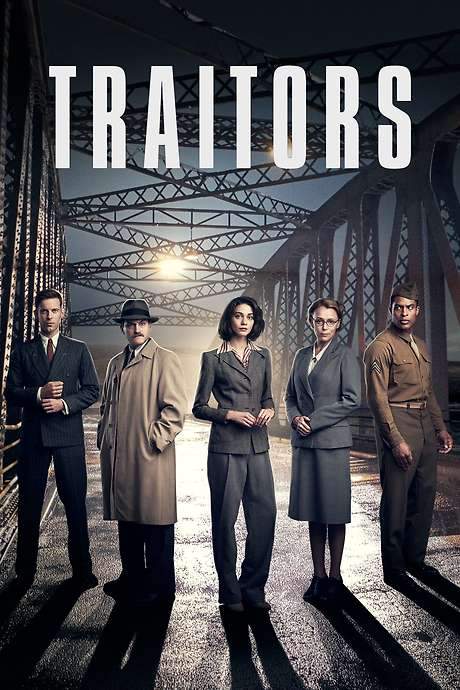
Traitors (1000) Full Movie Breakdown
The State Within (1000) Ending Explained & Film Insights
Hidden Agenda (1990) Plot Summary & Ending Explained
Cover-Up (1991) Spoiler-Packed Plot Recap
A Spy Among Friends (1000) Story Summary & Characters
Conspirator (1949) Spoiler-Packed Plot Recap
The Quiller Memorandum (1966) Full Movie Breakdown
The Defector (1966) Complete Plot Breakdown
The Spy Who Came In from the Cold (1965) Story Summary & Characters
Secret Agent (1936) Story Summary & Characters
13 Rue Madeleine (1947) Story Summary & Characters