Plot Explained Spoilers guaranteed!
Plot Explained

Browse by genre

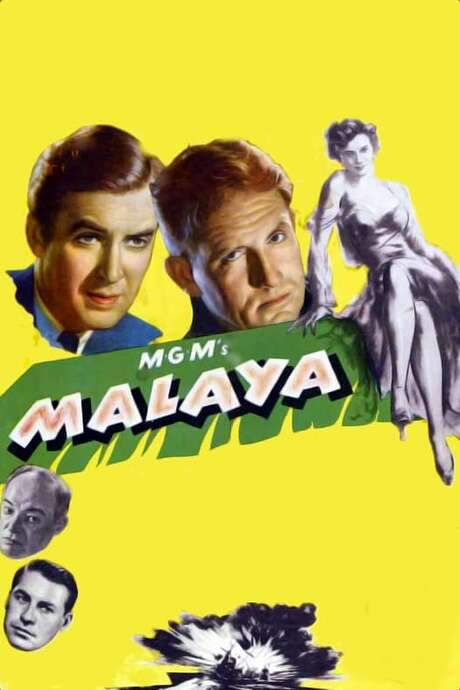
Malaya (1949) movie poster

Plot Summary

Malaya (1949) Plot Summary Explained

Release, runtime and language
1949 · 98 mins · English
Directed by
Richard Thorpe
Starring
James Stewart, Valentina Cortese, Tom Helmore, Spencer Tracy, Ian Macdonald, DeForest Kelley

After years abroad, journalist John Royer returns to the U.S. just as it enters World War II. Claiming he can smuggle rubber—a vital wartime resource—from Malaya, he is recruited for the mission. He frees former associate Carnaghan from Alcatraz, and the two masquerade as Irishmen heading to Southeast Asia. There, Carnaghan assembles old contacts and, with Royer and local plantation owners, plots to move the rubber past the Japanese occupation.

On this page (6)
  1. 1 Where to watch
  2. 2 What happens: full plot
  3. 3 Plot questions answered
  4. 4 Movie threads
  5. 5 Movies like Malaya
  6. 6 Every angle

Where to watch

Where to Watch Malaya (1949)

Where can you watch Malaya? Stream, rent or buy it in the US, including on Amazon Video, Apple TV Store and Fandango At Home: current JustWatch availability with up-to-date prices.

Streaming availability powered by JustWatch

Full plot summary · contains spoilers

What Happens in Malaya: Full Plot Summary

The whole story of Malaya (1949) explained, from the opening scene to the final frame: every key event, every twist and what it all adds up to. Read it as a quick recap before the sequel, to check a scene you missed, or to finally understand what really happened.

John Royer returns to the United States in January 1942, a pivotal moment just after the country enters World War II. He seeks out his friend, John Manchester, a newspaper publisher, to discuss a daring scheme: smuggling urgently needed rubber out of Japanese-occupied Malaya. Although Manchester has been tapped by the government to handle the rubber shortage, he isn’t eager to jump into action. A government agent, Kellar, pushes Royer toward a meeting with Manchester and other officials, and finally grant is given to move forward with the operation.

To pull off the risky plan, Royer enlists his old ally, Carnaghan, a hardened smuggler who is released from Alcatraz specifically to help. The pair slip into Malaya and reconnect with The Dutchman, the saloon owner who can recruit a crew from his customers, including Romano. As the partnership rekindles, Carnaghan also renews his connection with the Italian singer in the joint's orbit, the captivating Luana Luana.

With capital, leverage, and menace, the group buys up all the available rubber, using money and intimidation to secure the precious cargo. But their operation draws the attention of the Japanese commander, Colonel Tomura, who is determined to stamp it out. During the final trip to move the remaining rubber—the property of German plantation owner Bruno Gerber—an ambush appears imminent. Carnaghan, sensing danger, refuses to take Royer along, and the two men part ways in a tense moment of loyalty and suspicion. The attack comes as the boats are struck by machine-gun fire, and the boats, including the one carrying Royer, are overwhelmed and slaughtered.

The story shifts toward a grim finale as Tomura hints that he could overlook the stingy plan if offered gold, but [The Dutchman] believes such a bribe is impossible to buy. Carnaghan nonetheless accepts Tomura’s terms and, together with Romano, hatches a plan to outmaneuver the Japanese commander even if it renders them as “angels” in a dangerous game of betrayal and survival. In a desperate act, Luana volunteers for the risk, climbing aboard the smuggled vessel in what seems like a suicide mission. Carnaghan drives the scheme forward, forcing Tomura into a confrontation on the hidden freighter.

The climactic moment arrives as Carnaghan shoots the guards and defeats Tomura, pulling himself onto the gunwale just in time to witness the two PT boats sink the Japanese warship. Wounded, he collapses from exhaustion, a solitary silhouette watching the island’s battle end in a dramatic turn of fate.

In the aftermath, the island earns a new symbol of allegiance—the Australian flag rises where the Japanese ensign once flew. Kellar revisits the Dutchman’s bar and confirms the search for Carnaghan, who has vanished with Luana on the island. The government investigator describes a medal offered to the smuggler; Carnaghan, honoring his own code, rejects the gesture and sends the medal back to the Dutchman, a quiet emblem of a life spent in the shadows of war and survival.

Last updated: October 09, 2025 at 11:06

Was this helpful?

Plot questions answered

Malaya Plot Explained: Your Questions Answered

The questions people ask most about Malaya (1949): what happens in the confusing scenes, why the characters do what they do, the twists, hidden details and what the ending means. Each answer contains spoilers.

Q1

Why was Carnaghan released from Alcatraz for this mission?

Carnaghan was released from Alcatraz because the U.S. government needed his expertise as a hardened smuggler to pull off the risky rubber-smuggling operation in Japanese-occupied Malaya. Royer persuaded authorities that Carnaghan's connections and skills were essential for success, despite his criminal background.

Foreshadowing: Earlier in the film, Royer specifically seeks out Carnaghan because of his past as a smuggler with established contacts in Southeast Asia.

  • carnaghan
  • alcatraz
  • smuggler
  • release
  • government operation
Q2

Why did Carnaghan refuse to take Royer along on the final rubber shipment?

Carnaghan sensed danger ahead and suspected a trap. When forced to admit that Gerber had tipped off Colonel Tomura, Carnaghan made the tactical decision to separate from Royer, believing the ambush would target one boat while the other might escape.

Foreshadowing: Carnaghan's experience as a smuggler has taught him to recognize the signs of an impending setup.

  • carnaghan
  • royer
  • ambush
  • final shipment
  • separation
Q3

How did Royer die during the Japanese ambush?

Royer chose to attempt going around the ambush route while Carnaghan refused to join him. Both boats carrying the rubber were attacked with machine-gun fire, and Royer's boat was overwhelmed and slaughtered along with the other crew members.

Foreshadowing: The film builds tension as Tomura learns of the operation and plans a coordinated ambush to intercept the shipment.

  • royer
  • death
  • ambush
  • japanese
  • machine gun
Q4

Why did Luana volunteer to join Carnaghan's dangerous plan?

Luana chose to board Carnaghan's boat knowing it was likely a suicide mission, driven by her loyalty and romantic connection to Carnaghan. She expected to die with him rather than wait on shore.

Foreshadowing: Carnaghan had renewed his connection with Luana when they arrived in Malaya, establishing their relationship.

  • luana
  • carnaghan
  • volunteer
  • suicide mission
  • loyalty
Q5

Why did Carnaghan shove Luana overboard during the operation?

Despite her willingness to die with him, Carnaghan made the difficult choice to save Luana's life. He shoved her overboard and waved as she struggled to swim to shore, prioritizing her survival over having her die in the dangerous confrontation with Tomura.

Foreshadowing: This moment contrasts with Luana's earlier willingness to sacrifice herself, showing Carnaghan's deeper loyalty through action rather than allowing her to die.

  • carnaghan
  • luana
  • overboard
  • save
  • swim to shore
Q6

What was Tomura's offer regarding gold in exchange for the rubber?

After the ambush, Tomura hinted that he could overlook the entire smuggling operation if he was offered gold as a bribe. The Dutchman believed such a bribe was impossible to pay, but Carnaghan decided to use this offer as part of his plan to outmaneuver the Japanese commander.

Foreshadowing: Tomura's greed becomes his weakness, as he is willing to betray his own mission for personal gain.

  • tomura
  • gold
  • bribe
  • japanese
  • rubber operation
Q7

How did Carnaghan manage to defeat Tomura and sink the Japanese warship?

Carnaghan brought Tomura to a concealed freighter, luring him into a trap. When a Japanese warship appeared, Carnaghan shot the guards and killed Tomura in the confrontation. Two PT boats then arrived and sank the warship, though Carnaghan was wounded in the process.

Foreshadowing: Carnaghan's plan to outmaneuver Tomura involved using the Japanese commander's own greed against him.

  • carnaghan
  • tomura
  • pt boats
  • warship
  • defeat
Q8

Why did Carnaghan reject the medal offered by the government?

Carnaghan sent the medal back to the Dutchman, rejecting official recognition because he preferred to remain in the shadows rather than become a public hero. This reflects his identity as a smuggler who operates outside the law and his code of staying hidden.

Foreshadowing: Carnaghan's refusal to accept the medal echoes his earlier choice to remain with Luana on the island rather than return to civilization.

  • carnaghan
  • medal
  • rejection
  • government
  • honor
Q9

Why was Colonel Tomura so determined to stop the rubber smuggling operation?

As the Japanese commander occupying Malaya, Tomura was tasked with preventing Allied access to critical wartime resources. Rubber was desperately needed by the Allies, and Tomura wanted to stamp out the operation to deny the U.S. military this vital material.

Foreshadowing: The film establishes early on that rubber was a crucial resource for the war effort, making the smuggling operation a significant threat to Japanese control.

  • colonel tomura
  • rubber
  • intercept
  • japanese
  • occupation
Q10

Where did Carnaghan and Luana end up after the final battle?

After defeating Tomura and sinking the warship, Carnaghan vanished with Luana on the island where he had been hiding. Kellar's search confirmed they remained together there, choosing a quiet life in the shadows rather than returning to civilization.

Foreshadowing: The film's ending emphasizes Carnaghan's preference for a shadowy existence over public recognition.

  • carnaghan
  • luana
  • island
  • disappeared
  • hidden
Q11

What did the flag change at the end of the movie signify?

The Japanese flag was replaced by the Australian flag on the island, symbolizing the defeat of Japanese occupation and the restoration of Allied control in that region following the sinking of the warship and Carnaghan's victory.

Foreshadowing: This visual change marks the turning point in the film's climactic battle sequence.

  • japanese flag
  • australian flag
  • allied victory
  • occupation ends

Movie threads

More Movies Like Malaya, by Mood & Story

Curated lists built around what makes Malaya tick: the same mood, the same kind of story or the same emotional payoff. Each list explains why these movies belong together.

Movies about desperate wartime missions like Malaya

High-stakes covert operations where survival depends on stealth and nerve. If you liked the tense, high-stakes smuggling mission in Malaya, explore more movies like it. This collection features stories of covert operations, espionage, and survival behind enemy lines, where the fate of many rests on a small, determined group.

  • tense
  • clandestine
  • dangerous
  • desperate
  • grim
  • suspenseful
  • Tone: tense, grim, determined
  • Pacing: steady, suspenseful
Why these movies?

The story pattern: Stories in this thread follow a linear, goal-oriented structure: a vital objective is established, a team is assembled, and the plan is executed under constant threat. The narrative is driven by logistical challenges, close calls, and the psychological strain of operating in a hostile environment, often culminating in a costly victory.

Why they belong together: Movies are grouped here for their shared focus on clandestine, high-risk operations in wartime settings. They generate a consistent, tense atmosphere through the ever-present danger of discovery, requiring characters to make pragmatic, often morally ambiguous, choices for the greater good.

Movies with pragmatic heroes and bittersweet endings like Malaya

Stories where success is achieved through sacrifice, leaving scars on the survivors. Fans of the gritty, morally complex heroes and the bittersweet conclusion of Malaya will find similar stories here. These films explore the theme of necessary sacrifice, where achieving a greater good often involves personal loss and morally difficult choices.

  • bittersweet
  • world-weary
  • pragmatic
  • sacrifice
  • determined
  • grim
  • Tone: grim, bittersweet, world-weary
  • Pacing: steady, character-driven
Why these movies?

The story pattern: The narrative pattern involves a character, often world-weary or reluctant, undertaking a necessary but dirty job. The journey tests their resolve and morality, culminating in a success that is tempered by loss, betrayal, or a rejection of the glory associated with their actions. The focus is on the emotional and ethical toll of doing what is required.

Why they belong together: These films are connected by their portrayal of anti-heroic or pragmatic protagonists and their emotionally complex conclusions. The shared mood is one of grim determination leading to a victory that feels earned but hollow, focusing on the realistic consequences of high-stakes conflict.

If you liked this

Movies Like Malaya

Similar movies to Malaya: the same genre, themes or kind of story. Each one comes with its own plot summary, timeline and ending explained.

Browse all movie summaries

Every angle

Malaya (1949) Explained: Plot, Timeline & Characters

Everything about Malaya in one place: what happens in the plot summary, the timeline in chronological order, the characters and meaning and a spoiler-free summary. What's After the Movie adds the cast, box office and post-credit scenes.

Coming soon on iOS and Android

The Plot Explained Movie Summary App

Plot summaries, endings explained and timelines on your phone. Catch up on any movie in minutes, save your favorites and never miss a twist again.

Be the first to know when we launch. Your email stays private, always.

Learn more about the app