Plot Explained Spoilers guaranteed!
Plot Explained

Browse by genre

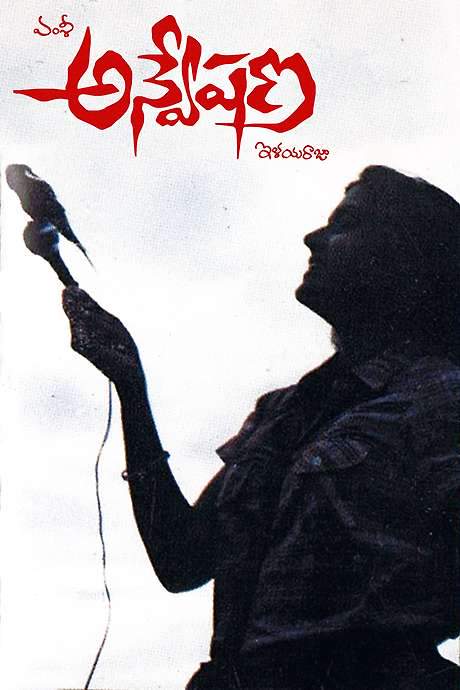
Anasuya (2007) movie poster

Plot Summary

Anasuya (2007) Plot Summary Explained

Release, runtime and language
2007 · 150 mins · Telugu
Loading streaming availability…
Starring
Bhumika Chawla, Chalapathi Rao, Sudeepa Pinky, Sandhya Janak, Ravi Babu, Sameer Hasan

A spine-chilling suspense thriller about a cat and mouse game between a budding journalist and motivated serial killer.

On this page (6)
  1. 1 Where to watch
  2. 2 What happens: full plot
  3. 3 Plot questions answered
  4. 4 Movie threads
  5. 5 Movies like Anasuya
  6. 6 Every angle
Loading streaming availability…

Full plot summary · contains spoilers

What Happens in Anasuya: Full Plot Summary

The whole story of Anasuya (2007) explained, from the opening scene to the final frame: every key event, every twist and what it all adds up to. Read it as a quick recap before the sequel, to check a scene you missed, or to finally understand what really happened.

Anasuya, Bhumika Chawla is an orphan with a postgraduate degree in criminal psychology who starts her career at NTV as a tenacious reporter. She shares a modest life with her elderly landlord, Joseph, Shankar Melkote, and dives into a high-stakes assignment: exposing child labour within a local politician’s household. Disguised as a journalist for a women’s magazine, she uncovers the brutal reality of an orphan girl named Lakshmi, who is condemned to domestic servitude. When the exposé draws widespread attention, the politician retaliates by throwing Lakshmi out to dodge legal trouble. Anasuya offers Lakshmi a safe place to stay, a move that elevates her reputation with her boss while stirring friction with some senior colleagues who question her methods and motives.

Simultaneously, a string of grisly murders unsettles the city and perplexes the police. The killer, who removes organs from his victims and leaves a single red rose at each crime scene, becomes the catalyst for Anasuya’s deepest professional turn. She is assigned to collaborate with task force officer Anand, Abbas, and she finds herself drawn into the case beyond reporting. The killer’s reach seems personal when he targets Joseph, killing him and stealing his heart, then turns his sights on Anasuya herself. She barely escapes with Lakshmi, deepening her resolve to uncover the truth behind these horrific acts.

Her investigation eventually points toward Govind, a hospital compounder who has polio, Ravi Babu. He is arrested on suspicion but is released because of his disability, a twist that only deepens Anasuya’s suspicions. Govind—now revealed to be posing as a disabled man—remains at large, and the trail of bodies continues as he resumes his murders, focusing on organ transplant recipients at the National Hospital. Anasuya connects the killings to Pooja, a brain-dead donor whose organs sparked a chain of tragedies. As she digs into Pooja’s past, she uncovers the disturbing history of the anatomy professor who tormented her, Dr. Amar, [Ravi Babu], whose obsession with Pooja grows dangerous. When Pooja refuses his advances and rejects marriage, Amar’s fixation intensifies, leading to a chilling chain of events. Pooja dies, her organs donated, and Amar—who later becomes Govind—preserves her body with a disturbing zeal. He starts murdering organ recipients to “reunite” Pooja’s organs with her body, convinced that she cannot be reborn while the organs remain with others.

In a final, desperate bid to complete his macabre plan, Govind kidnaps Lakshmi with the intent to remove her eye and fuse it with Pooja’s remains. He plans to burn himself with Lakshmi’s corpse on Akshaya Trutiya, convinced that this act will bring them back together in a rebirth. Anasuya, aided by Anand, tracks Govind to his hideout. A fire destroys Pooja’s remains, and in the climactic confrontation, Anasuya fatally wounds Govind, who dies heartbroken and unfulfilled.

In the aftermath, Anasuya clears her name and uses her platform to champion organ donation, while also underscoring the dangers of obsessive, harmful behavior. Her work echoes a message of responsibility and humanity, encouraging society to protect vulnerable people and to consider organ donation as a life-saving act when carried out with ethics and compassion.


Last updated: October 09, 2025 at 15:09

Was this helpful?

Plot questions answered

Anasuya Plot Explained: Your Questions Answered

The questions people ask most about Anasuya (2007): what happens in the confusing scenes, why the characters do what they do, the twists, hidden details and what the ending means. Each answer contains spoilers.

Q1

Why does the killer target organ transplant recipients?

The killer, Govind (who is actually Dr. Amar in disguise), targets organ recipients because he believes Pooja, a brain-dead donor whose organs were transplanted, cannot be reborn while her organs remain in other people's bodies. He murders recipients to 'reunite' Pooja's organs with her preserved body, viewing each killing as a step toward resurrecting her.

  • organ transplant recipients
  • killer motive
  • Pooja
  • organ donation
  • rebirth
Q2

Who is Govind and what is his connection to Dr. Amar?

Govind is the same person as Dr. Amar, an anatomy professor who became obsessed with Pooja after she rejected his advances. After Pooja died and her organs were donated, Dr. Amar faked polio to create a new identity as Govind, a hospital compounder. He preserved Pooja's body and began killing organ recipients to collect her organs, convinced this would bring her back.

Foreshadowing: Earlier scenes show Govind with physical disabilities, but Anasuya notices inconsistencies in his behavior.

  • Govind
  • Dr. Amar
  • identity
  • disguise
  • Ravi Babu
Q3

Why was Joseph killed?

Joseph, Anasuya's elderly landlord, was killed because he had received a heart transplant. The killer targeted him specifically to steal his heart, which belonged to Pooja. This was the first personal attack on Anasuya's inner circle, demonstrating the killer's obsession with reclaiming Pooja's donated organs.

  • Joseph
  • heart transplant
  • organ recipients
  • murder
Q4

Why does Govind kidnap Lakshmi?

Govind kidnaps Lakshmi because he needs an eye to complete Pooja's preserved body. Since Pooja's corneas were never donated (she died from a brain hemorrhage), Govind plans to remove Lakshmi's eye and fuse it with Pooja's remains. He then intends to burn himself with Lakshmi's corpse on Akshaya Trutiya, believing this ritual will cause both Pooja and himself to be reborn together.

  • Lakshmi
  • kidnapping
  • eye transplant
  • Akshaya Trutiya
  • ritual
Q5

What is Akshaya Trutiya and why does Govind choose that day?

Akshaya Trutiya is an auspicious Hindu festival considered ideal for new beginnings and rituals. Govind specifically chooses this day for his final ritual because he believes performing the act of burning himself with Lakshmi's corpse on this sacred day will ensure his rebirth alongside Pooja. The timing reflects his delusional belief that the ritual must align with cosmic forces for success.

  • Akshaya Trutiya
  • rebirth
  • ritual
  • festival
  • Hindu
Q6

How does Anasuya discover the killer's identity?

Anasuya connects the murders to Pooja, the brain-dead donor whose organs were transplanted to multiple recipients. Investigating Pooja's past, she learns she was harassed by anatomy professor Dr. Amar, who became obsessed with her. Through careful analysis of the timeline and medical records, Anasuya deduces that Dr. Amar created the Govind identity to continue his activities while appearing disabled.

Foreshadowing: Anasuya notices Govind's suspicious behavior and physical inconsistencies despite his claimed polio.

  • investigation
  • Dr. Amar
  • Pooja
  • discovery
  • criminal psychology
Q7

Why was Govind released from police custody initially?

Govind was released because he was arrested with the suspicion of being the serial killer, but the police could not hold him due to his claimed polio disability. The authorities assumed a person with such a severe physical disability could not commit these violent crimes. However, this was part of Govind's plan, his polio was entirely faked, allowing him to escape custody and continue his killings.

  • police custody
  • disability
  • arrest
  • release
  • polio
Q8

Why does the killer leave a red rose at each crime scene?

The red rose is the killer's signature symbol, representing his twisted devotion to Pooja. Roses traditionally symbolize love and beauty, which Govind associates with Pooja. Each murder is framed as a 'sacrifice' in his quest to reunite her organs with her body, making the rose both a calling card and a macabre tribute to his obsessive love.

  • red rose
  • signature
  • evidence
  • ritual
  • symbol
Q9

Why does the killer target Anasuya?

The killer targets Anasuya because she is actively investigating the murders and getting close to discovering his identity. After killing Joseph (her landlord) and learning about Anasuya's connection to the case, he views her as a threat. Additionally, Anasuya is sheltering Lakshmi, whom Govind later targets for the final ritual to complete Pooja's body.

  • Anasuya
  • threat
  • investigation
  • target
  • danger
Q10

What motivated Dr. Amar's obsession with Pooja?

Dr. Amar's obsession began when he was Pooja's anatomy professor. He became fixated on her and made advances, but Pooja rejected him and refused his marriage proposal. Her rejection intensified his obsession to a pathological level. When Pooja died from brain death, Amar preserved her body and developed his twisted belief that her organs must be reclaimed for her rebirth.

  • Dr. Amar
  • Pooja
  • obsession
  • rejection
  • professor
Q11

How does Anasuya escape the killer's attack?

When the killer targets Anasuya at her home, she manages to escape with Lakshmi just in time. This narrow escape strengthens her determination to investigate the case personally rather than just report on it. She then actively collaborates with police officer Anand, using her background in criminal psychology to help track down the killer.

  • escape
  • attack
  • Lakshmi
  • Anand
  • survival
Q12

Why is the child labour exposé significant to the story?

The child labour exposé serves as Anasuya's introduction as a tenacious journalist and establishes her character as someone who risks her career to protect vulnerable people. By sheltering Lakshmi, she creates a connection that becomes central to the climax when Govind kidnaps Lakshmi for his ritual. The subplot also adds depth to the film by addressing real social issues alongside the thriller narrative.

  • child labour
  • Lakshmi
  • politician
  • expose
  • journalism

Movie threads

More Movies Like Anasuya, by Mood & Story

Curated lists built around what makes Anasuya tick: the same mood, the same kind of story or the same emotional payoff. Each list explains why these movies belong together.

Cat-and-mouse chase thrillers like Anasuya

High-stakes battles of wits between determined protagonists and cunning antagonists. If you enjoyed the high-stakes pursuit in Anasuya, these movies feature similar gripping cat-and-mouse dynamics. Find more thrilling stories about journalists, detectives, or ordinary people racing against time to outsmart a dangerous foe, filled with suspense and urgency.

  • suspenseful
  • urgent
  • thrilling
  • anxious
  • gritty
  • cerebral
  • Tone: tense, urgent
  • Pacing: steady, methodical
Why these movies?

The story pattern: The narrative typically follows a linear but escalating structure, beginning with a crime or threat that sets the chase in motion. The protagonist's investigation narrows the gap, leading to a series of confrontations that raise the stakes, culminating in a final, decisive clash where the antagonist is ultimately unmasked or defeated.

Why they belong together: Movies are grouped here for their shared core dynamic: a tense, high-intensity pursuit driven by a clear conflict between two opposing forces. They deliver a consistent feeling of urgency, intellectual challenge, and the satisfaction of a well-earned resolution.

Thrillers about moral justice like Anasuya

Grim stories where light perseveres against overwhelming darkness. For viewers who liked how Anasuya tackles dark crimes but ends on a hopeful note of justice. These similar movies balance gritty, heavy subject matter with a rewarding conclusion where good triumphs, providing a satisfying and emotionally impactful experience.

  • dark
  • gritty
  • heavy
  • cathartic
  • hopeful
  • justice
  • Tone: dark, tense, ultimately hopeful
  • Pacing: steady, building
Why these movies?

The story pattern: The journey navigates through a world mired in crime, corruption, or psychological darkness, putting the characters through severe ethical and emotional trials. The narrative arc is defined by a struggle against overwhelming evil, culminating in a climax that restores moral balance, often through sacrifice or immense effort, leaving the audience with a sense of hard-won hope.

Why they belong together: These films are united by their specific emotional blend: they unflinchingly present a dark and heavy reality, yet their core narrative promise is the eventual triumph of justice. This creates a powerful, satisfying experience for viewers who seek intense stories without a completely bleak outcome.

If you liked this

Movies Like Anasuya

Similar movies to Anasuya: the same genre, themes or kind of story. Each one comes with its own plot summary, timeline and ending explained.

Browse all movie summaries

Every angle

Anasuya (2007) Explained: Plot, Timeline & Characters

Everything about Anasuya in one place: what happens in the plot summary, the timeline in chronological order, the characters and meaning and a spoiler-free summary. What's After the Movie adds the cast, box office and post-credit scenes.

Coming soon on iOS and Android

The Plot Explained Movie Summary App

Plot summaries, endings explained and timelines on your phone. Catch up on any movie in minutes, save your favorites and never miss a twist again.

Be the first to know when we launch. Your email stays private, always.

Learn more about the app