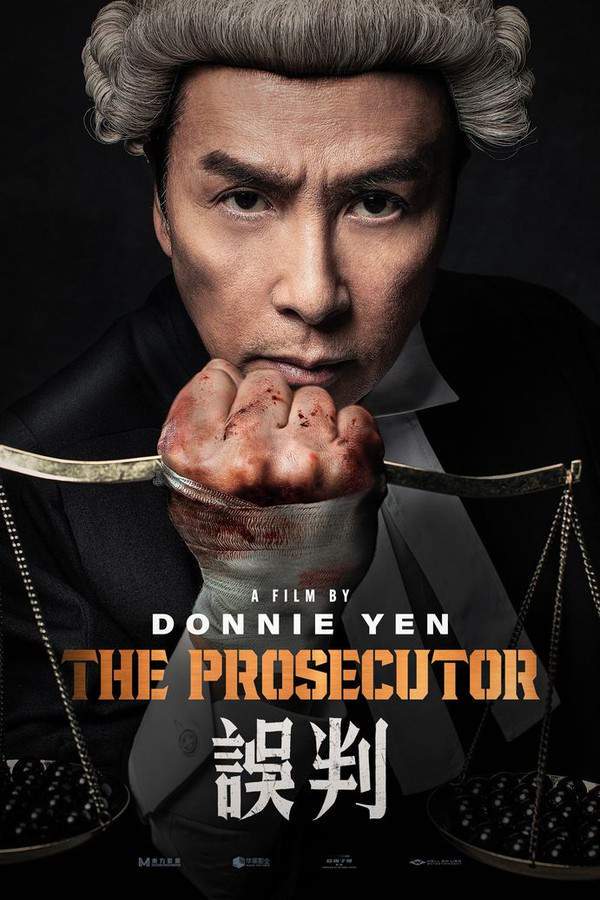
Since taking a temporary position at the city prosecutor's office, Han Ming has been plagued with one headache after another. In both work and private life, he frequently talks to and travels with his colleague, Lu Lingling, a former college girlfriend, a closeness that leaves cases dragging on unresolved. His wife, Li Maojuan, perceives this as infidelity, adding strain to their relationship and pushing the family into delicate territory.
Zhang Guisheng, a former bus driver and an old acquaintance of Han Ming, was fired years earlier for defending a woman against hooligans who harassed her on the bus. He plans to travel to Beijing to appeal the case, urged by his teenage daughter, but on the way to the train station he is struck by a high-speed truck and dies, a sudden tragedy that shadows Han Ming's ongoing investigations.
Han Ming is also pursuing a difficult rape case brought by a deaf woman, Hao Xiuping. Her husband had killed the rapist and was jailed, while the rapist's accomplices harass Hao Xiuping and pressure her to sign a document dropping the charges. In a moment of desperation and fear for her husband and child, she jumps from the top floor of a construction site, underscoring the peril that ordinary people face when the system feels slow or cold.
Meanwhile, his son, Han Yuchen, witnesses the principal's son beating a classmate and intervenes. He fights back, breaks the other boy's nose, and the principal responds by suing Han Ming's family, forcing them into a tense legal confrontation. Yuchen refuses to apologize or fully explain what happened, and this refusal sparks a counterattack as the principal's son's friends stalk and assault him.
The conflict expands beyond the courtroom as Li Maojuan's actions against the principal escalate the strains between personal anger and legal process, bringing the family’s troubles into sharper focus and testing the boundaries of justice within their community. Throughout these intertwined struggles, Han Ming wrestles with how to balance duty to the law with loyalty to his loved ones, all while maintaining a sense of fairness in a beloved city where every case carries real consequences.
As the narrative culminates, Han Ming decides to risk everything to pursue justice on his own terms. In the courtroom, he calls for charges in all the cases to be dropped, framing them as legitimate self-defense under Article 20 of Chinese criminal law. The moment resonates with the audience, and the proceedings culminate in a surprising resolution: the defendants are freed, underscoring a nuanced meditation on defense, responsibility, and the meaning of true fairness.