Plot Explained Spoilers guaranteed!
Plot Explained

Browse by genre

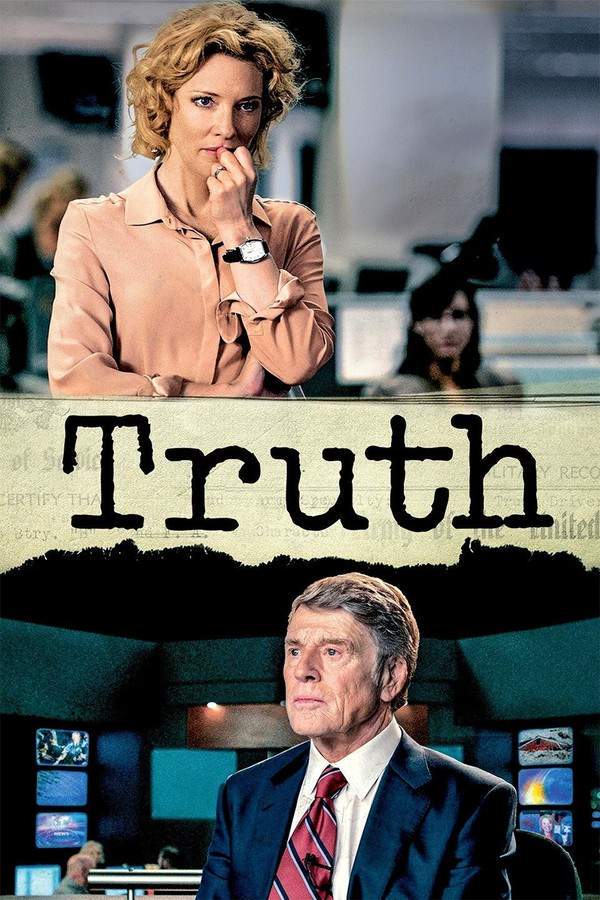
Truth (2015) movie poster

Plot Summary

Truth (2015) Plot Summary Explained

Release, runtime and language
2015 · 125 min · English
JustWatch #9,980 14
Directed by
James Vanderbilt
Starring
Cate Blanchett, Topher Grace, Robert Redford, Dennis Quaid, Bruce Greenwood, Elisabeth Moss

Cate Blanchett stars as Mary Mapes, a determined journalist whose investigation into a sitting president's military record ignites a fierce public debate. As the story unfolds, the repercussions extend far beyond a single news organization, challenging the integrity of American politics and forcing those involved to confront the high cost of uncovering the truth.

On this page (6)
  1. 1 Where to watch
  2. 2 What happens: full plot
  3. 3 Plot questions answered
  4. 4 Movie threads
  5. 5 Movies like Truth
  6. 6 Every angle

Where to watch

Where to Watch Truth (2015)

Where can you watch Truth? Stream, rent or buy it in the US, including on Fawesome, Tubi TV and Amazon Video: current JustWatch availability with up-to-date prices.

Streaming availability powered by JustWatch

Full plot summary · contains spoilers

What Happens in Truth: Full Plot Summary

The whole story of Truth (2015) explained, from the opening scene to the final frame: every key event, every twist and what it all adds up to. Read it as a quick recap before the sequel, to check a scene you missed, or to finally understand what really happened.

Months before the 2004 US presidential election, Mary Mapes, a producer for 60 Minutes Wednesday, teams up with a small crew—Mike Smith, Lucy Scott, and Colonel Colonel Roger Charles—in a meticulous pursuit to verify whether George W. Bush received any preferential treatment during his military service. Charles, who believes the military “is good at what they do,” contends there were no mistakes or errors, even as rumors persist that Bush’s records were lost or altered and that he struggled with minimal physical aptitude testing. With a stubborn commitment to proof, Mapes and her team chase down leads, including Bill Burkett, who claims to possess memos and letters detailing Bush’s favorable treatment and a 1972 AWOL period. They also interview former Texan Lieutenant Governor Ben Barnes, who admits he used political influence to help Bush join the National Guard. Mapes builds a story that Dan Rather reports on 60 Minutes, presenting the investigation to a wide audience.

Once the segment airs, the airwaves grow tense with questions about accuracy. The authenticity of the documents at the center of the report is challenged, and a broader controversy is fueled by radio hosts, bloggers, and resurfacing coverage from major outlets, including The Washington Post and CBS itself. Some of the memos’ characteristics—such as their font and letter spacing—suggest they were created on a computer using Microsoft Word, casting doubt on whether they could have been typed on a typewriter in the early 1970s. Burkett later acknowledges that he lied about where he obtained them.

The film then shifts to the implications for those involved. Jerry Killian was George W. Bush’s commanding officer in 1972, and by the time CBS aired the report, Killian was deceased. Robert Hodges, Killian’s supervisory officer, recants an earlier statement asserting the Killian documents were authentic, yet he refuses to dwell on whether there might be truth behind the papers. Dan Rather is forced to apologize for presenting the material as fact, and Mapes, along with her team and Rather, faces an internal review that probes potential political bias rather than the substance of the allegations.

As the internal proceedings unfold, Mapes’s colleagues—[Mike Smith], [Lucy Scott], and [Colonel Roger Charles]—are disciplined, with Smith venting in the office before being escorted out, and the trio ultimately barred from their roles. Rather decides to retire from broadcasting after the hearings. The film closes with a somber note on outcomes: Mapes is fired following the review, and several CBS executives are asked to resign. Yet the closing credits also remind viewers that CBS won a Peabody Award for Mapes’s earlier documentary exposing atrocities at Abu Ghraib, signaling a complex reckoning within the network’s journalistic legacy.
Last updated: October 09, 2025 at 16:23

Was this helpful?

Plot questions answered

Truth Plot Explained: Your Questions Answered

The questions people ask most about Truth (2015): what happens in the confusing scenes, why the characters do what they do, the twists, hidden details and what the ending means. Each answer contains spoilers.

Q1

Why were the Killian documents questioned for authenticity?

The Killian documents were questioned because forensic analysis revealed they were formatted using Microsoft Word, a program that did not exist in the 1970s when the memos were allegedly created. The font and letter spacing indicated they were typed on a computer rather than a typewriter, raising immediate doubts about whether they could be authentic records from George W. Bush's commanding officer Jerry Killian.

  • killian documents
  • forensic analysis
  • font analysis
  • microsoft word
  • document verification
Q2

Why did Bill Burkett lie about where he got the documents?

Bill Burkett admitted that he lied about the source of the documents he provided to the 60 Minutes team. He claimed to have obtained them from a specific person, but later acknowledged this was false. This lie severely undermined the credibility of the entire investigation, as Burkett was the primary source for the most damaging allegations against Bush.

  • bill burkett
  • documents source
  • lie
  • credibility
Q3

What happened to Mary Mapes after the 60 Minutes broadcast?

Mary Mapes was fired from CBS News following the internal review panel's investigation into the broadcast. The review focused heavily on alleged political bias rather than examining whether the core allegations about Bush's military service were true. Despite her previous successful career, including producing the award-winning Abu Ghraib documentary, Mapes lost her position as a result of the controversy.

  • mary mapes
  • fired
  • cbs news
  • career consequences
Q4

Why did Dan Rather apologize and retire after the broadcast?

Dan Rather was forced to apologize on air for presenting the Killian documents as factual without sufficient verification. After the documents were proven questionable and the controversy erupted, Rather faced intense public scrutiny and criticism. The scandal contributed to his decision to retire from broadcasting, ending his decades-long career with CBS.

  • dan rather
  • apology
  • retirement
  • cbs
  • 60 minutes
Q5

Why did the internal review focus on political bias instead of the truth of the allegations?

The CBS internal review panel chose to focus on whether the production team had political bias rather than investigating whether the core allegations about Bush's military record were accurate. This frustrated many involved, as the substance of the claims about preferential treatment and the AWOL period was never thoroughly examined, instead, the debate centered on document authenticity and editorial process.

  • internal review
  • political bias
  • cbs investigation
  • allegations
Q6

What did the memos' font reveal about their origins?

Analysis of the memos showed they used a typeface and formatting consistent with Microsoft Word, which was not available until the 1980s. This technical detail became the central piece of evidence suggesting the documents were fabricated or heavily altered, as they could not have been created on a 1970s typewriter as claimed.

  • memos
  • font
  • microsoft word
  • forensics
  • typewriter
  • 1970s
Q7

What happened to Mike Smith, Lucy Scott, and Colonel Roger Charles after the broadcast?

Mike Smith, Lucy Scott, and Colonel Roger Charles were all disciplined and ultimately fired from CBS News following the internal review. Smith was visibly upset, venting in the office before being escorted out. The three were banned from their roles at CBS, ending their careers at the network as a result of their involvement in the disputed story.

  • mike smith
  • lucy scott
  • roger charles
  • fired
  • cbs news
Q8

Why did Robert Hodges recant his statement about the Killian documents?

Robert Hodges, who was Jerry Killian's supervisory officer, initially stated that the Killian documents appeared to be authentic. However, he later recanted this statement during the investigation. While he refused to elaborate on whether there was truth in the documents, his recantation further weakened the case for authenticity and added to the uncertainty surrounding the evidence.

  • robert hodges
  • recant
  • statement
  • killian documents
Q9

What was the significance of the Abu Ghraib documentary mentioned at the end?

The film notes that CBS won a Peabody Award for Mary Mapes's earlier documentary exposing atrocities at Abu Ghraib prison in Iraq. This serves as a bittersweet contrast to the later scandal, it demonstrates that Mapes had previously produced impactful, award-winning journalism, highlighting both her proven capabilities and the tragic fall from grace that followed the disputed Bush story.

  • abu ghraib
  • peabody award
  • documentary
  • cbs
  • mapes
Q10

What did Ben Barnes reveal about helping George W. Bush join the National Guard?

Former Texas Lieutenant Governor Ben Barnes admitted to using political influence to help George W. Bush gain entry into the Texas National Guard. This admission provided some corroboration for the investigation's central claim that Bush received preferential treatment, though the story ultimately collapsed due to the questionable authenticity of the documentary evidence.

  • ben barnes
  • national guard
  • influence
  • texas
  • political favor

Movie threads

More Movies Like Truth, by Mood & Story

Curated lists built around what makes Truth tick: the same mood, the same kind of story or the same emotional payoff. Each list explains why these movies belong together.

Investigative Journalism Movies like Truth

Stories where journalists risk everything to uncover a game-changing truth. For viewers who liked the high-stakes tension of 'Truth', this collection features other movies about journalists uncovering scandals. If you enjoy stories about the painstaking process of investigative reporting, media ethics, and the personal cost of pursuing the truth, you'll find similar films here.

  • investigative
  • tense
  • urgent
  • suspenseful
  • sobering
  • methodical
  • Tone: tense, urgent, sobering
  • Pacing: steady, methodical
Why these movies?

The story pattern: The narrative typically follows a linear, procedural path: a promising lead, the methodical gathering of evidence, the breakthrough of publication, and the subsequent, often devastating, fallout. Character journeys revolve around professional integrity being tested under extreme public and institutional scrutiny.

Why they belong together: These films are grouped by their shared focus on the journalistic process, a tense and urgent tone, and narratives where the quest for truth has heavy personal and professional consequences. They deliver a sobering, suspenseful experience rooted in real-world power dynamics.

Movies about Professional Downfall like in Truth

Compelling stories of brilliant professionals facing devastating public ruin. If the personal cost and bittersweet ending of 'Truth' resonated with you, this list features similar films about high-achievers facing catastrophic career collapse. These stories explore themes of public shaming, institutional betrayal, and the heavy price of standing by one's work.

  • sobering
  • frustrating
  • anxious
  • tense
  • methodical
  • career downfall
  • Tone: sobering, frustrating, bittersweet
  • Pacing: steady, character-driven
Why these movies?

The story pattern: These narratives often begin with a character enjoying professional success, which is then shattered by a crisis that exposes them to intense scrutiny. The story arc follows their struggle to defend their actions and reputation, culminating in a loss that is not entirely devoid of dignity or a complex sense of moral victory.

Why they belong together: Movies in this thread share a heavy emotional weight, a focus on the destruction of a professional life, and a bittersweet or sobering conclusion. The experience is defined by frustration, anxiety, and a profound contemplation of the cost of integrity in a results-driven world.

If you liked this

Movies Like Truth

Similar movies to Truth: the same genre, themes or kind of story. Each one comes with its own plot summary, timeline and ending explained.

Browse all movie summaries

Every angle

Truth (2015) Explained: Plot, Timeline & Characters

Everything about Truth in one place: what happens in the plot summary, the timeline in chronological order, the characters and meaning and a spoiler-free summary. What's After the Movie adds the cast, box office and post-credit scenes.

Coming soon on iOS and Android

The Plot Explained Movie Summary App

Plot summaries, endings explained and timelines on your phone. Catch up on any movie in minutes, save your favorites and never miss a twist again.

Be the first to know when we launch. Your email stays private, always.

Learn more about the app