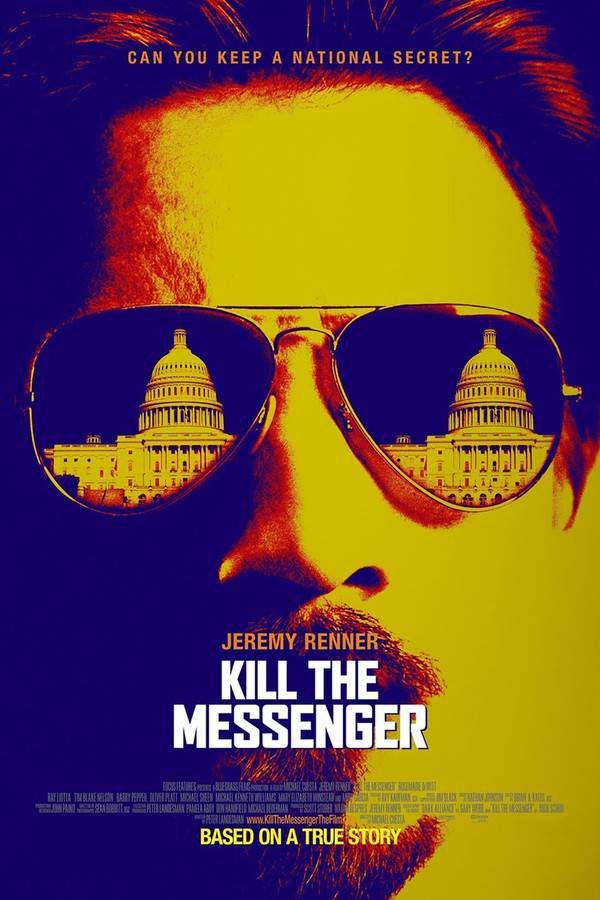
Kill the Messenger

Kill the Messenger

Year: 2014

Runtime: 112 min

Language: English

Director: Michael Cuesta

BiographyDramaMysteryThrillerCrime

Investigative journalist Gary Webb’s relentless pursuit of a story leads him to uncover a disturbing connection between CIA-backed drug cartels and the crack epidemic’s impact on American communities. Facing intimidation and warnings as he digs deeper, Webb confronts a complex network of deceit and powerful forces determined to silence him. His determination to expose the truth places him in grave danger, forcing him to navigate a treacherous path fraught with risk.

Warning: spoilers below!

Haven’t seen Kill the Messenger yet? This summary contains major spoilers. Bookmark the page, watch the movie, and come back for the full breakdown. If you're ready, scroll on and relive the story!

Kill the Messenger (2014) – Full Plot Summary & Ending Explained

Read the complete plot breakdown of Kill the Messenger (2014), including all key story events, major twists, and the ending explained in detail. Discover what really happened—and what it all means.

In the mid-1990s, a San Jose Mercury News investigation kicks off when Gary Webb, a dedicated reporter, sits down with Ronny Quail, a drug dealer furious that civil asset forfeiture allowed the government to keep his house even after an acquittal. Webb’s probing about forfeiture abuses grows into a broader inquiry as a woman named Coral repeatedly reaches out, claiming to have documents that prove the government backed cocaine trafficking in the United States. Coral hands Webb a transcript of grand jury testimony—normally sealed—accidentally released to her boyfriend during discovery, a critical clue that starts to illuminate a much larger, unsettling pattern. When Webb reveals the existence of the transcript to a prosecutor, charges against Coral’s boyfriend are dropped, seemingly to protect the main witness: Oscar Danilo Blandón.

Webb’s research pushes him deeper into the case, linking Blandón to the infamous “Freeway” Ricky Ross and revealing that Blandón is a paid informant. Ross’s attorney relentlessly presses Blandón to testify under oath about the CIA’s role in Contra cocaine trafficking, suggesting that the agency used drug profits to fund the Contras. This revelation unsettles Webb and points to a government-sponsored ecosystem where illicit drug trafficking could be leveraged for political ends. Webb’s pursuit takes him from U.S. streets to the streets of Managua, where he interviews Blandón’s partner, Norwin Meneses, who corroborates the chain of complicity, including the involvement of Oliver North in the so‑called drugs-for-guns scheme.

Back in Washington, Webb encounters Fred Weil, a National Security Council figure tied to the Kerry Committee report, who warns that delving into this story could put him in danger. Webb is summoned by federal agents who caution him against publishing what he has uncovered, adding a palpable sense of risk to a tale already shrouded in secrecy. Undeterred, the Mercury News presses ahead, and Webb’s three‑part series titled “Dark Alliance” erupts into a national sensation. The piece roils the media landscape, spurring the Los Angeles Times, the Washington Post, and The New York Times to launch their own investigations that sometimes appear to Webb as overly deferential to the CIA, even as they acknowledge the core claims.

The intense coverage also touches Webb personally, as his reporting is met with professional pushback and a controversial personal life, including an affair he had while at The Plain Dealer. His editors eventually relocate him to Cupertino, relegating him to covering local news while he stubbornly continues to chase leads. A pivotal encounter with John Cullen—an individual Webb believes provides a direct CIA link—fuels his sense that the story has real, dangerous substance. Yet the paper balks at the full implications, even as it contemplates publishing an open letter that would challenge aspects of the “Dark Alliance” reporting. At a Society of Professional Journalists dinner that honors Webb as the Bay Area’s Journalist of the Year, he submits his resignation, signaling a fracturing relationship with his editors and a career‑long commitment to a truth he believes deserves public scrutiny.

An epilogue closes the arc with a stark reminder of Webb’s fate: in 2004, he is found dead in his apartment, shot twice in the head, with the death ruled a suicide. The narrative that Webb pursued—of covert dollars, covert power, and the murky intersections of government and crime—leaves a lasting question about accountability, the courage to report hard truths, and the price paid by journalists who dare to challenge powerful institutions.

Last Updated: October 09, 2025 at 16:20

Mobile App Preview

Coming soon on iOS and Android

The Plot Explained Mobile App

From blockbusters to hidden gems — dive into movie stories anytime, anywhere. Save your favorites, discover plots faster, and never miss a twist again.

Sign up to be the first to know when we launch. Your email stays private — always.

Explore Movie Threads

Discover curated groups of movies connected by mood, themes, and story style. Browse collections built around emotion, atmosphere, and narrative focus to easily find films that match what you feel like watching right now.

Movies about journalistic integrity like Kill the Messenger

One determined reporter battles powerful institutions to expose the truth.If you liked Kill the Messenger, explore other movies about investigative journalists and truth-seekers facing immense pressure. These films capture the tense, high-stakes world of reporting, where exposing corruption comes with grave personal risks and a heavy emotional toll.

urgenttensefrustratingsomberparanoiddeterminedisolating

Narrative Summary

Stories in this thread typically follow a linear investigative arc, where a protagonist uncovers a conspiracy or systemic corruption. The central conflict pits an individual's integrity against the overwhelming power of the institutions they challenge, often leading to a crisis of conscience and profound personal consequences.

Why These Movies?

Movies are grouped here because they share a core narrative of investigative pursuit, a tense and urgent tone driven by high stakes, and a thematic focus on truth, power, and the ethical burdens of exposing wrongdoing. They create a similar feel of mounting pressure and moral weight.

Paranoid conspiracy thriller movies like Kill the Messenger

Stories where uncovering a hidden truth reveals a deeply disturbing reality.Find more movies like Kill the Messenger that delve into tense political conspiracies and cover-ups. These thrillers share a steady pacing, high intensity, and a bleak atmosphere, perfect for viewers who enjoy stories about individuals confronting sinister, hidden networks of power.

paranoidtenseanxioussuspensefuldisturbingunsettlingconspiratorial

Narrative Summary

The narrative pattern involves a protagonist stumbling upon a clue that leads them down a rabbit hole of lies and cover-ups. As they dig deeper, they become increasingly isolated and targeted, leading to a climax that often confirms their worst fears about systemic corruption, typically resulting in a pessimistic or bleak resolution.

Why These Movies?

These films are grouped by their shared mood of paranoia and tension, their focus on unraveling a complex web of deceit, and their consistently high-stakes, intense atmosphere. They deliver a similar experience of suspense and mounting frustration as the protagonist fights against an unseen enemy.

Unlock the Full Story of Kill the Messenger

Don't stop at just watching — explore Kill the Messenger in full detail. From the complete plot summary and scene-by-scene timeline to character breakdowns, thematic analysis, and a deep dive into the ending — every page helps you truly understand what Kill the Messenger is all about. Plus, discover what's next after the movie.

Kill the Messenger Timeline

Track the full timeline of Kill the Messenger with every major event arranged chronologically. Perfect for decoding non-linear storytelling, flashbacks, or parallel narratives with a clear scene-by-scene breakdown.

Kill the Messenger Timeline

Characters, Settings & Themes in Kill the Messenger

Discover the characters, locations, and core themes that shape Kill the Messenger. Get insights into symbolic elements, setting significance, and deeper narrative meaning — ideal for thematic analysis and movie breakdowns.

Characters, Settings & Themes in Kill the Messenger

Kill the Messenger Spoiler-Free Summary

Get a quick, spoiler-free overview of Kill the Messenger that covers the main plot points and key details without revealing any major twists or spoilers. Perfect for those who want to know what to expect before diving in.

Kill the Messenger Spoiler-Free Summary

More About Kill the Messenger

Visit What's After the Movie to explore more about Kill the Messenger: box office results, cast and crew info, production details, post-credit scenes, and external links — all in one place for movie fans and researchers.

More About Kill the Messenger

Similar Movies to Kill the Messenger

Discover movies like Kill the Messenger that share similar genres, themes, and storytelling elements. Whether you’re drawn to the atmosphere, character arcs, or plot structure, these curated recommendations will help you explore more films you’ll love.