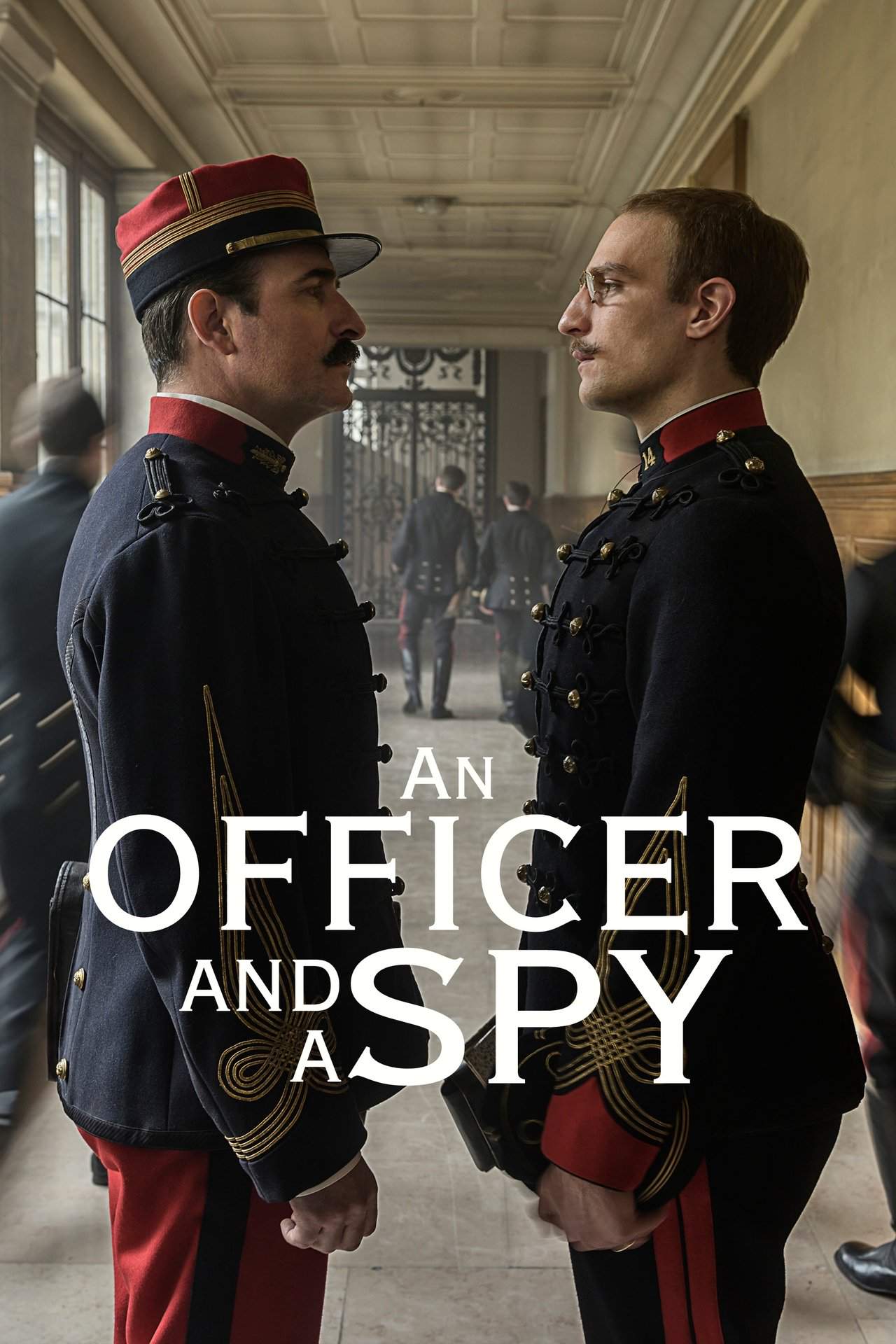
In 1894, French Captain Alfred Dreyfus is wrongfully convicted of treason and sentenced to life imprisonment at the Devil’s Island penal colony.
Warning: spoilers below!
Haven’t seen An Officer and a Spy yet? This summary contains major spoilers. Bookmark the page, watch the movie, and come back for the full breakdown. If you're ready, scroll on and relive the story!
Explore the full timeline and setting of An Officer and a Spy (2019). Follow every major event in chronological order and see how the environment shapes the story, characters, and dramatic tension.
Last updated: October 01, 2025 at 12:21
Meet the key characters of An Officer and a Spy (2019), with detailed profiles, motivations, and roles in the plot. Understand their emotional journeys and what they reveal about the film’s deeper themes.
Last updated: October 01, 2025 at 12:21
Explore the central themes of An Officer and a Spy (2019), from psychological, social, and emotional dimensions to philosophical messages. Understand what the film is really saying beneath the surface.
Last updated: October 01, 2025 at 12:21
Browse frequently asked questions about An Officer and a Spy (2019) focused on characters, relationships, themes, symbols, setting, and story context. This movie info FAQ gives spoiler-aware explanations for character arcs, world details, and thematic interpretation so readers can better understand what the film is really about.
The Dreyfus Affair was a major political scandal in late 19th century France that divided the nation. It began when Alfred Dreyfus, a Jewish army captain, was wrongfully convicted of treason in 1894 and sentenced to life imprisonment on Devil's Island. The affair exposed deep-seated antisemitism within French institutions and sparked years of public debate, legal battles, and eventually reforms in the military justice system.
The story unfolds primarily in three locations: Paris, where the military court and political maneuvering occur; Devil's Island, the remote penal colony in French Guiana where Dreyfus is exiled; and Rennes, where pivotal retrial hearings take place. These settings contrast the centers of French power with the isolation of the penal colony.
The film spans from 1894, when Dreyfus is first convicted, through to around 1907, covering his years of exile, the ongoing investigations, and the eventual pardons and partial rehabilitation. This late 19 to early 20th century period was a time of significant political tension in France.
Alfred Dreyfus is a French army captain and Jewish officer who becomes the victim of a flawed justice system. Wrongfully convicted of treason based on fabricated evidence and antisemitic bias, he is sent to Devil's Island. His case becomes a national scandal that divides France and ultimately leads to discussions about institutional reform and justice.
Georges Picquart is a French military officer who becomes head of the Deuxième Bureau (military intelligence) and later leads the investigation into the Dreyfus case. He discovers that the evidence against Dreyfus was falsified and the real culprit was another officer. Despite facing institutional resistance and personal danger, he pursues the truth at great cost to his career.
Émile Zola is the famous French writer who becomes a key figure in the campaign to expose the miscarriage of justice. His open letter 'J'accuse' directly accuses the military of imprisoning an innocent man and becomes a pivotal moment in the affair, galvanizing public debate and helping shift opinion toward Dreyfus's innocence.
The film explores several interconnected themes: justice and the fight against a corrupt system; investigation and the pursuit of truth against institutional resistance; public debate and the role of media and intellectuals in shaping opinion; and redemption, as the case gradually moves toward partial rehabilitation. The affair illustrates how prejudice can corrupt institutions and how individuals can risk everything for principle.
Devil's Island is a remote penal colony off the coast of French Guiana in South America. In the film, it is depicted as a harsh, isolated outpost where Dreyfus is exiled under brutal conditions. The colony serves as a stark symbol of the extreme punishment inflicted on an innocent man and the government's determination to silence him.
Antisemitism is central to the Dreyfus Affair. Dreyfus is convicted largely because he is Jewish, with anti-Jewish prejudice influencing evidence evaluation and institutional decisions. The film shows how this prejudice permeates military and political establishments, and how the affair ultimately forces France to confront these biases, though the road to full acknowledgment is long and difficult.
The film portrays institutional justice as deeply flawed when biased processes and political convenience override truth. Even after evidence of Dreyfus's innocence emerges, the military establishment resists reopening the case to protect its reputation. The story demonstrates how individual moral courage, exemplified by Picquart, is often necessary to challenge systemic failures in justice.
The media becomes a crucial battleground in the affair. Writers like Zola use their platforms to publish explosive exposes and opinion pieces that challenge the state's narrative. The press helps sway public opinion, forces political accountability, and demonstrates how journalism can either perpetuate injustice or champion reform depending on who controls the message.
The film depicts a bittersweet resolution: Dreyfus is eventually pardoned due to political pressure, but the military never formally admits its error within the timeline shown. Picquart's career advances but at great personal cost. The affair ultimately leads to partial reforms and forces France to reconsider its institutions, though full exoneration comes only years later.
Discover curated groups of movies connected by mood, themes, and story style. Browse collections built around emotion, atmosphere, and narrative focus to easily find films that match what you feel like watching right now.
Courageous individuals risk everything to expose institutional corruption and lies.If you enjoyed the tense, high-stakes investigation in An Officer and a Spy, explore more movies about whistleblowers and crusaders fighting institutional corruption. These films share a focus on evidence, moral courage, and the heavy personal cost of seeking justice against powerful, systemic forces.
These stories typically follow a methodical process of discovery, where a protagonist, often an insider, gradually uncovers a cover-up or miscarriage of justice. The central conflict is between the individual's integrity and the institution's desire to protect itself, leading to escalating tension and personal sacrifice.
They are grouped by their shared focus on a specific, high-stakes conflict: the lone truth-seeker versus an immovable system. The mood is consistently tense and gripping, built on a foundation of procedural detail and the emotional weight of fighting a seemingly unwinnable battle.
Where the weight of history builds a palpable sense of dread and injustice.For viewers who appreciated the slow-burn tension and historical setting of An Officer and a Spy, this collection features dramas and thrillers where a steady pace amplifies a feeling of institutional dread. These movies are gripping through atmosphere and building frustration, not fast-paced action.
Narratives unfold patiently, allowing the audience to feel the constraints and pressures of the historical context. The drama arises from navigating rigid social structures, bureaucratic inertia, or deep-seated bigotry. The climax is often a pyrrhic victory or a bittersweet resolution that reflects the era's limitations.
They share a distinctive combination of a historical setting, a steady narrative pace, and a tone dominated by tension and somber reflection. The experience is defined by a feeling of being trapped within the machinery of a specific time and place, leading to a heavy, often frustrating emotional journey.
Don't stop at just watching - explore An Officer and a Spy in full detail. From the complete plot summary and scene-by-scene timeline to character breakdowns, thematic analysis, and a deep dive into the ending - every page helps you truly understand what An Officer and a Spy is all about. Plus, discover what's next after the movie.
Read a complete plot summary of An Officer and a Spy, including all key story points, character arcs, and turning points. This in-depth recap is ideal for understanding the narrative structure or reviewing what happened in the movie.
Track the full timeline of An Officer and a Spy with every major event arranged chronologically. Perfect for decoding non-linear storytelling, flashbacks, or parallel narratives with a clear scene-by-scene breakdown.
Discover movies like An Officer and a Spy that share similar genres, themes, and storytelling elements. Whether you’re drawn to the atmosphere, character arcs, or plot structure, these curated recommendations will help you explore more films you’ll love.
An Officer and a Spy (2019) Plot Summary & Movie Recap
An Officer and a Spy (2019) Scene-by-Scene Movie Timeline
An Officer and a Spy (2019) Spoiler-Free Summary & Key Flow
Movies Like An Officer and a Spy – Similar Titles You’ll Enjoy
Criminal: France (1000) Plot Summary & Ending Explained
Prisoner of Honor (1991) Plot Summary & Ending Explained
Spy, Stand Up (1982) Detailed Story Recap
A Spy Among Friends (1000) Ending Explained & Film Insights
The Conspirators (1944) Film Overview & Timeline
The French Detective (1975) Ending Explained & Film Insights
Parisian Love (1925) Film Overview & Timeline
Grand Illusion (1937) Movie Recap & Themes
Le petit soldat (1963) Plot Summary & Ending Explained
Diary of a Chambermaid (1964) Movie Recap & Themes
Uncertain Glory (1944) Plot Summary & Ending Explained
Assignment in Brittany (1943) Spoiler-Packed Plot Recap
I Accuse! (1958) Complete Plot Breakdown
Operation Secret (1952) Full Movie Breakdown
The Life of Emile Zola (1937) Story Summary & Characters