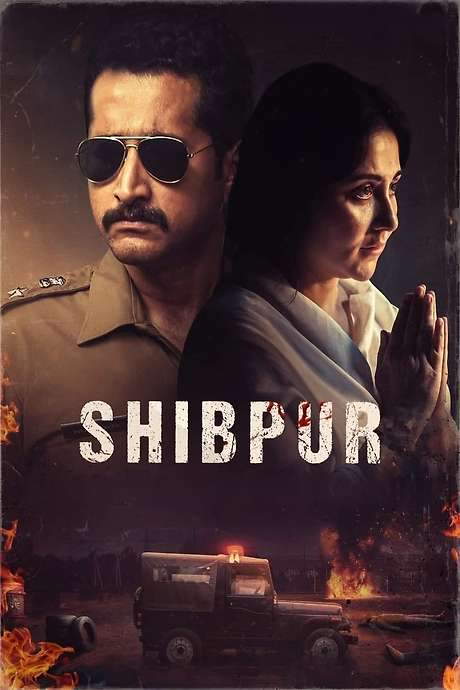
The film is based on the Mukherjee Commission hearings and offers a dramatized portrait of the work surrounding Bose’s mystery, highlighting the efforts of Anuj Dhar, Chandrachur Dhar Anirban Bhattacharya, and the Mission Netaji voluntary organization, as three theories compete to explain the death or disappearance of Netaji Subhash Chandra Bose Prosenjit Chatterjee.
Set against a pivotal moment in Indian history, the narrative follows Bose at the Congress Conference, where a courageous Bose refuses Gandhi’s nonviolent path and resigns from the Indian National Congress. He then travels the world to forge alliances and confront the British Empire, pursuing a course of action that he believes is essential to India’s freedom. The story moves through decades of pursuit, public doubt, and personal cost, painting Bose as a figure who relentlessly challenges the status quo while navigating a complex political landscape.
In 2003, journalist Chandrachur Dhar (Anirban Bhattacharya) takes on a high-stakes assignment to craft a detailed report about the Bose mystery. His quest consumes months of research and evidence gathering, and it begins to strain his marriage to Ronita Dhar Tanushree Chakraborty, who ultimately divorces him. Left emotionally battered yet undeterred, Dhar forms a dedicated group united by a single purpose: to uncover the truth behind Bose’s fate, no matter how contentious the conclusions may be.
At the 2005 Mukherjee Commission hearing, Dhar presents a provocative hypothesis: there was no plane crash in 1945. He argues that Bose may have preplanned a calculated ruse to fake his death and enlisted his most trusted INA soldier, Habibur Satyam Bhattacharya, to stand by him and guard the secret. The film emphasizes the kinds of questions Dhar raises—why a smaller or differently configured aircraft was used, the absence of a definitive crash record, and the lack of conclusive evidence about the fate of Japanese soldiers connected to the event.
The narrative also explores the personal and familial threads surrounding Bose’s disappearance. The judge presses for a trace of where Bose went, and Dhar reveals that Bose lived for years as an ascetic in Uttar Pradesh, visible to only a few through a veil or curtain. A handful of people who visited him heard his voice and recognized him, while close colleagues and family members reportedly knew he was alive, though he appeared as “Gumnaami Baba.” The story traces Bose’s later life and his death in 1985, noting that his funeral was attended by only 13 disciples, a detail that deepens the mystery surrounding his post-1945 whereabouts.
Despite the commission’s conclusion that there was no plane crash and Bose did not die in 1945, the government’s decision in 2006 to reject the verdict keeps the controversy alive. The film follows Dhar’s overwhelming sense of frustration as he burns his three years of work, yet the narrative also highlights a counterpoint of resolve: his former wife’s urging to continue the fight and the idea that Bose’s legacy demands persistent pursuit of justice and truth.
In a powerful closing flashback, Bose is shown singing Shubh Sukh Chain—the emblematic anthem associated with the Provisional Government of Free India and the Indian National Army—an image that crystallizes the enduring legend and emotional resonance of Bose, even as the mystery persists.

![Investigation of a Citizen Above Suspicion [re-release] movie poster](https://whats-after-the-movie-ti152.sevalla.storage/movies/investigation-of-a-citizen-above-suspicion.jpg)