Plot Explained Spoilers guaranteed!
Plot Explained

Browse by genre

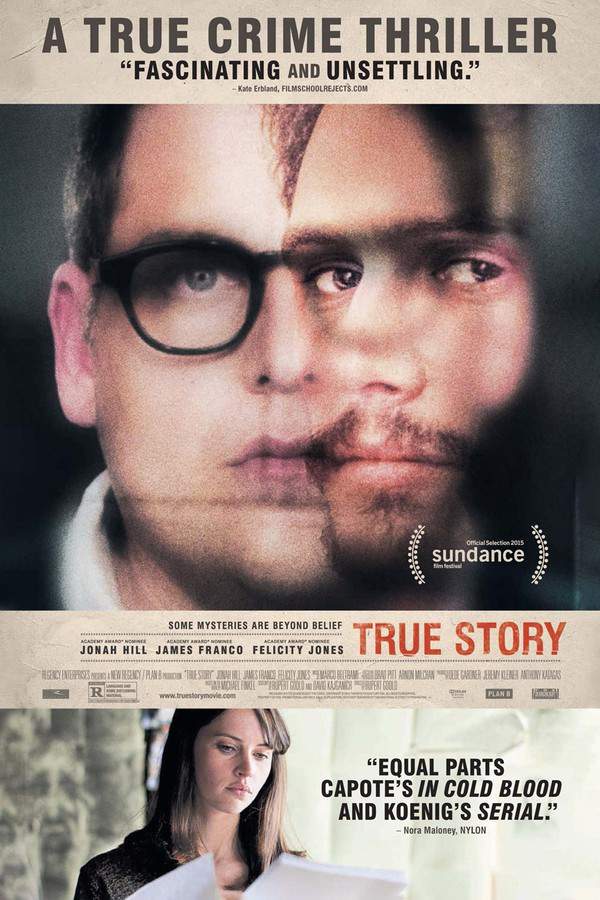
True Story (2015) movie poster

Plot Summary

True Story (2015) Plot Summary Explained

Release, runtime and language
2015 · 99 min · English
Directed by
Rupert Goold
Starring
James Franco, Jonah Hill, Felicity Jones

A disgraced journalist's search for a career comeback takes a dark turn when he meets a man in jail who claims to be his doppelganger. The accused killer assumes the reporter's identity, sparking a dangerous game of cat and mouse. As the journalist investigates the man's alleged crimes, he becomes increasingly entangled in a web of deception and questions the nature of truth and his own moral compass.

On this page (6)
  1. 1 Where to watch
  2. 2 What happens: full plot
  3. 3 Plot questions answered
  4. 4 Movie threads
  5. 5 Movies like True Story
  6. 6 Every angle

Where to watch

Where to Watch True Story (2015)

Where can you watch True Story? Stream, rent or buy it in the US, including on Amazon Video, Apple TV Store and Fandango At Home: current JustWatch availability with up-to-date prices.

Streaming availability powered by JustWatch

Full plot summary · contains spoilers

What Happens in True Story: Full Plot Summary

The whole story of True Story (2015) explained, from the opening scene to the final frame: every key event, every twist and what it all adds up to. Read it as a quick recap before the sequel, to check a scene you missed, or to finally understand what really happened.

Christian Longo, portrayed by James Franco, is an Oregon man who finds himself in a horrifying situation after the brutal murders of his wife and three children. The police arrest him in Mexico, where he has been misleading people by pretending to be a reporter for the New York Times named Michael Finkel.

Meanwhile, in New York City, we meet Michael Finkel, played by Jonah Hill, an ambitious journalist whose life takes a drastic turn when his editors accuse him of fabricating a story published on the cover of the New York Times Magazine. Unable to defend his actions, Finkel loses his job and struggles to find new opportunities in journalism, especially with the stain of his public firing looming over him.

Finkel's luck seems to change when a reporter from The Oregonian contacts him regarding Longo's case and his troubling appropriation of Finkel's identity. Intrigued, Finkel decides to reach out and meet Christian Longo in prison. During their first encounter, Longo professes his admiration for Finkel's writing, expressing that he has followed his career closely. In a rather peculiar arrangement, Longo agrees to share his side of the story in exchange for writing lessons and a promise from Finkel that their conversations will remain confidential until after the trial concludes.

As Finkel delves deeper into the case, he becomes captivated by Longo's charismatic yet ambiguous nature regarding his guilt. Finkel dedicates himself to understanding Longo and even corresponds with him extensively, receiving numerous letters as well as an intriguing 80-page notebook titled "Wrong Turns," wherein Longo documents his life’s missteps. The two men start to draw unsettling parallels between their lives, reflected in their handwriting and shared experiences. As the trial date approaches, Finkel begins to entertain the possibility that Longo might not be guilty after all, leading Longo to express his intentions of pleading not guilty.

In a dramatic courtroom scene, Longo indeed pleads not guilty to two murders but, shockingly, accepts guilt for the murder of his wife and one daughter. Finkel confronts Longo about his evasiveness, while Greg Ganley, a detective involved in Longo's case, warns Finkel of Longo's manipulative tendencies, urging him to disclose their correspondence. However, Finkel stands firm in his loyalty to Longo.

As the trial unfolds, Longo gives a detailed account of the tragic events he claims transpired one fateful night. According to him, after a violent argument over finances, he returned home to find two of his children missing and his wife in a deeply distressing state. In a fit of uncontrollable rage, Longo describes how he strangled his wife, believing she had caused harm to their children.

Amidst the tension, Finkel’s wife, Jill, watches in horror as Longo spins his tale. As the jury deliberates, she confronts Longo in jail, condemning him as a narcissistic murderer incapable of breaking free from his heinous identity.

Ultimately, Longo is found guilty on all counts and receives a death sentence. Following his sentencing, he brazenly winks at Finkel, leaving Finkel seething with fury upon realizing he has been played like a pawn in Longo's game, his trust exploited for Longo’s advantage. In their subsequent meeting on death row, Longo spins yet another narrative, claiming memory loss regarding the murders, but Finkel, now filled with determination, vows to expose Longo’s deceit.

In a poignant public appearance promoting his book, "True Story," Finkel is haunted by the presence of Longo in his mind, despite the distance between them. The final moments reveal the chilling truth: a year later, Longo confessed to the crime of murdering his whole family. Although Finkel never regained his position at the New York Times, Longo has continued to write articles from death row, even contributing to some prestigious publications. The film concludes with the eerie note that Finkel and Longo maintain contact, speaking on the first Sunday of every month, a testament to their twisted relationship.

Last updated: November 03, 2024 at 21:55

Was this helpful?

Plot questions answered

True Story Plot Explained: Your Questions Answered

The questions people ask most about True Story (2015): what happens in the confusing scenes, why the characters do what they do, the twists, hidden details and what the ending means. Each answer contains spoilers.

Q1

Why did Christian Longo steal Michael Finkel's identity?

Longo assumed Finkel's identity while fleeing arrest in Mexico, choosing the name of a real journalist to create a credible cover. During their meetings, Longo told Finkel he had been following his writing career and admired his work, suggesting he selected the identity deliberately because he respected Finkel as a journalist and wanted to associate himself with a legitimate media persona.

Foreshadowing: Longo's choice of identity foreshadows his later strategy of manipulating Finkel through intellectual admiration.

  • Christian Longo
  • Michael Finkel
  • identity theft
  • doppelganger
  • false identity
Q2

Why did Michael Finkel believe Christian Longo's story?

Finkel was desperate to revive his career after being fired for fabricating a story. Longo presented him with an opportunity to write a compelling narrative and regain journalistic credibility. Additionally, Longo's charisma, his claimed innocence on some charges, and the intellectual connection they developed through writing lessons made Finkel want to believe his story.

Foreshadowing: Finkel's career desperation established early in the film explains why he ignored multiple warning signs throughout the relationship.
  • Michael Finkel
  • Christian Longo
  • belief
  • manipulation
  • journalism career
Q3

Why did Longo plead not guilty to some murders but guilty to others?

Longo's mixed plea was a calculated legal strategy designed to create doubt in the jury's mind. By pleading not guilty to two charges while admitting guilt for the murder of his wife and one daughter, he attempted to appear partially honest while avoiding full accountability for the massacre of his entire family.

Foreshadowing: The inconsistent plea reflects Longo's pattern of manipulative behavior throughout the trial.

  • Christian Longo
  • plea
  • not guilty
  • guilty
  • murder charges
  • trial
Q4

What was the significance of Longo winking at Finkel after sentencing?

The wink revealed that Longo had been manipulating Finkel throughout the entire process. It signaled that Longo's claimed innocence, his emotional testimony about memory loss, and his supposed trust in Finkel were all performances. The wink confirmed to Finkel that he had been used as a pawn in Longo's game, exploited for attention and to shape the narrative around the murders.

Foreshadowing: The wink was the culmination of the detective's earlier warning about Longo's manipulative nature.

  • Christian Longo
  • wink
  • death sentence
  • betrayal
  • manipulation
Q5

How did Christian Longo manipulate Michael Finkel?

Longo manipulated Finkel through several methods: he offered exclusive access to his story in exchange for writing lessons, claimed uncertainty about his guilt to keep Finkel invested, shared personal details that created psychological parallels between them, wrote an 80-page notebook called 'Wrong Turns' to appear reflective, and strategically revealed information during the trial to control Finkel's perception. Detective Greg Ganley explicitly warned Finkel about these tactics, but Finkel ignored him.

Foreshadowing: The writing lessons and notebook exchange were early signs of Longo's strategy to control their relationship.
  • Christian Longo
  • Michael Finkel
  • manipulation
  • deception
  • writing lessons
  • Wrong Turns notebook
Q6

What was in Longo's 'Wrong Turns' notebook?

The 80-page notebook titled 'Wrong Turns' was Longo's documented account of life's mistakes he claimed to have made. Finkel received it as part of their correspondence and used it to draw unsettling parallels between their lives, including similarities in their handwriting. The notebook served as another tool for Longo to appear introspective and build emotional connection with Finkel.

Foreshadowing: The notebook's content of personal missteps mirrored Finkel's own career mistake of fabricating a story.

  • Wrong Turns notebook
  • Christian Longo
  • personal mistakes
  • letters
  • correspondence
Q7

Did Michael Finkel ever regain his journalism career?

No, Finkel never regained his position at the New York Times despite writing the book 'True Story' about his experience with Longo. While the book was published and he made public appearances to promote it, the scandal of his original firing remained a permanent stain on his career. The film ends with him continuing to work in journalism but not at the prestigious level he once achieved.

Foreshadowing: Finkel's career downfall established in the opening act prevented any full professional recovery.

  • Michael Finkel
  • career
  • New York Times
  • journalism
  • True Story book
Q8

Why did Finkel and Longo continue to speak after the trial?

Despite the betrayal and manipulation, Finkel and Longo maintained contact, speaking on the first Sunday of every month. This twisted relationship reflects the psychological hold Longo had on Finkel. Additionally, Finkel may have continued the conversations to gather material for his book or to maintain some form of control over the narrative. The ongoing contact represents the disturbing emotional complexity of their connection.

Foreshadowing: The continued contact reflects the unbalanced power dynamic established during their early prison meetings.

  • contact
  • relationship
  • death row
  • phone calls
  • monthly conversations
Q9

What did Longo confess to a year after the trial?

A year after being found guilty and sentenced to death, Longo confessed to murdering his entire family, including all three children. This confession confirmed what the prosecution had argued all along, that Longo had killed all four family members, not just his wife and one daughter as he had claimed during his inconsistent plea.

Foreshadowing: Longo's confession validated the detective's warnings about his manipulative tendency to control the truth.

  • Christian Longo
  • confession
  • murders
  • family
  • death row
  • year later
Q10

Why did Finkel's wife Jill confront Longo in prison?

Jill confronted Longo after witnessing his courtroom testimony because she was horrified by his manipulations and their effect on her husband. During the confrontation, she labeled him a narcissistic murderer incapable of breaking free from his self-centered identity. Her confrontation reflected the emotional toll the case had taken on Finkel's family and represented her attempt to protect Finkel from further manipulation.

Foreshadowing: Jill's earlier unease about Finkel's relationship with Longo built toward this direct confrontation.

  • Jill
  • Finkel's wife
  • confrontation
  • prison
  • Christian Longo
  • narcissistic
Q11

What did the detective warn Finkel about Longo?

Detective Greg Ganley warned Finkel that Longo was manipulative and urged him to disclose their correspondence. Ganley recognized Longo's pattern of using people and warned Finkel that he was being played. Finkel chose to ignore this warning, maintaining his loyalty to Longo and keeping their letters confidential until after the trial, which ultimately allowed Longo to continue controlling the narrative.

Foreshadowing: The detective's warning proved accurate when Longo winked at Finkel after sentencing.

  • Detective Greg Ganley
  • warning
  • manipulation
  • Finkel
  • correspondence

Movie threads

More Movies Like True Story, by Mood & Story

Curated lists built around what makes True Story tick: the same mood, the same kind of story or the same emotional payoff. Each list explains why these movies belong together.

Movies about deceptive identities like True Story

Stories where a character's identity is stolen or mirrored by a dangerous counterpart. Explore movies like True Story where protagonists face manipulative individuals who steal or mirror their identity. These similar thrillers and dramas focus on the psychological unraveling and moral dilemmas that arise when someone's very sense of self is under attack.

  • unsettling
  • manipulative
  • paranoid
  • identity crisis
  • tense
  • deceptive
  • Tone: dark, tense, unsettling
  • Pacing: steady, methodical
Why these movies?

The story pattern: These narratives typically begin with a protagonist encountering someone who claims to be them or who appropriates their life. The story unfolds as a cat-and-mouse game, where the protagonist must prove the deception while their own credibility is systematically dismantled, often leading to a climactic confrontation that reveals the doppelgänger's true motives.

Why they belong together: Movies in this thread share a core focus on identity theft and psychological manipulation. They create a specific kind of paranoia and tension, as the protagonist's reality is questioned and their trust is exploited, resulting in a deeply unsettling and claustrophobic viewing experience.

Dark journalism thrillers similar to True Story

Thrillers where reporters pursuing a story become dangerously consumed by it. If you liked True Story, discover more movies about journalists getting too close to their stories. These similar thrillers and dramas explore the moral gray areas and personal risks reporters face when their pursuit of the truth turns into a fight for their own sanity and safety.

  • tense
  • investigative
  • morally complex
  • gritty
  • unsettling
  • career downfall
  • Tone: dark, morally ambiguous, heavy
  • Pacing: steady, investigative
Why these movies?

The story pattern: The narrative follows a journalist, often flawed or disgraced, who sees a chance at redemption in a seemingly straightforward story. As they dig deeper, they form a complex, often manipulative relationship with their subject—usually a criminal—which leads them to question their own ethics and objectivity, culminating in a crisis that threatens their career and personal safety.

Why they belong together: These films are grouped by their shared protagonist archetype—the investigative journalist—and the specific narrative arc of a story consuming its teller. They blend procedural elements with deep psychological tension, exploring themes of truth, exploitation, and the cost of ambition.

If you liked this

Movies Like True Story

Similar movies to True Story: the same genre, themes or kind of story. Each one comes with its own plot summary, timeline and ending explained.

Browse all movie summaries

Every angle

True Story (2015) Explained: Plot, Timeline & Characters

Everything about True Story in one place: what happens in the plot summary, the timeline in chronological order, the characters and meaning and a spoiler-free summary. What's After the Movie adds the cast, box office and post-credit scenes.

Coming soon on iOS and Android

The Plot Explained Movie Summary App

Plot summaries, endings explained and timelines on your phone. Catch up on any movie in minutes, save your favorites and never miss a twist again.

Be the first to know when we launch. Your email stays private, always.

Learn more about the app