Plot Explained Spoilers guaranteed!
Plot Explained

Browse by genre

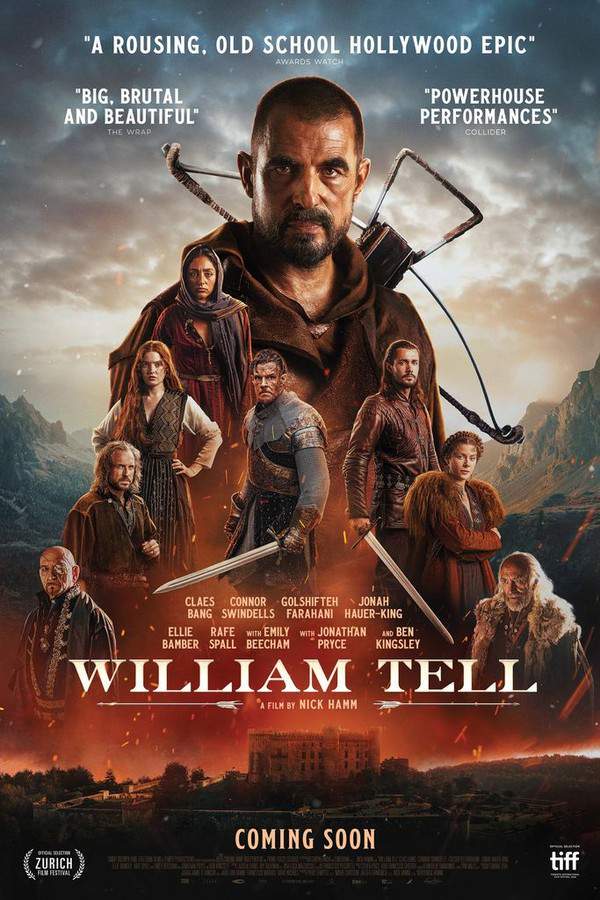
William Tell (2025) movie poster

Characters & Themes

William Tell (2025) Characters, Setting & Themes Explained

Release, runtime and language
2025 · 2 h 13 m · English
Echo score 55
Loading streaming availability…
Directed by
Nick Hamm
Starring
Jonah Hauer-King, Golshifteh Farahani, Ben Kingsley, Diarmaid Murtagh, Rafe Spall, Ellie Bamber

In 14th-century Europe, as the Holy Roman Empire struggles with competing nations and Austria seeks to expand its territory, Switzerland faces increasing pressure. William Tell, once a peaceful hunter, is compelled to act when Austria's ambitions threaten his homeland and family.

On this page (8)
  1. 1 Where to watch
  2. 2 Characters explained (12)
  3. 3 Where & when it takes place
  4. 4 Themes & meaning (3)
  5. 5 Character & meaning questions
  6. 6 Movie threads
  7. 7 Movies like William Tell
  8. 8 Every angle
Loading streaming availability…

12 main characters · contains spoilers

William Tell Characters Explained: Who Is Who

The main characters of William Tell (2025), heroes and villains: what drives them, how they change over the course of the story and what each of them reveals about the film's bigger ideas.

  • William Tell (Claes Bang)

    A war-weary Crusade veteran renowned for his crossbow, Tell is a local huntsman who keeps a quiet, moral center. He is reluctant to join a broader rebellion, but his sense of duty to his family and neighbors draws him into the Swiss cause. His skill and measured courage become a catalyst for uniting the cantons against Austrian rule.

    • 🗡️ Hero
    • 🏹 Archer
    • 🎯 Protagonist
  • Bertha (Golshifteh Farahani)

    The niece of Albert, Duke of Austria, Bertha resents her uncle’s tyranny and harbors genuine affection for Rudenz. She navigates courtly schemes while secretly supporting the Swiss uprising and ultimately acts decisively to challenge the king’s machinations.

    • 💃 Noble
    • 🗡️ Rebel
    • 🧭 Alliance-builder
  • Gessler (Connor Swindells)

    A ruthless Austrian bailiff who enforces imperial rule with brutal efficiency. He orchestrates humiliations, hunts rebels, and escalates the conflict, serving as the central antagonist driving the clash between occupied Switzerland and the Habsburgs.

    • 🗡️ Tyrant
    • 🕵️‍♂️ Enforcer
    • 🔥 Antagonist
  • King Albert (Ben Kingsley)

    The Austrian king who delegates control to Gessler to maintain order in the cantons. His rule embodies the oppressive imperial power that spurs the Swiss to unite; his death becomes a pivotal turning point for the rebellion.

    • 👑 Authority
    • ⚔️ Conflict
    • 🏛️ Ruler
  • Rudenz (Jonah Hauer-King)

    A noble from Attinghausen torn between loyalty to the Austrian crown and his people’s freedom. He joins the Swiss cause, embracing the rebellion as a path to protect his homeland and his loved ones.

    • 🗡️ Loyal
    • 🛡️ Leader
    • 🤝 Ally
  • Werner Stauffacher (Rafe Spall)

    A Crusader-turned-cantonal leader who shelters Tell and Baumgarten. He plays a key role in linking the cantons and pushing forward the movement for independence, even as danger closes in.

    • 🛡️ Leader
    • 🗺️ Strategist
    • 🤝 Ally
  • Gertrude Stauffacher (Emily Beecham)

    Wife of Werner Stauffacher, Gertrude helps sustain the resistance and urges action within the community. She embodies quiet strength and resolve, supporting her husband’s leadership.

    • 🧭 Supporter
    • 🕊️ Moral support
    • 🛡️ Resilience
  • Walter Fürst (Amar Chadha-Patel)

    A priest in Altdorf who acts as a spokesman and organizer for united cantons. He helps forge a common front among the diverse Swiss communities and channels their grievances into coordinated action.

    • 🕊️ Diplomat
    • 🗣️ Orator
    • 🧭 Unity-builder
  • Konrad Baumgarten (Sam Keeley)

    A farmer whose wife is killed during Austrian brutality, provoking Tell’s intervention. Baumgarten’s death becomes a brutal catalyst that fuels the rebellion and highlights the personal costs of oppression.

    • 🌾 Farmer
    • 💥 Catalyst
    • 🏞️ Victim
  • Arnold von Melchtal (Solly McLeod)

    A young farmer who loses his father to Austrian violence and becomes a symbol of the new generation’s stake in freedom. His experiences push the movement toward a decisive stand against the occupiers.

    • 🧒 Victim-turned-hero
    • 🗡️ Courage
    • 🌿 Growth
  • Stussi (Jake Dunn)

    Gessler’s ferocious enforcer who relentlessly pursues rebels and participates in brutal acts to maintain order. He represents the brutal reach of imperial rule and the resistance it provokes.

    • 🗡️ Enforcer
    • 🫂 Antagonist
    • 🧭 Threat
  • Walter Tell (Tobias Jowett)

    William Tell’s son, a poignant figure bound to the apple-shot test. His presence drives Tell’s fierce resolve to protect his family and resist oppression.

    • 👶 Son
    • 🧭 Catalyst
    • 🛡️ Protector

Last updated: February 05, 2026 at 07:34

Was this helpful?

Setting

Where and When Does William Tell Take Place?

The setting of William Tell (2025): the year and time period, the places and locations, and how they shape the characters, the mood and the tension of the story.

Time period

1307

Set in the year 1307, Switzerland is under the oppressive rule of the Austrian Habsburgs. The film portrays a harsh, hierarchical society where tolls, humiliations, and brute force are used to maintain control. In this tense period, a rebellion begins to brew among the Swiss cantons seeking autonomy and dignity.

Location

Altdorf, Rütli, Küssnacht, Sarnen, Unterwalden, Uri, Schwyz, Castle Habsburg (Aargau)

The story unfolds across central Switzerland, including the towns of Altdorf and Küssnacht, and the cantons Unterwalden, Uri and Schwyz. Key locations like Rütli become a symbol of unity, while Sarnen and surrounding areas serve as fronts in the struggle against Austrian rule. Castles and border towns such as Castle Habsburg in Aargau anchor the political power the Swiss rebels oppose.

  • 🏔️ Alpine Switzerland
  • 🏰 Historic cantons

Last updated: February 05, 2026 at 07:34

Was this helpful?

3 major themes

William Tell Meaning: Themes & Message Explained

What is William Tell (2025) really about? The emotional, social and philosophical themes the film keeps returning to, its symbolism and the message beneath the surface.

  • Freedom

    The Swiss cantons strive to reclaim autonomy from foreign rule. Personal bravery gradually coalesces into a broader movement for collective liberty. The narrative traces how individuals like Tell and Bertha become catalysts for a wider, cantonal resistance.

  • Oppression

    Gessler's tyranny, epitomized by public humiliations such as the helmet on the post, underscores the harsh regime the Swiss must resist. The film shows how power is exercised through fear, punishment, and surveillance. The rising rebellion tests where loyalty lies—in the crown, the church, or the people.

  • Heroism

    The story foregrounds acts of courage, from Tell’s reluctant leadership to Bertha’s bold defiance. It emphasizes sacrifice, resilience, and strategic alliances as the cantons unite. Heroism is shown not as solitary feats but as the fruit of collective action against oppression.

Last updated: February 05, 2026 at 07:34

Was this helpful?

Character & theme questions

William Tell Characters & Meaning: Your Questions Answered

The questions people ask about William Tell (2025): who the characters really are, their relationships, what the symbols mean, where it takes place and what the movie is really about. Each answer contains spoilers.

Q1

Where is William Tell set?

The film is set in central Switzerland during the early 14th century, primarily in the towns of Altdorf and Küssnacht, the cantons of Unterwalden, Uri and Schwyz, and the legendary Rütli meadow. The story unfolds across Alpine Switzerland, with locations like Castle Habsburg in Aargau representing the Austrian political power that the Swiss rebels oppose.

  • switzerland
  • altdorf
  • rütli
  • alpine
  • cantons
Q2

What time period is William Tell set in?

William Tell takes place in 1307, during the height of the Holy Roman Empire's control over the Swiss region. At this time, Switzerland was under the oppressive rule of the Austrian Habsburgs, who imposed heavy tolls, humiliations, and brute force to maintain control over the independent-minded Swiss cantons.

  • 1307
  • 14th century
  • holy roman empire
  • medieval switzerland
Q3

What is the main theme of William Tell?

The film's primary themes are freedom, oppression, and heroism. The Swiss cantons struggle to reclaim autonomy from Austrian rule, with personal acts of bravery gradually coalescing into a broader movement for collective liberty. The narrative emphasizes that heroism emerges not from solitary feats but from collective action against tyranny.

  • freedom
  • oppression
  • heroism
  • rebellion
  • swiss independence
Q4

Who is William Tell in the movie?

William Tell is a war-weary Crusader veteran and renowned crossbow marksman who works as a local huntsman in the Swiss Alps. Though initially reluctant to join a broader rebellion, his sense of duty to his family and neighbors draws him into the Swiss cause, and his skill and measured courage become a catalyst for uniting the cantons against Austrian rule.

  • william tell
  • huntsman
  • crossbow
  • swiss rebellion
Q5

Who is Gessler in William Tell?

Gessler is the ruthless Austrian bailiff who enforces imperial rule over the Swiss cantons with brutal efficiency. He orchestrates public humiliations such as placing his helmet on a post, hunts down rebels, and escalates the conflict, serving as the central antagonist who embodies the oppressive Habsburg regime.

  • gessler
  • austrian bailiff
  • antagonist
  • tyrant
Q6

What does the Rütli represent in William Tell?

The Rütli is a meadow in central Switzerland that becomes a symbol of unity for the Swiss cantons. In the film, it serves as a meeting place where the rebel leaders gather to forge their common cause against Austrian occupation, representing the birthplace of the Swiss Confederation's resistance movement.

  • rütli
  • swiss confederation
  • unity
  • rebellion meeting
Q7

Who is Bertha in William Tell?

Bertha is the niece of Albert, Duke of Austria, who secretly harbors affection for the Swiss noble Rudenz. Despite her royal connection, she resents her uncle's tyranny over Switzerland and navigates courtly schemes while secretly supporting the Swiss uprising, ultimately acting decisively to challenge the king's machinations.

  • bertha
  • duke albert
  • rudenz
  • court intrigue
Q8

What does the helmet on the post symbolize in William Tell?

The helmet on the post symbolizes Gessler's tyrannical rule and the degrading nature of Austrian occupation. By forcing Swiss citizens to bow before his helmet, Gessler asserts dominance and demands subservience, which fuels resentment and ultimately catalyzes the rebellion against Habsburg oppression.

  • helmet
  • oppression
  • humiliation
  • austrian rule
Q9

Who leads the Swiss rebellion in William Tell?

The rebellion is led by a collective of key figures including William Tell, Werner Stauffacher (a Crusader-turned-cantonal leader), and Walter Fürst (a priest who acts as organizer and spokesman). While Tell becomes the movement's symbolic catalyst through his legendary skill, the rebellion truly depends on the unified action of multiple cantonal leaders.

  • werner stauffacher
  • walter fürst
  • swiss rebellion
  • cantonal leaders
Q10

What role does King Albert play in William Tell?

King Albert is the Austrian monarch who delegates control of the Swiss cantons to his bailiff Gessler to maintain imperial order. His rule embodies the oppressive Habsburg power that spurs the Swiss to unite for autonomy. His death becomes a pivotal turning point that shifts momentum toward the rebellion.

  • king albert
  • habsburgs
  • austrian king
  • imperial rule
Q11

What is the historical context of William Tell?

William Tell is based on the legendary Swiss folk hero who became a symbol of resistance against foreign oppression. The film portrays the real historical struggle of the early Swiss Confederacy, depicting how disparate Alpine cantons united to resist Austrian Habsburg domination in the early 14th century, a conflict that eventually led to Swiss independence.

  • swiss history
  • habsburg
  • confederation
  • independence
  • 14th century

Movie threads

More Movies Like William Tell, by Mood & Story

Curated lists built around what makes William Tell tick: the same mood, the same kind of story or the same emotional payoff. Each list explains why these movies belong together.

Movies about reluctant heroes fighting tyranny like William Tell

Ordinary people driven to violence to protect their homes from tyranny. If you enjoyed William Tell, explore other movies about ordinary people becoming freedom fighters. These films feature high-stakes historical or fictional conflicts, heavy emotional weight, and protagonists forced into violence to defend their homes and families against oppressive regimes.

  • defiant
  • brutal
  • patriotic
  • tense
  • grim
  • hopeful
  • Tone: dark, defiant, grim
  • Pacing: fast, high-stakes
Why these movies?

The story pattern: The narrative follows a protagonist living a peaceful life until an external threat—often a foreign occupation or brutal regime—directly endangers their family or community. This inciting incident sparks a moral awakening, leading them on a path of resistance that is physically brutal and emotionally devastating, questioning the very cost of the freedom they seek.

Why they belong together: They share a core character arc of a peaceful individual transformed by necessity into a warrior, set against a backdrop of grim political oppression. The tone is dark and intense, the pacing is fast with high-stakes action, and the emotional journey is heavy, culminating in a victory that feels earned but scarred by loss.
Grim historical war epics similar to William Tell

Sweeping stories where the fight for freedom is depicted with brutal honesty. Fans of the intense and fast-paced historical action in William Tell will appreciate these movies. They are sweeping war epics that depict the brutal reality of resistance movements, featuring tense battles, political intrigue, and a focus on the heavy cost of fighting for freedom.

  • tense
  • oppressive
  • brutal
  • suspenseful
  • patriotic
  • grim
  • Tone: dark, tense, oppressive
  • Pacing: fast, event-driven
Why these movies?

The story pattern: These epics are set during pivotal historical conflicts, following a group or nation as they resist a dominant, tyrannical force. The plot is driven by key events like battles, assassinations, and betrayals, moving at a brisk pace. The focus is on the collective struggle, showcasing both the strategic defiance and the visceral, often horrific, human cost of war.

Why they belong together: They are united by a dark, oppressive tone, fast pacing filled with action and suspense, and a high level of intensity from both violence and emotional stakes. The setting is a historically grounded war for independence, and the narrative delivers a visceral, unflinching look at the price of liberty.

If you liked this

Movies Like William Tell

Similar movies to William Tell: the same genre, themes or kind of story. Each one comes with its own plot summary, timeline and ending explained.

Browse all movie summaries

Every angle

William Tell (2025) Explained: Plot, Ending, Timeline & Characters

Everything about William Tell in one place: what happens in the plot summary, the timeline in chronological order, the characters and meaning, the ending explained and a spoiler-free summary. What's After the Movie adds the cast, box office and post-credit scenes.

Coming soon on iOS and Android

The Plot Explained Movie Summary App

Plot summaries, endings explained and timelines on your phone. Catch up on any movie in minutes, save your favorites and never miss a twist again.

Be the first to know when we launch. Your email stays private, always.

Learn more about the app