Plot Explained Spoilers guaranteed!
Plot Explained

Browse by genre

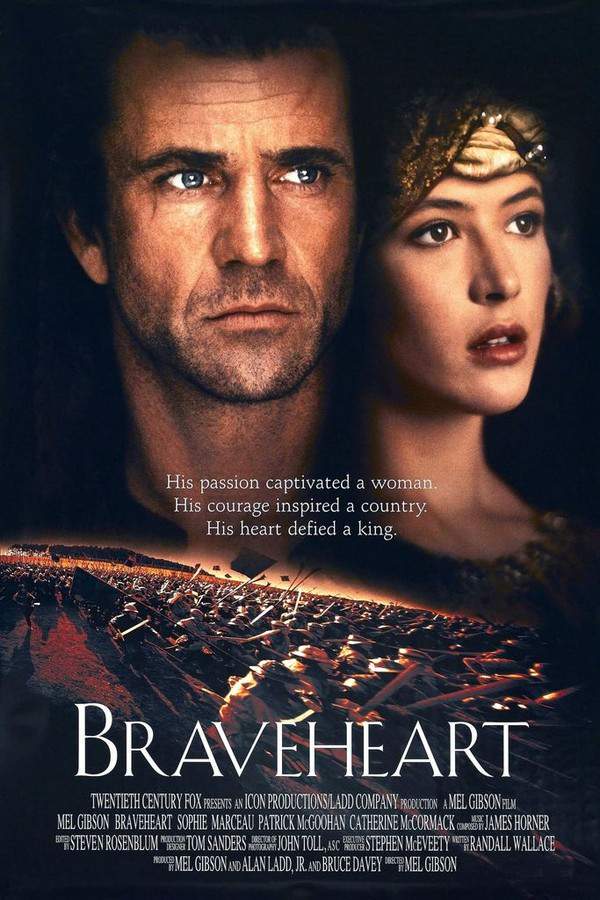
Braveheart (1995) movie poster

Plot Summary

Braveheart (1995) Plot Summary Explained

Release, runtime and language
1995 · 177 min · English
Loading streaming availability…
Starring
Mel Gibson, Sophie Marceau
Budget
$72M

In medieval Scotland, William Wallace (Mel Gibson) embarks on a courageous fight for freedom after suffering a tragic loss. He rallies a group of rebels to challenge the oppressive rule of King Edward I and his forces. Wallace’s defiance ignites a national uprising against English tyranny, leading to a fierce and ultimately defining struggle for Scottish independence and self-determination.

On this page (6)
  1. 1 Where to watch
  2. 2 What happens: full plot
  3. 3 Plot questions answered
  4. 4 Movie threads
  5. 5 Movies like Braveheart
  6. 6 Every angle
Loading streaming availability…

Full plot summary · contains spoilers

What Happens in Braveheart: Full Plot Summary

The whole story of Braveheart (1995) explained, from the opening scene to the final frame: every key event, every twist and what it all adds up to. Read it as a quick recap before the sequel, to check a scene you missed, or to finally understand what really happened.

In the year 1280 AD, Scotland is thrown into chaos following the death of its king, who left no heir. An ambitious invasion led by King Edward I of England, known as Longshanks (Patrick McGoohan), quickly sees Scottish nobles capitulate without a united front. Among them is William Wallace (Mel Gibson), a young man who bears witness to the brutal betrayal of his kin when Longshanks invites the nobles to a peace treaty and subsequently orders their execution.

After surviving the assassination of his father and brother, Wallace is taken abroad by his uncle Argyle for education. Years later, upon returning to Scotland, he discovers that Longshanks has imposed the horrifying Primae Noctis, a feudal right allowing lords to bed newly married Scottish brides. Determined to create a peaceful life, Wallace marries his childhood love, Murron MacClannough ([Catherine McCormack]), in secret to protect her from this cruel fate.

However, their happiness is shattered when an English soldier attempts to assault Murron. After a fierce struggle, Wallace is unable to save her from being captured and eventually executed by the local sheriff, who chillingly states, > "an assault on the King's soldiers is the same as an assault on the King himself." Fueled by vengeance, Wallace retaliates against the English, rallying his fellow Scots to join the fight against their oppressors.

As Wallace's reputation grows, he encounters colorful allies, including Stephen ([David O'Hara]), who claims kingship over Ireland, and seeks to gain the support of Robert the Bruce ([Angus Macfadyen]), a nobleman torn between loyalty to his father and his admiration for Wallace. During this period, Princess Isabelle (Sophie Marceau), neglected by her husband Edward, finds herself captivated by tales of Wallace's bravery.

The tension escalates leading to significant battles, including the Battle of Stirling, where Wallace's tactical genius leads to a stunning victory against English forces, igniting a spark of hope for Scottish freedom. Following the conflict, infighting among the Scottish nobles prevents them from naming a king, but Wallace’s vision drives him to plan an assault on England itself.

As he builds his forces, Longshanks retaliates by sending Isabelle to negotiate with Wallace, hoping she will be used as bait. Despite the temptation of riches and titles offered by Longshanks, Wallace remains steadfast and honorable, intriguing Isabelle further. Yet, betrayal lurks within his ranks, leading to devastating losses at the Battle of Falkirk.

In the aftermath of the battle, Wallace becomes increasingly isolated, fighting a guerilla war against the English while dealing with feelings of betrayal and loss. The stakes rise when Robert the Bruce, disillusioned with his father’s schemes, reconciles with Wallace. Meanwhile, Isabelle concocts a revenge plot against Longshanks, revealing her pregnancy with another man’s child.

Ultimately, Wallace is captured, tried for treason, and condemned to a gruesome fate. Yet, even in his final moments, he defiantly declares, > "Freedom!" as he sees a vision of Murron in the crowd. Years later, in 1314 AD, the legacy of his fight for independence ignites a fierce rebellion as Robert the Bruce leads Scotland's army into battle, reminding his troops of Wallace’s sacrifice, ultimately securing Scottish freedom on the fields of Bannockburn.
Last updated: November 03, 2024 at 22:12

Was this helpful?

Plot questions answered

Braveheart Plot Explained: Your Questions Answered

The questions people ask most about Braveheart (1995): what happens in the confusing scenes, why the characters do what they do, the twists, hidden details and what the ending means. Each answer contains spoilers.

Q1

What is Primae Noctis in Braveheart?

Primae Noctis is a fictional feudal law in the film that grants English lords the 'right' to sleep with newly married Scottish brides on their wedding night. This horrific oppression motivates William Wallace to marry Murron in secret, trying to protect her from this fate. The law represents the brutal control Longshanks exerts over Scotland.

Foreshadowing: Earlier scenes show English soldiers swaggering through Scottish villages with obvious contempt for the locals, establishing the atmosphere of oppression.

  • primae noctis
  • english law
  • scottish oppression
  • longshanks
  • marriage
Q2

Why does William Wallace marry Murron in secret?

Wallace marries Murron secretly specifically to protect her from Primae Noctis, the English law allowing lords to claim brides. By marrying in a private ceremony witnessed only by close friends, he hopes to give her the status of a married woman and shield her from English soldiers. This decision proves tragic when she's still targeted.

Foreshadowing: Wallace's return to Scotland coincides with his uncle's warnings about English tyranny, setting up his desire to live peacefully but within hostile conditions.

  • murron
  • secret marriage
  • protection
  • wallace wife
  • scotland
Q3

How does Murron die in Braveheart?

After an English soldier attempts to assault Murron, Wallace fights and injures the soldier. Murron is captured by the local sheriff and executed for what the sheriff calls 'an assault on the King's soldiers is an assault on the King himself.' Her death directly triggers Wallace's transformation from a peaceful farmer into a vengeful rebel leader.

Foreshadowing: The film establishes early that English authority in Scotland is absolute and ruthless, with Longshanks ordering the execution of nobles who trusted his peace treaty.

  • murron execution
  • wallace wife death
  • sheriff
  • revenge
Q4

Why does Robert the Bruce initially oppose William Wallace?

Robert the Bruce is torn between loyalty to his father and his admiration for Wallace. His father, Lord Bruce, supports the English to maintain power, and Robert is constrained by family loyalty and political calculations. He respects Wallace's cause but cannot openly oppose his father initially. His arc involves gradually reconciling his personal conscience with family obligations.

Foreshadowing: Robert's first meeting with Wallace shows visible admiration, but he withdraws when his father's influence becomes apparent.

  • robert the bruce
  • father loyalty
  • scottish nobles
  • wallace alliance
Q5

Who betrays William Wallace at the Battle of Falkirk?

Scottish nobles under Robert the Bruce's father secretly coordinate with the English, allowing Longshanks' forces to anticipate Wallace's attack. While Robert himself is not directly complicit, his father's betrayal of Wallace dooms the battle. The Scottish cavalry retreats prematurely, and the English longbowmen decimate Wallace's forces. This betrayal forces Wallace into guerrilla warfare.

Foreshadowing: Earlier scenes show the Scottish nobles infighting and refusing to unite under Wallace after Stirling, revealing their unwillingness to truly commit.

  • battle of falkirk
  • betrayal
  • scottish nobles
  • longshanks
  • defeat
Q6

How does Princess Isabelle help William Wallace?

Princess Isabelle, sent by Longshanks as a negotiating tool, instead becomes aligned with Wallace's cause. She refuses to be used as bait and warns Wallace of Longshanks' plans. Most significantly, she later poisons Longshanks, revealing she is pregnant with another man's child, a secret revenge against the king who neglected her.

Foreshadowing: Isabelle's fascination with Wallace's legend is established early when she hears tales of his bravery, showing her growing sympathy.

  • isabelle
  • princess
  • longshanks
  • negotiation
  • revenge
Q7

Why is William Wallace executed in Braveheart?

Wallace is captured after being betrayed by Scottish nobles who hand him over to the English. He is tried for treason against King Edward I. Despite the king's offer to spare him in exchange for pledging allegiance, Wallace refuses. He is publicly tortured and executed, but never renounces his fight for Scottish freedom.

Foreshadowing: The film establishes that resistance to English rule is considered treason, with earlier executions setting the tone.

  • execution
  • treason
  • capture
  • freedom
  • betrayal
Q8

What does William Wallace see before he dies?

In his final moments, Wallace looks into the crowd and sees a vision of his dead wife Murron, smiling at him. This moment represents his spiritual release and the fulfillment of his quest, he is finally reunited with his beloved and finds the freedom in death that he fought for in life. He shouts 'Freedom!' as he dies.

Foreshadowing: Wallace's love for Murron is established as his primary motivation for initially fighting, making her appearance a powerful emotional payoff.

  • murron vision
  • freedom
  • dying
  • spirit
  • reunion
Q9

How does Wallace's death inspire the victory at Bannockburn?

Wallace's execution makes him a martyr and symbol of Scottish resistance. Years later, Robert the Bruce leads the Scottish army at Bannockburn in 1314 AD, invoking Wallace's sacrifice to inspire his troops. The film suggests Wallace's legacy directly enabled this final victory for Scottish independence.

Foreshadowing: The film repeatedly shows Wallace's words and actions inspiring others to join his cause, building toward his martyrdom.

  • bannockburn
  • robert the bruce
  • victory
  • independence
  • legacy
Q10

Why do the Scottish nobles refuse to support Wallace?

After the Battle of Stirling, Scottish nobles squabble over who should be king rather than uniting behind Wallace. Many are more concerned with political power and their own titles than fighting for Scottish independence. Some, like Robert the Bruce's father, actively collaborate with the English to preserve their positions. This disunity weakens Wallace's cause.

Foreshadowing: The film opens with Scottish nobles failing to unite against English invasion, establishing this as a recurring weakness.

  • scottish nobles
  • disunity
  • politics
  • power
  • stirling
Q11

How does William Wallace become a rebel leader?

Wallace transforms from a peaceful farmer seeking a quiet life into a rebel leader after Murron's execution. His personal tragedy transforms into political defiance as he rallies Scots to fight against English oppression. His military successes at Stirling and other battles earn him the title 'Braveheart' and make him the symbol of Scottish resistance.

Foreshadowing: Wallace's early scenes show his skill in combat and his father's lesson about what people do with freedom, planting seeds of his future role.

  • rebel leader
  • braveheart
  • military
  • inspire
  • scottish freedom
Q12

What motivates William Wallace throughout Braveheart?

Wallace's motivation evolves from personal vengeance (Murron's death) to a broader fight for Scottish freedom and justice. Initially seeking revenge against those who killed his wife, he comes to represent the oppressed Scottish people. Even after personal losses and betrayal, he continues fighting not for glory but for the ideal of freedom.

Foreshadowing: Wallace's childhood trauma, witnessing his father and brother's deaths, establishes his deep-seated hatred of English oppression.

  • motivation
  • vengeance
  • freedom
  • justice
  • scottish independence

Movie threads

More Movies Like Braveheart, by Mood & Story

Curated lists built around what makes Braveheart tick: the same mood, the same kind of story or the same emotional payoff. Each list explains why these movies belong together.

Epic Historical Martyrdom Movies Like Braveheart

Grand-scale stories of iconic leaders whose deaths galvanize a cause. If you were moved by William Wallace's sacrifice in Braveheart, explore these movies like Braveheart that feature iconic historical figures whose martyrdom becomes a catalyst for freedom. These similar historical epics and war dramas share a heavy emotional weight and a defiant, hopeful spirit amidst brutal conflict.

  • epic
  • defiant
  • tragic
  • patriotic
  • hopeful
  • somber
  • Tone: dark, defiant, hopeful
  • Pacing: steady, epic build
Why these movies?

The story pattern: The narrative follows a single, determined individual who rises to lead a rebellion against overwhelming oppression. Their personal journey is inextricably linked to the fate of their people, culminating in their capture and execution, which serves not as an end, but as a spark that ignites ultimate victory.

Why they belong together: Movies are grouped here for their shared focus on martyrdom as a transformative force in history. They blend high-intensity action with heavy emotional drama, resulting in a dark yet hopeful tone and a bittersweet ending where the hero's death ensures a legacy of freedom.

Brutal Vengeance and Freedom Stories Similar to Braveheart

Stories where personal loss ignites a bloody fight for liberation. For viewers who liked the vengeful drive and brutal conflict in Braveheart, this list highlights movies like Braveheart where a personal quest for revenge expands into a fight for national liberty. These similar action dramas and war films share a high intensity, dark tone, and themes of sacrifice and betrayal.

  • vengeful
  • brutal
  • defiant
  • tragic
  • patriotic
  • somber
  • Tone: dark, vengeful, defiant
  • Pacing: steady, relentless
Why these movies?

The story pattern: The plot is catalyzed by a profound personal loss that fuels the protagonist's rage. This intimate desire for revenge soon intertwines with a broader political or social injustice, transforming a solitary mission into a rebellion. The narrative is marked by intense violence, strategic battles, and the heavy cost of defiance.

Why they belong together: These movies share a specific emotional arc: starting from a place of deep personal vengeance that broadens into an ideological war. They are united by their high intensity, dark tone, brutal action, and exploration of the sacrifices demanded by the pursuit of freedom.

If you liked this

Movies Like Braveheart

Similar movies to Braveheart: the same genre, themes or kind of story. Each one comes with its own plot summary, timeline and ending explained.

Browse all movie summaries

Every angle

Braveheart (1995) Explained: Plot, Timeline & Characters

Everything about Braveheart in one place: what happens in the plot summary, the timeline in chronological order, the characters and meaning and a spoiler-free summary. What's After the Movie adds the cast, box office and post-credit scenes.

Coming soon on iOS and Android

The Plot Explained Movie Summary App

Plot summaries, endings explained and timelines on your phone. Catch up on any movie in minutes, save your favorites and never miss a twist again.

Be the first to know when we launch. Your email stays private, always.

Learn more about the app