Plot Explained Spoilers guaranteed!
Plot Explained

Browse by genre

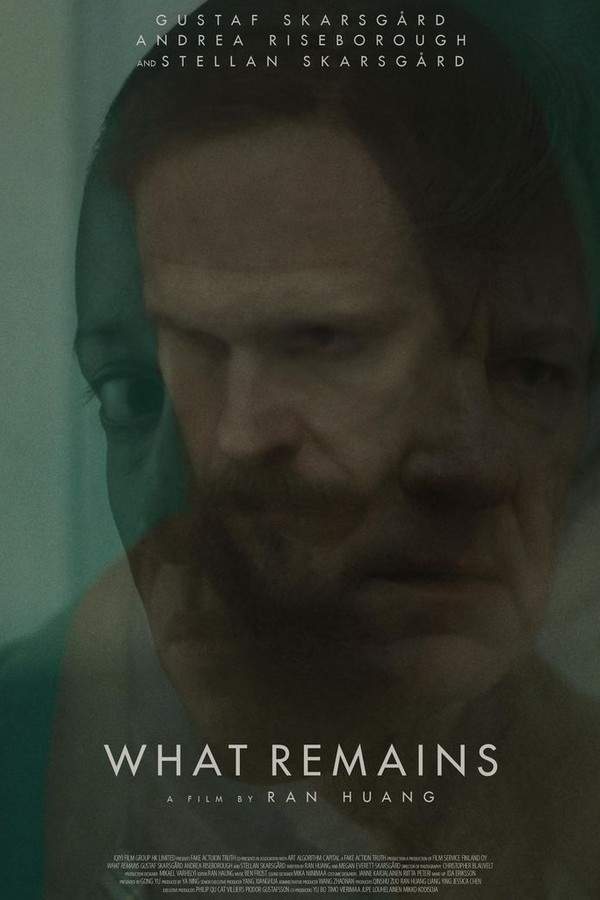
What Remains (2024) movie poster

Plot Summary

What Remains (2024) Plot Summary Explained

Release, runtime and language
2024 · 2 h 6 m · English
Echo score 38
Directed by
Ran Huang
Starring
Stellan Skarsgård, Andrea Riseborough, Gustaf Skarsgård, Éva Magyar, Jussi Kostamo, Antti Luusuaniemi

Set in 1990s Scandinavia, this film explores the unsettling relationship that develops when a notorious serial killer, Mads Lake, confesses to a series of murders and is subsequently convicted. As Mads, his therapist Anna Rudebeck, and the investigating officer Soren Rank attempt to uncover the full truth, their complex alliance is tested, leading to a blurring of boundaries between obsession and the possibility of redemption.

On this page (5)
  1. 1 What happens: full plot
  2. 2 Plot questions answered
  3. 3 Movie threads
  4. 4 Movies like What Remains
  5. 5 Every angle

Full plot summary · contains spoilers

What Happens in What Remains: Full Plot Summary

The whole story of What Remains (2024) explained, from the opening scene to the final frame: every key event, every twist and what it all adds up to. Read it as a quick recap before the sequel, to check a scene you missed, or to finally understand what really happened.

What Remains is a Scandinavian thriller set in the 1990s, loosely based on the infamous Thomas Quick case from Scandinavian history. The story centers on a dangerous, psychologically unsettled figure—Mads Lake, Gustaf Skarsgård—who is accused of a string of brutal crimes and becomes the focal point of a small-town murder inquiry. The film crafts a stark, wintry atmosphere where quiet streets feel crowded with unspoken questions and memory edges ever closer to the present.

As the investigation unfolds, the narrative threads together the lives of several damaged individuals. Soren Rank, Stellan Skarsgård, a seasoned investigator, grapples with unreliable testimonies and shifting memories as he tries to separate fact from rumor. Anna Rudebeck, Andrea Riseborough, a woman linked to the case with hidden stakes, moves through the town’s corridors with careful restraint, offering clues that invite scrutiny rather than closure. The cast expands this atmosphere of tension with Lillemor, Éva Magyar, whose presence amplifies the sense of communal fragility, and Elin, Milka Ahlroth, whose perspective introduces a different generational lens on the unfolding events. Alongside them, an Investigator, Jussi Kostamo, Dr. Jepsen, Antti Luusuaniemi, and other figures populate a web of relationships that blur the lines between witness and participant.

The plot follows Mads Lake, a Scandinavian man who previously went by Sigge Storm, as past and present collide. His history anchors the drama while the town’s focus widens to include a local pastor and an ex-convict, suggesting a deeper, interconnected web of sin and consequence. The tension builds not through constant action but through the slow drip of memory, motive, and motive’s ripple effects across a community already primed for suspicion.

What Remains aspires to a psychological deep-dive, exploring how trauma, guilt, and the malleable nature of truth shape a small society. The film emphasizes the fragility of certainty and the way personal narratives can distort or illuminate what really happened. At times it feels like an unholy triad of damaged souls—Mads Lake, Soren Rank, and Anna Rudebeck—each carrying their own burden, each pulled by forces too powerful to be fully explained by evidence alone. The attempt to weave together a quiet, introspective investigation with a broader crime story aims to offer a nuanced meditation on memory and accountability.

Despite these ambitions, some critics describe the film as unfocused or not fully engaging, leaving viewers detached from its core quartet of troubled figures. The reception underscores a tension between the movie’s desire to unfold a meticulous psychological puzzle and the perception that the drama never fully coalesces around a singular, compelling through-line. Yet the atmosphere—frigid landscapes, hushed conversations, and the weight of untold stories—continues to provoke discussion about how truth is constructed, who gets to tell it, and what remains when the noise of memory finally quiets.

In the end, What Remains presents a austere, atmospheric meditation on truth, memory, and the persistence of hidden histories. The film invites audiences to linger on unanswered questions, to consider how a community’s past can cast long shadows over its present, and to ponder what, if anything, can still be recovered from the fog of events that refuse to fully reveal themselves.
Last updated: October 27, 2025 at 16:47

Was this helpful?

Plot questions answered

What Remains Plot Explained: Your Questions Answered

The questions people ask most about What Remains (2024): what happens in the confusing scenes, why the characters do what they do, the twists, hidden details and what the ending means. Each answer contains spoilers.

Q1

Why does Mads Lake also go by the name Sigge Storm?

Mads Lake previously used the name Sigge Storm in his past, which emerges through flashbacks and hints throughout the film. This alter ego reveals his turbulent history and transformation, suggesting a complex psychology behind the accused killer. The dual identity anchors the narrative's exploration of memory and the malleable nature of truth.

Foreshadowing: The opening introduction establishes Mads Lake with a tangled past that hints at the identity reveal later.

  • mads lake
  • sigge storm
  • identity
  • serial killer
  • psychology
Q2

What is Anna Rudebeck's connection to the case?

Anna Rudebeck is linked to the case with hidden stakes, moving through the town with careful restraint while offering clues that invite scrutiny. Her involvement suggests a personal dimension beyond professional duty, though the summary keeps her exact connection ambiguous. This creates tension about her true motivations and what she stands to gain or lose.

Foreshadowing: Her presence from early scenes carries an undercurrent of undisclosed purpose.

  • anna rudebeck
  • therapist
  • hidden stakes
  • connection
Q3

How does the investigation deal with unreliable testimonies?

Soren Rank, the seasoned investigator, grapples with unreliable testimonies and shifting memories as he tries to separate fact from rumor. The film leans into psychological intrigue rather than a linear detective plot, inviting viewers to doubt what is real about the crime and its suspects. Memory, testimony, and truth collide throughout the investigation.

Foreshadowing: Early scenes establish the town's atmosphere of suspicion and rumor.

  • soren rank
  • investigation
  • unreliable testimony
  • memory
  • truth
Q4

Why is the pastor connected to the murder investigation?

Investigators connect the murder to a local pastor and an ex-convict, suggesting a web of secrets beneath the town's surface. This reveals a deeper, interconnected web of sin and consequence among flawed characters. The emerging links hint at deeper guilt and shared history among the town's damaged inhabitants.

Foreshadowing: The connection to a pastor suggests early hints of hidden sins within the community.

  • pastor
  • murder
  • ex-convict
  • investigation
  • web of secrets
Q5

How does the film connect to the Thomas Quick case?

The film is loosely based on the infamous Thomas Quick case from Scandinavian history, which involved false confessions and a controversial investigation into serial murders. This historical context grounds the drama in a real-life tale of manipulated truth and distorted memory. The connection provides thematic weight to the film's exploration of how truth is constructed.

Foreshadowing: The 1990s setting and Scandinavian backdrop signal the historical basis early on.

  • thomas quick
  • scandinavian history
  • true crime
  • based on true story
Q6

Why does the ending leave so many questions unanswered?

The ending deliberately avoids neat resolutions, reflecting the film's focus on psychological exploration rather than detective closure. The interplay between the damaged figures, Mads Lake, the pastor, and the ex-convict, remains unsettled, leaving room for interpretation. This ambiguity aligns with the movie's meditation on memory, accountability, and the persistence of hidden histories.

Foreshadowing: Throughout the narrative, answers remain elusive as new clues surface and old secrets resurface.

  • ambiguous ending
  • unresolved truth
  • open ending
  • psychological thriller
Q7

What does the forest imagery represent in the story?

Imagery of a dark forest frames the narrative, echoing unspoken truths and hidden sins throughout the town. The forest becomes a motif for the blurred line between guilt and innocence, as characters confront past shadows during the investigation. This setting amplifies the sense of communal fragility and psychological depth.

Foreshadowing: The forested outskirts appear early, establishing the mood of hidden truths.

  • forest imagery
  • motif
  • hidden sins
  • psychological atmosphere
Q8

Why do some critics describe the film as unfocused?

Critics describe the film as unfocused because the psychological puzzle never fully coalesces around a singular, compelling through-line. The tension between unfolding a meticulous psychological investigation and maintaining a cohesive narrative arc leaves some viewers detached. Despite atmospheric tension and strong performances, the drama struggles to fully engage its core quartet of troubled figures.

Foreshadowing: The multiple perspectives and complex web of relationships set up the potential for narrative diffusion.

  • critics
  • reception
  • narrative
  • unfocused
  • psychological thriller
Q9

Who are the three damaged souls at the center of the story?

The film centers on three damaged souls, Mads Lake (the alleged killer), the pastor, and the ex-convict, whose psyches intertwine throughout the narrative. Described as an 'unholy trinity,' each carries a private history that influences motive and perception. Their dynamic shapes how events unfold, blurring the lines between witness and participant.

Foreshadowing: The thematic triangle is established early through the introduction of these interconnected figures.

  • mads lake
  • pastor
  • ex-convict
  • unholy trinity
  • damaged characters
Q10

Why does the film emphasize memory and truth as central themes?

The film emphasizes memory and truth because the investigation relies on unreliable testimonies and shifting memories, making certainty fragile. Each character's personal narratives can distort or illuminate what really happened, reflecting the malleable nature of truth. This focus allows the film to explore how trauma and guilt shape individual and communal understanding of events.

Foreshadowing: From the opening, the 'slow drip of memory' establishes this thematic emphasis.

  • memory
  • truth
  • trauma
  • guilt
  • malleable truth
  • psychological themes

Movie threads

More Movies Like What Remains, by Mood & Story

Curated lists built around what makes What Remains tick: the same mood, the same kind of story or the same emotional payoff. Each list explains why these movies belong together.

Slow-burn Scandinavian Noir movies like What Remains

Atmospheric crime stories where bleak landscapes reflect deep-seated psychological trauma. If you liked the atmospheric tension and psychological depth of What Remains, explore more movies in this thread. These Scandinavian thrillers share a similar vibe of slow pacing, bleak settings, and complex investigations into dark crimes that unravel fragile communities.

  • atmospheric
  • bleak
  • cold
  • melancholic
  • suspenseful
  • oppressive
  • Tone: dark, melancholic, tense
  • Pacing: slow burn, deliberate
Why these movies?

The story pattern: Narratives typically follow a dogged investigator or a professional drawn into a cold case, where the process of uncovering the truth is as important as the truth itself. The journey is often introspective, blurring the lines between the protagonist and the darkness they are investigating, leading to ambiguous resolutions that prioritize thematic weight over neat conclusions.

Why they belong together: These films are grouped by their shared commitment to a specific mood and aesthetic: a slow, deliberate pace, a visually cold and oppressive atmosphere, and stories that prioritize psychological realism and moral complexity over conventional thriller beats.

Psychological crime thrillers with complex characters like What Remains

Stories where the search for truth blurs the line between investigator and subject. Fans of What Remains who enjoyed its deep dive into the minds of a killer, a therapist, and an investigator will find similar movies here. These films explore the psychological fallout of crime, featuring complex characters, unreliable narratives, and a heavy emotional weight.

  • psychological
  • tense
  • unsettling
  • introspective
  • suspenseful
  • heavy
  • Tone: dark, tense, introspective
  • Pacing: slow to steady, character-driven
Why these movies?

The story pattern: The narrative pattern involves professionals—therapists, detectives, journalists—becoming psychologically entangled with their subjects, often risking their own sanity in the pursuit of answers. The story structure is typically complex, weaving together multiple viewpoints and timelines to explore themes of memory, guilt, and the possibility—or impossibility—of redemption.

Why they belong together: These movies are united by their focus on the psychological dimensions of crime. They share a high emotional weight, complex narrative structures, and a tone that is dark and intense, creating a compelling but often draining viewing experience centered on character psychology.

If you liked this

Movies Like What Remains

Similar movies to What Remains: the same genre, themes or kind of story. Each one comes with its own plot summary, timeline and ending explained.

Browse all movie summaries

Every angle

What Remains (2024) Explained: Plot, Timeline & Characters

Everything about What Remains in one place: what happens in the plot summary, the timeline in chronological order, the characters and meaning and a spoiler-free summary. What's After the Movie adds the cast, box office and post-credit scenes.

Coming soon on iOS and Android

The Plot Explained Movie Summary App

Plot summaries, endings explained and timelines on your phone. Catch up on any movie in minutes, save your favorites and never miss a twist again.

Be the first to know when we launch. Your email stays private, always.

Learn more about the app