Plot Explained Spoilers guaranteed!
Plot Explained

Browse by genre

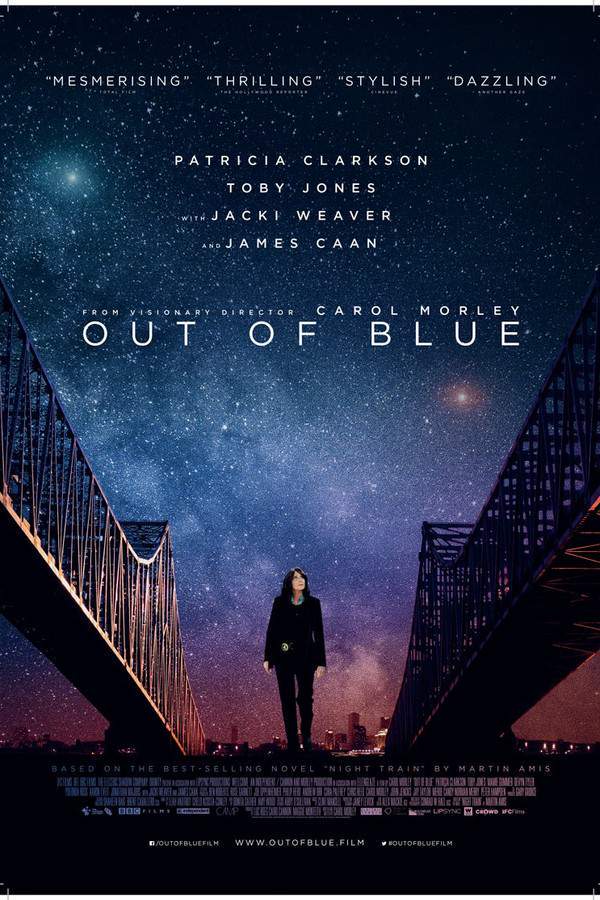
Out of Blue (2019) movie poster

Plot Summary

Out of Blue (2019) Plot Summary Explained

Release, runtime and language
2019 · 109 min · English
Echo score 50
Loading streaming availability…
Directed by
Carol Morley
Starring
Toby Jones, Jonathan Majors, James Caan, Patricia Clarkson, Jacki Weaver, Mamie Gummer

A detective in New Orleans investigates the murder of an astrophysicist and finds herself drawn into a baffling case involving quantum mechanics and the nature of reality. As she follows a trail of cryptic clues, she confronts perplexing questions about parallel universes and cosmic phenomena. The search for the killer becomes intertwined with a deeper exploration of existence, challenging her perception of the world and threatening to shatter her sense of self.

On this page (7)
  1. 1 Where to watch
  2. 2 What happens: full plot
  3. 3 Plot questions answered
  4. 4 The book behind the movie
  5. 5 Movie threads
  6. 6 Movies like Out of Blue
  7. 7 Every angle
Loading streaming availability…

Full plot summary · contains spoilers

What Happens in Out of Blue: Full Plot Summary

The whole story of Out of Blue (2019) explained, from the opening scene to the final frame: every key event, every twist and what it all adds up to. Read it as a quick recap before the sequel, to check a scene you missed, or to finally understand what really happened.

Detective Mike Hoolihan (Patricia Clarkson) embarks on a complex investigation following the shocking murder of Jennifer Rockwell (Mamie Gummer), an astrophysicist who was found dead at an observatory in New Orleans. Just hours earlier, Jennifer had captivated her audience with a talk on black holes, only to be discovered lifeless the next morning by the observatory’s manager, Prof Ian Strammi (Toby Jones). Mysteriously, Jennifer was shot in the face, yet there was no firearm present at the scene. Odd objects such as a sock and a jar of moisturizing cream become significant clues as the investigation unfolds.

Initially, the manager claims an alibi, stating he was out throughout the night with an associate. However, the sock leads back to Jennifer's boyfriend, who insists that he left in haste to work on a groundbreaking theory. As Mike delves deeper, she finds Jennifer's home cluttered with forgotten treasures and quirky souvenirs. While inspecting a Florida snow globe, Mike faints, and upon regaining consciousness, she reflects on a unique blue marble that hangs around her neck—an artifact tied to her childhood as an orphan.

Throughout the investigation, Mike and her colleague consider the chilling possibility that this murder connects to an old case involving "The .38 Caliber Killer," a notorious murderer of young women, who would exchange trinkets with his victims. While surveying the crime scene, Mike uncovers a hidden gun and a red scarf from Jennifer's dreams. Tracing the .38 revolver back to the observatory manager, he admits to having discovered it and attempting to hide it to avoid suspicion. The team reaches a consensus that Jennifer may have taken her own life.

However, as Mike revisits the crime scene photos, she realizes a crucial clue is missing: the jar of moisturizing cream. Purchasing a similar jar triggers a flood of memories for her. A haunting video of Jennifer's black holes presentation captures a shadowy figure resembling Jennifer’s father, Colonel Tom Rockwell (James Caan). Intrigued, Mike speaks with Jennifer’s two brothers and discovers an old brooch previously worn by Jennifer but absent from the crime scene.

As Mike uncovers more details about the family dynamics, she learns that Colonel Rockwell commands an air of intimidation, making others wary of him. A witness from the past murders describes the killer’s distinctive gait, reminiscent of walking with a cane—an accessory that Colonel Rockwell is seen using inconsistently in photographs. This points to a disturbing possible motive, suggesting he may have been targeting women who resembled his own mother.

Convinced of a connection between the past and present, Mike buys a .38 revolver at a gun shop and confronts Colonel Rockwell, but he manages to disarm her both literally and figuratively, dissuading her suspicions. In a state of turmoil, she contemplates suicide at the observatory but instead decides to explore an abandoned house filled with painful memories.

In this house, Mike is transported back to a time when she witnessed her mother's murder firsthand, recalling the moment she emerged from a closet and smeared moisturizing cream on her mother’s lifeless hands, pleading for her to awaken. Scattered around were blue marbles—remnants of her childhood, and one of these she carries away as she departs with a police officer. The notorious Florida snow globe was also taken by the killer that night.

As she drives away from the haunting memories, Mike realizes she has unraveled not only the mystery behind Jennifer's tragic death but also confronts the historical terror of the .38 Caliber Killer and her own buried traumas.
Last updated: November 08, 2024 at 04:43

Was this helpful?

Plot questions answered

Out of Blue Plot Explained: Your Questions Answered

The questions people ask most about Out of Blue (2019): what happens in the confusing scenes, why the characters do what they do, the twists, hidden details and what the ending means. Each answer contains spoilers.

Q1

Why was Jennifer shot in the face with no firearm found at the scene?

Jennifer was shot in the face at the observatory, yet no gun was recovered from the crime scene. This mysterious detail becomes central to the investigation, leading detectives to initially consider supernatural explanations. The absence of a weapon ultimately points to someone removing the gun deliberately, with Prof Ian Strammi later admitting he found the .38 revolver and hid it to avoid suspicion.

Foreshadowing: The movie opens with Jennifer's lecture on black holes, a topic that will later parallel the impossible nature of her death.

  • jennifer rockwell murder
  • no gun at crime scene
  • observatory shooting
Q2

Who killed Jennifer Rockwell and why?

The evidence increasingly points to Colonel Tom Rockwell, Jennifer's father, as the likely killer. A witness from the old .38 Caliber Killer case describes the killer's distinctive gait, walking with a cane, which Colonel Rockwell is seen using inconsistently in photographs. This suggests he may have been targeting women who resembled his own mother, potentially killing his daughter Jennifer for this disturbing reason.

Foreshadowing: The missing jar of moisturizing cream from crime scene photos becomes a crucial clue linking past and present.

  • jennifer rockwell killer
  • colonel tom rockwell
  • who killed jennifer
Q3

What is the connection between Jennifer's murder and The .38 Caliber Killer?

The investigation reveals chilling parallels between Jennifer's murder and The .38 Caliber Killer, a notorious serial murderer of young women who exchanged trinkets with victims before killing them. Jennifer was found with objects like a sock and a jar of cream, items that mirror the killer's modus operandi. The discovery of a hidden .38 revolver and red scarf at the scene further connects the cases, suggesting Colonel Rockwell may have been the original .38 Caliber Killer targeting women who resembled his mother.

Foreshadowing: Mike and her colleague explicitly discuss this connection early in the investigation.

  • 38 caliber killer
  • serial killer connection
  • trinkets with victims
Q4

Why does Mike faint when she sees the Florida snow globe?

While searching through Jennifer's home, Mike discovers a Florida snow globe that causes her to suddenly faint. This reaction occurs because the snow globe triggers a buried memory from her childhood. When she regains consciousness, she reflects on a unique blue marble she kept from her orphan childhood, revealing that this object holds profound personal significance connected to her traumatic past.

Foreshadowing: The snow globe is one of several forgotten treasures in Jennifer's cluttered home.

  • mike hoolihan faint
  • snow globe
  • childhood memory trigger
Q5

What is the significance of the blue marble in Out of Blue?

The blue marble is a treasured artifact from Mike's childhood as an orphan, which she wears around her neck throughout the film. It serves as a tangible connection to her past and becomes a symbol of her buried trauma. In the climactic scene at the abandoned house, Mike discovers that blue marbles were scattered around the scene of her mother's murder, the night she witnessed her mother being killed and fled with one of these marbles.

Foreshadowing: Mike reflects on the blue marble immediately after fainting from the snow globe.

  • blue marble
  • mike hoolihan childhood
  • orphan trauma
Q6

Why does the moisturizing cream trigger Mike's memories?

When Mike realizes the jar of moisturizing cream is missing from the crime scene photos, she purchases a similar jar to investigate. This triggers a flood of traumatic memories: she recalls the night her mother was murdered, when she emerged from a closet and smeared moisturizing cream on her mother's lifeless hands, desperately pleading for her to wake up. This pivotal childhood memory connects her personal trauma directly to Jennifer's case.

Foreshadowing: The missing cream from the crime scene is explicitly noted as a crucial clue Mike notices.

  • moistizing cream
  • mike childhood trauma
  • mother murder memory
Q7

Did Jennifer Rockwell commit suicide?

Early in the investigation, Mike and her team reach a consensus that Jennifer may have taken her own life, partly due to the mysterious circumstances and lack of an obvious killer. However, as Mike digs deeper into the evidence, including the connection to the .38 Caliber Killer and her father's suspicious behavior, she uncovers the truth pointing to murder rather than suicide, ultimately confronting Colonel Rockwell as the likely perpetrator.

Foreshadowing: The team's initial conclusion about suicide is reached before Mike discovers critical missing evidence.

  • jennifer suicide
  • did jennifer kill herself
  • murder or suicide
Q8

What is the significance of the red scarf in the movie?

The red scarf discovered at the crime scene is connected to Jennifer's dreams, as Mike uncovers through her investigation. This clue ties into the psychological and possibly supernatural elements of the film, where Jennifer's subconscious may have been forewarning of her fate. The scarf becomes one of several mysterious objects linking her death to the broader mystery.

Foreshadowing: Mike uncovers the hidden gun and red scarf while inspecting the crime scene more thoroughly.

  • red scarf
  • jennifer dreams
  • crime scene evidence
Q9

Why does Colonel Rockwell use a cane in the film?

Colonel Tom Rockwell is seen using a cane inconsistently in photographs throughout the film. This detail becomes significant when a witness from the past .38 Caliber Killer murders describes the killer's distinctive gait, walking with a cane. The inconsistency in Colonel Rockwell's cane usage suggests he may have been feigning or selectively using the cane, potentially to mimic the original killer's pattern or as part of his own psychological makeup.

Foreshadowing: Mike notices the cane discrepancy while investigating old photographs of the Rockwell family.

  • colonel rockwell cane
  • killer gait
  • walking with cane
Q10

Why does Mike consider suicide at the observatory?

After being disarmed and dismissed by Colonel Rockwell during her confrontation with him, Mike experiences overwhelming emotional turmoil. She drives to the observatory and contemplates suicide, symbolizing how the investigation has dragged up her deepest buried traumas. However, she decides instead to confront her past directly by visiting the abandoned house where her mother was murdered, choosing to face her memories rather than end her life.

Foreshadowing: Mike's emotional state has been deteriorating throughout the film as she gets closer to the truth.

  • mike suicide contemplation
  • observatory scene
  • emotional breakdown
Q11

What happens when Mike visits the abandoned house?

Mike decides to explore the abandoned house filled with painful memories, which serves as the film's emotional climax. Here, she is transported back to childhood and fully recalls witnessing her mother's murder. She remembers emerging from a closet, smearing moisturizing cream on her mother's lifeless hands, and finding blue marbles scattered around, the same blue marble she keeps with her. The notorious Florida snow globe was also taken by the killer that night, linking her personal tragedy to the present case.

Foreshadowing: Mike's contemplation of suicide leads her to choose confronting her past instead.

  • abandoned house
  • mike mother murder
  • childhood trauma resolution
Q12

How do quantum mechanics and parallel universes factor into the story?

While the movie description mentions quantum mechanics and parallel universes as part of the investigation's backdrop, the actual plot focuses more on the murder mystery and Mike's psychological journey. Jennifer's presentation on black holes at the observatory sets an eerie tone and provides thematic parallels to the impossible nature of her death, events that seem to defy logical explanation until the investigation uncovers the disturbing truth about her father.

Foreshadowing: The film opens with Jennifer's captivating lecture on black holes.

  • quantum mechanics
  • black holes
  • astrophysics jennifer rockwell

Movie threads

More Movies Like Out of Blue, by Mood & Story

Curated lists built around what makes Out of Blue tick: the same mood, the same kind of story or the same emotional payoff. Each list explains why these movies belong together.

Philosophical Detective Movies like Out of Blue

Crime investigations that unravel into deep questions about reality and identity. Discover movies like Out of Blue that blend classic crime investigation with deep philosophical inquiry. These films are for viewers who enjoy mysteries where solving the case is intertwined with exploring questions about reality, identity, and the cosmos.

  • brooding
  • atmospheric
  • philosophical
  • tense
  • introspective
  • melancholic
  • Tone: dark, philosophical, melancholic
  • Pacing: slow, deliberate, atmospheric
Why these movies?

The story pattern: The narrative typically follows a detective or investigator who begins with a straightforward, if gruesome, crime. As they dig deeper, the clues point not just to a culprit but to larger, more unsettling concepts—quantum physics, the nature of time, or the reliability of memory. The protagonist's personal journey often mirrors the case's complexity, leading to a crisis of self.

Why they belong together: These movies are grouped together because they share a unique blend of genre conventions: the structure of a noir or procedural mystery is fused with the thematic weight of a philosophical drama. The shared experience is one of intellectual and emotional unease, where the satisfaction of solving a puzzle is secondary to the disquieting questions it raises.

Atmospheric Slow Burn Movies like Out of Blue

Stories where a heavy atmosphere and gradual pacing create a pervasive sense of unease. If you liked the brooding, slow-paced atmosphere of Out of Blue, explore these movies. They share a similar focus on building tension and emotional weight through a deliberate pace and a strong, often melancholic, sense of place and mood.

  • slow burn
  • atmospheric
  • brooding
  • melancholic
  • dreary
  • tense
  • Tone: dark, melancholic, brooding
  • Pacing: very slow, atmospheric, deliberate
Why these movies?

The story pattern: Narratives in this thread unfold gradually, often focusing on a character grappling with trauma, grief, or a baffling situation. The plot is secondary to the emotional and psychological landscape. The pacing allows the viewer to sit with the character's loneliness and confusion, making the eventual climax or revelation feel earned and devastating.

Why they belong together: These films are united by their commitment to a specific vibe: a slow, atmospheric build of dread or sadness. They share a similar emotional rhythm—prioritizing introspection and mood over plot twists—which creates a cohesive viewing experience for those seeking a immersive, thoughtful, and somber film.

If you liked this

Movies Like Out of Blue

Similar movies to Out of Blue: the same genre, themes or kind of story. Each one comes with its own plot summary, timeline and ending explained.

Browse all movie summaries

Every angle

Out of Blue (2019) Explained: Plot, Timeline & Characters

Everything about Out of Blue in one place: what happens in the plot summary, the timeline in chronological order, the characters and meaning and a spoiler-free summary. What's After the Movie adds the cast, box office and post-credit scenes.

Coming soon on iOS and Android

The Plot Explained Movie Summary App

Plot summaries, endings explained and timelines on your phone. Catch up on any movie in minutes, save your favorites and never miss a twist again.

Be the first to know when we launch. Your email stays private, always.

Learn more about the app