Plot Explained Spoilers guaranteed!
Plot Explained

Browse by genre

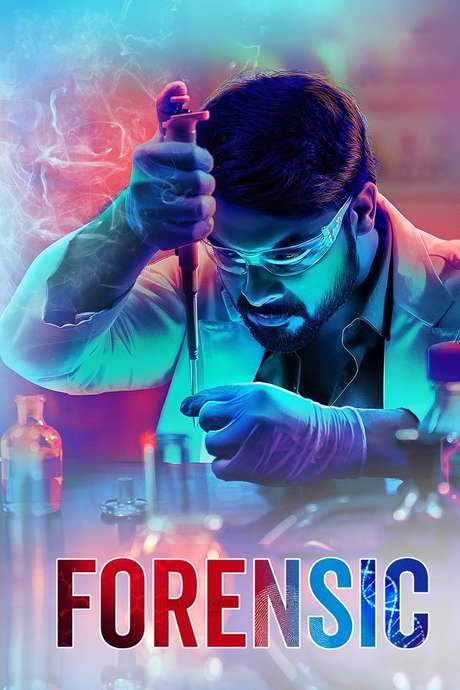
Forensic (2020) movie poster

Plot Summary

Forensic (2020) Plot Summary Explained

Release, runtime and language
2020 · 134 mins · Malayalam
Echo score 63
JustWatch #17,741 4
Directed by
Anas Khan, Akhil Paul
Starring
Prathap Pothan, Rony David Raj, Anil Murali, Ramu, Mohan Sharma, Mamta Mohandas

A forensic analyst and an investigating officer team up to pursue a brutal serial killer while attempting to solve one of the most well-known cold cases within their departments. Their investigation delves into a disturbing series of crimes, demanding precision and expertise to uncover the truth and bring the perpetrator to justice.

On this page (5)
  1. 1 Where to watch
  2. 2 What happens: full plot
  3. 3 Plot questions answered
  4. 4 Movie threads
  5. 5 Every angle

Where to watch

Where to Watch Forensic (2020)

Where can you watch Forensic? Stream, rent or buy it in the US, including on aha, Netflix and Netflix Standard: current JustWatch availability with up-to-date prices.

Streaming availability powered by JustWatch

Full plot summary · contains spoilers

What Happens in Forensic: Full Plot Summary

The whole story of Forensic (2020) explained, from the opening scene to the final frame: every key event, every twist and what it all adds up to. Read it as a quick recap before the sequel, to check a scene you missed, or to finally understand what really happened.

A disturbing pattern of child-killer murders unfolds in Thiruvananthapuram, drawing attention to a hidden psychology thatavoids easy explanations. In a chilling prologue, a young boy is shown vandalizing the remnants of slaughtered animals, an act that his father harshly disciplines, setting the stage for a fractured family history that will surface years later. As the boy grows, the story turns toward a calculated killer who moves with unsettling ease through spaces designed for children, all while leaving investigators with few motives and more questions. The investigation lands in the hands of Rithika Xavier [Mamta Mohandas], an ACP who relentlessly pursues a serial pattern even when the trail grows murky. Her case grows more complex when two abducted girls disappear in Thiruvananthapuram, and a sense of dread lingers over every alley and schoolyard.

To piece the puzzle together, she enlists a forensic team led by the minimally cooperative, yet keenly perceptive, Samuel John Kattookkaran [Tovino Thomas]. Samuel, the younger brother of Rithika’s estranged husband Xavier [Saiju Kurup], brings a sharper eye to the evidence: a killer who can slip through a 4-foot tunnel but can’t easily dispose of a body beyond a 5-foot wall, and someone who can blend seamlessly into a crowd of children. This professional tension—between Rithika’s personal history with Xavier and her reliance on Samuel’s expertise—creates a tense dynamic as the investigation widens. The case becomes personal for Rithika when an eyewitness places a boy at the scene of a dead body dump, forcing her to consider a troubling possibility: the killer might be a child masquerading as a killer and moving through the city with calculated anonymity.

Behind the scenes, the narrative threads expand through medical expertise that probes the killer’s mindset. Dr. Jayakumar Menon [Prathap Pothan], a clinical therapist, has previously treated a boy named Reuben Elias, whose troubling behaviors align with the emerging profile. Another key figure, Dr. Alphonse Kurian [Giju John], a clinical psychologist who has counselled the children at risk, becomes central to the story’s most shocking revelation. As the body count rises near the Burma Colony outskirts, Abdul Wahab [Renji Panicker], a retired police officer, volunteers to run DNA analyses that resurrect a decade-old case tied to Rithika’s early career. The investigation expands beyond a single suspect, drawing in a web of past traumas, professional reputations, and the fragile boundaries between child psychology and murderous intent.

The plot thickens when three girls from the Burma Colony are murdered in rapid succession, and the body of another victim is found on a school bus. The police initially frame the bus driver Ubaid Ahmed [Dhanesh Anand], but his innocence is proven only to reveal a more intricate conspiracy at work. A second victim is abducted while the investigation teeters on a knife’s edge, and Samuel’s theory of a second personality behind the child killer gains traction. With the help of Shikha Damodar [Reba Monica John], an eyewitness and ally within the team, the detectives connect the dots to a DNA match from the Burma Colony case, deepening the sense that a mastermind is orchestrating the killings from behind a child’s façade.

The investigation shifts as Samuel and Rithika pursue every lead—checking the hospital’s security footage, canvassing medical staff, and tracing the movements of hundreds of people who could have been in the right place at the wrong time. When Rithika finally corners Reuben, he delivers a disturbing, almost apocalyptic denial, which is interpreted as a confession by the team. Samuel sees through the deception, suspecting that Reuben is acting under the influence of a higher power, possibly the mastermind, and the tension escalates as Reuben’s own actions become a crucial piece of the puzzle.

As the net tightens, Ubaid’s case takes a dramatic turn. A Violet Honda Civic seen near the station becomes a critical clue, and Samuel’s relentless pursuit leads to a confrontation in a remote forested area. An abducted victim’s mother and the rest of the team race against time to rescue Navya, Navya’s whereabouts hounding the investigators as they chase the killer’s trail. In a pivotal moment, a revelation surfaces: Alphonse’s patient-turned-predator past—Naveen’s fatherhood and a blood cancer diagnosis—drives him to manipulate events as revenge, using two DNA sets to evade detection after undergoing a bone marrow transplant. This dual-DNA twist allows the mastermind to appear untouchable, tying the ongoing murders to Alphonse in a way no one anticipated.

A flashback sequence unpacks the truth: Samuel’s earlier conversations with Shikha hint that Alphonse’s two DNA profiles could be the key to the mystery. When Rithika and Xavier finally locate Navya within a narrow radius of Ubaid’s last known location, the stakes rise higher as Alphonse’s plan collapses around him. In a dramatic confrontation, Alphonse lunges at Samuel in a car, and a fateful decision leads to Alphonse’s death when the car’s seat belt is forcibly disengaged—an act that Samuel later reveals in the inquiry. The killer’s web begins to unravel as Navya’s safety becomes the primary objective, with Rithika taking a two-month leave to focus on her family while still tracking a new case and the forensic team she has come to rely on.

In the end, it becomes clear that the threads of vengeance, psychological trauma, and maternal fear have driven a complex, morally ambiguous plot. Alphonse’s death closes one chapter, but the implication lingers: Samuel’s moral lines have blurred as he acknowledges that he has crossed boundaries in pursuit of justice. The story closes on a note of fragile reconciliation—Rithika attempts to balance a renewed family life with the ongoing pressure of unresolved cases—while the brutal reality remains: a mastermind can hide in plain sight, using the broken connections between professionals and families to mask a carefully constructed plan. The narrative leaves viewers with a somber reflection on the lengths to which fear, guilt, and revenge can drive people, and the delicate line between protector and perpetrator that a few characters are forced to negotiate.
Last updated: February 25, 2026 at 08:22

Was this helpful?

Plot questions answered

Forensic Plot Explained: Your Questions Answered

The questions people ask most about Forensic (2020): what happens in the confusing scenes, why the characters do what they do, the twists, hidden details and what the ending means. Each answer contains spoilers.

Q1

Why was Reuben Elias suspected as the child killer in Forensic?

Reuben Elias became a prime suspect after an eyewitness reported seeing a boy disposing of a body near the crime scenes. His profile matched the forensic analysis, someone who could slip through a 4-foot tunnel but not climb over a 5-foot wall, and someone who could blend in with groups of children. Additionally, Dr. Jayakumar Menon confirmed that Reuben had been his patient years earlier with documented murderous tendencies, making him appear to fit the psychological profile investigators were building.

Foreshadowing: Earlier scenes show investigators analyzing the killer's physical capabilities, leading them to conclude the perpetrator was a child.

  • reuben elias
  • child killer
  • suspect
  • serial killer investigation
Q2

How did Dr. Alphonse manipulate Reuben Elias into acting as the killer?

Alphonse, a clinical psychologist, used his professional position to manipulate Reuben, who had pre-existing mental health issues. Through what appears to be a hearing aid device, Alphonse planted instructions and signals that caused Reuben to carry out actions while believing he was acting on his own impulses. Reuben was essentially a puppet, killing and abducting on Alphonse's command while the real mastermind remained hidden behind a child's façade.

Foreshadowing: Samuel notices the inquest footage of Reuben's 'confession' looks coerced, hinting at external manipulation.

  • alphonse
  • reuben
  • manipulation
  • hearing aid
  • mastermind
Q3

What was the dual DNA twist in Forensic that helped Alphonse evade detection?

Alphonse underwent a bone marrow transplant which gave him two distinct DNA profiles, the original one and that of his donor. This dual DNA allowed him to appear as both himself and another person during the murders, making it appear that two different people were responsible. The Burma Colony murders from ten years earlier matched one DNA profile, while current murders matched another, creating the illusion of a copycat or separate killer.

Foreshadowing: Samuel's earlier conversations with Shikha hint that Alphonse's two DNA profiles could be the key to the mystery.

  • dual dna
  • bone marrow transplant
  • alphonse
  • dna match
  • burma colony
Q4

Why did Dr. Alphonse become a serial killer in Forensic?

Alphonse's transformation began in childhood when his father violently punished him for hiding animal organs under his bed, an early sign of his disturbed psychology. As an adult, after learning he had blood cancer and becoming the father of Naveen, Alphonse developed a burning desire for revenge against society and the professionals who had failed to address his psychological issues. His cold case from ten years earlier and his son's health became catalysts for his killing spree.

Foreshadowing: The opening prologue shows the young boy stealing organs and being beaten by his father, establishing his traumatic origins.

  • alphonse motive
  • revenge
  • childhood trauma
  • blood cancer
  • serial killer origins
Q5

Why did Samuel kill Alphonse during their car confrontation in Forensic?

In the final showdown, Samuel and Alphonse fought in a car in a remote forested area. During the confrontation, Samuel forcibly unbuckled Alphonse's seat belt, causing the car to crash and resulting in Alphonse's death. Samuel later revealed this action during the inquiry, acknowledging he had crossed moral boundaries in pursuit of justice. This act marked a significant moral turning point for Samuel, whose ethical lines had blurred throughout the intense investigation.

Foreshadowing: Throughout the investigation, Samuel shows increasingly ruthless methods, setting up his willingness to take extreme action.

  • samuel
  • alphonse
  • car crash
  • death
  • seat belt
  • final confrontation
Q6

What was Alphonse's connection to the Burma Colony murders in Forensic?

The Burma Colony murders were a decade-old serial killing case that Alphonse had committed before the events of the film. When retired officer Abdul Wahab ran DNA analyses, the results linked the current murders to these earlier killings, revealing that the same person was responsible for both sets of crimes. This connection helped investigators realize they were dealing with one mastermind rather than a copycat killer.

Foreshadowing: Rithika's early career was involved in the original Burma Colony case, adding personal stakes to the investigation.

  • burma colony
  • cold case
  • dna match
  • decade old case
  • serial murders
Q7

Why was bus driver Ubaid Ahmed wrongly arrested in Forensic?

Ubaid Ahmed was arrested when a body was found on his school bus route, and initial evidence seemed to point to him as the killer. However, he was proven innocent when another victim was abducted and killed while he was in police custody, definitively establishing that someone else was responsible. The framing was part of Alphonse's elaborate scheme to misdirect the investigation and protect himself.

Foreshadowing: The investigation purposely follows false leads, demonstrating Alphonse's manipulation of police procedures.

  • ubaid ahmed
  • bus driver
  • wrong arrest
  • innocent
  • frame up
Q8

How did forensic evidence prove the killer was a child in Forensic?

Samuel identified key physical constraints that pointed to a child perpetrator: the killer could squeeze through a narrow 4-foot tunnel at crime scenes but could not climb over a 5-foot wall to escape. Additionally, the killer's ability to blend seamlessly into crowds of children suggested someone of similar age. This analysis shifted the investigation's focus from adult suspects to a juvenile perpetrator, before the deeper twist of manipulation was revealed.

Foreshadowing: Samuel's forensic expertise drives the initial theory that changes the entire direction of the case.

  • forensic evidence
  • child killer
  • tunnel
  • wall
  • physical constraints
  • samuel
Q9

How did Rithika's personal history affect the forensic investigation in Forensic?

Rithika's estranged husband Xavier was the brother of forensic analyst Samuel John Kattookkaran, creating professional tension throughout the case. Despite their personal history, Rithika relied heavily on Samuel's expertise to solve the complex murders. This dynamic added emotional weight to the investigation and ultimately contributed to reconciliation between Rithika and Xavier as they worked together to save Navya.

Foreshadowing: The strained family relationship is established early, with Samuel's assignment to the case creating immediate friction.

  • ritika
  • xavier
  • samuel
  • family conflict
  • estranged husband
  • brother

Movie threads

More Movies Like Forensic, by Mood & Story

Curated lists built around what makes Forensic tick: the same mood, the same kind of story or the same emotional payoff. Each list explains why these movies belong together.

Dark procedural thrillers with heavy trauma like Forensic

High-intensity thrillers where forensic experts hunt killers while grappling with deep-seated trauma. Explore movies like Forensic that combine a fast-paced, complex crime investigation with a dark tone and heavy emotional weight. If you liked the intense procedural elements and psychological depth of Forensic, these selections deliver a similar grim and suspenseful experience.

  • suspenseful
  • grim
  • disturbing
  • anxious
  • tense
  • psychological
  • Tone: dark, tense, grim
  • Pacing: fast, relentless
Why these movies?

The story pattern: The narrative follows a high-stakes investigation, often involving a serial killer or cold case, where the procedural puzzle is intertwined with the personal trauma of the investigators. The plot is driven by discoveries, twists, and a race against time, culminating in a resolution that provides catharsis after a harrowing journey.

Why they belong together: These films are grouped by their shared focus on a dark, intense crime investigation led by professionals. They feature complex plotting, a fast pace, heavy emotional themes, and a balance between procedural detail and psychological drama, creating a consistently suspenseful and grim atmosphere.

Cathartic justice after harrowing investigations like Forensic

Bleak journeys that culminate in a satisfying, happy ending after intense emotional turmoil. Find movies like Forensic where a dark and emotionally heavy story resolves with a happy ending. If you appreciated Forensic's blend of grim suspense and ultimate catharsis, these films deliver a similarly intense journey followed by a satisfying sense of justice and reconciliation.

  • disturbing
  • tragic
  • tense
  • unsettling
  • cathartic
  • satisfying
  • Tone: dark, heavy, ultimately hopeful
  • Pacing: fast, building to resolution
Why these movies?

The story pattern: The narrative structure involves a descent into darkness, following characters as they confront extreme evil or tragedy. The journey is fraught with tension and emotional weight, but the plot is engineered to provide a morally satisfying conclusion, often with the villain's defeat and the restoration of order or family, creating a hopeful endpoint.

Why they belong together: This thread connects films that master the balance between subjecting the audience to a bleak, intense experience and rewarding them with a definitive, happy resolution. The shared pattern is the emotional rollercoaster from despair to hope, making the darkness palatable and the conclusion deeply satisfying.

Every angle

Forensic (2020) Explained: Plot, Timeline & Characters

Everything about Forensic in one place: what happens in the plot summary, the timeline in chronological order, the characters and meaning and a spoiler-free summary. What's After the Movie adds the cast, box office and post-credit scenes.

Coming soon on iOS and Android

The Plot Explained Movie Summary App

Plot summaries, endings explained and timelines on your phone. Catch up on any movie in minutes, save your favorites and never miss a twist again.

Be the first to know when we launch. Your email stays private, always.

Learn more about the app