












Plot Explained Spoilers guaranteed!
Plot Explained

Browse by genre

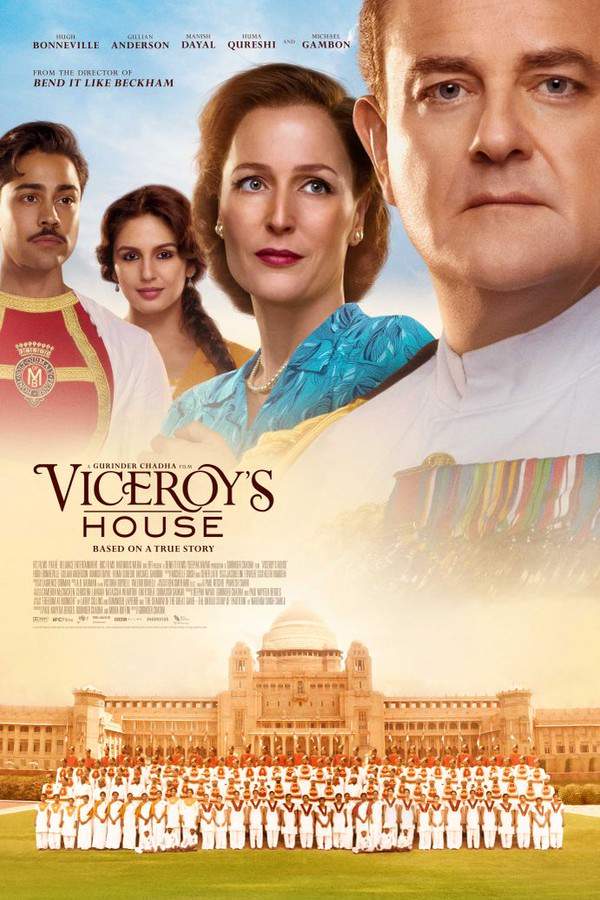
Viceroy's House (2017) movie poster

Timeline

Viceroy's House (2017) Timeline Explained – Every Event in Order

Release, runtime and language
2017 · 106 min · English
Echo score 58
JustWatch #22,995 1
Directed by
Gurinder Chadha
Starring
Gillian Anderson, Hugh Bonneville, Michael Gambon, Simon Callow, Manish Dayal, David Hayman
Budget
$8.5M

In 1947, Lord Mountbatten and his wife Edwina are tasked with overseeing the transition of British India to independence. As the final viceroy, Mountbatten confronts the immense challenge of peacefully transferring power amidst escalating religious tensions and cultural divides. Set within the grandeur of Viceroy's House, the couple must navigate a complex and volatile situation that threatens to destabilize the nation as it approaches freedom.

On this page (6)
  1. 1 Where to watch
  2. 2 Events in order (15)
  3. 3 Timeline questions answered
  4. 4 Movie threads
  5. 5 Movies like Viceroy's House
  6. 6 Every angle

Where to watch

Where to Watch Viceroy's House (2017)

Where can you watch Viceroy's House? Stream, rent or buy it in the US, including on AMC+, Philo and Sundance Now: current JustWatch availability with up-to-date prices.

Streaming availability powered by JustWatch

15 events in order · contains spoilers

Viceroy's House Timeline: Events in Chronological Order

Every key event of Viceroy's House (2017) in order, scene by scene, with when and where it takes place. Use it to untangle flashbacks, time jumps and parallel storylines, to refresh your memory before the sequel or to find the exact scene you are thinking of.

  1. Arrival in India

    In 1947, Lord Mountbatten arrives at the Viceroy's House in Delhi, bringing with him his wife Edwina and their daughter Pamela. Their arrival marks a significant moment as Britain prepares to announce the end of its colonial rule in India after three centuries.

    When
    1947
    Where
    Viceroy's House, Delhi
  2. Announcement of Independence

    As the British government declares its intention to depart from India, the nation stands at a crossroads, burdened by the effects of war. The toll of conflict has left both colonizers and the colonized weary and in need of resolution.

  3. Conflict Among Leaders

    Mountbatten takes on the challenging role of mediating between prominent leaders Jawaharlal Nehru and Muhammad Ali Jinnah. Nehru champions the idea of a unified India, while Jinnah is determined to secure a separate state for Muslims, reflecting deepening divides within the country.

  4. Pug Ismay's Skepticism

    Lord Lionel 'Pug' Ismay expresses doubts about the ability of Indians to self-govern, highlighting the colonial mindset prevalent among British officials. This skepticism complicates the already tense atmosphere in the Viceroy's House as discussions about independence unfold.

    Where
    Viceroy's House, Delhi
  5. Edwina Faces Social Inequities

    Edwina Mountbatten becomes increasingly alarmed by the dire social conditions in India, including a staggering illiteracy rate and high infant mortality. Motivated by her compassion, she urges her husband to take meaningful action to alleviate the suffering of the Indian populace.

  6. Jeet and Aalia's Past

    Jeet, Lord Mountbatten's valet, encounters Aalia, a woman he once loved under complex circumstances. Their love story is interwoven with historical tensions, as Aalia's father was imprisoned for his support of Gandhi, complicating their reunion.

  7. Partition Discussions

    As political discussions intensify, Jinnah remains firm on the necessity of partition. He draws parallels to British actions in other regions, asserting that separation is essential for maintaining Muslim rights, foreshadowing the turmoil to come.

  8. Meeting with Gandhi

    In a crucial meeting, Gandhi suggests involving Jinnah in the formation of the new Government of India. Nehru's reluctance reflects the divisions among leaders, complicating the push for unity and paving the way for the eventual partition.

  9. Hastened Independence Process

    As violence erupts across India, the British expedite the process of transferring power. Mountbatten, who initially believed in a unified India, must reconcile his ideals with the pressing reality of communal strife and impending division.

  10. Territorial Divisions Revealed

    With only days remaining before independence, Mountbatten discovers an old policy document outlining the territorial divisions. Realizing that millions will be displaced, he grapples with the moral implications of the decisions being made.

  11. Escalation of Violence

    As communal violence escalates, the pressures on the Viceroy's household intensify. Mountbatten’s servants face difficult choices regarding their loyalties amid the chaos, highlighting the deeply ingrained divisions in society.

  12. Jeet and Aalia's Complications

    With the partition deadline approaching, Jeet and Aalia struggle with their feelings amidst the turmoil. Aalia’s commitment to her fiancé Asif adds layers of complexity to their rekindled relationship as cultural and familial obligations weigh heavily.

  13. Train Attack

    Tragedy strikes when Jeet learns that Aalia’s train to Pakistan has been attacked, leaving him heartbroken. This attack exemplifies the cruel realities of partition and the devastating impact it has on personal lives.

  14. Mountbattens Assist Refugees

    In the aftermath of chaos and a rising refugee crisis, the Mountbattens resolve to stay in India and help those displaced. Their actions reflect a shift in responsibility as they strive to provide aid amid the escalating humanitarian disaster.

  15. Reunion of Jeet and Aalia

    After enduring immense hardship, Jeet crosses paths with Aalia, who miraculously survived the train attack. In a poignant reunion, their love begins to blossom again, symbolizing hope amidst the ashes of turmoil and despair.

Last updated: November 07, 2024 at 23:29

Was this helpful?

Timeline questions answered

Viceroy's House Timeline Explained: Your Questions Answered

When does it happen, and why in that order? The questions people ask about the chronology of Viceroy's House (2017): time jumps, flashbacks, cause and effect between scenes and the correct order of events, each answered with spoilers.

Q1

Why did Britain decide to leave India in 1947?

Britain decided to leave India in 1947 because the country was exhausted after World War II, during which 2.5 million Indians fought for Britain hoping for freedom in return. The British could no longer sustain their empire in the East, and the escalating Hindu-Muslim riots made maintaining control increasingly impossible. The war had depleted Britain's resources and military strength, making continued colonial rule economically and logistically unfeasible.

  • britishraj
  • independence
  • 1947
  • worldwar2
  • colonialism
Q2

Why did Muhammad Ali Jinnah insist on partition?

Jinnah insisted on partition because he feared that Muslims would be marginalized in a Hindu-majority India. He cited British actions in Ireland and Palestine as precedents, arguing that a separate Pakistani state was necessary to protect Muslim rights and ensure their political safety. Despite Mountbatten's attempts at mediation, Jinnah remained adamant that only a divided India could prevent ongoing religious conflict.

  • jinnah
  • muslimleague
  • pakistan
  • religiousdivide
  • minorityrights
Q3

Why did Jawaharlal Nehru agree to partition despite opposing it?

Nehru agreed to partition because the escalating violence across India made continued unity impossible. When Gandhi suggested including Jinnah in forming the new Government of India, Nehru refused and sided with partition. The mounting communal riots and the reality that millions of people were already being displaced forced Nehru to accept what he had fought against, prioritizing some form of stability over his vision of a unified nation.

  • nehru
  • indianationalcongress
  • partition
  • gandhi
  • unity
Q4

What was Mountbatten's role in the partition of India?

Mountbatten served as the last Viceroy tasked with overseeing Britain's withdrawal and facilitating the transfer of power. Initially believing in a unified India, he ultimately had to accept partition as the only viable solution to prevent further bloodshed. He was shown a previously hidden policy document from Ismay outlining territorial divisions, realizing that millions would be displaced by decisions made in just a few days.

  • mountbatten
  • viceroy
  • transferpower
  • britishgovernment
  • independence
Q5

Why did Gandhi suggest including Jinnah in the new government?

Gandhi suggested inviting Jinnah to help form the inaugural Government of India because he believed including all parties was essential for a peaceful transition. Gandhi's philosophy prioritized reconciliation and unity, and he that into the government hoped bringing Jinnah structure might prevent the complete breakdown of communal relations. However, Nehru rejected this approach, viewing it as unacceptable compromise.

  • gandhi
  • jinnah
  • negotiation
  • governmentformation
  • peace
Q6

What happened to Aalia's train to Pakistan?

Aalia's train to Pakistan was attacked during the violence surrounding partition, leaving Jeet heartbroken upon hearing the news. However, Aalia miraculously survived the attack. This devastating event occurs as the couple's relationship is complicated by Aalia's engagement to Asif and the cultural divisions tearing the nation apart.

Foreshadowing: The escalating violence that spreads across India foreshadows this tragic attack on civilians traveling between the new borders.

  • aalia
  • jeet
  • partition
  • trainattack
  • refugees
Q7

Why did Edwina Mountbatten become so invested in India's problems?

Edwina Mountbatten became deeply invested after discovering India's dire social conditions, including a 92% illiteracy rate and extremely high infant mortality. Her compassionate nature drove her to urge her husband to take action. She formed strong relationships with the Indian staff, particularly Ram Lal Chandra, the Head Chef, and consistently advocated for improving the lives of those working in Viceroy's House.

  • edwina
  • socialissues
  • illiteracy
  • health
  • compassion
Q8

What was the document that Ismay showed Mountbatten about partition?

Ismay revealed a previously kept policy document outlining territorial divisions between India and Pakistan. This document had been prepared in advance by British officials but was hidden from Mountbatten. When he discovered it with only days before the transfer of power, he realized he had been used as a pawn and that millions of people would be displaced based on decisions made in extreme haste.

Foreshadowing: Ismay's earlier skepticism about India's self-governance hints at the British establishment's preparations for division all along.

  • ismay
  • partitionmap
  • borders
  • policy
  • displacement
Q9

Why did the British rush the independence process?

The British hastened the independence process because violence was erupting across India, with Hindu-Muslim riots resulting in countless deaths. The British government wanted to complete the transfer before the situation deteriorated further and before their remaining forces became overwhelmed. The mounting casualties created urgent pressure to finalize boundaries and withdraw, even though many critical decisions remained unresolved.

  • britishexit
  • urgency
  • violence
  • riots
  • timeline
Q10

Did Jeet and Aalia end up together?

Yes, Jeet and Aalia reunited after the chaos of partition. After Aalia survived the train attack, Jeet threw himself into helping refugees, eventually crossing paths with her again. Their love story, which began years earlier when Jeet was a policeman and Aalia's father was imprisoned for supporting Gandhi, emerged from the ashes of turmoil, offering a hopeful conclusion amid the tragedy of partition.

Foreshadowing: The film hints at their rekindled connection as Aalia begins acknowledging her feelings for Jeet before the train attack occurs.

  • jeet
  • aalia
  • love
  • reunion
  • hopep
Q11

Why did the Mountbattens stay in India after independence?

The Mountbattens chose to remain in India after the transfer of power to help with the humanitarian crisis caused by partition. With millions of refugees fleeing violence and the country in chaos, they dedicated themselves to aiding displaced persons rather than immediately returning to Britain. This decision reflected their shift from colonial rulers to volunteers during one of history's largest migrations.

  • mountbattens
  • refugees
  • aid
  • poscolonial
  • humanitarian

Movie threads

More Movies Like Viceroy's House, by Mood & Story

Curated lists built around what makes Viceroy's House tick: the same mood, the same kind of story or the same emotional payoff. Each list explains why these movies belong together.

Sweeping historical dramas like Viceroy's House

Epic history unfolds through the eyes of those shaping and surviving it. For viewers who enjoyed the grand scale and personal stakes of Viceroy's House, this section features movies that explore other major historical turning points. These films blend political intrigue with human drama, offering a similar mix of tense negotiation, ethical dilemmas, and emotional journeys set against a backdrop of real-world events.

  • grand
  • somber
  • tense
  • urgent
  • tragic
  • hopeful
  • Tone: tense, somber, grand
  • Pacing: steady, deliberate
Why these movies?

The story pattern: These narratives typically follow a dual track: a macro-level story of political leaders, diplomats, or revolutionaries making difficult decisions under immense pressure, and a micro-level story of ordinary people or supporting characters whose lives are irrevocably altered by those decisions. The plots often build steadily towards a known historical outcome, creating a sense of inevitable, often tragic, consequence.

Why they belong together: They are grouped by their shared focus on a specific historical event, their balance between grand political scope and intimate human drama, and their ability to generate tension and emotional weight from the collision of personal desires with historical forces.

Movies with bittersweet historical endings like Viceroy's House

Stories where systemic collapse is countered by small acts of human resilience. If the ending of Viceroy's House, with its mix of political failure and personal hope, resonated with you, explore these similar films. They feature stories where a bleak historical outcome is tempered by moments of human connection and resilience, creating a powerful and emotionally complex viewing experience.

  • bittersweet
  • tragic
  • hopeful
  • somber
  • heavy
  • resilient
  • Tone: bittersweet, tragic, hopeful
  • Pacing: steady, character-driven
Why these movies?

The story pattern: The narrative pattern involves a central, often unavoidable, large-scale tragedy or failure that forms the backbone of the plot. The characters are caught in this maelstrom, and while they cannot prevent the overarching disaster, their personal arcs may conclude with a measure of hope, redemption, or connection, providing emotional counterpoint to the historical bleakness.

Why they belong together: These movies share a specific emotional structure: they deliver the heavy emotional impact of a tragic historical event while simultaneously offering a cathartic, though limited, sense of hope through focused character resolutions. This creates a uniquely bittersweet and thoughtful tone.

If you liked this

Movies Like Viceroy's House

Similar movies to Viceroy's House: the same genre, themes or kind of story. Each one comes with its own plot summary, timeline and ending explained.

Browse all movie summaries

Every angle

Viceroy's House (2017) Explained: Plot, Timeline & Characters

Everything about Viceroy's House in one place: what happens in the plot summary, the timeline in chronological order, the characters and meaning and a spoiler-free summary. What's After the Movie adds the cast, box office and post-credit scenes.

Coming soon on iOS and Android

The Plot Explained Movie Summary App

Plot summaries, endings explained and timelines on your phone. Catch up on any movie in minutes, save your favorites and never miss a twist again.

Be the first to know when we launch. Your email stays private, always.

Learn more about the app