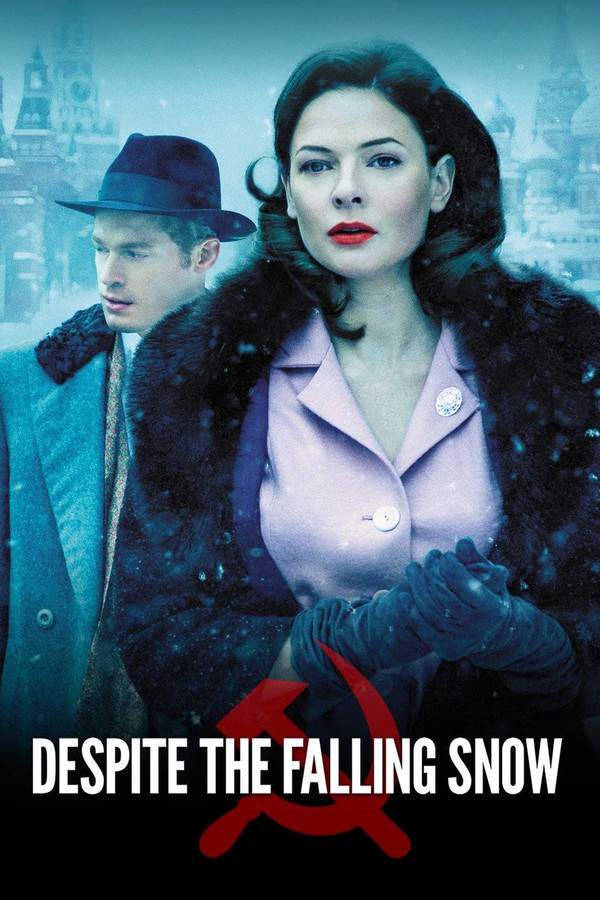
Set in Moscow during the final months of Stalin’s rule, from late 1952 to early 1953, the film unfolds under the heavy shadow of the Doctors’ Plot and the rising surge of anti-Semitic sentiment. In this tense atmosphere, a single communal apartment on Bolshaya Pirogovka becomes a microcosm of a society straining under shifting loyalties, class pressures, and competing ideologies.
The Petkevich family, Polish-Russian intellectuals, inhabit that shared space with a chorus of neighbors, and their residence becomes a crossroads where personal lives intersect with political fear. The cramped rooms and peeling walls reflect how tightly people hold onto ideas about family, tradition, and progress while the city around them pushes for conformity.
Pavel Kazimirovich [Andrey Smolyakov], a philosophy professor who is openly critical of Marxism, and his aristocratic wife Angelina Fedorovna [Irina Rozanova] struggle to adapt to the realities of Soviet life. Their другрly debates about liberty and duty reveal a quiet, stubborn hope that intellectual integrity might survive the new order even as pressures tighten around them.
Their daughter Dina [Yuliya Snigir], described as bright and beautiful, steps into a new chapter when she marries Boris [Aleksandr Ustyugov], a Communist metro construction worker and war veteran. Boris’s arrival brings a clash of generations and classes into the household, spotlighting the ongoing tension between the old world—scripted by tradition and privilege—and the new Soviet order that promises hard work and loyalty above all.
The communal apartment also shelters a Jewish doctor [Leonid Yarmolnik] and his family, whose presence foregrounds the era’s pervasive anti-Semitism. Arrests, betrayals, and acts of quiet survival ripple through the building, with Pavel eventually being swept up in the political crackdown, and Boris finding himself accused of betraying his father-in-law, which strains bonds and reshapes loyalties within the group.
Amid the grim backdrop, small moments of connection offer a fragile sense of hope. Dina’s path crosses with Ivan [Aleksandr Kuznetsov], an MGB officer with a tragic past, and their brief romance hints at the possibility of renewal even as fear and suspicion linger in every corridor. The film keeps a careful balance between intimate human moments and the larger state-driven cruelty that frames them.
As Stalin’s death arrives, the story suggests a turning point—an opening to a new public consciousness and a chance for personal reinvention—yet the scars of oppression remain, reminding viewers that freedom in this era is always earned in small, stubborn acts of courage and fidelity. The narrative remains attentive to how ordinary lives navigate extraordinary times, painting a portrait of a city and a people on the cusp of uncertain change.