Plot Explained Spoilers guaranteed!
Plot Explained

Browse by genre

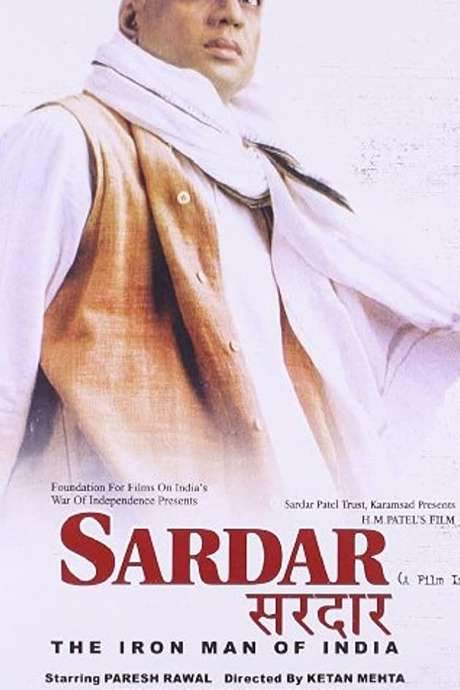
Sardar (1993) movie poster

Plot Summary

Sardar (1993) Plot Summary Explained

Release, runtime and language
1993 · 175 mins · Hindi
Directed by
Ketan Mehta
Starring
Satish Kaushik, Paresh Rawal, Suhasini Mulay, Benjamin Gilani, Annu Kapoor, Ashish Vidhyarthi

The 1993 Indian biographical drama chronicles the life of Sardar Vallabhbhai Patel, a pivotal leader in India’s struggle for independence and the architect of its political integration. Directed by Ketan Mehta and scripted by acclaimed playwright Vijay Tendulkar, the film portrays Patel’s steadfast determination and his role in uniting the nation’s princely states.

On this page (5)
  1. 1 What happens: full plot
  2. 2 Plot questions answered
  3. 3 Movie threads
  4. 4 Movies like Sardar
  5. 5 Every angle

Full plot summary · contains spoilers

What Happens in Sardar: Full Plot Summary

The whole story of Sardar (1993) explained, from the opening scene to the final frame: every key event, every twist and what it all adds up to. Read it as a quick recap before the sequel, to check a scene you missed, or to finally understand what really happened.

The film opens with a young Sardar Patel, Paresh Rawal sitting around a card table with friends, where he mocks Mahatma Gandhi's methods for achieving independence. His stance shifts when his brother introduces him to Gandhi; after listening to a stirring lecture, he joins the movement. He soon channels his energy into organizing a network of nonviolent protests across Gujarat, leading peaceful, well-coordinated actions that showcase both discipline and political acumen.

As the country moves toward independence, the story follows Patel through the Quit India era and the mounting pressures that shape the road to partition. He becomes a pivotal voice within the Congress Working Committee and toward Jawaharlal Nehru, Benjamin Gilani, urging them to consider a plan that would partition the subcontinent in the face of rising communal violence. Patel realizes that delaying action could spark civil war, and his calculations weigh heavily as riots erupt and the nation teeters on the brink.

Following partition, Patel shifts his focus to stitching together a fractured map by coaxing the princely states to join the Indian Union. The film details his handling of Kashmir, Junagadh, and Hyderabad, balancing diplomacy, power, and the realities on the ground as he negotiates with rulers and local leaders alike. It also portrays his tensions with Nehru and, after Gandhi's death, the ways in which the two men work toward a shared vision for a young nation.

The closing scenes frame Patel in the quiet desert village of Shahpura in Rajasthan, reflecting on a country that stretches from Kashmir to Kanyakumari—one independent nation. The portrait emphasizes his lifelong drive to unify a diverse land through pragmatic leadership, conciliatory diplomacy, and a unifying vision.

Last updated: February 24, 2026 at 13:59

Was this helpful?

Plot questions answered

Sardar Plot Explained: Your Questions Answered

The questions people ask most about Sardar (1993): what happens in the confusing scenes, why the characters do what they do, the twists, hidden details and what the ending means. Each answer contains spoilers.

Q1

Why did Sardar Patel initially mock Gandhi's methods?

Young Sardar Patel initially ridiculed Gandhi's nonviolent approach because he saw it as impractical for achieving independence. He believed more aggressive methods would be more effective. However, after his brother introduced him to Gandhi and he attended a stirring lecture, Patel became convinced by Gandhian principles and joined the freedom movement, channeling his energy into organizing nonviolent protests across Gujarat.

Foreshadowing: The film opens with Patel playing cards with friends and dismissing Gandhi's policies, setting up his dramatic transformation.

  • sardar patel
  • gandhi methods
  • nonviolent protest
  • gujarat
  • satyagraha
Q2

Why did Sardar Patel support partition of India?

Patel advocated for partition because he believed delaying action could spark a full-scale civil war. Following the Direct Action Day riots in 1946, communal violence erupted across the subcontinent. Patel calculated that accepting partition might prevent an even broader civil war, even though he was a lifelong nationalist who had fought for a united India.

Foreshadowing: The film shows mounting communal tensions and riots that force Patel to consider partition as the lesser evil.

  • partition
  • direct action day
  • 1946 riots
  • civil war
  • nehrus
Q3

How did Sardar Patel integrate princely states into India?

After independence, Patel focused on unifying the fragmented map by convincing princely states to join the Indian Union. He used a combination of diplomacy, political pressure, and strategic negotiations with rulers and local leaders. His approach balanced diplomatic talks with firm political will to preserve national integrity, successfully integrating states like Kashmir, Junagadh, and Hyderabad.

Foreshadowing: The film establishes early that Patel was known for his organizational skill and pragmatic leadership.

  • princely states
  • integration
  • kashmir
  • junagadh
  • hyderabad
  • union of india
Q4

What was the Kashmir accession crisis?

The Kashmir crisis involved the princely state of Kashmir deciding whether to join India or Pakistan at independence. Patel worked to secure Kashmir's accession to India amid regional tensions and conflict. His diplomatic efforts aimed to prevent a broader war and align Kashmir with the new Indian state, though the issue remained complex due to the region's mixed religious population.

Foreshadowing: The timeline shows Kashmir's accession as a critical test of national integration after independence.

  • kashmir accession
  • pakistan
  • 1947
  • princely state
Q5

How did Sardar Patel handle Junagadh?

Junagadh was a princely state in Gujarat that attempted to secede and join Pakistan despite having a predominantly Hindu population. Patel dealt with these secessionist moves firmly, working to bring the state into the Indian Union. His strategy combined diplomacy with strong political action to reverse the illegal accession and preserve national integrity.

Foreshadowing: The film portrays Junagadh as one of several tests of Patel's resolve in keeping India united.

  • junagadh
  • gujarat
  • secession
  • pakistan
  • nawab
Q6

What was the Hyderabad integration issue?

Hyderabad was the largest princely state ruled by the Nizam who initially refused to join either India or Pakistan, declaring independence. Patel navigated complex political maneuvering to integrate Hyderabad into the Indian Union. The situation tested Patel's leadership and required a careful balance of diplomacy and political pressure to ensure the state's accession.

Foreshadowing: The film shows Hyderabad as the final and most challenging princely state integration.

  • hyderabad
  • nizam
  • 1948
  • princely state
  • accession
Q7

Why did Sardar Patel have differences with Nehru?

The film portrays differences between Patel and Nehru in their visions for India's future. Despite their disagreements, they worked together after Gandhi's death to shape the fledgling republic. Their partnership reflected a mature approach to differing opinions for the greater national good, as they tackled ongoing integration challenges and set the direction for India's governance.

Foreshadowing: The timeline shows both men collaborating to cement the union despite earlier tensions.

  • nehru
  • differences
  • congress
  • leadership
  • government
Q8

What was Direct Action Day and how did it lead to partition?

Direct Action Day was called by the Muslim League in 1946, resulting in violent riots across India. These communal riots convinced Patel that partition might be necessary to prevent all-out civil war. He persuaded the Congress Working Committee and Nehru to accept the partition plan, which ultimately led to the creation of India and Pakistan.

Foreshadowing: The film shows the escalating violence following Direct Action Day as the turning point for Patel's position on partition.

  • direct action day
  • 1946
  • muslim league
  • riots
  • partition plan
Q9

What was Sardar Patel's role in the Quit India Movement?

Patel played a key role in mobilizing resistance during the Quit India Movement of 1942. He helped drive the movement toward India's eventual freedom from British rule, using his organizational skills to coordinate protests and build political pressure. His leadership during this period established him as a central figure in the freedom struggle.

Foreshadowing: The film builds from his earlier Gujarat Satyagrahas to his national leadership role.

  • quit india
  • 1942
  • british rule
  • movement
  • congress
Q10

What was Sardar Patel's leadership style?

Patel was known for his pragmatic leadership, organizational acumen, and firm diplomatic approach. He combined discipline with political skill, effectively coordinating nonviolent protests in Gujarat before rising to national leadership. His style emphasized practical results over ideology, making him effective at negotiating with princes and managing complex political situations.

Foreshadowing: The film opens by showing his early organizational skills at the card table with friends.

  • leadership style
  • pragmatic
  • organizational skill
  • diplomacy
  • negotiation

Movie threads

More Movies Like Sardar, by Mood & Story

Curated lists built around what makes Sardar tick: the same mood, the same kind of story or the same emotional payoff. Each list explains why these movies belong together.

Political Nation Building Dramas like Sardar

Biographical stories of leaders who forged nations from conflict. Find more movies like Sardar that dramatize the political struggles of nation building. If you enjoyed the story of Sardar Patel unifying India, you'll appreciate these films about leaders, independence movements, and the difficult political integration of countries.

  • historical
  • political
  • serious
  • contemplative
  • urgent
  • patriotic
  • Tone: neutral, sober, decisive
  • Pacing: steady, methodical
Why these movies?

The story pattern: These narratives typically follow a chronological, steady-paced progression through major historical events, from the initial conflict or colonial rule to the ultimate achievement of sovereignty or unification. The central character's journey is one of unwavering determination, strategic negotiation, and managing internal and external conflicts.

Why they belong together: Movies are grouped here based on their shared focus on historical political leadership during formative national periods. They carry a serious, contemplative tone, high intensity due to the monumental stakes, and a heavy emotional weight, often concluding with a sense of hard-won accomplishment.

Heavy-Hitting Historical Biopics like Sardar

Serious dramas that immerse you in pivotal, high-stakes moments of history. Discover intense historical biopics similar to Sardar. If you liked the serious, weighty drama of Sardar Patel's story, explore these films that delve into the lives of influential figures during times of great conflict and change.

  • serious
  • contemplative
  • urgent
  • reflective
  • sober
  • weighty
  • Tone: serious, reflective, sober
  • Pacing: steady, immersive
Why these movies?

The story pattern: The narrative pattern follows a linear, factual dramatization of a real person's involvement in world-changing events. The journey is emotionally heavy, focusing on struggle, sacrifice, and the immense pressure of making decisions that affect millions, often culminating in a historically significant, hopeful conclusion.

Why they belong together: These films share a cohesive vibe defined by high intensity, a steady, contemplative pace, and a heavy emotional weight derived from their factual gravity. The tone is predominantly neutral and sober, prioritizing a respectful portrayal of history over sensationalism.

If you liked this

Movies Like Sardar

Similar movies to Sardar: the same genre, themes or kind of story. Each one comes with its own plot summary, timeline and ending explained.

Browse all movie summaries

Every angle

Sardar (1993) Explained: Plot, Timeline & Characters

Everything about Sardar in one place: what happens in the plot summary, the timeline in chronological order, the characters and meaning and a spoiler-free summary. What's After the Movie adds the cast, box office and post-credit scenes.

Coming soon on iOS and Android

The Plot Explained Movie Summary App

Plot summaries, endings explained and timelines on your phone. Catch up on any movie in minutes, save your favorites and never miss a twist again.

Be the first to know when we launch. Your email stays private, always.

Learn more about the app