Plot Explained Spoilers guaranteed!
Plot Explained

Browse by genre

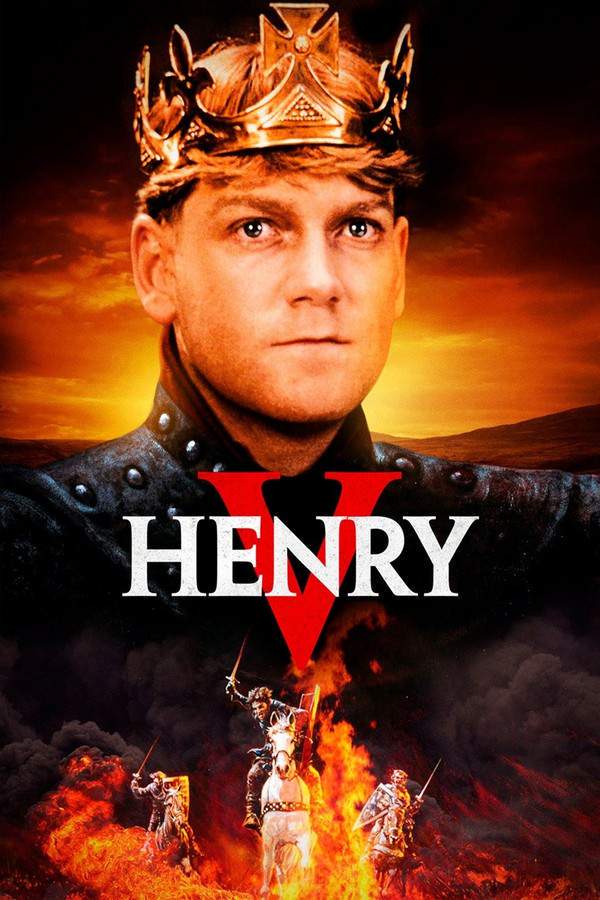
Henry V (1989) movie poster

Plot Summary

Henry V (1989) Plot Summary Explained

Release, runtime and language
1989 · 137 min · English
JustWatch #8,001 15
Starring
Derek Jacobi
Budget
$9M

During the 15th century in England, ambitious church officials plot to distract the young King Henry V from his progressive reforms. Their scheme involves inciting him to invade France. The cunning Archbishop of Canterbury attempts to influence the king’s decisions, but Henry V must ultimately decide whether to follow a path of war or uphold his sense of duty and honor.

On this page (7)
  1. 1 Where to watch
  2. 2 What happens: full plot
  3. 3 Plot questions answered
  4. 4 The book behind the movie
  5. 5 Movie threads
  6. 6 Movies like Henry V
  7. 7 Every angle

Where to watch

Where to Watch Henry V (1989)

Where can you watch Henry V? Stream, rent or buy it in the US, including on Amazon Prime Video, MGM Plus and Hoopla: current JustWatch availability with up-to-date prices.

Streaming availability powered by JustWatch

Full plot summary · contains spoilers

What Happens in Henry V: Full Plot Summary

The whole story of Henry V (1989) explained, from the opening scene to the final frame: every key event, every twist and what it all adds up to. Read it as a quick recap before the sequel, to check a scene you missed, or to finally understand what really happened.

The film opens with the character Chorus, portrayed by Derek Jacobi, who sets the stage by walking through a deserted film studio. He introduces the narrative before dramatically opening the doors to the main action, reappearing intermittently to offer insights and drive the plot forward.

Act 1 unfolds in the early 15th century, specifically the year 1422 A.D., where the Bishop of Ely (Alec McCowan) and the Archbishop of Canterbury (Charles Kay) plot to divert the attention of young King Henry V (Kenneth Branagh) from a decree threatening the Catholic Church's property. They persuade him to consider an invasion of France using the claim that he is the rightful heir to the French throne, arguing that the Salic law unjustly denies him this right. With the backing of noblemen The Duke of Exeter (Brian Blessed) and Westmoreland (Paul Gregory), they convince Henry to declare war, leading to a confrontation with Mountjoy (Christopher Ravenscroft), the Dauphin's envoy. The Dauphin's disdainful gift of tennis balls abates Henry's initial anger but ignites his resolve to claim his birthright.

In Act 2, King Henry cunningly exposes three of his high-ranking officers—Richard, Earl of Cambridge, Sir Thomas Grey, and Henry, Lord Scroop of Masham—previously plotting to betray him. By feigning an inquiry about an insolent offender, he prompts their own confession of guilt, leading to their arrest for treason. After a violent display, Henry orders their execution before embarking across the English Channel. Meanwhile, in France, King Charles VI (Paul Schofield) and his court debate Henry's threats. The Dauphin's bravado is mitigated by the concerns of his peers over Henry's formidable heritage and prior English victories.

In Act 3, Henry delivers an inspiring speech to his troops as they besiege the fortified French city of Harfleur. When the Dauphin fails to send reinforcements, the governor capitulates under Henry's assurance of mercy. Concurrently, Katherine (Emma Thompson), the French princess betrothed to Henry prior to the conflict, struggles to learn English, observing her father’s anxiety regarding the war. Following a series of grim encounters, Henry asserts the strength of his beleaguered forces when confronted by a French herald demanding his surrender.

During Act 4, the eve of the famous Battle of Agincourt on October 22, 1415, reveals a stark contrast between the impatient French nobility and the solemn English troops. Disguised, Henry mingles among his soldiers, reflecting on his leadership and the bloodshed to come, leading to an intense encounter with Williams, where they agree to a duel for the next day. Despite being heavily outnumbered, Henry’s fervent St. Crispin's Day Speech boosts his soldiers' morale, and the ensuing battle showcases the devastating effectiveness of English archers. As chaos unfolds, the French suffer catastrophic losses, ultimately culminating in their surrender.

Act 5 sees negotiations for Henry's royal union with Katherine, symbolizing peace between England and France. Their private conversation reveals Henry's sincerity and affection for her, and he hopes for a future where the two kingdoms are united. As the treaty is finalized, the Chorus returns to reflect on the historical ramifications, culminating in the eventual loss of the French crown by Henry VI, underscoring the film's exploration of ambition, leadership, and the tragic cycles of history.
Last updated: November 04, 2024 at 04:09

Was this helpful?

Plot questions answered

Henry V Plot Explained: Your Questions Answered

The questions people ask most about Henry V (1989): what happens in the confusing scenes, why the characters do what they do, the twists, hidden details and what the ending means. Each answer contains spoilers.

Q1

Why does the Archbishop of Canterbury support Henry's invasion of France?

The Archbishop and Bishop of Ely orchestrate the invasion to distract Henry V from a decree that would threaten the Catholic Church's property rights. They convince Henry to pursue his claim to the French throne by arguing the Salic law unjustly denies him this right. Their scheme is politically motivated, they use the king's ambition for war to protect their own ecclesiastical interests.

Foreshadowing: Earlier, the Church officials explicitly discuss their concern about a decree that would seize Church property, establishing their ulterior motive for pushing war.

  • archbishop of canterbury
  • bishop of ely
  • church
  • political scheme
  • invasion france
Q2

How does Henry V discover and handle the conspiracy against him?

Henry cleverly uncovers the plot by feigning inquiry about an unrelated insolent offender. When he asks his officers about the matter, the three conspirators, Richard Earl of Cambridge, Sir Thomas Grey, and Lord Scroop, implicate themselves through their own guilty responses. Henry obtains their confessions, has them arrested for treason, and executes them before departing for France, demonstrating both his cunning and his ruthless commitment to crown security.

Foreshadowing: The timeline notes this as a key demonstration of Henry's sharp political acumen before his military campaign begins.

  • richard earl of cambridge
  • lord scroop
  • treason
  • conspiracy
  • execution
Q3

What is the significance of the tennis balls the Dauphin sends to Henry?

The Dauphin sends tennis balls as a dismissive, insulting gift meant to mock Henry's youth and inexperience. Rather than humiliating Henry into submission, the insult has the opposite effect, it ignites Henry's fierce resolve to claim his birthright through conquest, steeling his determination to invade France.

Foreshadowing: The timeline notes this gift as the direct catalyst that fuels Henry's determination to declare war.

  • dauphin
  • tennis balls
  • insult
  • declaration of war
Q4

Why does the governor of Harfleur surrender to Henry V?

The governor surrenders after Henry delivers a threatening speech promising mercy if they yield, but warning of massacre if they resist further. With no reinforcements arriving from the Dauphin, the governor accepts Henry's terms rather than face total destruction. Henry's strategic use of both the promise and threat of violence achieves the surrender without a prolonged siege.

Foreshadowing: The timeline notes this as a demonstration of Henry's strategic prowess in warfare and his ability to project both power and calculated mercy.

  • harfleur
  • surrender
  • governor
  • siege
  • mercy
Q5

Why do the English win the Battle of Agincourt despite being outnumbered?

The English victory stems from multiple factors: the devastating effectiveness of English longbowmen who decimate the French cavalry caught in muddy terrain; French overconfidence and disorganized tactics; and the narrow battlefield where French numbers became a liability rather than an advantage. Henry's inspired leadership and the morale-boosting St. Crispin's Day Speech also played crucial roles in unifying his outnumbered forces.

Foreshadowing: Act 4 establishes the stark contrast between the impatient, overconfident French nobility and the grim but determined English troops.

  • battle of agincourt
  • longbowmen
  • english victory
  • french defeat
  • muddy terrain
Q6

Why does Henry disguise himself among his soldiers before the battle?

Henry secretly mingles among his soldiers in disguise to understand their true feelings, fears, and loyalty without the barrier of his royal status. This encounter leads to his intense exchange with the soldier Williams, where they agree to a duel the following day. The scene reveals Henry's introspective nature and his grapple with the moral weight of leading men to their deaths.

Foreshadowing: The timeline explicitly frames this as Henry reflecting on leadership and the bloodshed to come.

  • disguise
  • soldiers
  • williams
  • duel
  • leadership
  • personal stakes
Q7

What is the purpose and effect of Henry's St. Crispin's Day Speech?

Henry delivers the St. Crispin's Day Speech on October 22, 1415, to inspire his heavily outnumbered troops before the Battle of Agincourt. He emphasizes shared glory, mutual bonds among brothers-in-arms, and the honor of fighting together. The speech transforms despair into determination, rallying the English forces psychologically and ensuring they fight with fierce commitment despite overwhelming odds.

Foreshadowing: The timeline marks this as the moment that underscores Henry's effective leadership and deep bond with his soldiers.

  • st crispins day speech
  • motivation
  • rally
  • english troops
  • inspiration
Q8

Why does Henry V marry Princess Katherine?

Henry marries Katherine as part of peace negotiations following the English victory at Agincourt. The marriage represents a political union that would unite England and France, ending the war. Their private conversation reveals genuine affection and sincerity between them, suggesting the political alliance also develops into personal connection, symbolizing hope for lasting peace.

Foreshadowing: The timeline notes this as symbolizing peace between England and France, with their private conversation revealing budding affection.

  • katherine
  • marriage
  • princess
  • peace
  • political union
  • treaty
Q9

What does the Chorus reveal about Henry VI losing the French crown?

The Chorus concludes by revealing the historical irony of Henry V's victory: despite his triumph and political marriage, his son Henry VI will ultimately lose all French territories. This framing turns the apparent victory into a bittersweet moment, suggesting the futility of conquest and the tragic cycles of history where victories prove temporary.

Foreshadowing: The meta notes explicitly describe this as the film's exploration of the tragic cycles of history and the ultimate futility hinted at in the conclusion.

  • chorus
  • henry vi
  • loss french crown
  • historical irony
  • futility
  • tragic cycle
Q10

What is the Salic law argument that justifies Henry's claim to France?

The Salic law was a Germanic legal code that excluded females from inheriting property or titles. The Archbishop of Canterbury argues this law unjustly denies Henry his claim to the French throne through his ancestral lineage. By framing the invasion as correcting this injustice, the Church provides religious and legal justification for war, though the Archbishop's underlying motive is to protect Church property from Henry's domestic reforms.

Foreshadowing: The summary notes the Archbishop uses this argument to persuade Henry to consider an invasion of France.

  • salic law
  • french throne
  • inheritance
  • claim
  • legal argument
Q11

Why does a French herald demand Henry's surrender before Agincourt?

A French herald approaches Henry's camp demanding surrender, exploiting the English forces' exhaustion and severe depletion from prior battles and disease. Henry responds defiantly, asserting his small but battle-hardened force is stronger than ever, rejecting surrender and preparing for battle.

Foreshadowing: The summary notes this confrontation occurs following a series of grim encounters that have worn down the English forces.

  • french herald
  • surrender demand
  • exhaustion
  • battle preparation
Q12

Why does Princess Katherine struggle to learn English during the war?

Katherine, the French princess previously betrothed to Henry before the conflict, studies English as she anticipates potential marriage to the English king. Her efforts to learn the language symbolize the cultural connection between the two nations and her personal adaptation to a possible future as Henry's wife. Her observations also highlight the emotional toll of war on the French royal family, particularly her father's anxiety.

Foreshadowing: The summary notes Katherine's struggle occurs as her father King Charles VI debates the war threat.

  • katherine
  • learning english
  • cultural connection
  • princess
  • anticipation

Movie threads

More Movies Like Henry V, by Mood & Story

Curated lists built around what makes Henry V tick: the same mood, the same kind of story or the same emotional payoff. Each list explains why these movies belong together.

Movies about the Burden of Leadership like Henry V

Stories focused on a leader making difficult, morally complex decisions under immense pressure. Discover movies like Henry V that explore the heavy responsibilities of leadership. This collection features intense historical dramas and political thrillers where protagonists face monumental decisions, balancing personal honor against the demands of their role. If you liked the pressure and moral gravity of King Henry's journey, you'll find similar stories here.

  • solemn
  • tense
  • grandiose
  • inspiring
  • somber
  • anxious
  • Tone: tense, solemn, morally complex
  • Pacing: steady, deliberate
Why these movies?

The story pattern: The narrative follows a leader's arc as they confront a major crisis. The story delves into their internal struggle, the counsel (and betrayals) they face from advisors, and the ultimate, often bittersweet, outcome of their decisions. The focus is on the psychological toll of power rather than just the external victory or defeat.

Why they belong together: Movies are grouped here based on their intense focus on a singular leader's moral and psychological journey. They share a heavy emotional weight, a tense tone arising from high-stakes decisions, and a thematic exploration of duty, ambition, and the cost of power.

Grand Historical Tragedies with Epic Scope like Henry V

Sweeping historical epics where political ambition leads to tragic consequences. Explore grand historical tragedies similar to Henry V. These epic films combine large-scale battle sequences with deep political intrigue, resulting in a somber and bittersweet reflection on history. If you appreciated the grandiose yet tragic feel of Henry V, you'll find more movies here that merge epic spectacle with a poignant, thoughtful ending.

  • epic
  • somber
  • tragic
  • grandiose
  • solemn
  • inspiring
  • Tone: somber, grand, bittersweet
  • Pacing: steady, epic build
Why these movies?

The story pattern: These narratives often follow a rise-and-fall structure within a historical period. A central figure's ambition drives the plot towards a major conflict, which is depicted with epic scale. However, the conclusion undercuts any pure triumph with a reminder of the human cost and the fleeting nature of power, creating a bittersweet or tragic finale.

Why they belong together: These films are united by their combination of epic scope and tragic undertones. They share a somber, grandiose mood, a steady pacing that builds to a climactic event, and a complexity that comes from examining the political and moral justifications for war and power.

If you liked this

Movies Like Henry V

Similar movies to Henry V: the same genre, themes or kind of story. Each one comes with its own plot summary, timeline and ending explained.

Browse all movie summaries

Every angle

Henry V (1989) Explained: Plot, Timeline & Characters

Everything about Henry V in one place: what happens in the plot summary, the timeline in chronological order, the characters and meaning and a spoiler-free summary. What's After the Movie adds the cast, box office and post-credit scenes.

Coming soon on iOS and Android

The Plot Explained Movie Summary App

Plot summaries, endings explained and timelines on your phone. Catch up on any movie in minutes, save your favorites and never miss a twist again.

Be the first to know when we launch. Your email stays private, always.

Learn more about the app