Plot Explained Spoilers guaranteed!
Plot Explained

Browse by genre

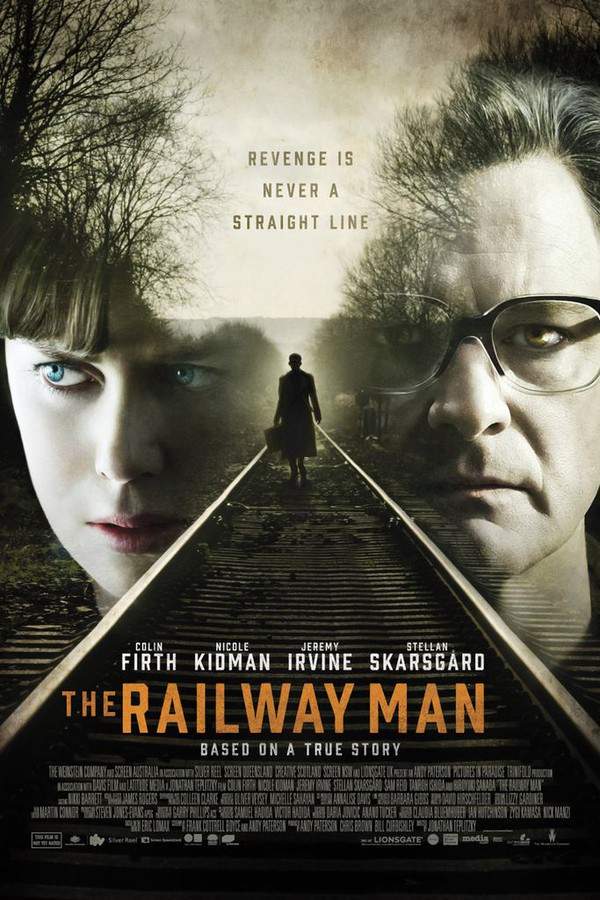
The Railway Man (2014) movie poster

Characters & Themes

The Railway Man (2014) Characters, Setting & Themes Explained

Release, runtime and language
2014 · 116 min · English
Loading streaming availability…
Directed by
Jonathan Teplitzky
Starring
Stellan Skarsgård, Hiroyuki Sanada, Nicole Kidman, Colin Firth, Jeremy Irvine

A former British prisoner of war, Eric Lomax, struggles to overcome the trauma of his wartime experiences. Seeking closure, he confronts the Japanese officer and interpreter who inflicted terrible suffering during his captivity. Accompanied by his wife, he travels to Japan on a journey of reconciliation and healing, forcing him to face the painful memories he has long suppressed.

On this page (9)
  1. 1 Where to watch
  2. 2 Characters explained (4)
  3. 3 Where & when it takes place
  4. 4 Themes & meaning (2)
  5. 5 Character & meaning questions
  6. 6 The book behind the movie
  7. 7 Movie threads
  8. 8 Movies like The Railway Man
  9. 9 Every angle
Loading streaming availability…

4 main characters · contains spoilers

The Railway Man Characters Explained: Who Is Who

The main characters of The Railway Man (2014), heroes and villains: what drives them, how they change over the course of the story and what each of them reveals about the film's bigger ideas.

  • Eric Lomax

    played by Stellan Skarsgård

    Eric Lomax is a former British officer who endures tremendous suffering as a POW during World War II. He is resourceful and resilient, but also deeply scarred by his experiences. His journey towards forgiveness portrays the difficult path of confronting the past and finding closure.

    • 🧑‍✈️ Protagonist
    • 🚀 Resilient
    • 🌍 Survivor
  • Patricia

    played by Nicole Kidman

    Patricia is Eric Lomax's loving wife who stands by him through his emotional turmoil. Her dedication and support provide him with the strength to confront his past. She shares a passion for trains, symbolizing their connection and the hope for healing.

    • 💖 Supportive
    • 🚂 Train Enthusiast
  • Finlay

    played by Jeremy Irvine

    Finlay is a former POW and Eric's confidant. He struggles with his own memories of the war and ultimately succumbs to his inner demons. His tragic end serves as a catalyst for Eric’s journey back to Thailand, emphasizing the lingering effects of trauma.

    • 😢 Tragic
    • 🧔 Confidant
  • Takashi Nagase

    played by Hiroyuki Sanada

    Takashi Nagase is a former Japanese officer and Eric's captor during the war. His role evolves from torturer to a figure of complexity, as he represents the duality of humanity and the misunderstandings bred by conflict. The eventual confrontation between him and Eric exposes layers of guilt and ignorance.

    • ⚔️ Antagonist
    • 🧑‍🤝‍🧑 Complex

Last updated: October 22, 2024 at 22:21

Was this helpful?

Setting

Where and When Does The Railway Man Take Place?

The setting of The Railway Man (2014): the year and time period, the places and locations, and how they shape the characters, the mood and the tension of the story.

Time period

World War II, 30 years later

The film spans the duration of World War II and the subsequent decades, highlighting the lasting impact of war on individuals. It showcases the psychological scars that remain many years post-conflict, underscoring the theme of trauma and healing in the aftermath of brutal experiences.

Location

Thailand, Singapore

The story takes place primarily in Thailand and Singapore, pivotal locations during World War II. Singapore was invaded by Japanese forces, leading to horrific conditions for POWs, while Thailand is known for the Thai-Burma Railway, infamous for its brutal construction, where many soldiers suffered immensely.

  • 🌏 Locations
  • 🚂 Historical

Last updated: October 22, 2024 at 22:21

Was this helpful?

2 major themes

The Railway Man Meaning: Themes & Message Explained

What is The Railway Man (2014) really about? The emotional, social and philosophical themes the film keeps returning to, its symbolism and the message beneath the surface.

  • Forgiveness

    Forgiveness is a central theme, as the protagonist struggles with the desire for revenge against his torturer. Ultimately, Lomax's journey leads him to understand the complexities behind his adversary's actions, allowing him to choose empathy over hatred, highlighting the powerful act of letting go.

  • War Trauma

    The film delves deep into war trauma, illustrating how the horrors of captivity and torture can haunt a person's life long after the war ends. Lomax's emotional struggles reflect the broader ramifications of war and the importance of confronting one's past to find peace.

Last updated: October 22, 2024 at 22:21

Was this helpful?

Character & theme questions

The Railway Man Characters & Meaning: Your Questions Answered

The questions people ask about The Railway Man (2014): who the characters really are, their relationships, what the symbols mean, where it takes place and what the movie is really about. Each answer contains spoilers.

Q1

Where is the movie set?

The Railway Man is primarily set in Thailand and Singapore, two pivotal locations during World War II. Thailand is associated with the Thai-Burma Railway, also known as the Death Railway, where Allied prisoners of war were forced into brutal construction work. Singapore represents the site of a major Japanese invasion where many British soldiers became POWs.

  • thailand
  • singapore
  • thai-burma railway
  • pow camp
  • world war 2
Q2

What time period does the film cover?

The film spans World War II and continues approximately 30 years later. The main wartime events occur during the early-to-mid 1940s, while the reconciliation storyline takes place decades after the war ends, showing how trauma persists long after the conflict itself has ended.

  • world war 2
  • 1940s
  • post-war
  • 1980s
  • time period
Q3

What is the main theme of forgiveness in the movie?

Forgiveness is the central theme, as Eric Lomax grapples with his desire for revenge against his torturer, Takashi Nagase. Over time, Eric comes to understand the complexities behind his adversary's actions and chooses empathy over hatred. This represents the powerful act of letting go and finding peace after profound suffering.

  • forgiveness
  • revenge
  • reconciliation
  • empathy
  • closure
Q4

How does the film address war trauma?

The film deeply explores war trauma, showing how the horrors of captivity and torture haunted Eric Lomax decades after the war ended. His psychological struggles reflect the broader impact of war on individuals, demonstrating that confronting one's past is essential to finding peace. The film shows that trauma doesn't end when the conflict does.

  • ptsd
  • trauma
  • psychological scars
  • war aftermath
  • captivity
Q5

Who is the main character Eric Lomax?

Eric Lomax is a former British army officer who was captured as a prisoner of war during World War II. He endured severe torture and suffering at the hands of Japanese forces while working on the Thai-Burma Railway. The film follows his difficult journey decades later as he seeks closure and reconciliation with his former captor.

  • british officer
  • pow
  • prisoner of war
  • stalin skarsgard
Q6

Who is Eric's wife Patricia?

Patricia is Eric Lomax's devoted wife who supports him through his emotional turmoil. Her unwavering dedication and love provide Eric with the strength to confront his traumatic past. The couple shares a passion for trains, which becomes a symbolic element representing their connection and hope for healing.

  • nicole kidman
  • wife
  • support
  • marriage
  • railway
Q7

Who is Takashi Nagase?

Takashi Nagase is the former Japanese officer and interpreter who detained and tortured Eric Lomax during the war. His role evolves throughout the film from representing pure evil to a figure of complex humanity. The confrontation between him and Eric reveals layers of guilt, ignorance, and ultimately creates space for reconciliation.

  • japanese officer
  • captor
  • torturer
  • hiroyuki sanada
  • interpreter
Q8

What role does Finlay play in the story?

Finlay is a former POW and Eric Lomax's close friend who also endured captivity during the war. He struggles with his own traumatic memories and ultimately succumbs to his inner demons by taking his own life. His tragic death serves as a catalyst that forces Eric to return to Thailand and confront his past.

  • jeremy irvine
  • friend
  • pow
  • suicide
  • catalyst
Q9

What is the significance of the Thai-Burma Railway in the film?

The Thai-Burma Railway, also called the Death Railway, is central to the film's historical context. It was a massive construction project during World War II built by Allied prisoners of war under brutal conditions. Many soldiers, including Eric Lomax, suffered immensely during its construction, and the railway became a symbol of the horrific treatment POWs endured.

  • death railway
  • burma railway
  • construction
  • forced labor
  • historical
Q10

What is the emotional journey of the film?

The film follows an emotional arc from darkness to light, beginning with the stark depiction of war trauma and a friend's suicide. It then moves deliberately through past and present, building toward a powerful transformation. Eric's journey takes him from rage and revenge toward understanding and ultimately achieves a hard-won reconciliation that feels earned rather than simplistic.

  • emotional journey
  • transformation
  • reconciliation
  • healing
  • closure

Movie threads

More Movies Like The Railway Man, by Mood & Story

Curated lists built around what makes The Railway Man tick: the same mood, the same kind of story or the same emotional payoff. Each list explains why these movies belong together.

Movies about Trauma and Healing like The Railway Man

Characters confront a traumatic past on a painful but redemptive path to recovery. If you were moved by The Railway Man's powerful story of confronting wartime trauma, you'll find similar journeys here. These films delve into the long, difficult process of psychological recovery, often featuring characters who must face their past to find peace. They share a serious tone, heavy emotional weight, and a focus on the redemptive power of confronting pain.

  • traumatic
  • cathartic
  • somber
  • heavy
  • reflective
  • forgiving
  • Tone: somber, tense, ultimately hopeful
  • Pacing: steady, deliberate
Why these movies?

The story pattern: Stories in this thread typically begin with a character deeply scarred by a past event, struggling with PTSD, anger, or isolation. The plot is driven by their need for closure, often involving a journey—literal or metaphorical—back to the source of their pain. The climax is a confrontation or revelation that, while painful, allows for catharsis and the possibility of moving forward, leading to an ending that feels hopeful but earned.

Why they belong together: These films are grouped together because they all center on the specific, difficult arc of overcoming severe trauma. They share a heavy, reflective mood, a steady pacing that allows for deep character exploration, and a narrative structure that balances past suffering with present-day struggle. The emotional core is the transformative power of facing one's demons.


Stories of Tense Reconciliation like The Railway Man

High-stakes confrontations between victim and perpetrator that challenge simple notions of good and evil. For viewers captivated by The Railway Man's tense confrontation and complex forgiveness, this thread collects movies with similar high-stakes meetings. These films explore the grey areas of morality, where victims and perpetrators are forced to see each other's humanity. They are characterized by psychological depth, moral ambiguity, and a focus on the difficult path to reconciliation.

  • tense
  • psychological
  • morally complex
  • anxious
  • somber
  • thought-provoking
  • Tone: tense, psychologically complex, morally ambiguous
  • Pacing: steady build to a climax
Why these movies?

The story pattern: The narrative pattern involves establishing a clear historical wrong and its lasting impact on the protagonist. The central plot engine is the protagonist's decision to seek out the person responsible. The main event is a long, dialogue-heavy scene of confrontation that deconstructs the original trauma, challenging both characters' perspectives. The resolution is rarely simple justice, but often a nuanced, bittersweet, or surprisingly human connection.

Why they belong together: These movies are united by their focus on a very specific narrative beat: the deeply tense and morally complex encounter between a victim and a perpetrator after a significant passage of time. They share a high-intensity, psychologically focused tone, and explore similar themes of memory, responsibility, and the possibility—or impossibility—of forgiveness beyond revenge.

If you liked this

Movies Like The Railway Man

Similar movies to The Railway Man: the same genre, themes or kind of story. Each one comes with its own plot summary, timeline and ending explained.

Browse all movie summaries

Every angle

The Railway Man (2014) Explained: Plot, Timeline & Characters

Everything about The Railway Man in one place: what happens in the plot summary, the timeline in chronological order, the characters and meaning and a spoiler-free summary. What's After the Movie adds the cast, box office and post-credit scenes.

Coming soon on iOS and Android

The Plot Explained Movie Summary App

Plot summaries, endings explained and timelines on your phone. Catch up on any movie in minutes, save your favorites and never miss a twist again.

Be the first to know when we launch. Your email stays private, always.

Learn more about the app