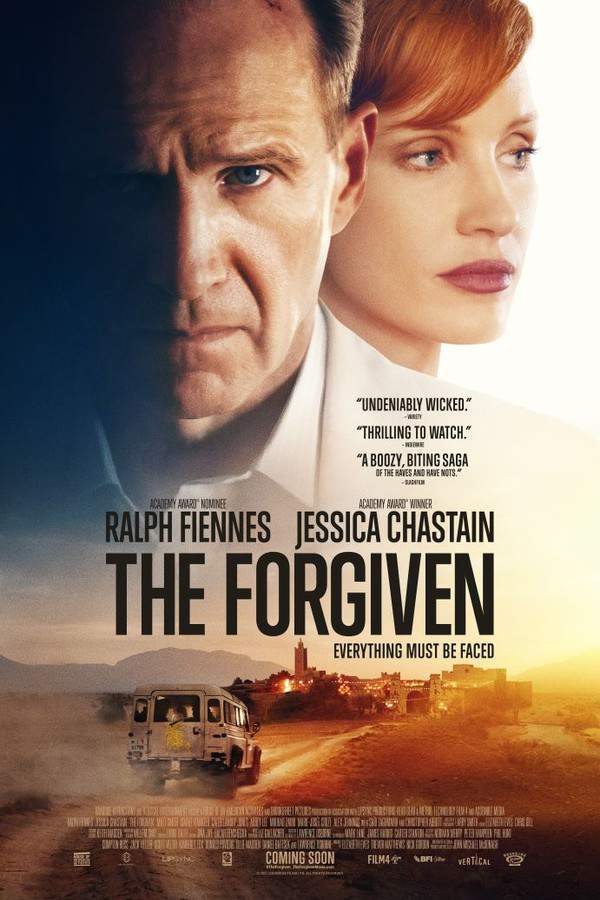
David Henninger, Ralph Fiennes and his wife Jo Henninger, Jessica Chastain, travel to Morocco in an effort to ease the strain that has been building between them. As they move along a winding road, a misjudged curve turns tragic when David strikes and kills a young teenager named Driss, who is holding a fossil in his grasp. The accident is compounded by the fact that David was driving while intoxicated, and the couple is confronted with the harsh reality of what has happened.
In the aftermath, the body of Driss is brought to the home of their friend Richard Galloway during a celebration. Faced with the consequences of the crash, David agrees to report the death as accidental, choosing to protect himself and, in his view, not ruin the family of the boy. The weight of that decision begins to press on him as he and Jo navigate the emotional fallout and the moral maze that follows. The next day, David accompanies Driss’s father and the interpreter, Anouar, back to Driss’s home so that he can be laid to rest in his own community and country. Anouar, a calm and steady presence, helps bridge the gap between cultures and perspectives as they travel through the streets and countryside toward the burial.
Back at the gathering, Jo remains in Morocco, but her behavior shifts in the wake of the tragedy. She becomes drawn into the party atmosphere and indulges in the debaucheries and activities hosted by Richard Galloway, moving even further from the quiet, careful life she once shared with David. During this time, she complicates her marriage by having an affair with one of the guests, a choice that casts long shadows over the relationship she shares with David and further complicates the emotional terrain both must traverse.
As the day grows heavier with secrets and unspoken guilt, David returns to Jo, and the pair leave the party together after most of the guests have departed. They drive past the site of Driss’s death, a place that has become a chilling reminder of the accident and what it has cost them personally. It is there that they are confronted by Driss’s friend, who is visibly distressed and armed with a revolver. The moment is tense and charged with fear and desperation, and under the pressure of the situation, the friend shoots David dead. The act is swift and brutal, and he then walks away into the distance, leaving Jo and the audience to grapple with the sudden, devastating turn of events and the stark consequences of choices made in the shadow of tragedy.
The film unfolds at a measured pace, letting the audience sit with the weight of each decision and the cultural distances that complicate judgment and empathy. What begins as a personal crisis between two partners becomes a broader meditation on guilt, accountability, and the fragile thread by which human lives are held together. The Moroccan setting serves not merely as a backdrop but as a catalyst that intensifies the emotional stakes and the moral ambiguity of every action. The interplay between silence and confession, responsibility and concealment, creates a tense atmosphere where every detail matters and every choice echoes beyond the moment of impact.
Throughout, the narrative remains focused on the inner turmoil of the main characters while painting a larger picture of consequences that ripple outward. The collisions between personal desire, social expectations, and ethical duty are laid bare in quiet, precise language, inviting viewers to weigh each decision alongside the characters. The result is a work that is somber and contemplative, presenting a stark portrait of how a single event can fracture a marriage, a community, and a life, leaving behind not just a trail of sorrow but a prompt for reflection on the kinds of responsibility we owe to others when the line between accident and intention becomes dangerously blurred.