Plot Explained Spoilers guaranteed!
Plot Explained

Browse by genre

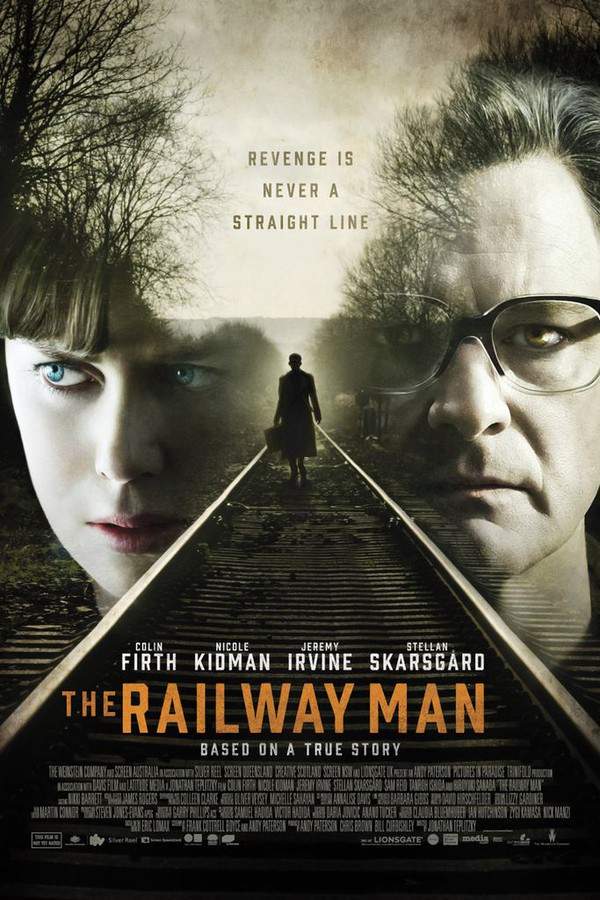
The Railway Man (2014) movie poster

Plot Summary

The Railway Man (2014) Plot Summary Explained

Release, runtime and language
2014 · 116 min · English
Loading streaming availability…
Directed by
Jonathan Teplitzky
Starring
Stellan Skarsgård, Hiroyuki Sanada, Nicole Kidman, Colin Firth, Jeremy Irvine

A former British prisoner of war, Eric Lomax, struggles to overcome the trauma of his wartime experiences. Seeking closure, he confronts the Japanese officer and interpreter who inflicted terrible suffering during his captivity. Accompanied by his wife, he travels to Japan on a journey of reconciliation and healing, forcing him to face the painful memories he has long suppressed.

On this page (7)
  1. 1 Where to watch
  2. 2 What happens: full plot
  3. 3 Plot questions answered
  4. 4 The book behind the movie
  5. 5 Movie threads
  6. 6 Movies like The Railway Man
  7. 7 Every angle
Loading streaming availability…

Full plot summary · contains spoilers

What Happens in The Railway Man: Full Plot Summary

The whole story of The Railway Man (2014) explained, from the opening scene to the final frame: every key event, every twist and what it all adds up to. Read it as a quick recap before the sequel, to check a scene you missed, or to finally understand what really happened.

As World War II unfolded, British officer Eric Lomax became a victim of the Japanese invasion in Singapore, leading to his capture and subsequent transfer to a brutal POW camp. Here, he was coerced into forced labor on the infamous Thai-Burma Railway, an endeavor that tested the limits of his physical and emotional stamina. As the war raged on, Lomax's resourcefulness raised suspicions among his captors, culminating in severe torture—ranging from beatings and starvation to waterboarding. The reason behind this brutal treatment was their belief that he was attempting to gather intelligence for espionage. However, unbeknownst to them, his true motive was to create a simple device to uplift the spirits of himself and his fellow prisoners.

Fast forward thirty years, and the haunting memories from Lomax's harrowing experiences remain etched in his psyche. Despite the unwavering love and support from his wife, Patricia, who shared his fervor for trains, the emotional scars lingered. Lomax's confidant, Finlay, himself a former POW, stumbled upon the shocking news that one of their torturers, Takashi Nagase, had now become a tour guide at the very camp where he had once served. Tragically, before Lomax could act on this unsettling revelation, Finlay's own demons took hold, leading him to a heartbreaking end by hanging from a bridge.

Devastated by Finlay's passing, Lomax felt compelled to undertake a journey to Thailand, seeking closure amid his swirling emotions of grief and anger. He returned to the scene of his trauma, intent on confronting Nagase, hoping to free himself from a lifetime shackled by resentment. In a gripping standoff with his former captor, Lomax found himself mirroring the brutal interrogation techniques once unleashed upon him, highlighting the relentless cycle of suffering that can ensue.

In a climactic moment fraught with tension, Lomax prepared to exact his revenge using a gruesome torture device. Yet, in an unexpected turn, he found Nagase submissively awaiting his fate, prompting a moment of introspection for Lomax just as he was about to strike. Instead, he chose to encapsulate Nagase in a bamboo cage, symbolizing the horrific treatment both he and other POWs had endured.

As Nagase languished within the cage, a startling truth unfolded: he too had been misled into believing in Japan's destined glory in the war, ignorant of the horrific toll it wrought upon humanity. This moment of revelation softened Lomax's fury, allowing empathy to break through as he grasped the complexity of Nagase's situation. Eventually, he made the poignant decision to free Nagase, casting aside his weapon and returning home.

Months later, Lomax revisited Thailand with Patricia by his side and was met with a powerful reunion with Nagase. In a transformative encounter filled with emotion, the former enemies offered heartfelt apologies and embraced, demonstrating remarkable growth and understanding. The narrative concludes with a powerful testament to the enduring strength of forgiveness and friendship, revealing that until Nagase's death in 2011, the bond between him and Lomax remained steadfast, with Lomax following suit just a year later.

Last updated: November 22, 2024 at 11:58

Was this helpful?

Plot questions answered

The Railway Man Plot Explained: Your Questions Answered

The questions people ask most about The Railway Man (2014): what happens in the confusing scenes, why the characters do what they do, the twists, hidden details and what the ending means. Each answer contains spoilers.

Q1

Why was Eric Lomax tortured by the Japanese?

The Japanese believed Lomax was gathering intelligence for espionage because of his resourcefulness in the camp. However, his true motive was completely innocent, he was actually building a simple device to lift the spirits of his fellow prisoners. This misunderstanding led to severe torture including beatings, starvation, and waterboarding.

Foreshadowing: Earlier in the camp, Lomax's ingenuity and willingness to help others had already drawn attention from his captors.

  • torture
  • espionage
  • intelligence
  • japanese
  • prisoner of war
  • misunderstanding
Q2

Why did Eric Lomax decide to travel to Thailand?

After learning that his former torturer Takashi Nagase was working as a tour guide at the same POW camp where he had been held, Lomax felt compelled to seek closure. The death of his friend Finlay, who discovered this information, intensified Lomax's grief and anger, pushing him toward confronting the man who had caused him immense suffering.

Foreshadowing: Finlay's discovery of Nagase's whereabouts directly led to Lomax's decision to return to the site of his trauma.

  • thailand
  • confrontation
  • closure
  • nagase
  • prisoner of war
  • finlay
Q3

What happened to Finlay before Eric could confront Nagase?

Finlay, who was also a former POW and Lomax's confidant, tragically took his own life by hanging from a bridge. He succumbed to his own psychological demons from his wartime experiences. This devastating loss occurred before Lomax could act on the information about Nagase.

Foreshadowing: Finlay's discovery of Nagase's location was meant to help Lomax find closure, but instead led to another tragedy.

  • finlay
  • suicide
  • death
  • prisoner of war
  • friendship
Q4

Why did Lomax put Nagase in a bamboo cage instead of killing him?

At the climactic moment of confrontation, Lomax placed Nagase in a bamboo cage as a symbolic act rather than killing him. This represented the brutal treatment that Lomax and other POWs had endured. The cage became a visual representation of the suffering inflicted upon prisoners, allowing Lomax to make Nagase experience what he himself had suffered.

Foreshadowing: The cage mirrored the exact conditions Lomax was subjected to during his captivity.

  • bamboo cage
  • revenge
  • symbolism
  • torture
  • confrontation
Q5

What caused Lomax to change his mind about revenge?

Lomax's mindset shifted when he saw Nagase submissively awaiting his fate without resistance. This moment triggered introspection, making Lomax realize he was about to become exactly like his torturer. Additionally, learning that Nagase had also been misled about Japan's destiny in the war, that he believed in Japan's glorious cause without understanding its horrific toll, allowed empathy to break through Lomax's rage.

Foreshadowing: Nagase's passive acceptance during the confrontation mirrored the psychological submission the Japanese attempted to force on their prisoners.

  • forgiveness
  • revenge
  • empathy
  • transformation
  • nagase
Q6

How did Lomax and Nagase reconcile after their confrontation?

After Lomax freed Nagase from the cage, he cast aside his weapon and chose forgiveness over revenge. Months later, Lomax returned to Thailand with his wife Patricia, where he and Nagase had a powerful reunion. They exchanged heartfelt apologies and embraced, forming a genuine friendship that lasted until Nagase's death in 2011.

Foreshadowing: The symbolic release of Nagase from the cage represented Lomax's decision to release himself from the prison of his own trauma.

  • reconciliation
  • forgiveness
  • apology
  • embrace
  • friendship
  • nagase
Q7

What was the device Eric Lomax was building in the POW camp?

While enduring brutal conditions, Lomax created a simple device intended to uplift the spirits of his fellow prisoners. This act of resilience and compassion demonstrated his character, he was not an intelligence gatherer as suspected, but someone trying to bring hope to other men suffering alongside him.

Foreshadowing: This device was the exact reason the Japanese suspected him of espionage, yet it revealed his true nature as a leader who cared for others.

  • device
  • prisoners
  • spirit
  • ingenuity
  • compassion
Q8

How did Patricia support Lomax throughout his journey?

Patricia, who shared Lomax's passion for trains, provided unwavering love and support throughout his decades of struggling with PTSD. She stood by him as he grappled with haunting memories. Later, she accompanied him to Thailand for the reunion with Nagase, serving as a crucial emotional anchor during his confrontation with the past.

Foreshadowing: Their shared love of trains established a deep connection that helped sustain their marriage through Lomax's trauma.

  • patricia
  • wife
  • support
  • love
  • marriage
  • journey
Q9

What was the relationship between Lomax and Nagase after their confrontation?

After their initial confrontation and reconciliation, Lomax and Nagase developed a genuine friendship that endured for years. They maintained contact until Nagase's death in 2011, with Lomax passing away just a year later. Their bond represented a remarkable transformation from torturer and victim to friends who understood each other's suffering.

Foreshadowing: The reunion scene demonstrated that their relationship had evolved beyond the traumatic events of the past.

  • friendship
  • relationship
  • bond
  • reconciliation
  • aftermath
Q10

Why was Takashi Nagase working at the former POW camp as a tour guide?

Nagase had become a tour guide at the Thai-Burma Railway POW camp, serving as a guide at the very location where he had once been a torturer. This ironic turn of events shocked former prisoners like Finlay when they discovered it, and it was this revelation that prompted Lomax to finally confront his past.

Foreshadowing: This discovery represented a chance encounter that forced Lomax to decide whether to face his trauma or continue suppressing it.

  • tour guide
  • Thailand
  • POW camp
  • nagase
  • discovery

Movie threads

More Movies Like The Railway Man, by Mood & Story

Curated lists built around what makes The Railway Man tick: the same mood, the same kind of story or the same emotional payoff. Each list explains why these movies belong together.

Movies about Trauma and Healing like The Railway Man

Characters confront a traumatic past on a painful but redemptive path to recovery. If you were moved by The Railway Man's powerful story of confronting wartime trauma, you'll find similar journeys here. These films delve into the long, difficult process of psychological recovery, often featuring characters who must face their past to find peace. They share a serious tone, heavy emotional weight, and a focus on the redemptive power of confronting pain.

  • traumatic
  • cathartic
  • somber
  • heavy
  • reflective
  • forgiving
  • Tone: somber, tense, ultimately hopeful
  • Pacing: steady, deliberate
Why these movies?

The story pattern: Stories in this thread typically begin with a character deeply scarred by a past event, struggling with PTSD, anger, or isolation. The plot is driven by their need for closure, often involving a journey—literal or metaphorical—back to the source of their pain. The climax is a confrontation or revelation that, while painful, allows for catharsis and the possibility of moving forward, leading to an ending that feels hopeful but earned.

Why they belong together: These films are grouped together because they all center on the specific, difficult arc of overcoming severe trauma. They share a heavy, reflective mood, a steady pacing that allows for deep character exploration, and a narrative structure that balances past suffering with present-day struggle. The emotional core is the transformative power of facing one's demons.

Stories of Tense Reconciliation like The Railway Man

High-stakes confrontations between victim and perpetrator that challenge simple notions of good and evil. For viewers captivated by The Railway Man's tense confrontation and complex forgiveness, this thread collects movies with similar high-stakes meetings. These films explore the grey areas of morality, where victims and perpetrators are forced to see each other's humanity. They are characterized by psychological depth, moral ambiguity, and a focus on the difficult path to reconciliation.

  • tense
  • psychological
  • morally complex
  • anxious
  • somber
  • thought-provoking
  • Tone: tense, psychologically complex, morally ambiguous
  • Pacing: steady build to a climax
Why these movies?

The story pattern: The narrative pattern involves establishing a clear historical wrong and its lasting impact on the protagonist. The central plot engine is the protagonist's decision to seek out the person responsible. The main event is a long, dialogue-heavy scene of confrontation that deconstructs the original trauma, challenging both characters' perspectives. The resolution is rarely simple justice, but often a nuanced, bittersweet, or surprisingly human connection.

Why they belong together: These movies are united by their focus on a very specific narrative beat: the deeply tense and morally complex encounter between a victim and a perpetrator after a significant passage of time. They share a high-intensity, psychologically focused tone, and explore similar themes of memory, responsibility, and the possibility—or impossibility—of forgiveness beyond revenge.

If you liked this

Movies Like The Railway Man

Similar movies to The Railway Man: the same genre, themes or kind of story. Each one comes with its own plot summary, timeline and ending explained.

Browse all movie summaries

Every angle

The Railway Man (2014) Explained: Plot, Timeline & Characters

Everything about The Railway Man in one place: what happens in the plot summary, the timeline in chronological order, the characters and meaning and a spoiler-free summary. What's After the Movie adds the cast, box office and post-credit scenes.

Coming soon on iOS and Android

The Plot Explained Movie Summary App

Plot summaries, endings explained and timelines on your phone. Catch up on any movie in minutes, save your favorites and never miss a twist again.

Be the first to know when we launch. Your email stays private, always.

Learn more about the app