Plot Explained Spoilers guaranteed!
Plot Explained

Browse by genre

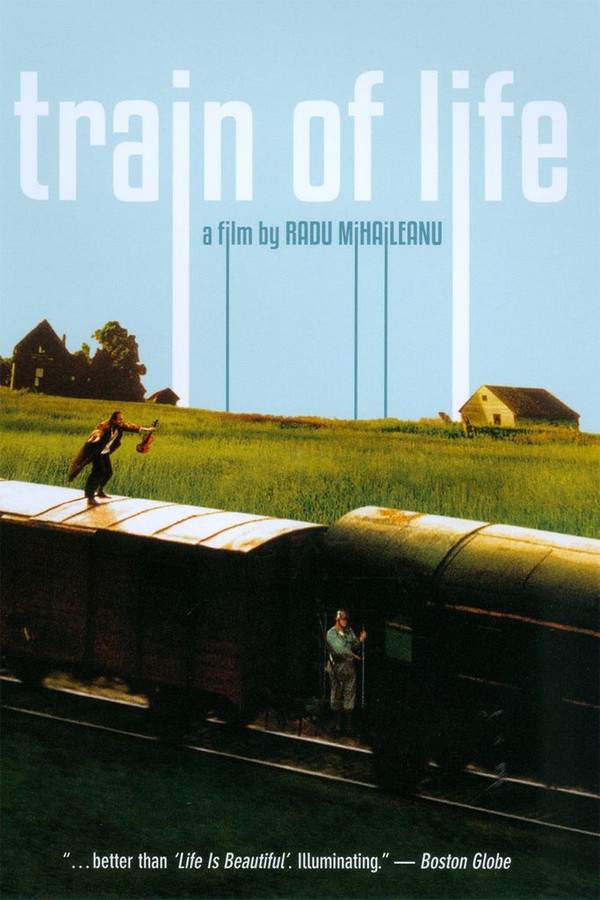
Train of Life (1999) movie poster

Plot Summary

Train of Life (1999) Plot Summary Explained

Release, runtime and language
1999 · 103 min · French
Loading streaming availability…
Directed by
Radu Mihaileanu

During World War II, a Jewish community, facing the encroaching Nazi occupation, takes extraordinary action to secure their survival. They board a train, embarking on a perilous journey toward an uncertain future and freedom. Along the way, they experience moments of love, laughter, and heartbreaking loss, highlighting the strength and resilience of the human spirit in the face of unimaginable adversity.

On this page (6)
  1. 1 Where to watch
  2. 2 What happens: full plot
  3. 3 Plot questions answered
  4. 4 Movie threads
  5. 5 Movies like Train of Life
  6. 6 Every angle
Loading streaming availability…

Full plot summary · contains spoilers

What Happens in Train of Life: Full Plot Summary

The whole story of Train of Life (1999) explained, from the opening scene to the final frame: every key event, every twist and what it all adds up to. Read it as a quick recap before the sequel, to check a scene you missed, or to finally understand what really happened.

The film opens with Schlomo (Lionel Abelanski) running frantically through a forest, his voice narrating the chilling memories of Nazi horrors witnessed in a nearby town. Arriving in the town, he finds the local rabbi, and together they rally the townspeople for an urgent meeting. Initially, many are skeptical, viewing Schlomo as the village madman with tales too dark to believe. However, the rabbi lends credibility to Schlomo’s warnings, prompting a collective discussion about the imminent threats.

As they contemplate their fate amid disputes and doubts, Schlomo proposes an audacious plan: to construct a train for a mass deportation, but with a twist—while they pretend to be heading to a concentration camp, their real destination is Palestine, routed through Russia. Thus, the Train of Life is conceived, sparking a mix of hope and anxiety among the townsfolk.

Their journey through the rural landscapes of Eastern Europe becomes a complex saga, filled with internal tensions among the passengers, dangerous encounters with genuine Nazis, and encounters with Communist partisans. They also share fleeting moments of camaraderie with the Roma people, all while navigating the perils that lie between the German and Soviet frontline.

The narrative culminates with a poignant voice-over from Schlomo, reflecting on the fates of those aboard the train once it reaches the Soviet Union: some ventured onward to Palestine, others found a new life in the Soviet lands, and a few even reached America. Just as he is about to share the closing remarks, the scene shifts to a close-up of his face. With a grave expression, he states, > “That is the true story of my shtetl...” but the moment swiftly transitions as the camera zooms out, revealing him grinning and clad in prisoner’s garb behind the barbed wire of a concentration camp, finishing with a wry, “Ye nu, almost the true story!”

Last updated: November 15, 2024 at 16:07

Was this helpful?

Plot questions answered

Train of Life Plot Explained: Your Questions Answered

The questions people ask most about Train of Life (1999): what happens in the confusing scenes, why the characters do what they do, the twists, hidden details and what the ending means. Each answer contains spoilers.

Q1

Why does Schlomo warn the town about the Nazi threat?

Schlomo has witnessed the horrors of the Nazi regime firsthand in a nearby town. After escaping from what he saw, he runs frantically to his own town to warn the residents. He knows the Nazis are advancing and that their community will be targeted. Despite being initially dismissed as a madman, his urgent testimony about the mass killings drives him to rally the townspeople before it's too late.

Foreshadowing: The opening scene establishes Schlomo as someone who has already experienced the Nazi atrocities, setting up his desperate urgency to save his community.

  • schlomo
  • nazi warning
  • town rally
  • Holocaust survival
Q2

How does the Train of Life plan work?

Schlomo proposes building a fake deportation train. The Jewish community will pretend to be heading to a concentration camp, but in reality, their destination is Palestine. The train will travel through Russia to avoid detection. This audacious plan allows them to escape under the guise of a legitimate Nazi deportation while actually seeking freedom.

Foreshadowing: The plan is introduced as a daring solution to certain death, though the film's ending casts doubt on whether this plan ever truly succeeded.

  • train of life
  • fake deportation
  • pal escape
  • schem
Q3

Why does the rabbi support Schlomo's warnings?

The rabbi's support is crucial because Schlomo alone is dismissed as a madman with unbelievable tales. When the rabbi vouches for Schlomo's credibility, the townspeople finally take the warnings seriously. This gives Schlomo the legitimacy he needs to convene the town meeting and propose his escape plan.

  • rabbi
  • town credibility
  • community leader
  • schlo support
Q4

What happens to the passengers after reaching the Soviet Union?

According to Schlomo's voice-over, the passengers took different paths once they reached the Soviet Union. Some continued onward to Palestine, others settled in Soviet lands, and a few even reached America. This suggests the journey had varied outcomes for different people, though the film leaves the exact details ambiguous.

  • soviet union
  • passengers fate
  • palestine
  • america
  • survival outcomes
Q5

What does the ending reveal about the story?

The film ends with Schlomo in a concentration camp, revealing that the entire Train of Life narrative may have been a fantasy or coping mechanism he imagined while imprisoned. His wry closing line 'Ye nu, almost the true story!' suggests the journey was either a daydream or a distorted memory, blurring the line between hope and harsh reality.

Foreshadowing: The bittersweet, hopeful tone of the journey throughout the film contrasts sharply with the grim ending, hinting that the optimistic narrative may have been a psychological escape from his actual circumstances.

  • concentration camp twist
  • ending revelation
  • fantasy vs reality
  • narrative ambiguity
Q6

What is the significance of meeting the Roma people?

The encounter with the Roma people provides a moment of solidarity during the journey. Both communities share the experience of being persecuted during World War II. This meeting illustrates themes of shared humanity and mutual support between marginalized groups facing similar oppression, offering a brief respite from the constant danger.

  • roma people
  • solidarity
  • shared persecution
  • human connection
Q7

How does the train avoid detection by real Nazis?

The train travels through the warzone between the German and Soviet frontlines, which creates dangerous situations where they encounter genuine Nazis. These encounters test their resolve and require careful improvisation to maintain their cover. The plan relies on the ruse of appearing as an official deportation train, but the danger is ever-present throughout their journey.

  • nazi detection
  • frontline journey
  • dangerous encounters
  • cover blown risk
Q8

What role do the Communist partisans play in the story?

The travelers encounter Communist partisans along their route through Eastern Europe. These interactions are tense and uncertain, adding another layer of complexity to their journey. The group must navigate not only the Nazi threat but also the political landscape of the war, as Communist partisans have their own agenda and may not automatically help Jewish refugees.

  • communist partisans
  • political tension
  • eastern europe route
  • partisan encounter
Q9

Why do the townspeople initially dismiss Schlomo?

Many townspeople view Schlomo as the village madman because his warnings about Nazi atrocities seem too horrific to be true. The tales of mass killings and systematic persecution exceed what they can initially comprehend or accept. Their skepticism represents the common human response to unimaginable threats, denial until evidence becomes overwhelming.

  • skepticism
  • town denial
  • unimaginable threat
  • community reaction

Movie threads

More Movies Like Train of Life, by Mood & Story

Curated lists built around what makes Train of Life tick: the same mood, the same kind of story or the same emotional payoff. Each list explains why these movies belong together.

Movies with farcical survival schemes like Train of Life

Stories where desperate characters use absurd schemes to endure terrible circumstances. Find more movies like Train of Life that blend high-stakes survival with dark comedy. This collection features stories where characters in desperate situations concoct absurd or farcical plans to save themselves, creating a unique, bittersweet viewing experience.

  • farcical
  • anxious
  • resilient
  • somber
  • witty
  • tragicomic
  • Tone: bittersweet, tragicomic
  • Pacing: steady, plot-driven
Why these movies?

The story pattern: This thread groups films where characters facing existential threats devise elaborate, often absurd plans to survive. The narrative typically follows the anxious execution of this scheme, encountering obstacles that test the characters' resolve and ingenuity, and often culminating in an ending that questions the very nature of their success.

Why they belong together: These films are connected by their unique tonal mix of heavy emotional stakes and darkly comic execution. They share a theme of resilience through absurdity, where laughter and sorrow are intertwined as essential parts of the human survival instinct.

Movies about ambiguous wartime journeys like Train of Life

Poignant stories of community survival on a perilous path to an uncertain future. Discover films similar to Train of Life that follow a community's perilous journey for survival during war. If you liked the themes of resilience, found family, and the poignant, ambiguous ending, you'll find more emotionally heavy stories here.

  • hopeful
  • somber
  • poignant
  • anxious
  • resilient
  • sorrowful
  • Tone: somber, poignant, hopeful
  • Pacing: steady, linear
Why these movies?

The story pattern: Narratives in this thread follow a linear journey structure, driven by the group's need to reach safety. The plot progresses through encounters and challenges that reveal character and test community bonds. The focus is less on a clear destination and more on the transformative, often heartbreaking, experience of the journey itself, frequently culminating in an ending that leaves the nature of their survival in question.

Why they belong together: These movies are grouped by their shared core structure of a wartime exodus, their heavy emotional weight centered on community and resilience, and their tendency to deliver poignant, thought-provoking, and ambiguous conclusions about survival and memory.

If you liked this

Movies Like Train of Life

Similar movies to Train of Life: the same genre, themes or kind of story. Each one comes with its own plot summary, timeline and ending explained.

Browse all movie summaries

Every angle

Train of Life (1999) Explained: Plot, Timeline & Characters

Everything about Train of Life in one place: what happens in the plot summary, the timeline in chronological order, the characters and meaning and a spoiler-free summary. What's After the Movie adds the cast, box office and post-credit scenes.

Coming soon on iOS and Android

The Plot Explained Movie Summary App

Plot summaries, endings explained and timelines on your phone. Catch up on any movie in minutes, save your favorites and never miss a twist again.

Be the first to know when we launch. Your email stays private, always.

Learn more about the app