




Plot Explained Spoilers guaranteed!
Plot Explained

Browse by genre

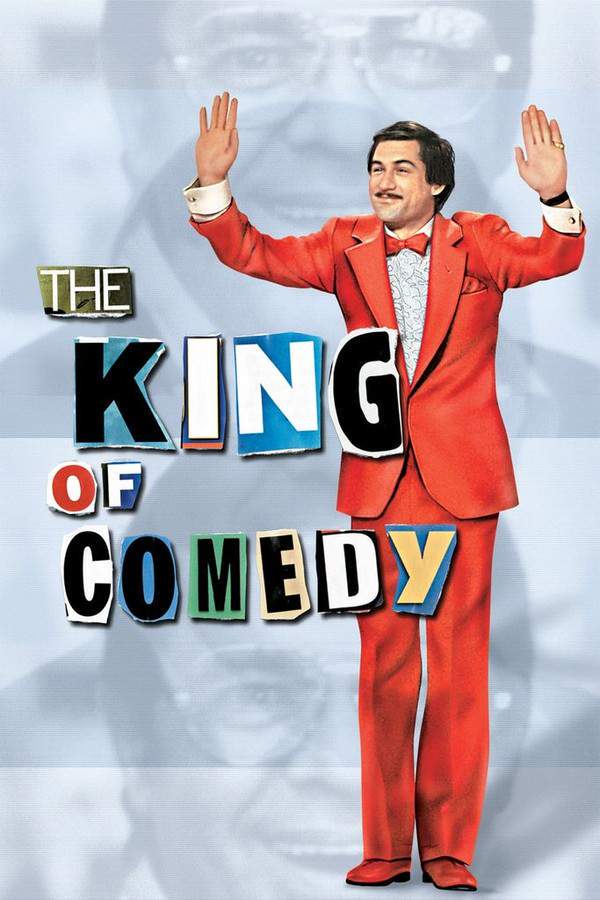
The King of Comedy (1983) movie poster

Timeline

The King of Comedy (1983) Timeline Explained – Every Event in Order

Release, runtime and language
1983 · 109 min · English
Directed by
Martin Scorsese
Starring
Robert De Niro, Sandra Bernhard, Diahnne Abbott, Ed Herlihy, Jerry Lewis, Loretta Tupper

Driven by a desperate longing for recognition, Rupert Pupkin, a struggling comic, becomes dangerously obsessed with Jerry Langford, a hugely popular late-night talk show host. Unable to cope with repeated rejections, Rupert’s fantasies spiral into a disturbing reality when he takes drastic measures, kidnapping Langford and demanding a place on his show in exchange for his release. The situation escalates into a tense and unsettling confrontation.

On this page (6)
  1. 1 Where to watch
  2. 2 Events in order (14)
  3. 3 Timeline questions answered
  4. 4 Movie threads
  5. 5 Movies like The King of Comedy
  6. 6 Every angle

Where to watch

Where to Watch The King of Comedy (1983)

Where can you watch The King of Comedy? Stream, rent or buy it in the US, including on Amazon Video, Apple TV Store and Fandango At Home: current JustWatch availability with up-to-date prices.

Streaming availability powered by JustWatch

14 events in order · contains spoilers

The King of Comedy Timeline: Events in Chronological Order

Every key event of The King of Comedy (1983) in order, scene by scene, with when and where it takes place. Use it to untangle flashbacks, time jumps and parallel storylines, to refresh your memory before the sequel or to find the exact scene you are thinking of.

  1. Rupert's Aspiration

    Rupert Pupkin, an aspiring comedian, becomes obsessed with achieving fame and fortune. His dreams are fueled by admiration for the celebrated comedian Jerry Langford, whom he believes can provide him with his big break.

  2. Initial Rejection

    Rupert boldly approaches the staff of Jerry Langford's show, hoping to secure a guest spot. However, he experiences repeated rejection from them, particularly from the staff member Cathy Long, who shows no interest in his ambitions.

  3. Vivid Daydreams

    After facing consistent setbacks, Rupert retreats into his imagination, where he envisions himself as Jerry Langford's friend and a star. These daydreams illustrate his inner turmoil and desperation for recognition.

  4. The Trip to Langford's Home

    Determined to get closer to his idol, Rupert invites Rita to accompany him on an uninvited visit to Langford's country home. Their visit ends abruptly when Langford returns and firmly asks them to leave, leaving Rupert feeling rejected.

    Where
    Langford's country home
  5. Vow of Perseverance

    In a moment of frustration following their eviction, Rupert vows to work '50 times harder'. He remains resolved to charm Langford into giving him an opportunity despite the setbacks he has faced.

  6. Bonding with Masha

    Feeling disheartened, Rupert finds companionship with Masha, another fan who shares his obsession with Langford. Together, they concoct a bold scheme to kidnap Langford in an attempt to secure Rupert's spot on the show.

  7. The Kidnapping Plot

    Rupert and Masha execute their plan to kidnap Langford, believing it will guarantee Rupert a spot on the show. To their surprise, the network agrees under the condition that Langford remains captive until after the broadcast.

    Where
    Manhattan
  8. Langford's Escape Attempt

    During the kidnapping, Langford tries to persuade Masha to release him, manipulating her emotions. However, his escape attempt turns dire when he discovers she's armed with a faulty toy gun, leading to a confrontation.

    Where
    Masha's apartment
  9. Rupert's Stand-Up Routine

    As Langford escapes, he inadvertently lands in the midst of Rupert's stand-up routine, broadcasted live. Rupert captures the audience's attention with his raw honesty while humorously revealing his dark deed of kidnapping.

  10. The Shocking Confession

    In a bold move, Rupert confesses to the audience that he kidnapped Langford to achieve fame. The crowd, amused by his performance, fails to grasp the seriousness of his admission, laughing at his audacity.

  11. Arrest and Sentence

    Following his performance, Rupert is apprehended by the authorities, who are not pleased with his actions. He is sentenced to six years in prison, followed by two years of parole, marking a significant downfall from his dreams.

  12. Post-Prison Life

    As time passes, Rupert manages to publish his autobiography, *King for a Night*, revealing the complexities of his journey. Despite legal troubles, he starts to receive offers for comedy tours and film adaptations of his life story.

  13. Rupert's Televised Special

    The movie culminates in a televised special where Rupert is celebrated as the 'King of Comedy' before an enthusiastic audience. His devious grin hints at the darkness beneath the glittering facade of fame.

  14. Audience's Applause

    The crowd erupts in applause as Rupert takes the stage, finally receiving the validation he craved. His journey comes full circle as he reflects on the price of his ambition, leaving viewers with a haunting reminder of his pursuit.

Last updated: November 22, 2024 at 15:50

Was this helpful?

Timeline questions answered

The King of Comedy Timeline Explained: Your Questions Answered

When does it happen, and why in that order? The questions people ask about the chronology of The King of Comedy (1983): time jumps, flashbacks, cause and effect between scenes and the correct order of events, each answered with spoilers.

Q1

Why does Rupert Pupkin kidnap Jerry Langford?

Rupert kidnaps Langford because he believes it's the only way to get the talk show appearance he's been desperately seeking. After months of rejection from Langford's staff and being dismissed by Langford himself, Rupert sees the kidnapping as a way to force the network to give him what he wants: a spot on the show. He's convinced that his talent deserves recognition and that drastic measures are justified to achieve his dream of fame.

Foreshadowing: Earlier, Rupert vows to work '50 times harder' after being rejected, showing his determination borders on obsession.

  • rupert pupkin
  • kidnapping
  • jerry langford
  • fame
  • obsession
  • comedy dreams
Q2

Why does the TV network agree to let Rupert perform while Langford is kidnapped?

The network agrees because they face a high-stakes situation: their main talk show host is being held captive. They calculate that broadcasting Rupert's requested spot is the only way to keep Langford alive and secure his release. The broadcast serves as a cover for the negotiation, allowing them to air the show while working behind the scenes to resolve the crisis.

Foreshadowing: This extreme decision follows the pattern of Rupert being refused any normal path to the stage throughout the film.

  • network broadcast
  • kidnapping
  • talk show
  • negotiation
  • langford
Q3

Why doesn't the audience realize Rupert actually kidnapped Langford?

The audience perceives Rupert's confession as part of his act. His comedic delivery makes the admission sound like a dark joke about his material, which fits the edgy humor of the show. Additionally, the absurdity of claiming to have kidnapped a famous talk show host seems too ridiculous to be true, so they laugh along rather than taking it seriously.

Foreshadowing: Throughout the film, Rupert's daydreams blur reality and fantasy, and his public persona already includes outlandish self-deprecating stories.

  • audience reaction
  • confession
  • comedy
  • stand-up routine
  • real vs performance
Q4

Why does Rupert confess to kidnapping Langford during his stand-up routine?

Rupert confesses because he wants to prove his authenticity to the audience. He believes that revealing the truth, that he actually did something bold and extreme to get on stage, will demonstrate his commitment to his craft. The confession is also his ultimate act of seeking validation: he wants to be celebrated for achieving his goal, even if it means admitting to a crime.

Foreshadowing: Rupert's earlier daydreams show him fantasizing about being respected and admired for his accomplishments.

  • confession
  • stand-up
  • validation
  • fame
  • rupert pupkin
Q5

Is Rupert's success at the end of The King of Comedy real?

The film deliberately leaves this ambiguous. While Rupert achieves fame, he gets a televised special, publishes a book called 'King for a Night,' and receives lucrative offers, the context of his criminal conviction and the unsettling final shot of his devious grin suggest his 'success' is tainted. The ending could be interpreted as a realistic portrayal of notoriety or as another fantasy sequence showing Rupert's distorted relationship with reality.

Foreshadowing: The film consistently blurs the line between Rupert's elaborate daydreams and reality throughout the narrative.

  • ending
  • ambiguity
  • fame
  • success
  • rupert pupkin
  • king of comedy
Q6

Why does Masha help Rupert kidnap Langford?

Masha helps because she's equally obsessed with Langford, though her obsession is romantic rather than professional. She sees the kidnapping as her opportunity to finally be close to Langford, the 'dream date' she's imagined. Her motivation stems from the same desperation for validation and connection that drives Rupert, making her willing to commit a serious crime to fulfill her fantasy.

Foreshadowing: Masha is introduced as another fan who shares Rupert's obsession with Langford, establishing her vulnerability to his plan.

  • masha
  • kidnapping
  • obsession
  • langford
  • fan
  • romantic fantasy
Q7

Why does Jerry Langford try to manipulate Masha during the kidnapping?

Langford attempts to manipulate Masha because he's trying to escape. He uses charm and emotional appeals to convince her to free him, preying on her romantic feelings for him. When he discovers she's armed with a toy gun, he realizes the situation is less dangerous than he thought, which gives him the confidence to overpower her and flee.

Foreshadowing: Earlier interactions show Langford's discomfort with his fans' attention, but also his willingness to use his celebrity status when convenient.

  • jerry langford
  • masha
  • escape
  • manipulation
  • toy gun
Q8

Why does Rupert surrender to the authorities after his performance?

Rupert surrenders because performing on the show was always his primary goal, getting arrested wasn't part of his plan, but it also doesn't devastate him. By surrendering, he maintains control over the narrative and transforms his crime into part of his comedic story. He seems to calculate that prison will only add to his legend, making him even more famous.

Foreshadowing: Rupert's final statement before surrendering, 'I'd rather reign supreme for one night than remain inconsequential for an eternity', reveals his twisted prioritization of fame over freedom.

  • arrest
  • surrender
  • fame
  • consequences
  • rupert pupkin
Q9

What happens to Masha after Langford escapes?

After Langford overpowers Masha and escapes, she's left alone in her apartment. The summary doesn't detail her immediate fate, but she's clearly abandoned, Langford leaves without her, and Rupert is focused on his own performance. Her storyline ends with her being used and discarded by both Rupert and Langford, highlighting the tragic dimension of her obsession.

Foreshadowing: Masha's role was always secondary to Rupert's goal; she was a means to an end for his plan.

  • masha
  • langford escape
  • abandonment
  • fan obsession
Q10

Why does Rupert take Rita to Langford's country home?

Rupert brings Rita along because he hopes presenting himself with a woman will make him appear more established and attractive to Langford. He imagines that having a beautiful date will elevate his status and make Langford take him seriously as a potential guest. It's another example of Rupert misreading social situations and believing superficial improvements will earn him the recognition he craves.

Foreshadowing: This scene follows Rupert's pattern of daydreaming about scenarios where he already has Langford's approval and friendship.

  • rita
  • country home
  • rupert pupkin
  • social climbing
Q11

What is the purpose of Rupert's fantasy sequences in the movie?

The fantasy sequences reveal Rupert's psychological state and his disconnect from reality. They show how deeply he believes he's entitled to fame and friendship with Langford. These daydreams function as visual metaphors for his delusions, making viewers understand why he resorts to extreme actions, he genuinely cannot distinguish between his fantasies and actual possibilities.

Foreshadowing: The first fantasy appears early, after Rupert faces rejection, establishing the pattern that continues throughout the film.

  • fantasy
  • delusion
  • psychology
  • daydreams
  • mental state
  • rupert pupkin
Q12

Why does Rupert think Jerry Langford is his friend or mentor?

Rupert projects his own desires onto Langford, treating a brief interaction as a meaningful relationship. Because Langford once gave Rupert minor attention (shaking his hand after a show), Rupert interprets this as a genuine connection. His loneliness and desperation for validation lead him to construct an elaborate fantasy where Langford actively supports his career, when in reality Langford barely remembers him.

Foreshadowing: The initial meeting between Rupert and Langford is minimal, yet Rupert builds an entire friendship around that single moment.

  • friendship
  • mentor
  • delusion
  • projection
  • jerry langford
  • rupert pupkin

Movie threads

More Movies Like The King of Comedy, by Mood & Story

Curated lists built around what makes The King of Comedy tick: the same mood, the same kind of story or the same emotional payoff. Each list explains why these movies belong together.

Movies about obsessive descent like The King of Comedy

Character-driven stories where a dangerous fixation shatters reality. If you were captivated by the unsettling obsession in The King of Comedy, explore these movies featuring characters spiraling into dangerous fixations. These stories share a similar tone of psychological tension and a character-driven narrative of desperation.

  • obsessive
  • unsettling
  • psychological
  • cringe-inducing
  • delusional
  • desperate
  • Tone: dark, unsettling, tense
  • Pacing: steady, character-driven
Why these movies?

The story pattern: The narrative pattern follows a protagonist whose normal life is consumed by an unhealthy fixation on a person, goal, or idea. Rejection and delusion often fuel their journey, escalating from harmless fantasy to drastic, reality-shattering actions that create intense psychological tension.

Why they belong together: These movies are grouped together because they share a core focus on the character arc of obsession. They create a similar mood of unease and cringe-inducing tension by exploring the psychological breakdown that occurs when a character's desperate desires clash with the real world.
Dark satires about fame like The King of Comedy

Bleakly funny critiques of celebrity culture and desperation. For viewers who appreciated the darkly funny media satire in The King of Comedy, this collection features similar films that critically examine celebrity obsession. These movies blend sharp social commentary with an unsettling, often cringe-inducing vibe.

  • satirical
  • darkly funny
  • cringe-inducing
  • unsettling
  • critical
  • media
  • Tone: darkly funny, satirical, bleak
  • Pacing: steady
Why these movies?

The story pattern: Stories in this thread often follow an outsider or anti-hero whose desperate pursuit of recognition exposes the absurdities and emptiness of celebrity culture. The plot serves as a vehicle for satire, using uncomfortable situations and dark humor to deliver a sharp critique.

Why they belong together: These films are united by their use of dark satire to explore themes of fame, media, and desperation. They share a specific tonal mix: a darkly funny, cringe-inducing, and intellectually critical perspective on society's obsession with celebrity.

If you liked this

Movies Like The King of Comedy

Similar movies to The King of Comedy: the same genre, themes or kind of story. Each one comes with its own plot summary, timeline and ending explained.

Browse all movie summaries

Every angle

The King of Comedy (1983) Explained: Plot, Timeline & Characters

Everything about The King of Comedy in one place: what happens in the plot summary, the timeline in chronological order, the characters and meaning and a spoiler-free summary. What's After the Movie adds the cast, box office and post-credit scenes.

Coming soon on iOS and Android

The Plot Explained Movie Summary App

Plot summaries, endings explained and timelines on your phone. Catch up on any movie in minutes, save your favorites and never miss a twist again.

Be the first to know when we launch. Your email stays private, always.

Learn more about the app