Plot Explained Spoilers guaranteed!
Plot Explained

Browse by genre

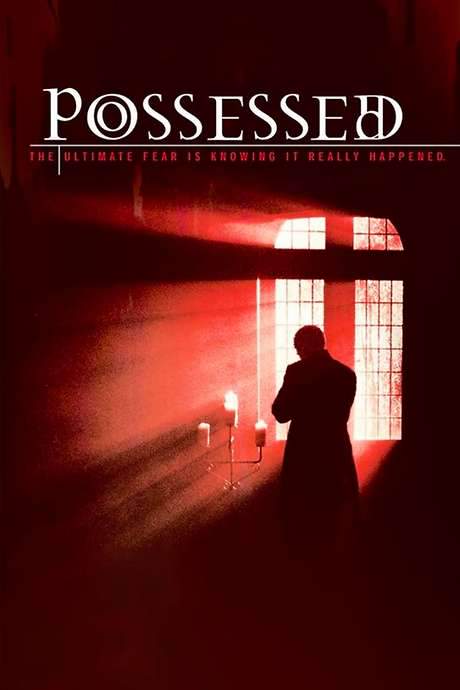
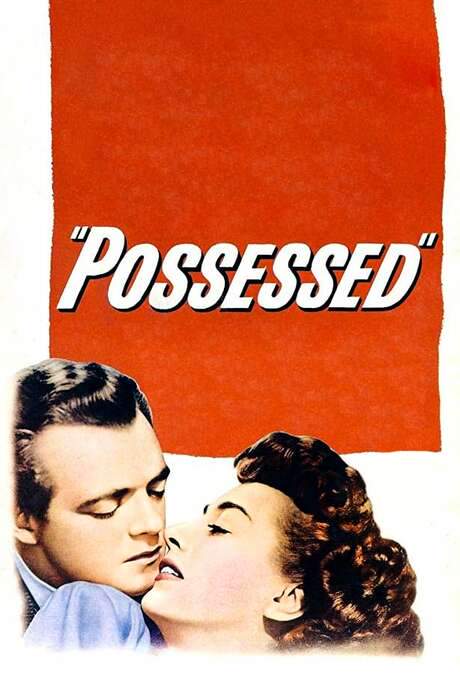
Possessed (1947) movie poster

Plot Summary

Possessed (1947) Plot Summary Explained

Release, runtime and language
1947 · 108 mins · English
Directed by
Curtis Bernhardt
Starring
Erskine Sanford, Moroni Olsen, Joan Crawford, Van Heflin, Griff Barnett, Raymond Massey

A striking performance by Joan Crawford opposite Van Heflin drives this dramatic tale. After being discovered wandering the streets of Los Angeles in a catatonic state, a woman is taken to a doctor who patiently draws out the tangled, haunting events that led her to that desperate condition.

On this page (6)
  1. 1 Where to watch
  2. 2 What happens: full plot
  3. 3 Plot questions answered
  4. 4 Movie threads
  5. 5 Movies like Possessed
  6. 6 Every angle

Where to watch

Where to Watch Possessed (1947)

Where can you watch Possessed? Stream, rent or buy it in the US, including on Amazon Video, Apple TV Store and Fandango At Home: current JustWatch availability with up-to-date prices.

Streaming availability powered by JustWatch

Full plot summary · contains spoilers

What Happens in Possessed: Full Plot Summary

The whole story of Possessed (1947) explained, from the opening scene to the final frame: every key event, every twist and what it all adds up to. Read it as a quick recap before the sequel, to check a scene you missed, or to finally understand what really happened.

Louise Howell, [Joan Crawford], wanders through Los Angeles, barely speaking and repeatedly muttering the name “David” as if searching for a trace of someone from her tangled past. Her condition lands her in a hospital’s psychiatric ward where she is examined by a doctor and, in scattered, fragmentary bursts, she recalls a life she can’t fully trust. One memory centers on her lover [Van Heflin], the man who played Schumann for her, and a moment when she tells him, “I want to have a monopoly on you.”

In the years she can remember, Louise works as a nurse at the lakeside home of the Grahams. There, she tends to Pauline, the sick wife of Dean Graham, a man of wealth and gravity who straddles a fragile line between propriety and desire. Pauline is irascible and sharp-tongued, convinced that Louise is having an affair with her husband, and Louise herself feels more and more unsettled and boxed in. She longs to leave this complicated domestic arrangement, yet the responsibilities at the house pull her in and keep her tethered to a life she is increasingly wary of.

Tragedy strikes when Pauline’s body is found in the lake. The police and coroner begin their work, and Dean Graham explains Pauline’s death as a suicide. A formal inquest follows, and a verdict of accidental death is reached. The family’s quietly tense dynamics intensify: Wynn, the Graham child, and Carol, the college-age daughter, return home, and a sense of unresolved guilt lingers in the air. The coroner’s hearing is followed by tense confrontations, and Louise, already on edge, becomes a focal point of suspicion and rumor.

Carol, who resents Louise’s proximity to her father, confronts Louise in the wake of Pauline’s death. In a charged exchange, Carol hints that Pauline’s letters claimed Louise attracted Dean, and Louise senses hostility in the girl’s harsh questions. The rift between Louise and the family grows when Dean, who has come home, asserts his authority and demands an apology from Carol. In the midst of escalating tensions, David reappears in Louise’s life, and she is drawn back into the emotional thicket they shared. He denies involvement with anyone else, yet Louise’s fears and insecurities push her toward a decision that will redefine her fate.

On the border of the couple’s lives, Louise travels with the Grahams to Washington, D.C., to help care for Wynn and to step back from a relationship she cannot fully trust. There, Louise begins to drink more heavily and the strain shows in her face and demeanor. David reveals that he is no longer in love with her, a blow that deepens Louise’s sense of isolation. Despite this, Dean asks Louise to marry him, and she agrees, not because she loves him, but because she fears the consequences of losing the life she has built around him.

Louise’s bond with Carol softens as she visits the college where Carol studies, hoping for acceptance or at least a measure of sympathy. The two women reach a uneasy reconciliation, and the wedding to Dean seems set—until David arrives at the last moment, late, and speaks to Carol, evoking a past that neither Louise nor Carol fully understands. Louise warns David away and insists he leave, setting off a chain of events that will reveal how tangled loyalties have become.

At a piano recital, the memory of Louise’s earlier life collides with the present, and she experiences a disturbing hallucination in which Carol returns with David and he kisses Carol. In a moment of desperate confession, Louise admits to Pauline’s death, but Carol threatens that she will tell Dean. Louise’s fear and anger drive her to strike Carol, who falls down the stairs and dies. The incident further unsettles Louise, who seeks help from a doctor under a false name and is advised to consult a psychiatrist. She resists this step, choosing instead to pursue a divorce from Dean, telling him that Pauline despised her.

A vacation at the lake house intensifies Louise’s psychic strain. She climbs to Pauline’s bedroom and, in a chilling moment, screams, only to see Pauline’s ghost and then realize that she believes Pauline is in the room with her. Dean dismisses the vision as a figment of Louise’s mind, but the memory of her complicity in Pauline’s death continues to haunt her. She confesses to helping Pauline kill herself, though Dean insists Pauline is already dead and that Louise was away on her day off.

Back at home, Louise longs for normalcy and even a night out dancing, but the sight of David and Carol together at a nightclub unsettles her further. She fabricates a tale about David’s desire for her, and David warns that the truth could ruin Louise if Dean learns of their past. A confrontation with a doctor and the looming specter of institutionalization push Louise toward a dangerous brink. She heads for David in a final, desperate moment, and a gun becomes the instrument of a violent choice.

Louise wakes in a hospital bed, admitting that she killed David. The doctor explains that her breakdown is a psychotic episode, a torment of delusions and guilt that could have been averted with earlier help. The physician affirms that Louise is not fully responsible for David’s death, and that her recovery will be long and arduous. Dean visits, and together they face the arduous work of rebuilding their lives. The doctor’s somber prognosis underlines the slow, painful path that lies ahead for Louise, but Dean commits to standing by her as she seeks healing and a steadier sense of self.

Note: This retelling preserves the core events and emotional arc of the film, emphasizing Louise’s fragility, the tangled relationships around the Grahams, and the eventual unraveling of the chain of actions that leads to tragedy, while staying true to the source material.

Last updated: October 09, 2025 at 12:35

Was this helpful?

Plot questions answered

Possessed Plot Explained: Your Questions Answered

The questions people ask most about Possessed (1947): what happens in the confusing scenes, why the characters do what they do, the twists, hidden details and what the ending means. Each answer contains spoilers.

Q1

How did Pauline Graham die in Possessed?

Pauline Graham's death is ruled accidental by a coroner, but Louise later confesses to having helped Pauline kill herself. Dean initially claims Pauline committed suicide, and the official verdict is accidental death. Louise's guilt stems from her complicity in Pauline's death, though the exact details of what Louise did remain somewhat ambiguous, it's clear she was involved in some way but the film suggests Pauline may have killed herself with Louise's assistance or encouragement.

Foreshadowing: Early in the film, Pauline is irascible and suspicious, convinced Louise is having an affair with her husband, creating tension that foreshadows the tragic events to come.

  • pauline graham death
  • suicide
  • accidental death
  • lake
  • confession
Q2

Why did Louise agree to marry Dean Graham?

Louise agreed to marry Dean Graham not because she loved him, but because she feared losing the life she had built around him. After David's rejection in Washington and her growing isolation, Dean proposed and she accepted as a way to secure her future and stability. She explicitly admits she is not in love with him, suggesting the marriage was a practical choice born from fear and insecurity rather than genuine affection.

Foreshadowing: Louise's increasing weariness with the complicated domestic arrangement at the Graham home and her desire to escape are established early, making her desperate choice to marry Dean more understandable.

  • marriage
  • dean graham
  • louise
  • insecurity
  • practical marriage
Q3

What causes Louise's mental breakdown in Possessed?

Louise's breakdown stems from a combination of overwhelming guilt over her role in Pauline's death, her unstable relationship with David who rejects her, and the psychological strain of living within the Graham family's tense household. The film depicts her descending into psychosis with hallucinations, delusions, and eventually violent acts. The doctor explains her condition is a psychotic episode aggravated by guilt that could have been prevented with earlier psychiatric help.

Foreshadowing: Louise's early catatonic state in Los Angeles, muttering "David," establishes her fragile mental state from the opening scene.

  • mental breakdown
  • psychosis
  • hallucinations
  • guilt
  • schizophrenia
  • nervous breakdown
Q4

How did Carol Graham die?

Carol Graham died after Louise struck her during a confrontation. In a hallucinatory episode, Louise confesses to killing Pauline, and Carol threatens to tell Dean. In a moment of fear and anger, Louise strikes Carol, who falls down the stairs and dies. This violent act represents the climax of Louise's psychological unraveling, as she loses control and commits murder in a delusional state.

Foreshadowing: Earlier confrontations between Louise and Carol, particularly Carol's hostility about Louise's relationship with Dean and hints about Pauline's letters, build tension that culminates in this tragic moment.

  • carol graham death
  • stairs
  • murder
  • louise
  • hallucination
Q5

What was Louise's relationship with David Sutton?

David Sutton was Louise's former lover, a man she was deeply possessive of, she famously told him she wanted to "have a monopoly" on him. When the film begins, David has already ended their relationship, rejecting her and returning her home in a boat. His rejection devastates Louise, and throughout the film, her jealousy and suspicion about his fidelity drive much of her irrational behavior. David later becomes involved with Carol, further exacerbating Louise's mental state.

Foreshadowing: The opening scene shows Louise wandering muttering "David," and early memory sequences establish how intensely attached she was to him.

  • david sutton
  • lover
  • relationship
  • jealousy
  • rejection
  • monopoly
Q6

Why was Louise saying David's name when she was found?

Louise was found wandering the streets of Los Angeles in a catatonic state, repeatedly muttering the name "David," because he represents the central trauma of her life. His rejection and subsequent involvement with other women (first apparently with someone else, then with Carol) contributed to her psychological breakdown. The name represents her obsessive attachment to a man who abandoned her, and it surfaces as a symptom of her fragmented mental state.

Foreshadowing: The entire narrative is framed as Louise's fragmented memories being drawn out by a doctor, with David being the emotional core of her deterioration.

  • david
  • catatonic
  • muttering
  • los angeles
  • hospital
  • obsession
Q7

Did Louise really see Pauline's ghost at the lake house?

The film presents Pauline's ghost as part of Louise's deteriorating mental state rather than an actual supernatural occurrence. When Louise climbs to Pauline's bedroom during a vacation at the lake house and sees Pauline's ghost, Dean dismisses it as a figment of her mind. This vision occurs within the context of Louise's guilt and psychosis, suggesting it is a hallucination rather than a real haunting.

Foreshadowing: Louise's earlier confession about helping Pauline die, combined with her guilt-ridden mental state, makes this ghostly vision a manifestation of her subconscious.

  • ghost
  • pauline
  • hallucination
  • lake house
  • vision
  • delusion
Q8

What happens at the piano recital in Possessed?

At the piano recital, Carol invites David to her box, and Louise experiences a disturbing hallucination where she sees David and Carol together with David kissing Carol. This triggers Louise's breakdown, and in her altered state, she confesses to killing Pauline. The piano setting is significant because it echoes earlier memories of David playing Schumann for Louise, connecting her past happiness with her present suffering.

Foreshadowing: Earlier memories established David playing Schumann for Louise, making the piano a powerful trigger for her jealousy and delusion.

  • piano recital
  • carol
  • david
  • hallucination
  • schumann
  • jealousy
Q9

What was David's relationship with Carol Graham?

David's relationship with Carol Graham appears to be romantic. On the wedding day, David arrives late and speaks with Carol, who is crying and recalls a past request for marriage from David. Later, Carol invites David to the piano recital box, and they are seen together at a nightclub. David warns Louise that he could expose their past relationship if he chooses, suggesting he may be using this connection strategically.

Foreshadowing: The tension between Louise and Carol is partially driven by Carol's resentment of Louise's proximity to her father, but David's reappearance introduces a new layer of rivalry between the two women.

  • david
  • carol
  • relationship
  • romance
  • wedding
  • nightclub
Q10

Why did Louise ask Dean for a divorce?

After her hallucinatory episode and Carol's death, Louise asks Dean for a divorce, claiming Pauline despised her. This request comes after her psychological break and reflects her guilt and fear of exposure. She tells Dean she might be institutionalized, suggesting she recognizes her own instability. The divorce request is part of her unraveling, as she can no longer maintain the facade of normalcy in her marriage.

Foreshadowing: Louise's earlier confession to helping Pauline die, combined with her growing hallucinations, creates the psychological groundwork for this desperate request.

  • divorce
  • dean
  • pauline
  • confession
  • institutionalization
Q11

Is Louise responsible for killing David?

Yes, Louise admits to killing David. In the final confrontation, she sneaks away to David, and during an argument, she pulls a gun and shoots him repeatedly, killing him. However, the doctor explains that Louise is not fully responsible for her actions due to her psychotic state. She wakes in a hospital bed and admits to the killing, but the physician indicates her mental illness significantly diminishes her culpability.

Foreshadowing: Earlier scenes establish Louise's increasing desperation and the doctor's warning that she needs psychiatric help she refused to seek.

  • david
  • shooting
  • murder
  • psychosis
  • responsibility
  • hospital
  • confession
Q12

Why did Louise become a nurse at the Graham household?

Louise took a job as a nurse at the Grahams' lakeside home to care for Pauline, Dean Graham's ill wife. She entered this position as a professional caregiver, but the job placed her in an emotionally charged domestic environment where she became entangled in the family's complex dynamics. Pauline suspected her of having an affair with Dean, creating constant tension, and Louise found herself trapped in a situation she grew increasingly weary of but could not easily leave.

Foreshadowing: The film establishes early that Louise feels "boxed in" by her responsibilities at the house, hinting at how the situation will erode her mental stability.

  • nurse
  • graham family
  • pauline
  • dean
  • lakeside home
  • job

Movie threads

More Movies Like Possessed, by Mood & Story

Curated lists built around what makes Possessed tick: the same mood, the same kind of story or the same emotional payoff. Each list explains why these movies belong together.

Movies about psychological unraveling like Possessed

Stories where a character's mind fractures under the weight of guilt and obsession. Discover movies like Possessed that follow a character's descent into mental illness. If you were captivated by the tragic, psychological unraveling in Possessed, you'll find similar stories of fractured realities and haunting obsessions in these films.

  • unsettling
  • paranoid
  • tragic
  • oppressive
  • melancholic
  • psychological
  • Tone: dark, tragic, unsettling
  • Pacing: steady, methodical
Why these movies?

The story pattern: Narratives in this thread typically follow a linear or non-linear path that mirrors the protagonist's fracturing psyche. Hallucinations, paranoia, and memories distort the reality of the story, creating an unreliable narrative perspective. The conflict is often internal, pitting the character against their own mind, with external events serving as catalysts for the collapse.

Why they belong together: These films are grouped together by their intense focus on a character's psychological breakdown. They share a dark, oppressive tone, heavy emotional weight, and a steady pacing that allows the unease to build methodically. The central thread is the tragic, immersive experience of watching a mind come undone.

Claustrophobic domestic thrillers similar to Possessed

Tense stories where home life becomes a cage of secrets and psychological pressure. Explore more movies like Possessed that use the home as a setting for psychological tension and drama. If you liked the oppressive marriage and stepfamily dynamics in Possessed, these films deliver similar stories of domestic unease and emotional confinement.

  • claustrophobic
  • anxious
  • oppressive
  • tense
  • domestic
  • unsettling
  • Tone: dark, tense, anxious
  • Pacing: steady, building tension
Why these movies?

The story pattern: The narrative pattern involves a central character feeling trapped within their own home by the people they are closest to. The story escalates through revelations of betrayal, obsessive love, or concealed crimes, turning everyday domestic interactions into high-stakes psychological battles. The plot often builds to a breaking point where the oppressive environment leads to a dramatic, often tragic, climax.

Why they belong together: These movies are linked by their use of the domestic sphere as a primary source of conflict and dread. They share an anxious, claustrophobic mood, a steady pacing that builds tension relentlessly, and a focus on the dark side of intimate relationships. The similarity lies in the feeling of being psychologically suffocated by one's own life.

If you liked this

Movies Like Possessed

Similar movies to Possessed: the same genre, themes or kind of story. Each one comes with its own plot summary, timeline and ending explained.

Browse all movie summaries

Every angle

Possessed (1947) Explained: Plot, Timeline & Characters

Everything about Possessed in one place: what happens in the plot summary, the timeline in chronological order, the characters and meaning and a spoiler-free summary. What's After the Movie adds the cast, box office and post-credit scenes.

Coming soon on iOS and Android

The Plot Explained Movie Summary App

Plot summaries, endings explained and timelines on your phone. Catch up on any movie in minutes, save your favorites and never miss a twist again.

Be the first to know when we launch. Your email stays private, always.

Learn more about the app