A ruthless crime lord attempts to seize control of New York's drug trade, unexpectedly joining forces with the city's forgotten residents. His ambition isn's solely about power; he aims to redistribute wealth and influence within the underbelly of the city, creating a complex web of alliances and betrayals as he strives for dominance.
Find where to stream, rent, or buy King of New York (1990) in the US with current JustWatch availability, up-to-date pricing, and platform listings for subscription, rental, and digital purchase options.
Warning: spoilers below!
Haven’t seen King of New York yet? This summary contains major spoilers. Bookmark the page, watch the movie, and come back for the full breakdown. If you're ready, scroll on and relive the story!
Read the complete plot breakdown of King of New York (1990), including all key story events, major twists, and the ending explained in detail. Discover what really happened, and what it all means.
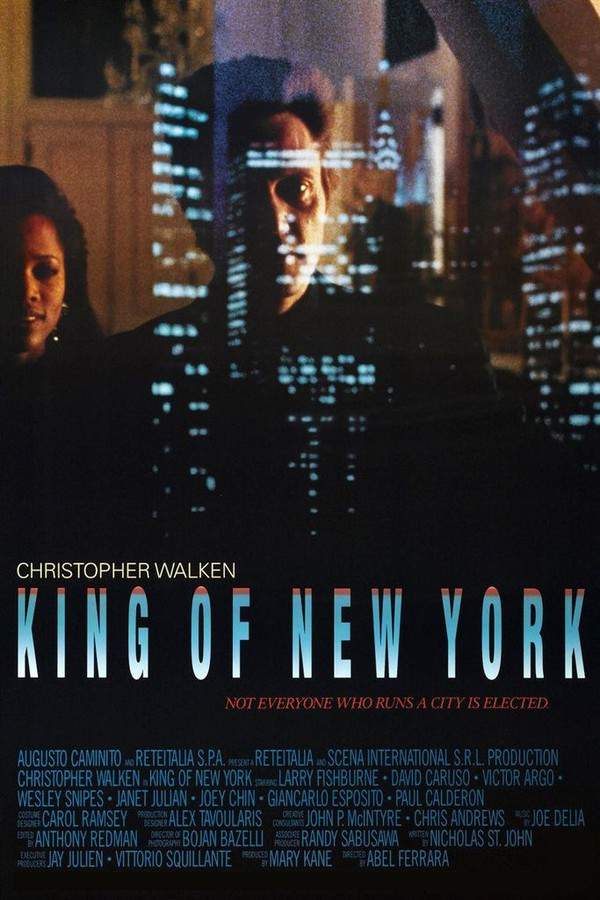
Frank White, portrayed by Christopher Walken, is a notorious drug lord making a grand return to New York City in a luxurious limousine after his release from the infamous Sing Sing prison. The story kicks off with the cold-blooded murder of a Colombian drug dealer, Emilio El Zapa, whose death is marked by a newspaper headline announcing Frank’s release. Zapa’s associate, King Tito, finds himself in a compromising position, holed up in a hotel room with Jimmy Jump, played by Laurence Fishburne, and Test Tube, depicted by Steve Buscemi. The duo seizes the opportunity to kill Tito and his armed guards, making off with a hefty stash of cocaine.
As Frank settles into his lavish suite at the Plaza Hotel, he is welcomed back into his criminal fold by Jimmy, Test Tube, and other loyal gang members. Seeking more than just a return to power, Frank aims to become the mayor of New York City and recruits his lawyers, Joey Dalesio and Jennifer, played by Paul Calderón and Janet Julian respectively, to help him make connections with influential figures like Mafia boss Arty Clay. During an intense subway ride, he encounters muggers and, rather than resorting to violence, opts to give them cash, suggesting they could find jobs at the Plaza if they want.
Joey heads over to Little Italy to secure a meeting with Clay but is humiliated when the don urinates on his shoes, signaling disdain for Frank’s ambitions. Undeterred, Frank confronts Clay at his social club, asserting that he desires a slice of Clay’s profits. When Clay insults him, Frank retaliates by killing him. As he strides away, Frank offers Clay’s men a chance to work at the Plaza, an audacious declaration of power.
The plot thickens as the NYPD narcotics squad, represented by Detectives Bishop, played by Victor Argo, Gilley, portrayed by David Caruso, and Flanigan, played by Wesley Snipes, take matters into their hands. They drive Frank to an isolated lot to reveal El Zapa’s corpse stuffed in a trunk. When Frank stands firm and refuses to confess, the detectives resort to violence, leaving him there. Meanwhile, Frank sends Dalesio to make a deal with Triad leader Larry Wong for a vast cocaine shipment. Larry demands a hefty upfront payment, but Frank suggests they team up for mutual benefit, which Larry ultimately rebuffs.
As tension escalates, Jimmy and several of Frank’s men are apprehended. Frank learns of their capture and dispatches his lawyers to secure their release. Determined to eliminate threats, he orchestrates the murder of Larry and his gang in Chinatown, reclaiming the cocaine they were after. In an ensuing clash, the detectives disguise themselves as drug dealers, leading to a violent confrontation at a nightclub. Many of Frank’s men fall, but he and Jump manage to evade their pursuers, albeit with chaos brewing around them.
Tragedy strikes when Gilley shoots Jimmy, marking a personal loss for Frank. Grief turns to vengeance as Frank retaliates against Gilley at Flanigan’s funeral, proving that his desire for power is unyielding. However, the body count continues to rise when Frank places a bounty on the heads of detectives involved in his case. In a tense showdown with Bishop at the detective’s apartment, Frank explains his murderous actions were driven by a moral stance against the human trafficking and child exploitation linked to his rivals. When Frank escapes to the subway, a final, deadly encounter with Bishop ensues. As the movie nears its conclusion, Frank, hit by a bullet in the chaos, finds himself cornered in a taxi in Times Square. Surrounded by the police, he succumbs to his injuries, closing his eyes and letting go of his tumultuous life.
Last updated: November 03, 2024 at 20:56
Explore frequently asked questions about King of New York (1990) with spoiler-rich answers covering the full plot summary, major story beats, character motivations, hidden details, and ending meaning. This movie summary FAQ helps explain confusing scenes, plot twists, and narrative decisions in clear, searchable detail.
Frank White's ambition to become mayor stems from his desire to consolidate power beyond just the drug trade. Rather than remaining purely a criminal figure, he seeks legitimate political influence that would give him control over the city's power structure. He uses his lawyers to build connections with influential figures, believing that holding political office would elevate his operation above the traditional criminal hierarchy and provide a layer of protection.
Frank's earlier decision to give money to subway muggers and offer them jobs at the Plaza hints at his desire to build a broader power base beyond his criminal organization.
Frank kills Arty Clay after the Mafia don humiliates Frank's lawyer Joey Dalesio by urinating on his shoes. This insult represents Clay's refusal to acknowledge Frank's authority or share his profits. When Frank confronts Clay at his social club seeking a partnership, Clay insults him again, prompting Frank to kill him on the spot rather than negotiate. The murder demonstrates Frank's ruthlessness and his belief that he cannot coexist with rivals who refuse to acknowledge his power.
The NYPD narcotics detectives, Bishop, Gilley, and Flanigan, target Frank White because he's a major drug lord reasserting control over New York's drug trade after his release from prison. They show Frank El Zapa's corpse in a trunk to intimidate him into confessing or cooperating. When Frank refuses and stands firm, the detectives resort to brutal tactics, establishing an intense personal war between Frank and law enforcement that escalates throughout the film.
The newspaper headline announcing Frank's release alongside El Zapa's murder signals that the authorities are already watching his return closely.
Frank places a bounty on the detectives after Detective Gilley kills Jimmy Jump during a confrontation at Flanigan's funeral. Jimmy was Frank's loyal friend and key ally, and his death represents a personal betrayal that Frank cannot ignore. The bounty is Frank's response to eliminate the detectives who are systematically destroying his operation and killing his men, showing that his desire for vengeance overrides any caution about provoking further police attention.
During his final confrontation with Detective Bishop at Bishop's apartment, Frank claims his violent actions were morally motivated, he says he eliminated rivals because they were involved in human trafficking and child exploitation. This explanation provides psychological depth to Frank's character, suggesting he sees himself as a righteous figure rather than simply a greedy criminal. However, this justification is largely self-serving, as Frank's primary motivation remains maintaining power and control over the drug trade.
Jimmy Jump is shot and killed by Detective Gilley during a violent confrontation at Flanigan's funeral. Jimmy was one of Frank's most loyal men, having been with him from the beginning and helping him reclaim his criminal empire after his release from prison. His death hits Frank personally because Jimmy proved his commitment repeatedly, including killing King Tito early in the film to help Frank regain power. Frank's grief turns immediately to vengeance, prompting him to kill Gilley at the funeral.
Frank sends his lawyer Joey Dalesio to negotiate a deal with Triad leader Larry Wong for a major cocaine shipment. Larry demands excessive payment and rejects Frank's proposal for a mutually beneficial partnership. Rather than accept unfavorable terms, Frank decides to eliminate the threat entirely. He orchestrates the murder of Larry Wong and his entire gang in Chinatown, reclaiming the cocaine they had and eliminating a rival who refused to work with him.
The NYPD detectives Bishop, Gilley, and Flanigan disguise themselves as drug dealers to infiltrate Frank White's operation and get close enough to confront his men. This strategy leads to a violent showdown at a nightclub where many of Frank's gang members are killed. The disguise is a tactical move to bypass Frank's security and create chaos within his organization, though Frank and Jimmy manage to escape the ambush.
Frank goes to Detective Bishop's apartment for a final confrontation, where he explains his actions and justifies his crimes by claiming moral opposition to his rivals' involvement in human trafficking and child exploitation. This meeting represents Frank's need to justify his violence to someone in authority. The confrontation ends with Bishop shooting Frank, who then escapes to the subway where their conflict reaches its deadly conclusion.
During a subway ride shortly after his release from prison, Frank encounters muggers but instead of using violence, he gives them cash and offers them jobs at the Plaza Hotel. This scene establishes Frank as someone who operates differently from typical gangsters, he prefers buying loyalty rather than forcing it through fear. It also foreshadows his political ambitions, as he builds a network of people who owe him favors and can be recruited into his growing operation.
Frank recruits lawyers Joey Dalesio and Jennifer specifically to bridge the gap between his criminal enterprise and legitimate political power. He needs their connections to meet influential figures like Mafia boss Arty Clay and build the relationships necessary to become mayor. The lawyers serve as his diplomats and dealmakers, representing his interests in situations where brute force would be inappropriate. This strategic use of legal professionals shows Frank's sophistication and long-term planning.
Discover curated groups of movies connected by mood, themes, and story style. Browse collections built around emotion, atmosphere, and narrative focus to easily find films that match what you feel like watching right now.
Charismatic yet brutal figures pursue power, only to be consumed by it.Explore more films like King of New York, featuring ambitious and morally complex crime lords on a violent path to power. If you liked the story of Frank White's rise and fall, you'll find similar tragic tales of underworld ambition, fatalistic endings, and gritty criminal sagas here.
Stories in this thread typically chart the rise and fall of a formidable criminal protagonist. They begin with a powerful drive for control or revenge, leading to a period of dominance, but are ultimately defined by the fatal flaws and external forces that orchestrate their tragic downfall, often ending in death or ruin.
These movies are grouped by their central focus on a magnetic but ruthless protagonist, a fast-paced and violent narrative of ascent, and a pessimistic, often fatalistic worldview where the pursuit of power leads to an inevitable, sad conclusion.
Gritty, violent tales of ambition and betrayal set against a decaying city.Find movies similar to King of New York that explore the brutal realities of organized crime in a decaying urban environment. If you liked the film's depiction of New York's underworld, you'll discover more grim thrillers about drug trades, police corruption, and violent power struggles set against a backdrop of urban decay.
The narrative pattern involves multiple factions—criminals, corrupt cops, rivals—clashing in a violent struggle for control of a city's illicit markets. The plot is driven by a series of betrayals, deals, and confrontations, painting a bleak picture where loyalty is fleeting and the city itself feels like a pitiless battleground.
They share a cohesive and oppressive atmosphere defined by a grim tone, a fast pace fueled by constant conflict, a heavy emotional weight, and a pervasive sense of urban decay and moral bankruptcy that makes the world feel authentically harsh and unforgiving.
Don't stop at just watching - explore King of New York in full detail. From the complete plot summary and scene-by-scene timeline to character breakdowns, thematic analysis, and a deep dive into the ending - every page helps you truly understand what King of New York is all about. Plus, discover what's next after the movie.
Track the full timeline of King of New York with every major event arranged chronologically. Perfect for decoding non-linear storytelling, flashbacks, or parallel narratives with a clear scene-by-scene breakdown.
Discover the characters, locations, and core themes that shape King of New York. Get insights into symbolic elements, setting significance, and deeper narrative meaning - ideal for thematic analysis and movie breakdowns.
Discover movies like King of New York that share similar genres, themes, and storytelling elements. Whether you’re drawn to the atmosphere, character arcs, or plot structure, these curated recommendations will help you explore more films you’ll love.
King of New York (1990) Scene-by-Scene Movie Timeline
King of New York (1990) Movie Characters, Themes & Settings
King of New York (1990) Spoiler-Free Summary & Key Flow
Movies Like King of New York – Similar Titles You’ll Enjoy
Gangs of New York (2002) Film Overview & Timeline
New Jack City (1991) Detailed Story Recap
Rob the Mob (2014) Movie Recap & Themes
We Own the Night (2007) Detailed Story Recap
New York (2009) Plot Summary & Ending Explained
Mobsters (1991) Detailed Story Recap
The New York Ripper (1982) Complete Plot Breakdown
99 River Street (1953) Movie Recap & Themes
Port of New York (1949) Ending Explained & Film Insights
The Funeral (1996) Story Summary & Characters
Streets of New York (1939) Story Summary & Characters
Gangs of New York (1938) Plot Summary & Ending Explained
The Killer That Stalked New York (1950) Complete Plot Breakdown
Law of the Underworld (1938) Ending Explained & Film Insights
New York Confidential (1955) Story Summary & Characters