Plot Explained Spoilers guaranteed!
Plot Explained

Browse by genre

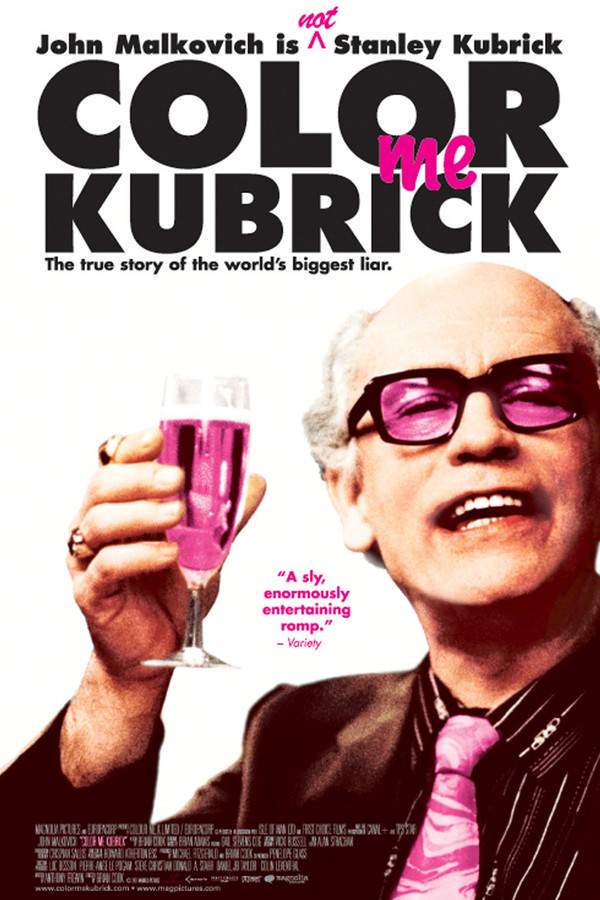
Color Me Kubrick (2007) movie poster

Plot Summary

Color Me Kubrick (2007) Plot Summary Explained

Release, runtime and language
2007 · 86 min · English
JustWatch #6,184 8
Directed by
Brian W. Cook

Alan Conway is a con man who impersonates director Stanley Kubrick, successfully fooling many people with his elaborate scheme. Despite lacking any real resemblance to Kubrick and possessing limited knowledge of his films, Conway’s audacious deception highlights his remarkable cunning and ability to manipulate those around him. The ruse becomes increasingly complex, testing the boundaries of belief and the allure of meeting a legendary figure.

On this page (6)
  1. 1 Where to watch
  2. 2 What happens: full plot
  3. 3 Plot questions answered
  4. 4 Movie threads
  5. 5 Movies like Color Me Kubrick
  6. 6 Every angle

Where to watch

Where to Watch Color Me Kubrick (2007)

Where can you watch Color Me Kubrick? Stream, rent or buy it in the US, including on Hoopla, Kanopy and DistroTV: current JustWatch availability with up-to-date prices.

Streaming availability powered by JustWatch

Full plot summary · contains spoilers

What Happens in Color Me Kubrick: Full Plot Summary

The whole story of Color Me Kubrick (2007) explained, from the opening scene to the final frame: every key event, every twist and what it all adds up to. Read it as a quick recap before the sequel, to check a scene you missed, or to finally understand what really happened.

As the evening sun sets below the horizon, two somewhat clumsy thugs arrive at the doorstep of an unsuspecting elderly couple, waving a questionable debt notice that claims to be from Stanley Kubrick. Yet, their target, the clever con artist Alan Conway, has already fled to greener pastures, leaving behind a web of deceit and misdirection. Oblivious to the deception, the would-be collectors create a scene outside, only to be escorted away by law enforcement.

Conway's cons are nothing short of astounding, as he seamlessly takes on multiple identities to convincingly impersonate the reclusive film director. He enchants a young fashion designer with grand stories of cinematic brilliance, wins over the managers of an aspiring heavy metal band with his misguided expertise in rock music, and even persuades a cab driver to part with cash, all while posing as Kubrick. His unwitting victims, blissfully unaware, shower him with gifts ranging from complimentary meals to evenings filled with romance.

However, Conway's most formidable obstacle arises in the form of a savvy rent boy, who sees right through the con man's flimsy charade. When Conway tries to share an anecdote about directing Judgment at Nuremberg (1961), he is quickly corrected that it was actually Stanley Kramer behind the camera, leaving the rent boy's piercing glare to force Conway to retreat.

Later, in a drunken stupor, Conway encounters Frank Rich, a journalist associated with The New York Times, in a local diner. Infuriated by an article suggesting that Kubrick is a recluse, Conway seizes the opportunity to argue the inaccuracies within the piece. This unexpected meeting profoundly influences Rich, sparking a determination to uncover the truth about Kubrick's reclusive persona.

As Rich dives deeper into his research, he discovers a photograph of the real Stanley Kubrick, only to be struck by the jarring difference between the man in the photograph and the imposter he met at the diner. Conway's carefully crafted persona begins to unravel, setting off a chain of events that will leave a lasting impact on everyone involved.

After collapsing from intoxication on a sun-drenched beach, Conway is revived by a gentle nurse, setting the stage for a series of fortuitous encounters that will dramatically change his life. Amidst this newfound camaraderie, he befriends Lee Pratt, a charming British singer and comedian, who unwittingly becomes his gateway to a life filled with luxury and extravagance. With Pratt indulging him financially in exchange for Conway's empty promises of catapulting him to international fame, the con artist embarks on a lavish adventure, leveraging Pratt's readiness to support him while spinning tales of his ability to make the entertainer an American sensation.

Yet, this precarious balancing act collapses when an observant cleaning woman at an upscale seaside hotel in Devon discovers Conway's passport, exposing his real identity. With Pratt's suspicions aroused, Conway finds himself unceremoniously dropped from Pratt's life and plunged into the cold waters of Lyme Bay.

In a bid to evade consequences, Conway devises a cunning plan, pretending to be the legendary filmmaker Stanley Kubrick himself. This audacious ruse successfully lands him a stay at a prestigious mental institution, where his doctor composes a detailed case study for submission to a respected medical journal.

As Conway navigates this peculiar detour, he convinces the doctor that he has recovered from a fictional mental breakdown, securing his release from the facility. However, his doctor remains skeptical about his battle with alcoholism, ensuring that Conway is admitted for a four-week stay at the luxurious Rimini Clinic, a well-known rehab center frequented by numerous celebrities.

Within the serene confines of the clinic, Conway finds himself surrounded by wealthy individuals, living lavishly as he indulges in spa treatments and leisurely relaxes in a stunning hot tub. Meanwhile, on-screen text unveils his astonishing escape from prosecution, culminating in a quiet return to his modest flat in Harrow. This chapter of his life would eventually close in December 1998, a mere three months before the death of another cinematic icon, Stanley Kubrick.
Last updated: November 18, 2024 at 20:22

Was this helpful?

Plot questions answered

Color Me Kubrick Plot Explained: Your Questions Answered

The questions people ask most about Color Me Kubrick (2007): what happens in the confusing scenes, why the characters do what they do, the twists, hidden details and what the ending means. Each answer contains spoilers.

Q1

Why did Alan Conway impersonate Stanley Kubrick?

Conway used Kubrick's identity because the director was famously reclusive and mysterious, making it easier to deceive people who would never meet the real Kubrick. His audacious scheme relied on the fact that most people could not verify his claims, and Kubrick's legendary status gave his con immediate credibility and access to people eager to meet a cinematic legend.

Foreshadowing: Earlier scenes show Conway easily deceiving victims with elaborate stories about cinema, establishing his comfort with impersonation.

  • alan conway
  • stanley kubrick
  • impersonation
  • con artist
  • deception
Q2

What happened when Conway met the rent boy who saw through his disguise?

When Conway tried to impress the rent boy by claiming he directed Judgment at Nuremberg, the rent boy immediately corrected him, noting it was Stanley Kramer who directed that film. This moment forced Conway to realize his limited knowledge of Kubrick's actual filmography could expose him, and he retreated from the encounter under the rent boy's skeptical glare.

  • rent boy
  • judgment at nuremberg
  • stanley kramer
  • exposure
Q3

How did Conway end up at a mental institution?

After being exposed by the cleaning woman and dropped by Lee Pratt, Conway devised a desperate plan to avoid consequences for his impostor lifestyle. He pretended to be Stanley Kubrick again, this time claiming he was suffering from a mental breakdown, which secured him admission to a prestigious mental institution where he could escape prosecution.

Foreshadowing: The timeline shows Conway always using Kubrick's identity as his ultimate escape mechanism when other cons failed.

  • mental institution
  • escape
  • fake breakdown
  • kubrick identity
Q4

Why did Conway argue with Frank Rich at the diner?

Conway was furious that Rich's New York Times article described Kubrick as a recluse, viewing this as an inaccurate portrayal of the director he was impersonating. This passionate defense of Kubrick's character surprised Rich and sparked his curiosity to investigate the real Kubrick, eventually leading him to discover the photograph that exposed Conway as an imposter.

  • frank rich
  • new york times
  • diner argument
  • kubrick article
Q5

What exposed Conway's true identity at the hotel in Devon?

A cleaning woman discovered Conway's passport while cleaning his room at the upscale seaside hotel in Devon. The passport revealed his real name and identity, which contrasted sharply with the Kubrick identity he had been using. This discovery prompted Lee Pratt's suspicions and ultimately led to Conway being dropped from Pratt's life.

  • cleaning woman
  • passport
  • devon hotel
  • lee pratt
  • exposure
Q6

What happened to Conway after Lee Pratt dropped him?

After Pratt discovered Conway's true identity through the passport incident, Conway was cast out from his luxurious lifestyle. He fell into the cold waters of Lyme Bay, symbolizing his sudden fall from grace. This led him to devise his most desperate con yet, pretending to be Kubrick suffering from a mental breakdown to gain entry into a mental institution.

  • lee pratt
  • lyme bay
  • dropped
  • downfall
Q7

How did Conway avoid prosecution for his impersonation scheme?

Conway cleverly avoided criminal prosecution by convincing doctors at the mental institution that he had recovered from a fictional mental breakdown. This narrative allowed him to be transferred to the luxurious Rimini Clinic for alcoholism treatment instead of facing criminal charges. The film notes he ultimately returned quietly to his modest flat in Harrow, having escaped legal consequences.

  • prosecution
  • rimini clinic
  • escape
  • legal consequences
Q8

Why did Conway incorrectly claim to have directed Judgment at Nuremberg?

Conway's mistake demonstrated his limited actual knowledge of Stanley Kubrick's filmography. When he made this claim to the rent boy, it immediately revealed his imposture because Judgment at Nuremberg (1961) was directed by Stanley Kramer, not Kubrick. This error exposed the gap between Conway's confident persona and his shallow understanding of the director's actual works.
  • judgment at nuremberg
  • stanley kramer
  • film error
  • knowledge gap
Q9

How did Conway meet the nurse who revived him on the beach?

After collapsing from intoxication on a sun-drenched beach, Conway was revived by a gentle nurse who tended to him during his drunken stupor. This fortuitous encounter led to his introduction to Lee Pratt, as the nurse apparently connected him with people who would become his next victims.

  • nurse
  • beach
  • collapse
  • lee pratt introduction
Q10

When did Alan Conway die and what happened to him?

Conway returned to his modest flat in Harrow after his various cons collapsed, living quietly until December 1998 when he died. Notably, this was just three months before the actual death of Stanley Kubrick, creating a darkly ironic coincidence given Conway's years of impersonating the legendary director.

  • death
  • 1998
  • haddon
  • stanley kubrick death
  • irony
Q11

Why did Conway pretend to have a mental breakdown?

Conway claimed to be suffering from a mental breakdown as a calculated escape from the consequences of his repeated impersonations. By adopting Kubrick's identity and framing himself as a confused celebrity experiencing psychological distress, he secured admission to a mental institution rather than facing criminal charges for fraud.

  • mental breakdown
  • escape plan
  • fraud
  • kubrick identity

Movie threads

More Movies Like Color Me Kubrick, by Mood & Story

Curated lists built around what makes Color Me Kubrick tick: the same mood, the same kind of story or the same emotional payoff. Each list explains why these movies belong together.

Movies about daring imposters like Color Me Kubrick

Darkly humorous tales where audacious frauds test the limits of belief and identity. If you enjoyed the darkly comedic deception in Color Me Kubrick, explore more movies about cunning impersonators. These films feature audacious frauds, psychological manipulation, and the chaotic fallout of living a lie, capturing a similar blend of unease and cynical humor.

  • deceptive
  • satirical
  • unsettling
  • cunning
  • absurd
  • manipulative
  • Tone: dark, satirical
  • Pacing: steady, character-driven
Why these movies?

The story pattern: Stories in this thread typically follow a con artist or imposter as they weave an elaborate fiction, often targeting the wealthy or gullible. The narrative focuses on the mechanics of the deception, the near-misses with exposure, and the psychological toll on both the fraudster and their victims, culminating in an ambiguous or mixed resolution.

Why they belong together: These movies are grouped by their central theme of pathological deception, a tone that balances dark satire with character study, and a moderate intensity that comes from interpersonal manipulation rather than physical danger. They share a focus on cunning, absurdity, and the blurred lines between reality and performance.

Dark character comedies similar to Color Me Kubrick

Satirical portraits of deeply flawed protagonists navigating their own chaotic downfall. Fans of the cynical humor and flawed protagonist in Color Me Kubrick will appreciate these dark character comedies. These movies feature charismatic but dysfunctional leads, satirical observations on human behavior, and a tone that blends comedy with a palpable sense of unease.

  • satirical
  • darkly humorous
  • unsettling
  • character study
  • dysfunctional
  • cynical
  • Tone: dark, cynical, unsettling
  • Pacing: steady, observational
Why these movies?

The story pattern: The narrative pattern is a character arc that follows a deeply flawed, often self-destructive protagonist as they create chaos in their wake. There is little traditional plot; the focus is on a series of escalating misadventures driven by the character's personality defects, leading to a conclusion that is neither fully tragic nor triumphant but leaves a lasting impression of absurdity.

Why they belong together: These films share a specific tonal blend: a dark, satirical edge combined with a steady, observational pace. They are united by a medium emotional weight that allows for both laughs and discomfort, and a focus on the absurdities of human failure rather than dramatic catharsis.

If you liked this

Movies Like Color Me Kubrick

Similar movies to Color Me Kubrick: the same genre, themes or kind of story. Each one comes with its own plot summary, timeline and ending explained.

Browse all movie summaries

Every angle

Color Me Kubrick (2007) Explained: Plot, Timeline & Characters

Everything about Color Me Kubrick in one place: what happens in the plot summary, the timeline in chronological order, the characters and meaning and a spoiler-free summary. What's After the Movie adds the cast, box office and post-credit scenes.

Coming soon on iOS and Android

The Plot Explained Movie Summary App

Plot summaries, endings explained and timelines on your phone. Catch up on any movie in minutes, save your favorites and never miss a twist again.

Be the first to know when we launch. Your email stays private, always.

Learn more about the app