Plot Explained Spoilers guaranteed!
Plot Explained

Browse by genre

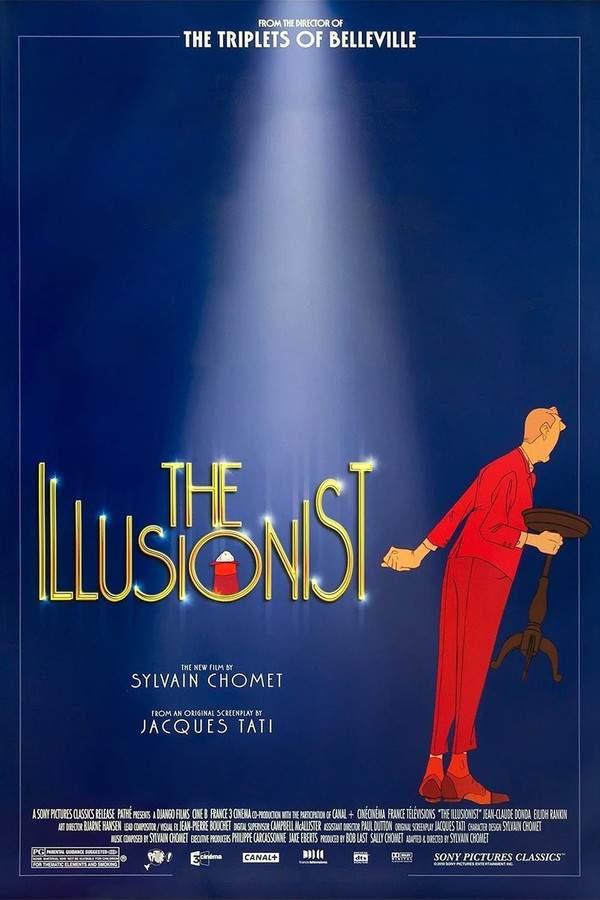
The Illusionist (2010) movie poster

Plot Summary

The Illusionist (2010) Plot Summary Explained

Release, runtime and language
2010 · 80 min · English
Directed by
Sylvain Chomet
Starring
Jean-Claude Donda, Didier Gustin, Edith Rankin, Frédéric Lebon
Budget
$17M

An aging illusionist finds his artistry fading and sets out to rediscover his passion. Along the way, he encounters Alice, a lively young girl who cherishes the wonder of childhood. Their unexpected connection sparks a journey of self-discovery, as they confront the challenges of growing up and the importance of embracing change. Through their bond, they bridge the differences between generations and find inspiration in the magic of life.

On this page (6)
  1. 1 Where to watch
  2. 2 What happens: full plot
  3. 3 Plot questions answered
  4. 4 Movie threads
  5. 5 Movies like The Illusionist
  6. 6 Every angle

Where to watch

Where to Watch The Illusionist (2010)

Where can you watch The Illusionist? Stream, rent or buy it in the US, including on YouTube Free, Amazon Video and Apple TV Store: current JustWatch availability with up-to-date prices.

Streaming availability powered by JustWatch

Full plot summary · contains spoilers

What Happens in The Illusionist: Full Plot Summary

The whole story of The Illusionist (2010) explained, from the opening scene to the final frame: every key event, every twist and what it all adds up to. Read it as a quick recap before the sequel, to check a scene you missed, or to finally understand what really happened.

The story centers around an illusionist and magician named Tatischeff, who struggles to find his place in a rapidly changing entertainment world. Set in 1959 Paris, the landscape is transforming, overwhelmed by the rise of rock and roll and television; Tatischeff (though his name is seldom spoken, it's featured on the poster he carries) performs in increasingly empty theaters. Desperate for a breakthrough, he moves to London hoping for better luck.

However, in London, he faces a tough crowd yet again. His only chance to showcase his talent is to follow a lively rock band that attracts enthusiastic audiences of screaming girls. By the time Tatischeff finally performs, the audience has dwindled down to just a couple of spectators. The slide continues as he seeks out smaller venues, from cafes to private parties, where he barely captures the attention of anyone—except for a rowdy Scotsman.

That Scotsman invites Tatischeff to showcase his skills at his pub in Scotland, and to everyone's surprise, the pub patrons actively engage with his magic. Among the curious audience is the Scotsman’s daughter, Alice. One day while tidying, Alice drops a bar of soap. When the Illusionist picks it up, she is astonished as he magically transforms it into a shiny new bar! From that moment, she believes he possesses extraordinary powers.

As Tatischeff wanders through the town, he notices Alice's fascination with a pair of red shoes displayed in a shop. Observing her worn-out footwear, he secretly purchases the shoes and magically presents them to her, leading to her overflowing joy.

Time passes, and when Tatischeff prepares to leave, he is surprised to find Alice has chosen to accompany him on the ferry back to the mainland. He accepts her wish to visit Edinburgh, where they settle into a modest apartment shared with other performers, including three acrobatic brothers and a clown. While Alice gets the bedroom, Tatischeff opts for the sofa in the living room.

Tatischeff soon finds work at the local Music Hall, sharing moments with Alice. But their bond is tested when Alice encounters a young man and decides to spend time with him while Tatischeff is away. One fateful night, he returns home, tipsy, only to discover that Alice is no longer there. Heartbroken, he wanders into the mountains with his rabbit, setting it free as a gesture of farewell before packing up and leaving, uncertain of his future.

After a night out with her new companion, Alice returns to the apartment only to find it empty. Tatischeff has left her some money along with a note that reads, > “magicians do not exist.” In the end, she takes her suitcase and joins her young man waiting outside.

The film concludes with Tatischeff sharing a train compartment with a mother and her child, while the city's lights dim, save for the glow of televisions in a shop window where a ventriloquist's dummy awaits, marked with a price tag that reads "free."

Last updated: November 15, 2024 at 19:49

Was this helpful?

Plot questions answered

The Illusionist Plot Explained: Your Questions Answered

The questions people ask most about The Illusionist (2010): what happens in the confusing scenes, why the characters do what they do, the twists, hidden details and what the ending means. Each answer contains spoilers.

Q1

Why does Alice believe the Illusionist has real magical powers?

Alice becomes convinced the Illusionist possesses real magical powers after witnessing him transform a bar of soap into a shiny new one right before her eyes. This seemingly impossible feat occurs when she accidentally drops the soap while tidying up at the pub, and Tatischeff catches it and magically produces a fresh bar. The trick, which is simple stage magic to an adult, appears extraordinary to young Alice, who sees the world through the eyes of a child full of wonder.

Foreshadowing: The film establishes early on that Alice lives in a small Scottish town where real magic has become rare, making her susceptible to believing in extraordinary possibilities.

  • alice
  • soap
  • magic trick
  • illusionist
  • scotland
  • pub
Q2

Why does the Illusionist buy Alice the red shoes?

Tatischeff notices Alice admiring a pair of red shoes displayed in a shop window while she wears worn-out, tattered footwear. Moved by her fascination and perhaps seeing a reflection of his own fading relevance, he secretly purchases the shoes and presents them to her as a magical gift. The gesture reflects his desire to bring joy and wonder into her life, just as his performances once brought delight to audiences.

Foreshadowing: This act of generosity foreshadows the paternal-like bond that develops between them, with Tatischeff filling a void in Alice's life through both magic and material kindness.

  • red shoes
  • alice
  • gift
  • tatischeff
  • scotland
  • shop
Q3

Why does Alice decide to follow the Illusionist to Edinburgh?

Alice develops a deep attachment to Tatischeff after witnessing his magical performances and receiving the red shoes. When he prepares to leave Scotland, she sees an opportunity to escape her small-town life and pursue excitement beyond what her father or her hometown can offer. Her decision reflects a child's longing for adventure and something more, combined with her belief that Tatischeff possesses extraordinary abilities worth following.

Foreshadowing: Alice's fascination with the magical world and her desire to escape her current circumstances were established through her awe at the soap transformation and her admiration for the traveling performer.

  • alice
  • edinburgh
  • tatischeff
  • scotland
  • journey
  • escape
Q4

Why does the Illusionist leave Alice in Edinburgh?

Tatischeff discovers that Alice has been spending time with a young man while he was away, and when he returns home intoxicated one night, he finds her gone. Feeling abandoned and heartbroken, he decides to leave rather than confront the situation or compete for her attention. He leaves her money and a note saying 'magicians do not exist', a statement that seems designed to release her from her belief in magic (and by extension, her dependence on him), allowing her to grow up and live a normal life.

Foreshadowing: Earlier tension arises when Alice begins seeking companionship elsewhere, spending less time with Tatischeff as she grows older and more interested in romance.

  • tatischeff
  • alice
  • heartbreak
  • leaving
  • edinburgh
  • note
Q5

What does the note "magicians do not exist" mean?

When Tatischeff writes "magicians do not exist," he is both revealing the truth about his profession and releasing Alice from the enchantment she believes in. By telling her that magic was never real, he hopes to help her stop clinging to childhood fantasies and the fantasy of their relationship, encouraging her to move forward with her life. It is a bittersweet farewell that prioritizes her growth over maintaining the magical bond they shared.

Foreshadowing: The note represents the culmination of the film's central theme about the loss of wonder in adulthood and the harsh realities of a changing world where old-fashioned magic no longer has a place.

  • magicians do not exist
  • note
  • farewell
  • alice
  • tatischeff
  • message
Q6

Why does the Illusionist set his rabbit free in the mountains?

After discovering Alice has left, Tatischeff wanders into the mountains with his rabbit, a constant companion throughout his performances. Setting the rabbit free symbolizes his release of the past, his artistic identity, and the relationship with Alice. Just as he is about to leave Edinburgh and his old life behind, he gives the rabbit freedom rather than continuing to use it as a prop in his fading act. This moment represents letting go of everything that defined him.

Foreshadowing: The rabbit appears throughout Tatischeff's journey as a symbol of his profession and his solitude, making its release a powerful emotional moment of surrender.

  • rabbit
  • mountains
  • tatischeff
  • freedom
  • letting go
  • symbolism
Q7

What does the ending of the movie mean?

The film ends with Tatischeff alone on a train, sharing a compartment with a mother and her child. As the train moves through the darkened countryside, city lights dim except for the glow of televisions in shop windows, and a ventriloquist's dummy sits marked "free", a symbol of old entertainers who have become obsolete. The ending suggests that Tatischeff, like traditional magic, no longer fits into a modern world dominated by television and rock and roll. His solitary journey continues into uncertainty, while Alice has found a new life with her companion, representing the bittersweet nature of growing up and moving on.

Foreshadowing: The film consistently shows traditional performers being replaced by modern entertainment, building toward this final image of obsolescence.

  • ending
  • train
  • television
  • dummy
  • obsolescence
  • tatischeff
  • lights
Q8

Why can't the Illusionist find audiences for his performances?

Tatischeff struggles to find audiences because the entertainment industry in 1959 is rapidly changing. Rock and roll and television have revolutionized how people seek entertainment, making traditional stage magic and illusion shows feel outdated. Audiences now prefer the excitement of rock bands and the convenience of television over live performances by aging magicians. The film is set in this transitional period, showing how technological and cultural shifts render certain art forms irrelevant.

Foreshadowing: The opening scenes in Paris clearly establish this shift, with Tatischeff performing to empty theaters while rock and roll takes over.

  • audiences
  • rock and roll
  • television
  • 1959
  • entertainment
  • tatischeff
  • paris
  • london
Q9

Why does Alice choose to leave with the young man instead of staying with the Illusionist?

Alice meets a young man while living in Edinburgh and becomes romantically interested in him. When she spends nights out with him while Tatischeff is away, her priorities begin to shift away from their bond. When she returns to find Tatischeff gone, she chooses to leave with her new companion rather than chase after the magician. This represents her transition from childhood to adulthood, she is choosing a real-life future with a peer over the magical, father-like relationship she had with Tatischeff.

Foreshadowing: The tension between Alice and Tatischeff emerges when she starts seeking companionship outside their relationship, reflecting her natural progression toward independence.

  • alice
  • young man
  • leaving
  • edinburgh
  • romance
  • choice
  • growing up
Q10

What is the relationship between the Illusionist and Alice?

The relationship between Tatischeff and Alice is not romantic, it is a complex bond between an aging performer and a young girl who sees him as a magical figure. Alice views Tatischeff through the eyes of a child, believing he possesses real powers, while he provides her with attention, wonder, and material gifts she lacks at home. It is a paternal-like connection tinged with loneliness on both sides: he is isolated as a failing artist, and she feels unseen in her small-town life. Their bond represents shared loneliness and the human need for connection across generations.

Foreshadowing: The film carefully frames their interactions as protective and nurturing rather than romantic, with Tatischeff acting as a surrogate parent figure.

  • relationship
  • tatischeff
  • alice
  • connection
  • bond
  • loneliness
  • surrogate father

Movie threads

More Movies Like The Illusionist, by Mood & Story

Curated lists built around what makes The Illusionist tick: the same mood, the same kind of story or the same emotional payoff. Each list explains why these movies belong together.

Movies about fading artists like The Illusionist

Quiet stories about performers facing their own obsolescence with grace. Explore a collection of movies like The Illusionist that follow performers and artists confronting the end of their relevance. These films share a gentle, melancholic tone and explore themes of aging, tradition, and the bittersweet beauty of a life dedicated to art.

  • melancholic
  • nostalgic
  • reflective
  • quiet
  • lonely
  • gentle
  • Tone: melancholic, bittersweet
  • Pacing: slow, contemplative
Why these movies?

The story pattern: The narrative typically follows an aging protagonist whose skills or art form is becoming obsolete. The conflict is internal and existential, focusing on their search for meaning, connection, or a final moment of brilliance rather than external, high-stakes plots. The journey is often one of quiet acceptance.

Why they belong together: They are grouped by their shared focus on the emotional landscape of artistic decline, using slow pacing and a melancholic tone to create a reflective, often bittersweet, viewing experience centered on character over plot.

Movies about bittersweet mentorship like The Illusionist

The fleeting, meaningful connections that bridge the gap between youth and age. If you liked the gentle connection between the characters in The Illusionist, discover other movies about fleeting but profound intergenerational friendships. These stories focus on quiet mentorship, personal growth, and the bittersweet feeling of paths crossing and then diverging.

  • bittersweet
  • gentle
  • nostalgic
  • hopeful
  • reflective
  • quiet
  • Tone: bittersweet, gentle
  • Pacing: slow, character-driven
Why these movies?

The story pattern: The narrative revolves around the formation and eventual dissolution of a deep connection between an older, often weary, adult and a younger, vibrant individual. The relationship acts as a catalyst, helping the older character rediscover purpose and the younger one gain wisdom, ending with a poignant but necessary separation.

Why they belong together: They share a specific emotional arc: the formation of a poignant, platonic bond across generations that is central to the story's emotional core, resulting in a farewell that is both sad for its ending and hopeful for the characters' futures.

If you liked this

Movies Like The Illusionist

Similar movies to The Illusionist: the same genre, themes or kind of story. Each one comes with its own plot summary, timeline and ending explained.

Browse all movie summaries

Every angle

The Illusionist (2010) Explained: Plot, Timeline & Characters

Everything about The Illusionist in one place: what happens in the plot summary, the timeline in chronological order, the characters and meaning and a spoiler-free summary. What's After the Movie adds the cast, box office and post-credit scenes.

Coming soon on iOS and Android

The Plot Explained Movie Summary App

Plot summaries, endings explained and timelines on your phone. Catch up on any movie in minutes, save your favorites and never miss a twist again.

Be the first to know when we launch. Your email stays private, always.

Learn more about the app