Plot Explained Spoilers guaranteed!
Plot Explained

Browse by genre

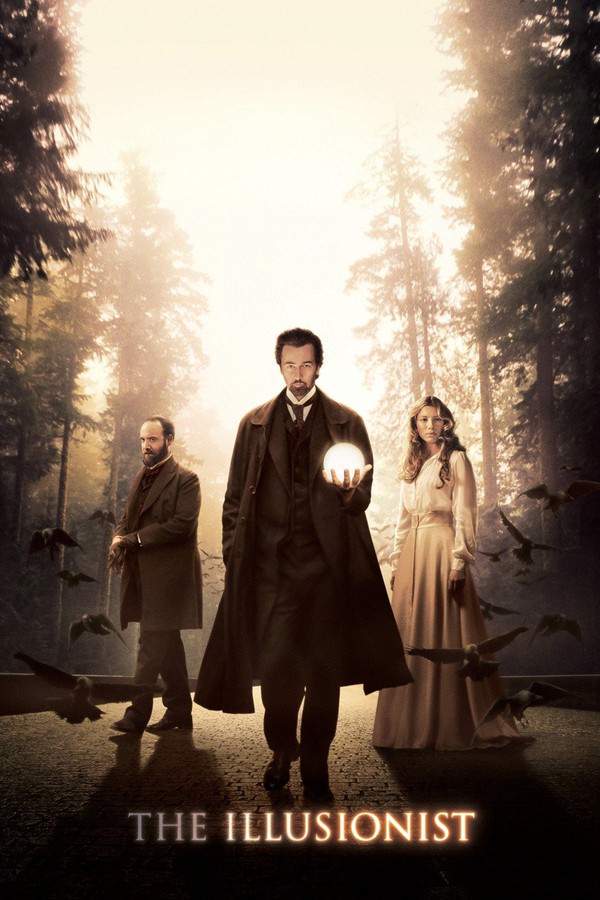
The Illusionist (2006) movie poster

Plot Summary

The Illusionist (2006) Plot Summary Explained

Release, runtime and language
2006 · 110 min · English
JustWatch #4,426 12
Directed by
Neil Burger
Starring
Paul Giamatti, Edward Norton, Jessica Biel
Budget
$16.5M

Set in Vienna at the end of the 20th century, a talented illusionist uses his mesmerizing skills to win the affection of a duchess. His pursuit leads him into a world of privilege and danger, as he confronts the powerful and influential, blurring the lines between magic and reality in a passionate quest for love.

On this page (7)
  1. 1 Where to watch
  2. 2 What happens: full plot
  3. 3 Plot questions answered
  4. 4 The book behind the movie
  5. 5 Movie threads
  6. 6 Movies like The Illusionist
  7. 7 Every angle

Where to watch

Where to Watch The Illusionist (2006)

Where can you watch The Illusionist? Stream, rent or buy it in the US, including on Amazon Prime Video, AMC+ and FlixFling: current JustWatch availability with up-to-date prices.

Streaming availability powered by JustWatch

Full plot summary · contains spoilers

What Happens in The Illusionist: Full Plot Summary

The whole story of The Illusionist (2006) explained, from the opening scene to the final frame: every key event, every twist and what it all adds up to. Read it as a quick recap before the sequel, to check a scene you missed, or to finally understand what really happened.

The film opens with Chief Inspector Uhl (Paul Giamatti) narrating the tale of Eisenheim the Illusionist to Crown Prince Leopold (Rufus Sewell), after Uhl's dramatic visit to a theater where he attempts to arrest Eisenheim during what seems to be an illusion allegedly involving necromancy.

Eisenheim, born to a humble cabinetmaker in the region of Austria-Hungary, has his fateful encounter as a young man with a magician (David Forest) who teaches him the art of magic. This meeting ignites a deep fascination with the craft in Eisenheim, played in his younger days by Aaron Johnson. Simultaneously, he falls in love with Sophie, the Duchess von Teschen, portrayed by Jessica Biel when she is still a young lady, played by Eleanor Tomlinson. Their bond is forged in secret – even as he gifts her a unique marquetry puzzle locket that reveals a hidden picture of him. Despite their love, social boundaries keep them apart, and on the day they plan to escape to China to explore the depths of magic, they are thwarted when the authorities intervene, leading to a heart-wrenching separation.

Years later, Eisenheim returns, transformed into a master of illusions. During a performance, he unexpectedly reunites with Sophie, only to discover she is to be wed to the menacing Crown Prince Leopold, who has a dismal reputation for treating women cruelly. The two rekindle their romance in secrecy, discovering that Sophie still cherishes the locket from their youth. Their desire to be together escalates, yet they perceive the threat posed by Leonardo's ambitions to seize power and eliminate anyone in his way. This includes their desperate plans for escape, jeopardized by Sophie’s awareness of Leopold's nefarious intentions.

When Leopold learns of their meetings through Uhl’s surveillance, he confronts Sophie in a drunken rage, resulting in her apparent murder. This tragedy plunges Eisenheim into despair just as the public starts to suspect Leopold's involvement. Driven by grief, he crafts a new magic show that incites intrigue as he seems to summon the spirit of Sophie during a performance.

In a twist, Leopold attends this show incognito and panics when Sophie’s spirit accuses someone in the audience of her murder. As Uhl, entwined in the prince's web of deceit, presses for answers, Eisenheim cleverly uses his tricks to elude capture, disappearing before their eyes during a performance.

Uhl’s investigation leads him to the hidden truth about Sophie's locket and the deadly deception orchestrated by Leopold. In a tension-filled climax, Uhl reveals the connection between the prince and Sophie's demise, leading to a frantic culmination where Leopold, in desperation, takes his own life rather than face the consequences of his actions.

In a final twist of fate, Uhl receives a folio labeled "Orange Tree" from a young boy, brimming with mechanisms that hint at Eisenheim’s clever deception. This revelation leads Uhl to the realization of Eisenheim’s true escape plan and, with bemusement rather than anger at the unfolding events, he watches as Eisenheim, in disguise, approaches waiting Sophie, who has been hidden away. The two lovers, against the backdrop of intrigue and danger, look poised for their reunion, a testament to the enduring power of love and illusion.
Last updated: November 03, 2024 at 23:36

Was this helpful?

Plot questions answered

The Illusionist Plot Explained: Your Questions Answered

The questions people ask most about The Illusionist (2006): what happens in the confusing scenes, why the characters do what they do, the twists, hidden details and what the ending means. Each answer contains spoilers.

Q1

What inspires Eisenheim to become an illusionist?

Eisenheim's journey into magic begins in his youth when he encounters a traveling magician who teaches him the art of illusion. This pivotal meeting sparks a lifelong fascination with magic that transforms him from a humble cabinetmaker's son into a master performer. The skill becomes his pathway to reuniting with his lost love Sophie.

Foreshadowing: Earlier in the film, the young Eisenheim is shown deeply absorbed in studying magic books and performing small tricks for himself.

  • eisenheim
  • illusionist
  • magician
  • inspiration
  • origin
Q2

Why is Sophie forced to marry Crown Prince Leopold?

Sophie is arranged to marry Crown Prince Leopold for political advantage, as his family holds power and influence in Vienna. Although Sophie still cherishes her secret love for Eisenheim, she cannot refuse this advantageous match due to social constraints and family expectations. Leopold's notorious cruelty toward women makes this marriage particularly dangerous for Sophie.

Foreshadowing: The film establishes early that Leopold has a dismal reputation for treating women cruelly, setting up the tragedy to come.

  • sophie
  • leopold
  • marriage
  • arranged
  • crown prince
Q3

Does Sophie actually die in the movie?

No, Sophie does not actually die. Her apparent murder at Leopold's hands is part of an elaborate deception staged by Eisenheim and Sophie herself. The death is faked to expose Leopold's crimes and allow Sophie to escape from his control permanently. This twist reveals that the tragic ending is actually part of Eisenheim's ultimate illusion.

Foreshadowing: Eisenheim's magic show featuring necromancy appears to summon Sophie's spirit, raising questions about what really happened.

  • sophie
  • death
  • faked
  • illusion
  • twist
Q4

What is the significance of the locket Sophie keeps?

The locket is a marquetry puzzle gift from Eisenheim that reveals a hidden picture of him when opened. Sophie keeps it throughout the years as a treasured symbol of their youthful love. The locket becomes crucial evidence in Uhl's investigation, as it connects Sophie to Eisenheim and helps reveal the truth about their relationship and Leopold's crimes.

Foreshadowing: Sophie mentions still treasuring the locket when she reunites with Eisenheim, emphasizing its emotional importance.

  • locket
  • puzzle
  • keepsake
  • evidence
  • sophie
Q5

How does Eisenheim perform the necromancy illusion?

Eisenheim's necromancy trick appears to summon the spirit of the dead, including Sophie. This elaborate illusion serves multiple purposes: it publicizes Sophie's death, creates public suspicion about Leopold's involvement, and allows Eisenheim to expose the prince's crimes. The performance uses sophisticated stage techniques to create the illusion of a spirit accusing someone in the audience of murder.

Foreshadowing: Eisenheim's earlier performances always involve elaborate setups with hidden mechanisms and misdirection.

  • necromancy
  • illusion
  • spirit
  • performance
  • show
Q6

How does Uhl discover the truth about Sophie's death?

Uhl's investigation leads him to uncover the hidden truth about Sophie's locket and Leopold's deception. He connects the evidence of the locket with the circumstances of Sophie's death, realizing that Leopold orchestrated her murder. This revelation comes through careful examination of the clues left behind and understanding Eisenheim's magical abilities.

Foreshadowing: Uhl is shown investigating throughout the film, following leads and surveillance information.

  • uhl
  • investigation
  • truth
  • evidence
  • leopold
Q7

What is the Orange Tree folio that Uhl receives?

The Orange Tree folio is a mysterious book given to Uhl by a young boy after Leopold's death. It contains mechanisms and schematics that reveal Eisenheim's clever escape plan. This final piece of the puzzle helps Uhl understand how Eisenheim staged his ultimate deception and where the illusionist has gone.
Foreshadowing: Earlier scenes show Eisenheim using elaborate mechanical devices in his performances.

  • orange tree
  • folio
  • mechanisms
  • escape
  • plan
Q8

Why does Leopold take his own life at the end?

Leopold commits suicide when confronted by Uhl with irrefutable evidence of his crimes, particularly Sophie's murder. Facing public disgrace and the certainty of justice for his actions, Leopold chooses death over capture. His desperation stems from the exposure of his violent nature and the political ruin that would follow.

Foreshadowing: Leopold's violent temper and ruthless nature are established throughout the film.

  • leopold
  • suicide
  • death
  • confrontation
  • disgrace
Q9

How does Eisenheim escape from the theater?

Eisenheim uses his mastery of illusion to vanish spectacularly during a performance, escaping from Uhl and the authorities. This escape demonstrates his incredible skill as an illusionist and sets up the final revelation of his ultimate plan. The mechanisms shown in the Orange Tree folio later explain how this impossible escape was accomplished.

Foreshadowing: Eisenheim's performances consistently feature disappearing acts and elaborate stage escapes.

  • escape
  • theater
  • vanish
  • illusion
  • performance
Q10

Do Eisenheim and Sophie end up together?

Yes, Eisenheim and Sophie are reunited at the end of the film. After faking Sophie's death and exposing Leopold's crimes, Eisenheim escapes with Sophie, who has been hidden away. The final scene shows them together, preparing for a life together away from the danger and intrigue of Vienna.

Foreshadowing: Their childhood promise to escape together to China foreshadows their ultimate reunion.

  • reunion
  • eisenheim
  • sophie
  • together
  • love
Q11

Why does Inspector Uhl allow Eisenheim to escape?

Uhl, after discovering the truth about Leopold's crimes, becomes an ally rather than an pursuer of Eisenheim. He recognizes that Eisenheim's actions were justified in exposing a murderer and that Sophie did not actually die. Rather than arrest the illusionist, Uhl chooses to let him escape, watching with bemusement as Eisenheim reunites with his beloved Sophie.

Foreshadowing: Uhl's narration throughout the film shows his growing sympathy for Eisenheim's situation.

  • uhl
  • allow
  • escape
  • sympathy
  • justice
Q12

Why does Crown Prince Leopold kill Sophie?

Leopold kills Sophie when he discovers her secret meetings with Eisenheim. Driven by rage and jealousy, he confronts Sophie in a drunken fit and murders her. This violent act stems from his cruel nature and his need to control those around him, particularly his fiancée.

Foreshadowing: Leopold's abusive and violent tendencies are established early in the film.

  • leopold
  • murder
  • sophie
  • rage
  • jealousy

Movie threads

More Movies Like The Illusionist, by Mood & Story

Curated lists built around what makes The Illusionist tick: the same mood, the same kind of story or the same emotional payoff. Each list explains why these movies belong together.

Movies about deceptive heroes who outsmart the powerful like The Illusionist

Clever outsiders use deception and artistry to challenge oppressive power structures. Find more movies like The Illusionist, where a master of deception uses their skills to challenge authority. This thread features clever protagonists in tense, high-stakes battles of wits against formidable opponents, often set against a backdrop of social inequality.

  • cerebral
  • tense
  • defiant
  • strategic
  • suspenseful
  • satisfying
  • Tone: tense, cerebral, defiant
  • Pacing: steady, methodical build
Why these movies?

The story pattern: Narratives in this thread follow a pattern where a seemingly powerless hero, armed with specialized skills, engages in a dangerous game of cat and mouse with a powerful foe. The conflict is intellectual and strategic, building towards a climactic deception or reveal that turns the tables, often at great personal risk.

Why they belong together: These films are grouped by their core premise of a 'trickster' protagonist overcoming oppression through cunning rather than brute force. They share a tense, cerebral tone, high emotional stakes, and a satisfying narrative arc centered on an elaborate, clever solution to an apparently insurmountable problem.

Movies with bittersweet twists and secret happy endings like The Illusionist

Emotionally heavy stories where an apparent tragedy hides a secretly hopeful resolution. If you liked the clever, bittersweet ending of The Illusionist, explore these movies. They are emotionally heavy dramas or thrillers where a seemingly tragic outcome is later revealed to be a staged deception, leading to a secretly hopeful and satisfying conclusion for the characters.

  • bittersweet
  • melancholic
  • hopeful
  • clever
  • emotional
  • satisfying
  • Tone: melancholic, bittersweet, hopeful
  • Pacing: steady, deliberate
Why these movies?

The story pattern: The narrative journey in this thread involves the audience experiencing a profound sense of loss or injustice, often through the perspective of an investigating character. The final act recontextualizes the preceding events, unveiling a complex plan where the protagonists faked their downfall to achieve freedom, safety, or love.

Why they belong together: These films are united by a specific and powerful narrative twist structure that blends heavy emotion with intellectual satisfaction. They masterfully balance melancholy and hope, delivering a viewing experience that is both wrenching and ultimately rewarding, leaving the audience with a bittersweet but hopeful feeling.

If you liked this

Movies Like The Illusionist

Similar movies to The Illusionist: the same genre, themes or kind of story. Each one comes with its own plot summary, timeline and ending explained.

Browse all movie summaries

Every angle

The Illusionist (2006) Explained: Plot, Timeline & Characters

Everything about The Illusionist in one place: what happens in the plot summary, the timeline in chronological order, the characters and meaning and a spoiler-free summary. What's After the Movie adds the cast, box office and post-credit scenes.

Coming soon on iOS and Android

The Plot Explained Movie Summary App

Plot summaries, endings explained and timelines on your phone. Catch up on any movie in minutes, save your favorites and never miss a twist again.

Be the first to know when we launch. Your email stays private, always.

Learn more about the app