






Plot Explained Spoilers guaranteed!
Plot Explained

Browse by genre

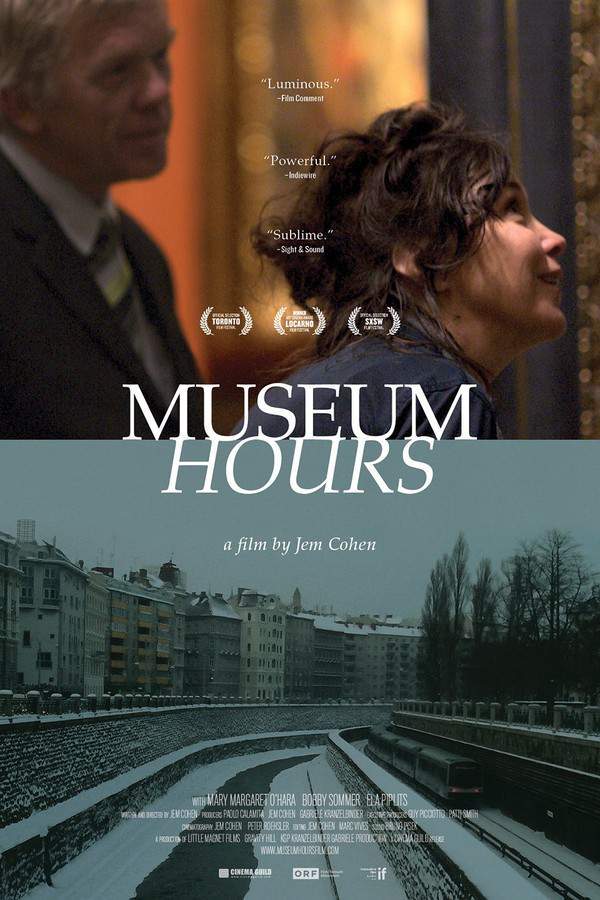
Museum Hours (2013) movie poster

Plot Summary

Museum Hours (2013) Plot Summary Explained

Release, runtime and language
2013 · 107 min · German
JustWatch #30,747 2
Directed by
Jem Cohen

In Vienna, a museum security guard and a visitor forge an unexpected friendship as night falls and the city's grand museums awaken. They share stories and wander through the city's lesser-known areas, discovering a shared appreciation for art and the profound connections between human experience and creativity.

On this page (7)
  1. 1 Where to watch
  2. 2 What happens: full plot
  3. 3 Plot questions answered
  4. 4 Movie threads
  5. 5 Movies like Museum Hours
  6. 6 Categories
  7. 7 Every angle

Where to watch

Where to Watch Museum Hours (2013)

Where can you watch Museum Hours? Stream, rent or buy it in the US, including on OVID, Kanopy and Apple TV Store: current JustWatch availability with up-to-date prices.

Streaming availability powered by JustWatch

Full plot summary · contains spoilers

What Happens in Museum Hours: Full Plot Summary

The whole story of Museum Hours (2013) explained, from the opening scene to the final frame: every key event, every twist and what it all adds up to. Read it as a quick recap before the sequel, to check a scene you missed, or to finally understand what really happened.

When an unassuming guard at theKunsthistorisches Museum in Vienna encounters the mysterious Anne, a visitor who arrives in Austria due to a family medical emergency, their fateful meeting unfolds within the grand halls of art. Johann, the museum guard, is initially cautious but soon finds himself compelled to assist Anne, who, with limited funds and no prior experience in Austria, takes refuge among the museum's treasures.

As they connect, their worlds intertwine, leading to a profound exploration of their lives and the vibrant city surrounding them. This bond ignites a journey where they discover how art not only reflects but also shapes human experience.

During one poignant moment at the Bruegel exhibit, Johann observes a lively discussion led by a tour guide examining whether Bruegel can be viewed as a religious individual based on his passionate portrayals of various spiritual themes. A visitor asserts that his devotion is evident in his work, but the tour guide counters that Bruegel’s genius lies in the balance he strikes; often, he allocates as much, if not more, significance to seemingly mundane subjects as he does to prominent religious figures.

Rather than a mere repository of historical artifacts, the museum emerges as a dynamic venue for exchange, where conversations about love, mortality, theology, and materialism permeate its walls. These significant themes are grounded in the everyday realities of both Johann and Anne, turning lofty ideas into tangible experiences. As the film nears its conclusion, the duo finds themselves exploring the outskirts of the city just as Anne's cousin faces a critical health crisis. In a heart-wrenching scene, Johann receives a call from the doctor and reluctantly conveys the tragic news of her loved one’s passing, marking a poignant climax in their intertwined stories.

Last updated: November 15, 2024 at 20:46

Was this helpful?

Plot questions answered

Museum Hours Plot Explained: Your Questions Answered

The questions people ask most about Museum Hours (2013): what happens in the confusing scenes, why the characters do what they do, the twists, hidden details and what the ending means. Each answer contains spoilers.

Q1

Why does Johann decide to help Anne at the museum?

Johann, initially cautious, becomes compelled to assist Anne because of her vulnerable situation. She has limited funds, no prior experience in Austria, and is dealing with a family medical emergency. Her distress moves him to offer refuge among the museum's treasures, marking the beginning of their unexpected friendship.

Foreshadowing: Earlier scenes establish Johann as a quiet, observant figure, hinting at his capacity for deep empathy despite his reserved demeanor.

  • Johann
  • Anne
  • museum guard
  • help
  • friendship
Q2

What does the Bruegel exhibit discussion reveal about the film?

The Bruegel exhibit discussion serves as a thematic cornerstone for the film. The tour guide explores whether Bruegel can be considered religious given his passionate spiritual portrayals, ultimately arguing that his genius lies in balancing significant religious themes with mundane everyday subjects. This directly mirrors Johann and Anne's own journey, finding profound meaning in ordinary human moments.

Foreshadowing: The film consistently uses art as a lens for understanding human experience, making this discussion a key thematic preview.

  • Bruegel
  • exhibit
  • religion
  • art
  • themes
Q3

Why does the museum become important to their relationship?

The museum transforms from a mere repository of artifacts into a dynamic venue for exchange. Within its walls, conversations about love, mortality, theology, and materialism unfold naturally. The art provides a bridge for Johann and Anne to explore their own struggles, turning abstract philosophical ideas into tangible experiences they can both relate to.

Foreshadowing: The opening scenes establish the museum as a magical, awakened space that seems to facilitate connection between the two characters.

  • museum
  • Vienna
  • Kunsthistorisches
  • art
  • conversation
Q4

Why does Johann receive the call about Anne's cousin?

Johann receives the call from the doctor because he has become Anne's primary support during her difficult time in Vienna. Since Anne is dealing with a family medical emergency and has limited connections in the city, Johann has stepped into a trusted role. The call marks the pivotal moment when they learn the tragic outcome of her cousin's health crisis.

Foreshadowing: Earlier timeline events establish the escalating family crisis that builds toward this devastating moment.

  • doctor
  • call
  • cousin
  • health
  • crisis
Q5

What happens to Anne's cousin in the film?

Anne's cousin faces a critical health crisis while she is in Vienna. Despite the care and support from Johann, the film reaches its poignant climax when Johann receives the call from the doctor and must reluctantly convey the tragic news of her loved one's passing. This event marks the emotional peak of their intertwined stories.

Foreshadowing: The mounting tension around Anne's family emergency throughout the film builds toward this heart-wrenching moment.

  • cousin
  • death
  • tragedy
  • family
  • health
Q6

How does the film explore mortality through art?

The film explores mortality by using art as a mirror for human experience. As Johann and Anne wander through the museum, they find parallels between the themes in the artworks, love, loss, spirituality, and their own personal struggles. The Bruegel exhibit specifically discusses how art allocates significance to both grand religious figures and humble everyday scenes, reflecting how the characters find meaning in ordinary moments amid crisis.

Foreshadowing: Discussions throughout the museum consistently draw connections between art and life, building toward deeper reflections on death.

  • mortality
  • death
  • art
  • life
  • themes
Q7

What role does Vienna play in the story?

Vienna serves as more than just a backdrop, it becomes a character itself. The city's grand museums and lesser-known areas both reflect and shape Johann and Anne's experiences. Their explorations beyond the museum walls allow them to forge memories together, with the city's beauty providing a poignant contrast to the heavy emotional weight of Anne's family crisis.

Foreshadowing: The timeline shows their journey expanding from the museum to the broader city, indicating Vienna's integral role in their bonding.

  • Vienna
  • city
  • setting
  • exploration
  • museum
Q8

Why do Johann and Anne form such a deep bond so quickly?

Their rapid bond forms because of shared vulnerability and complementary needs. Anne is in crisis and needs support in an unfamiliar place, while Johann, despite his reclusive nature, craves meaningful connection. The museum setting accelerates their intimacy by providing endless stimuli for conversation and reflection, allowing them to bypass surface-level interactions.

Foreshadowing: Johann's initial caution gives way to curiosity almost immediately, suggesting he's been waiting for exactly this kind of connection.

  • friendship
  • bond
  • connection
  • Johann
  • Anne
Q9

How does the film achieve its bittersweet tone?

The bittersweet tone emerges from the film's refusal to let tragedy define the narrative. While Anne's cousin's death provides a clear sad note, the film emphasizes the profound connection forged between Johann and Anne. Their journey through art and emotion helps them view life through a different lens, finding renewal and purpose despite loss. The ending balances grief with hope, showing that meaningful human contact can emerge from even the darkest circumstances.

Foreshadowing: Early scenes establish the melancholic yet hopeful atmosphere that carries through to the conclusion.

  • ending
  • bittersweet
  • hope
  • loss
  • renewal
Q10

What do Johann and Anne learn from their friendship?

Johann and Anne each learn to see life through a new perspective. Johann, who has spent years observing art in isolation, discovers the value of sharing those observations with another person. Anne, burdened by her family crisis, finds solace and grounding through their meandering conversations and the beauty of Vienna. Together, they explore how both love and loss intersect with the art they cherish, ultimately finding a renewed sense of purpose.

Foreshadowing: Their conversations throughout the film consistently shift from surface-level observations to deeper personal revelations.

  • learning
  • perspective
  • art
  • connection
  • growth

Movie threads

More Movies Like Museum Hours, by Mood & Story

Curated lists built around what makes Museum Hours tick: the same mood, the same kind of story or the same emotional payoff. Each list explains why these movies belong together.

Movies with Quiet Journeys of Unexpected Connection like Museum Hours

Stories where strangers form profound bonds through shared discovery and conversation. If you liked the gentle, contemplative friendship in Museum Hours, explore these movies about quiet encounters that blossom into profound connections. These films share a focus on character-driven stories, unexpected bonds formed through shared discovery, and a soothing, reflective mood.

  • contemplative
  • gentle
  • quiet
  • lonely
  • soothing
  • reflective
  • Tone: melancholic, reflective
  • Pacing: slow, deliberate
Why these movies?

The story pattern: Narratives in this thread typically follow characters at a crossroads, often brought together by chance. There is little conventional plot; the story unfolds through conversation, observation, and a mutual discovery of a shared perspective on the world, leading to a quiet but significant emotional transformation.

Why they belong together: These films are grouped by their focus on subtle, character-based relationships that defy typical narrative arcs. They share a gentle tone, low-key intensity, and a belief in the power of small, human moments to create deep meaning and connection.

Meditative Movies about Art and Life like Museum Hours

Films where the contemplation of art mirrors a deeper exploration of human experience. For viewers who appreciated how Museum Hours uses art to explore deeper themes, this section collects films where creative expression mirrors human experience. Discover similar stories with a slow pace, moderate complexity, and a bittersweet feel that ponder the connections between art and life.

  • meditative
  • contemplative
  • artistic
  • philosophical
  • quiet
  • reflective
  • Tone: melancholic, contemplative
  • Pacing: slow, atmospheric
Why these movies?

The story pattern: The narrative pattern involves characters engaging deeply with artistic works or environments, which prompts internal reflection on their own lives. The plot is secondary to thematic exploration, often blending observation, philosophical musings, and personal revelation into a cohesive, meditative whole.

Why they belong together: These films are united by their use of art as a narrative device to explore themes of existence, grief, and meaning. They prioritize atmosphere, thoughtful observation, and a layered, thematic complexity over traditional plot, creating a uniquely reflective viewing experience.

If you liked this

Movies Like Museum Hours

Similar movies to Museum Hours: the same genre, themes or kind of story. Each one comes with its own plot summary, timeline and ending explained.

Browse all movie summaries

Categories

Movie Lists Featuring Museum Hours

Museum Hours appears in these hand-built movie categories. Each one groups movies by a specific mood, theme or story type, with their plot summaries and endings explained.

View all movie categories

Every angle

Museum Hours (2013) Explained: Plot, Timeline & Characters

Everything about Museum Hours in one place: what happens in the plot summary, the timeline in chronological order, the characters and meaning and a spoiler-free summary. What's After the Movie adds the cast, box office and post-credit scenes.

Coming soon on iOS and Android

The Plot Explained Movie Summary App

Plot summaries, endings explained and timelines on your phone. Catch up on any movie in minutes, save your favorites and never miss a twist again.

Be the first to know when we launch. Your email stays private, always.

Learn more about the app