Plot Explained Spoilers guaranteed!
Plot Explained

Browse by genre

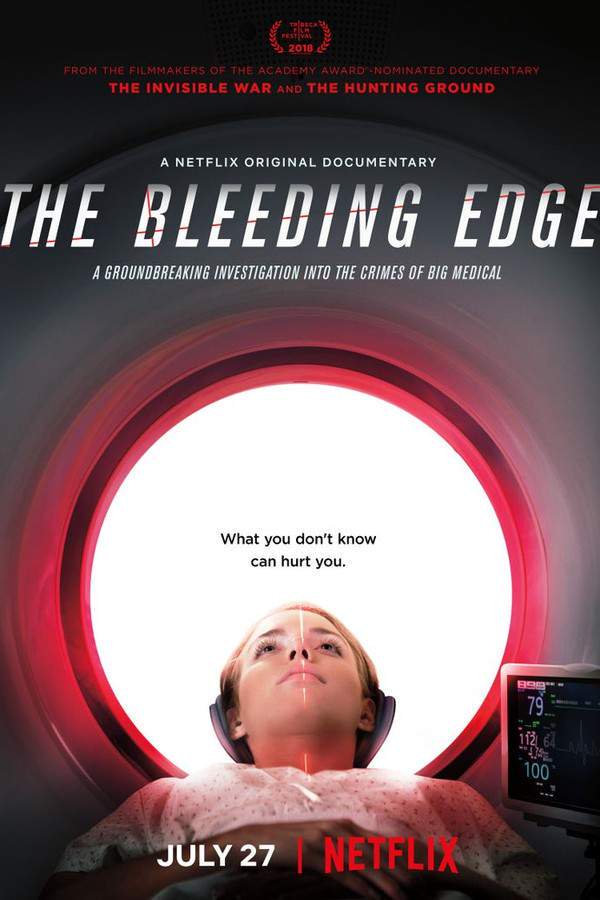
The Bleeding Edge (2018) movie poster

Plot Summary

The Bleeding Edge (2018) Plot Summary Explained

Release, runtime and language
2018 · 99 min · English
Echo score 75
Loading streaming availability…
Directed by
Kirby Dick
Starring
Angie Firmalino, Rita Redberg, Robert Bridges, Stephen Tower

Filmmaker Kirby Dick investigates the medical device industry, exposing a system prioritizing profit above patient well-being. The documentary reveals how innovative implants are rushed to market, frequently bypassing comprehensive clinical trials. This raises serious questions about safety protocols and the potential risks to those receiving these cutting-edge technologies.

On this page (6)
  1. 1 Where to watch
  2. 2 What happens: full plot
  3. 3 Plot questions answered
  4. 4 Movie threads
  5. 5 Movies like The Bleeding Edge
  6. 6 Every angle
Loading streaming availability…

Full plot summary · contains spoilers

What Happens in The Bleeding Edge: Full Plot Summary

The whole story of The Bleeding Edge (2018) explained, from the opening scene to the final frame: every key event, every twist and what it all adds up to. Read it as a quick recap before the sequel, to check a scene you missed, or to finally understand what really happened.

The Bleeding Edge is a gripping investigative documentary created by Academy Award-nominated filmmakers Kirby Dick and Amy Ziering. The film directs its lens toward the massive, $400 billion medical device industry, exposing a systemic culture of lax regulations, corporate secrecy, and profit-driven motivations that place countless patients in danger every single day. By weaving together emotionally charged and powerful personal narratives, the documentary poses a chilling question: What lifesaving technologies may actually be killing us?

The filmmakers emphasize a terrifying reality regarding the oversight of these products. As noted by the director:

> "Very few people know about the medical device industry and the fact that it is even less regulated than pharmaceuticals"

The narrative deeply explores the intricate and often flawed process of regulating medical devices, specifically within the United States, and examines the devastating physical and psychological impact these faulty devices have on the people who receive them.

A significant portion of the film focuses on the failures of Essure, a permanent birth control device manufactured by Bayer. Through the harrowing testimony of victims like Angie Firmalino, the film highlights how the device caused excruciating pain, chronic discomfort, lost pregnancies, and in some cases, death. The documentary doesn't stop there, profiling other dangerous medical innovations, including artificial hips that can lead to severe cobalt poisoning and vaginal mesh devices that have caused permanent injuries to a vast number of women.

To understand how these products reach the public, the film investigates the FDA's 510(k) process. This controversial regulatory pathway allows a new medical device to be fast-tracked onto the market if it is deemed "substantially equivalent" to a device already in use. This means many products are approved with minimal clinical study and, most alarmingly, without any mandatory human testing before they are implanted into patients.

To provide expert context on these systemic failures, the film features insights from professionals such as Rita Redberg, an editor for JAMA Internal Medicine, as well as medical specialists including diagnostic radiologist Robert Bridges and orthopedic surgeon Stephen Tower, who help uncover the gap between corporate claims and patient reality.

Last updated: October 11, 2026 at 16:41

Was this helpful?

Plot questions answered

The Bleeding Edge Plot Explained: Your Questions Answered

The questions people ask most about The Bleeding Edge (2018): what happens in the confusing scenes, why the characters do what they do, the twists, hidden details and what the ending means. Each answer contains spoilers.

Q1

Why are medical devices less regulated than pharmaceutical drugs?

In the United States, medical devices are governed under separate laws from pharmaceuticals and historically face far less stringent premarket requirements. The Bleeding Edge highlights how this regulatory disparity means devices can be permanently implanted into patients with significantly less clinical evidence of safety than prescription drugs require. As filmmakers Kirby Dick and Amy Ziering emphasize, very few people realize that the medical device oversight system is weaker than the pharmaceutical system they are more familiar with.

  • medical device regulation
  • fda oversight
  • pharmaceutical comparison
  • regulatory framework
  • device approval
Q2

What is the FDA's 510(k) clearance process?

The FDA's 510(k) process is a regulatory pathway that allows a new medical device to be cleared for sale if it is deemed "substantially equivalent" to a device already on the market. Unlike drug approval, this route does not require new clinical trials or demonstration of safety and effectiveness in humans. The documentary shows how the vast majority of medical devices, including many that caused serious harm, reached patients through this pathway rather than through more rigorous premarket testing.

  • 510k process
  • fda clearance
  • medical device approval
  • regulatory pathway
  • substantially equivalent
Q3

How can medical devices reach the market without human testing?

Under the 510(k) pathway, devices can be cleared based on similarity to a predicate device without ever being tested in human patients. This means a product can be implanted into real bodies even though it was never studied in clinical trials beforehand. The Bleeding Edge exposes this practice as a central failure in U.S. medical device regulation, allowing dangerous products like Essure and metal hip implants to reach millions of people with minimal scrutiny.

  • human testing
  • clinical trials
  • 510k loophole
  • medical device testing
  • premarket approval
Q4

Why was Essure so harmful to women?

Essure, a permanent birth control device manufactured by Bayer, caused severe harm because its metal coils were designed to trigger scar tissue in the fallopian tubes, a process that frequently went catastrophically wrong inside patients. The documentary features victims like Angie Firmalino who suffered excruciating chronic pain, heavy bleeding, lost pregnancies, and in some cases death. These injuries occurred because the device was cleared through the 510(k) process without the rigorous clinical trials that would have revealed its dangers.

  • essure
  • bayer
  • birth control device
  • essure injuries
  • firmalino
  • fallopian coils
Q5

How do metal hip implants cause cobalt poisoning?

Metal-on-metal artificial hip implants shed microscopic metal particles as the ball and socket components wear against each other during normal movement inside the body. These particles release toxic cobalt and chromium ions into the bloodstream and surrounding tissues, leading to systemic cobalt poisoning. Orthopedic surgeon Stephen Tower, featured in the documentary, explains how this metal debris caused severe neurological damage, heart complications, and tissue destruction in patients who trusted the devices to restore their quality of life.

  • cobalt poisoning
  • hip implants
  • metal-on-metal
  • stephen tower
  • artificial hip
  • chromium toxicity
Q6

What injuries did vaginal mesh cause?

Vaginal mesh implants, used to treat pelvic organ prolapse and stress urinary incontinence, caused severe and often permanent injuries in thousands of women. The mesh could erode into surrounding tissue, cut through vaginal walls, and trigger chronic infections and debilitating pain. Many women profiled in the documentary required multiple corrective surgeries, with some left with lifelong complications even after mesh removal attempts proved unsuccessful.

  • vaginal mesh
  • pelvic mesh
  • mesh injuries
  • prolapse
  • urinary incontinence
  • mesh complications
Q7

Why is the 510(k) pathway considered a regulatory loophole?

The 510(k) pathway is considered a loophole because it was originally designed for low-risk devices but became the dominant route to market for high-risk, permanently implanted products. This pathway allows manufacturers to bypass the more rigorous Premarket Approval process, which requires extensive clinical trials and human testing. The documentary argues that this misuse of 510(k) is the root regulatory failure behind many of the patient injuries profiled throughout the film.

  • 510k loophole
  • premarket approval
  • fda pathway
  • regulatory reform
  • device oversight
Q8

Why did Bayer keep selling Essure despite reported injuries?

Bayer continued selling Essure because the company prioritized profit over patient safety, downplaying injury reports and relying on its original FDA clearance as legal cover. Internal documents revealed during the investigation showed the manufacturer was aware of safety concerns but chose to keep generating revenue from the device for years. The documentary argues that this corporate decision-making allowed preventable harm to continue while regulators failed to intervene effectively.

  • bayer
  • essure recall
  • corporate negligence
  • profit over safety
  • device manufacturer
Q9

How did manufacturers hide known device dangers from regulators and patients?

Manufacturers concealed known dangers by suppressing internal safety studies, lobbying regulators to weaken oversight, and selectively reporting adverse events to the FDA. The documentary uncovers how companies used confidential legal settlements, influence over the approval process, and aggressive marketing campaigns to keep harmful products in widespread use. Whistleblowers and internal documents later exposed that safety concerns had been buried for years before patients and the public learned the truth.

  • corporate cover-up
  • device dangers
  • whistleblower
  • adverse event reporting
  • industry secrecy
Q10

What does "substantially equivalent" mean in medical device approval?

"Substantially equivalent" is the legal standard used in the 510(k) process that allows a new device to be cleared if it is similar in design and intended use to an existing device already on the market. This standard does not require the new device to be safer or more effective than its predicate, only that it is not drastically different. The Bleeding Edge demonstrates how this created a chain of approvals, where flawed devices became the legal basis for clearing even more dangerous successors.

  • substantially equivalent
  • predicate device
  • 510k standard
  • device comparison
  • fda definition
Q11

What financial incentives drive medical device companies?

Medical device companies are driven by the massive financial rewards of bringing products to market quickly and selling them widely before safety problems emerge. In an industry generating $400 billion annually, rapid approval and high sales volume often matter more to executives than long-term patient outcomes. The documentary argues this profit-first culture is a root cause of the patient harm documented throughout The Bleeding Edge.

  • medical device profits
  • industry revenue
  • financial incentives
  • corporate motivation
  • 400 billion industry
Q12

Why did the FDA originally approve Essure?

Essure received FDA clearance in 2002 through the 510(k) process based on its similarity to a predicate device, not through rigorous clinical trials demonstrating long-term safety and effectiveness. The approval relied heavily on manufacturer-sponsored studies that proved insufficient to detect the device's serious long-term complications. The Bleeding Edge highlights how this regulatory shortcut allowed a fundamentally flawed device to reach millions of women before the dangers became undeniable to regulators.

  • fda approval
  • essure clearance
  • 2002 approval
  • predicate device
  • essure timeline
Q13

What is the central question The Bleeding Edge asks?

The documentary poses the chilling question: what lifesaving technologies may actually be killing us? This framing challenges viewers to reconsider their blind trust in medical innovation and FDA approval. The filmmakers use this question as a thread connecting patient testimonies and regulatory revelations, showing how devices intended to heal can instead cause lasting, irreversible harm to the people who receive them.

  • central question
  • lifesaving technology
  • medical trust
  • documentary thesis
  • patient harm
Q14

How did the filmmakers investigate the medical device industry?

Kirby Dick and Amy Ziering investigated the industry by combining deeply personal patient testimony, expert medical interviews, and internal corporate documents obtained through legal and journalistic channels. They focused on specific victims of Essure, metal hip implants, and vaginal mesh while consulting professionals like Rita Redberg and Stephen Tower. This methodical approach allowed The Bleeding Edge to connect individual tragedies to systemic regulatory failures rather than treating each case as an isolated incident.

  • kirby dick
  • amy ziering
  • investigative documentary
  • filmmaking approach
  • rita redberg

Movie threads

More Movies Like The Bleeding Edge, by Mood & Story

Curated lists built around what makes The Bleeding Edge tick: the same mood, the same kind of story or the same emotional payoff. Each list explains why these movies belong together.

Corporate negligence exposés like The Bleeding Edge

Investigative documentaries that pull back the curtain on profit-driven harm and regulatory failure. Movies like The Bleeding Edge that expose corporate misconduct and regulatory failure. These investigative documentaries methodically reveal how industries cut corners, bypass safeguards, and harm the public for profit. Expect sobering, journalistic storytelling that names names and demands accountability, perfect for viewers who want eye-opening, confrontational nonfiction cinema.

  • investigative
  • confrontational
  • eye-opening
  • alarming
  • journalistic
  • urgent
  • Tone: dark, bleak, confrontational
  • Pacing: steady, methodical
Why these movies?

The story pattern: These stories typically open with a troubling anecdote that pulls viewers in, then expand outward to reveal systemic patterns of misconduct. Through expert testimony, leaked documents, insider interviews, and regulatory analysis, the films build an irrefutable case against powerful institutions. The narrative arc moves from individual harm to systemic critique, often concluding that meaningful reform remains out of reach and the danger persists.

Why they belong together: Films in this thread share a confrontational, urgent stance toward powerful organizations. They tend to be dark in tone, bleak in their conclusions, and heavy in emotional weight because real human harm sits at the center of every revelation. The pacing is deliberate, allowing evidence and testimony to accumulate into an overwhelming moral indictment of unchecked corporate behavior.

Victim-centered documentaries like The Bleeding Edge

Documentaries that center on real people betrayed by the institutions meant to protect them. If you liked The Bleeding Edge, these documentaries share its deeply personal approach to institutional critique. Movies in this thread foreground victim testimonies and harrowing first-person accounts of harm, weaving individual suffering into a larger story about systems that failed them. Expect heavy, sobering viewing anchored by real human stories.

  • sobering
  • unsettling
  • heartbreaking
  • intimate
  • devastating
  • human
  • Tone: somber, devastating, heavy
  • Pacing: steady, reflective
Why these movies?

The story pattern: Stories in this thread tend to begin with intimate portraits of affected individuals, letting their voices, medical journeys, and family struggles establish the human stakes before widening the lens. Narratives unfold through personal interviews, home footage, medical records, and quiet moments of grief, building emotional pressure through accumulation rather than spectacle. The ending often resists easy resolution, leaving viewers with the weight of unresolved injustice.

Why they belong together: Films are grouped together because they refuse to let systemic issues remain abstract. They are united by an unflinching commitment to letting harmed individuals speak for themselves, by their dark and somber tone, and by endings that feel bleak precisely because no meaningful remedy has arrived. The steady pacing allows grief and outrage to coexist without rushing past the human cost.

If you liked this

Movies Like The Bleeding Edge

Similar movies to The Bleeding Edge: the same genre, themes or kind of story. Each one comes with its own plot summary, timeline and ending explained.

Browse all movie summaries

Every angle

The Bleeding Edge (2018) Explained: Plot, Timeline & Characters

Everything about The Bleeding Edge in one place: what happens in the plot summary, the timeline in chronological order, the characters and meaning and a spoiler-free summary. What's After the Movie adds the cast, box office and post-credit scenes.

Coming soon on iOS and Android

The Plot Explained Movie Summary App

Plot summaries, endings explained and timelines on your phone. Catch up on any movie in minutes, save your favorites and never miss a twist again.

Be the first to know when we launch. Your email stays private, always.

Learn more about the app