Plot Explained Spoilers guaranteed!
Plot Explained

Browse by genre

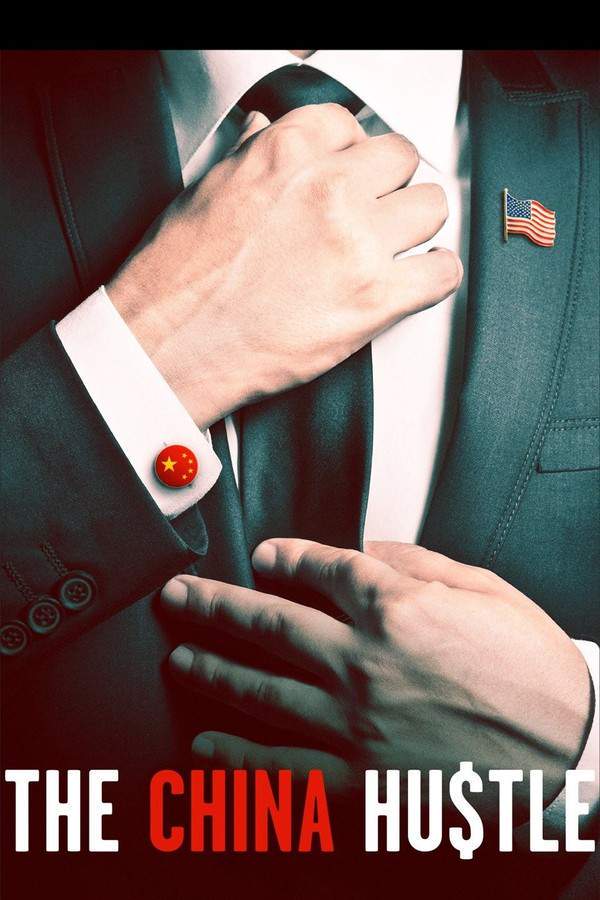
The China Hustle (2018) movie poster

Plot Summary

The China Hustle (2018) Plot Summary Explained

Release, runtime and language
2018 · 82 min · English
Echo score 65
Loading streaming availability…
Directed by
Jed Rothstein
Starring
Pat O'Brien, Carson Block, Dan David, Matthew Wiechert

This gripping documentary explores a significant financial deception within China's markets. Wall Street insiders come forward to reveal how investors were lured into a complex scheme promising substantial returns. A whistleblower's discovery triggers intense scrutiny of the financial system, exposing the potential consequences of deregulation and emphasizing the importance of transparency in the global economy. The film examines the risks involved when chasing high profits and the need for careful oversight.

On this page (5)
  1. 1 Where to watch
  2. 2 What happens: full plot
  3. 3 Plot questions answered
  4. 4 Movie threads
  5. 5 Every angle
Loading streaming availability…

Full plot summary · contains spoilers

What Happens in The China Hustle: Full Plot Summary

The whole story of The China Hustle (2018) explained, from the opening scene to the final frame: every key event, every twist and what it all adds up to. Read it as a quick recap before the sequel, to check a scene you missed, or to finally understand what really happened.

In the wake of the 2008 financial crisis, investment firms across the United States began searching for aggressive new strategies to boost client performance while simultaneously maximizing their own profits. They discovered a lucrative, albeit deceptive, opportunity: selling the dream of the "China growth story" to unsuspecting American investors. These individuals, eager to build wealth but lacking deep knowledge of Chinese markets or corporate structures, became the primary targets for a massive financial scheme.

The mechanism for this fraud involved utilizing reverse mergers. Small, nondescript Chinese companies—such as Orient Paper and Advanced Battery Technologies (ABAT)—would merge with defunct American shells, like Buffalo Mining. This allowed these obscure firms to bypass traditional scrutiny and become listed on the New York Stock Exchange (NYSE) almost overnight. To provide a veneer of legitimacy and reliability, second-tier investment firms, including Matthew Wiechert of Roth Capital Partners, organized "investment conferences." These events were bolstered by paid guest appearances from high-profile figures like Bill Clinton and Henry Kissinger, which added a deceptive layer of respectability to the offerings.

As the hype intensified, these investment firms goaded their clients into purchasing these stocks, siphoning off massive brokerage fees in the process. The stock prices experienced artificial spikes, but once the bubble burst and the prices crashed to their actual value, ordinary savers were left with worthless stocks in their 401(k) accounts.

The documentary meticulously investigates the collusion that occurred between 2008 and 2016 between third-tier Wall Street firms and these small Chinese entities. A shocking revelation of the film is that the actual revenues of these Chinese firms, as reflected in their filings with the Chinese government, were typically only one-tenth of the figures reported to the SEC. Following extensive investigations, the majority of these firms were eventually de-listed from the NYSE, resulting in billions of dollars in losses for U.S. investors.

Interestingly, warnings about these frauds had been published in Chinese newspapers as early as 2010, including the online edition of Sina. However, because the reports were written in Chinese, American investors remained oblivious. Even when the research firm Muddy Waters published English translations of these reports, they failed to gain significant traction.

The film features critical insights from various industry figures, including:

Whistleblowers such as Dan David, who, after reviewing reports from Muddy Waters Research*, chose to short many of these hyped-up penny stocks.

* Investment professionals like Carson Block, the founder of Love Box.

Journalists from the Wall Street Journal and New York Times*.

Mitchell Nussbaum*, a lawyer from Loeb & Loeb who represented the Chinese firms involved.

Retired U.S. Army General Wesley Clark*, who served as chairman of Rodman & Renshaw.

Paul Gills, a professor at Peking University*.

The documentary also highlights a systemic failure within the "Big Four" accounting firms—Deloitte, EY, KPMG, and PwC. It exposes the flaws in a system where these global giants sign off on audit reports produced by their Chinese affiliates, reports that may not have been fully verified, yet are accepted as standard global practice.

The film reaches a sobering conclusion by highlighting the ongoing lack of regulatory oversight regarding Chinese securities fraud. Out of approximately 400 Chinese companies involved in these schemes, only one CEO ever faced jail time for fraudulent reverse mergers. The documentary ends with a haunting suggestion that the high growth claims of major existing firms, such as the Alibaba Group, might be just as fraudulent as the penny stocks that came before them.

Last updated: October 11, 2026 at 16:43

Was this helpful?

Plot questions answered

The China Hustle Plot Explained: Your Questions Answered

The questions people ask most about The China Hustle (2018): what happens in the confusing scenes, why the characters do what they do, the twists, hidden details and what the ending means. Each answer contains spoilers.

Q1

What is a reverse merger and how did Chinese companies use it to get listed on the NYSE?

A reverse merger is a shortcut to the public markets in which a small private company absorbs a defunct, already-public American shell company, in The China Hustle's case, firms like Buffalo Mining. Companies such as Orient Paper and Advanced Battery Technologies used this trick to bypass the lengthy SEC review process and appear on the New York Stock Exchange almost overnight, instantly gaining the appearance of legitimacy without ever proving their underlying business was real.

Foreshadowing: The documentary notes that the 2008 financial crisis had left many American shell companies dormant, perfectly positioned to be merged into by foreign firms looking for a fast track to U.S. listings.

  • reverse merger
  • NYSE
  • Chinese companies
  • shell company
  • Orient Paper
  • Buffalo Mining
  • Advanced Battery Technologies
Q2

Why did Wall Street firms specifically target American investors with small Chinese stocks?

After the 2008 crisis, smaller Wall Street firms needed aggressive new revenue streams and found them in selling the "China growth story" to ordinary Americans who were eager to invest but knew almost nothing about Chinese markets or corporate structures. These investors were the ideal marks because their ignorance of Chinese accounting standards made inflated claims believable, and the brokerage fees generated on every share traded were enormous.

Foreshadowing: The film underscores that the same investors burned in 2008 were the ones most desperate for high returns, making them uniquely vulnerable to the next pitch.

  • Wall Street
  • American investors
  • China growth story
  • brokerage fees
  • financial crisis 2008
Q3

How did Bill Clinton and Henry Kissinger end up promoting these questionable Chinese stocks?

Second-tier firms like Roth Capital Partners hosted so-called "investment conferences" featuring paid guest appearances by high-profile figures such as Bill Clinton and Henry Kissinger. Their presence was purely a marketing tactic, the celebrities had no real connection to the underlying businesses, but their stature conferred an air of respectability that helped brokers push obscure Chinese penny stocks onto skeptical investors.

Foreshadowing: The documentary flags early on that any conference featuring a former president draws a crowd regardless of what's actually being sold on stage.

  • Bill Clinton
  • Henry Kissinger
  • investment conference
  • celebrity endorsement
  • Roth Capital
Q4

Why did Muddy Waters' English translations of the fraud warnings fail to stop the scheme?

Although Muddy Waters published English translations of 2010 Sina articles exposing the frauds, the warnings never reached mainstream Wall Street because the firms profiting from the stocks had no incentive to amplify them and most investors were not following small research outfits covering obscure Chinese penny stocks. By the time Dan David and a few short sellers acted on the research, billions had already been funneled into the bubble.

Foreshadowing: Muddy Waters' founder Carson Block notes that the same research houses warning about the fraud were simultaneously being ignored by the very firms whose clients were most at risk.

  • Muddy Waters
  • Sina
  • fraud warnings
  • English translation
  • Carson Block
  • Dan David
Q5

How were the Big Four accounting firms part of the problem in the China Hustle?

Deloitte, EY, KPMG, and PwC signed off on audit reports prepared by their Chinese affiliates for U.S.-listed Chinese companies, accepting them as the global standard without fully verifying the underlying work. Because the Big Four stamp of approval made these firms appear trustworthy to American regulators and investors, the flawed affiliate audits became the principal mechanism that gave fraudulent financial statements their credibility.

Foreshadowing: The film stresses from the start that auditors thousands of miles away from the client companies were approving numbers no one had meaningfully inspected.

  • Big Four
  • Deloitte
  • KPMG
  • EY
  • PwC
  • Chinese affiliates
  • audit failures
Q6

Why did only one CEO face jail time out of roughly 400 Chinese companies involved in the fraud?

The China Hustle attributes this near-total impunity to a regulatory blind spot: U.S. authorities lacked jurisdiction over executives operating inside China, while Chinese regulators had little incentive to prosecute companies that had defrauded foreign investors rather than domestic ones. Combined with the complexity of cross-border evidence gathering, this jurisdictional gap meant almost none of the roughly 400 firms faced any criminal consequences.

Foreshadowing: The film flags early that the very mechanism, reverse mergers, that let these companies access U.S. capital also placed their executives beyond the reach of U.S. prosecutors.

  • jail time
  • CEO
  • regulatory oversight
  • impunity
  • cross-border fraud
  • jurisdictional gap
Q7

Who is Dan David and what did he do as a whistleblower in this documentary?

Dan David is a Wall Street figure featured in The China Hustle who read Muddy Waters' research exposing inflated Chinese reverse-merger companies and decided to short their stocks, betting publicly that their share prices would collapse. His willingness to put money behind the research, and later testify about the scheme, made him one of the documentary's central whistleblowers and helped crystallize suspicions that had previously been dismissed.

Foreshadowing: David appears throughout the film citing the same Muddy Waters reports that had circulated for years without action, suggesting he alone was willing to act on what others ignored.

  • Dan David
  • whistleblower
  • short selling
  • Muddy Waters
  • penny stocks
Q8

How did the Chinese penny stocks' prices artificially spike and then crash in this scheme?

Wall Street brokers and investment conferences generated hype around the newly NYSE-listed Chinese firms, creating artificial buying pressure that pushed share prices far above their actual underlying value. Once investigations or short sellers exposed the gap between reported and real revenues, the same hyped-up stocks collapsed to their true worth, leaving ordinary investors holding nearly worthless shares inside their 401(k) accounts.

Foreshadowing: The film repeatedly contrasts the explosive price charts shown at investment conferences with the empty warehouses and nonexistent operations behind the companies.

  • artificial price spike
  • stock crash
  • penny stocks
  • bubble
  • 401k losses
Q9

Why does The China Hustle end by suggesting Alibaba's growth claims might also be fraudulent?

The documentary closes with Alibaba as a cautionary comparison because the same gap between Chinese-government filings and SEC-reported revenues documented in penny-stock frauds still exists in the disclosures of larger Chinese firms. The filmmakers use Alibaba to argue that the structural vulnerabilities exposed in the reverse-merger scandal, weak audits, opaque revenue reporting, and limited cross-border enforcement, could still be distorting the valuations of today's most trusted Chinese giants.

Foreshadowing: Throughout the film, interviewees repeatedly note that the auditing and disclosure problems they uncovered in small firms apply identically to much bigger ones.

  • Alibaba
  • growth fraud
  • warning
  • Chinese companies
  • regulatory failure
  • conclusion
Q10

Why were the Chinese companies' actual revenues typically only one-tenth of what they reported to the SEC?

The China Hustle explains that the Chinese parent firms massively inflated their SEC filings to attract American investors and boost their stock prices, while their actual operational revenue, reflected in filings with Chinese government agencies, was roughly one-tenth as large. Cross-referencing the two sets of filings exposed the enormous gap, but the discrepancy went unnoticed for years because U.S. regulators and investors rarely cross-checked the Chinese-language records.

Foreshadowing: The film hints early that the U.S. and Chinese filings were telling two completely different stories, and that almost nobody was reading both.

  • actual revenue
  • SEC filings
  • Chinese government filings
  • one-tenth
  • financial discrepancy
Q11

How did firms like Roth Capital and Rodman & Renshaw profit from pushing these risky Chinese stocks?

Second- and third-tier Wall Street firms such as Roth Capital Partners and Rodman & Renshaw earned lucrative brokerage commissions on every share their clients traded, regardless of whether the underlying company was legitimate. By organizing hype-filled investment conferences and aggressively goading clients into buying the freshly listed Chinese stocks, they generated fees on the inflated prices, essentially profiting from the very activity that was destroying their clients' retirement savings.

Foreshadowing: The film notes that firms advising on the stocks were also the ones selling them, a conflict of interest that should have triggered alarms from the start.

  • Roth Capital
  • Rodman Renshaw
  • brokerage fees
  • Wall Street firms
  • conflict of interest
Q12

Why were fraud warnings published in Chinese newspapers as early as 2010 ignored by American investors?

Warnings about the reverse-merger frauds were published in outlets such as the online edition of Sina in 2010, but virtually no American investor, regulator, or Wall Street analyst was reading Chinese-language financial media. The language barrier, combined with the obscurity of the companies involved, meant that explicit red flags about inflated revenues were effectively invisible to the U.S. investment community that was most at risk.

Foreshadowing: The film emphasizes that the Sina reports laid out every major warning sign years before the bubble burst, foreshadowing that the collapse was avoidable.

  • Sina
  • Chinese newspapers
  • language barrier
  • 2010 warnings
  • American investors
Q13

What kind of losses did ordinary American savers actually suffer in the Chinese stock fraud?

Once the fraudulent Chinese firms were de-listed from the NYSE and their stock prices collapsed to their real value, ordinary American investors were left holding essentially worthless shares inside their 401(k) retirement accounts, with total U.S. losses estimated at billions of dollars. Many of these savers had no idea their retirement portfolios were concentrated in obscure Chinese companies until their statements began showing near-total wipeouts.

Foreshadowing: The documentary shows brokers celebrating brokerage fees while their clients quietly accumulated positions they would later be unable to sell at any meaningful price.

  • 401k losses
  • retirement savings
  • ordinary investors
  • de-listed stocks
  • billions in losses

Movie threads

More Movies Like The China Hustle, by Mood & Story

Curated lists built around what makes The China Hustle tick: the same mood, the same kind of story or the same emotional payoff. Each list explains why these movies belong together.

Methodical investigative exposés like The China Hustle

Evidence accumulates layer by layer, exposing corruption powerful institutions tried to bury. Looking for movies like The China Hustle? These are patient, evidence-driven exposés that methodically uncover widespread fraud, corporate malfeasance, or institutional failure. Each story rewards viewers who stay with its slow, deliberate pace, building outrage through whistleblowers, documents, and insider testimony. Perfect for fans of serious financial and corporate documentaries that strip back layers of systemic corruption.

  • investigative
  • outraged
  • cynical
  • slow burn
  • chilling
  • evidence-based
  • Tone: dark, cynical, outraged
  • Pacing: steady, slow burn build
Why these movies?

The story pattern: The narrative unfolds as a structured investigation rather than a linear story. A central figure, often a journalist, lawyer, or whistleblower, encounters an initial anomaly and then chases leads through corporate filings, interviews, and insider documents. Each chapter typically reveals a new layer, whether shell companies, complicit regulators, celebrity endorsers, or hidden ownership, until the full scope of the scheme becomes undeniable. Conflicts center on access to information, the silencing of critics, and the moral weight of complicity. By the climax the audience has internalized enough granular detail to grasp how the fraud actually worked, even when the perpetrators escape full accountability.

Why they belong together: These films share the same emotionally engaging structure: a slow but relentless investigative pace, a dark and cynical view of powerful institutions, and a tone of mounting outrage. They reward attention to complex financial or institutional detail and tend to emphasize the human cost over the abstract numbers. Whether focused on reverse mergers, oil spills, healthcare fraud, or corporate cover-ups, the experience is one of watching truth get painstakingly excavated under hostile conditions, with no neat resolution promised.
Bleak stories of systemic betrayal like The China Hustle

Investors, workers, and citizens exploited while the powerful rarely pay the price. If you liked The China Hustle and its bleak view of investor exploitation, these are similarly heavy stories about ordinary people crushed by powerful systems. Perfect for viewers searching for movies like The China Hustle about corporate fraud, regulatory failure, white-collar crime, and the destruction of retirement savings or public trust, where most perpetrators walk free.

  • bleak
  • outraged
  • cynical
  • heavy
  • exploitation
  • systemic failure
  • Tone: bleak, cynical, outraged
  • Pacing: steady, methodical
Why these movies?

The story pattern: Protagonists in these stories are rarely the wealthy or powerful; they are accountants, retirees, factory workers, patients, or small investors who trusted promises they did not know to be lies. The narrative arc typically moves from plausible setups and seemingly legitimate facades, to mounting suspicions, to confirmed harm, to a final reckoning that is far less complete than viewers want. Investigations may succeed morally but rarely deliver full closure, leaving an emotional residue of cynicism and unease about how the modern economy actually operates.

Why they belong together: These films are unified by their bleak endings, dark and cynical tone, and unflinching willingness to follow harm through to its mundane aftermath. They treat ordinary investors, employees, or citizens as the central figures deserving of empathy rather than abstractions, and they portray regulators, auditors, and executives as complicit in chains of betrayal. The thematic center is always the gap between the laws on the books and the enforcement actually delivered to ordinary people.

Every angle

The China Hustle (2018) Explained: Plot, Timeline & Characters

Everything about The China Hustle in one place: what happens in the plot summary, the timeline in chronological order, the characters and meaning and a spoiler-free summary. What's After the Movie adds the cast, box office and post-credit scenes.

Coming soon on iOS and Android

The Plot Explained Movie Summary App

Plot summaries, endings explained and timelines on your phone. Catch up on any movie in minutes, save your favorites and never miss a twist again.

Be the first to know when we launch. Your email stays private, always.

Learn more about the app