Plot Explained Spoilers guaranteed!
Plot Explained

Browse by genre

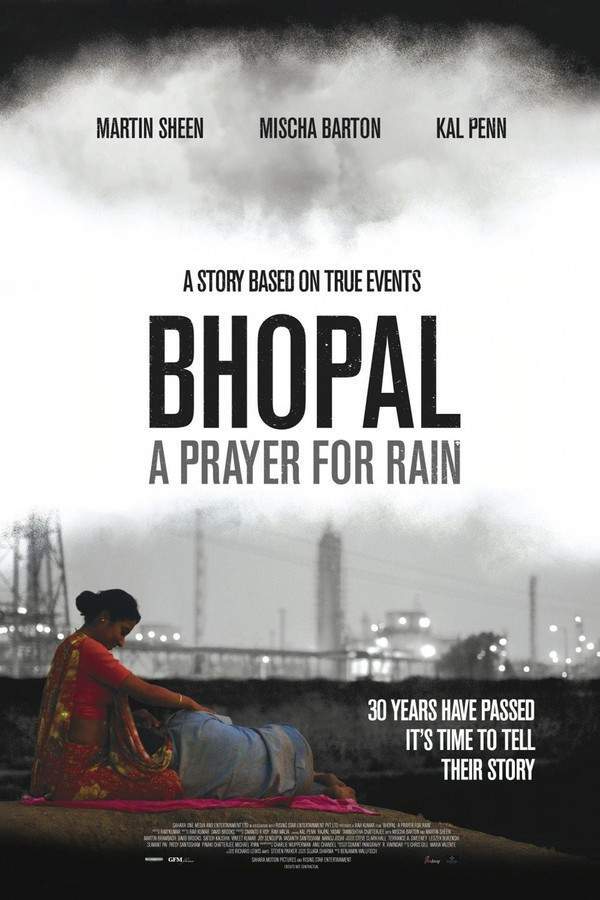
Bhopal: A Prayer for Rain (2014) movie poster

Plot Summary

Bhopal: A Prayer for Rain (2014) Plot Summary Explained

Release, runtime and language
2014 · 96 min · English
Loading streaming availability…
Directed by
Ravi Kumar

A rickshaw driver seeking a better life accepts a job at Union Carbide's Bhopal plant, unaware of the impending danger. His life becomes intertwined with those of a tabloid journalist and an American reporter who are investigating alarming signs and attempting to alert the public. Their efforts lead to a desperate fight to uncover the truth behind the catastrophic industrial disaster and its devastating consequences, ultimately resulting in a profound and life-altering confrontation.

On this page (6)
  1. 1 Where to watch
  2. 2 What happens: full plot
  3. 3 Plot questions answered
  4. 4 Movie threads
  5. 5 Movies like Bhopal: A Prayer for Rain
  6. 6 Every angle
Loading streaming availability…

Full plot summary · contains spoilers

What Happens in Bhopal: A Prayer for Rain: Full Plot Summary

The whole story of Bhopal: A Prayer for Rain (2014) explained, from the opening scene to the final frame: every key event, every twist and what it all adds up to. Read it as a quick recap before the sequel, to check a scene you missed, or to finally understand what really happened.

The film intricately weaves together the stories of various individuals, all grappling with personal dilemmas as they approach the heart-wrenching tragedy that unfolded on the night of December 3rd, 1984. This fateful date marks the infamous Bhopal gas tragedy, which remains etched in history as the largest industrial disaster ever, resulting in the unimaginable loss of tens of thousands of lives in a matter of hours.

As the storyline unfolds, viewers are taken back to December 2nd, 1984, a time when few were fully aware of the impending disaster that would soon claim the lives of 10,000 people. Set against the backdrop of Madhya Pradesh, this tragedy reveals a shameful disregard for safety by the Union Carbide Corporation, a company based in the United States. The stark juxtaposition of an "American dream" transforming into a harrowing "Indian nightmare" highlights the legacy that continues to haunt the survivors.

Over half a million individuals were exposed to the toxic methyl isocyanate (MIC) gas and other hazardous chemicals that night, leading to an estimated death toll ranging from 4,000 to 10,000 within just 24 hours. In addition to the tragic loss of life, around 3,900 people suffered severe and permanent injuries, a grim reality further exacerbated by the corrupt governance of Madhya Pradesh. The Union Carbide India Limited (UCIL) sought to deflect blame with their narrative of "sabotage," yet the weight of historical evidence points towards corporate negligence, an act that would be deemed criminal in any other scenario.

The film serves not only as a reminder of this tragic event but also as a critical examination of the consequences of negligence and the ripple effects that such an industrial disaster leaves on society for decades to come.

Last updated: October 25, 2024 at 10:38

Was this helpful?

Plot questions answered

Bhopal: A Prayer for Rain Plot Explained: Your Questions Answered

The questions people ask most about Bhopal: A Prayer for Rain (2014): what happens in the confusing scenes, why the characters do what they do, the twists, hidden details and what the ending means. Each answer contains spoilers.

Q1

Why did the gas leak occur at the Union Carbide plant?

The gas leak was caused by a combination of inadequate safety measures and corporate negligence. Water entered a storage tank containing methyl isocyanate (MIC), triggering a chemical reaction that released toxic gas into the surrounding city. Union Carbide had failed to invest in proper safety infrastructure and maintenance, despite using hazardous chemicals at their Bhopal facility.

  • gas leak
  • union carbide
  • safety negligence
  • MIC
  • chemical disaster
Q2

What caused the Bhopal gas tragedy?

The tragedy was caused by a massive leak of methyl isocyanate (MIC) gas at the Union Carbide India Limited plant. Water accidentally mixed with MIC in a storage tank, causing a rapid pressure build-up that ruptured safety valves. The resulting gas cloud swept through Bhopal while thousands of residents slept, exposing over 500,000 people to toxic chemicals.

Foreshadowing: The film shows the plant operating with minimal safety precautions long before the disaster.

  • Bhopal gas tragedy
  • MIC gas
  • 1984
  • industrial disaster
  • toxic gas
Q3

How many people died in the Bhopal gas disaster?

The death toll ranged from 4,000 to 10,000 within the first 24 hours, with most estimates placing it around 10,000. Over 500,000 people were exposed to the toxic gas, and approximately 3,900 survivors suffered severe, permanent injuries that affected them for decades after the disaster.

  • death toll
  • casualties
  • Bhopal disaster
  • fatalities
  • victims
Q4

Why did Union Carbide blame sabotage for the disaster?

Union Carbide Corporation and the Indian government attempted to deflect blame from their own negligence by claiming the leak was an act of sabotage by a disgruntled employee. This narrative sought to shift responsibility away from the company's failure to install adequate safety measures, despite evidence showing that poor maintenance and understaffing were the actual causes.

Foreshadowing: Early scenes highlight the plant's neglected safety systems and untrained staff.

  • sabotage
  • union carbide
  • blame
  • corporate negligence
  • deflection
Q5

Who was responsible for the Bhopal gas tragedy?

Union Carbide Corporation, particularly its American parent company, bore primary responsibility for the disaster. Investigation commissions consistently found that corporate negligence, including inadequate safety equipment, insufficient staff training, and poor maintenance, directly caused the catastrophe. The Madhya Pradesh government was also criticized for inadequate oversight and delayed emergency response.

  • responsibility
  • union carbide
  • corporate accountability
  • government
  • negligence
Q6

What happened to the Bhopal survivors after the disaster?

Survivors faced decades of health complications including chronic respiratory problems, vision impairment, neurological disorders, and psychological trauma. Approximately 3,900 people sustained severe permanent injuries. Many lost family members, and the inadequate medical response left them without proper care. Survivors and their descendants continue to suffer from related health issues today.

  • survivors
  • health issues
  • long-term effects
  • injuries
  • medical care
Q7

Was the Bhopal disaster preventable?

Yes, the disaster was largely preventable. Investigation reports confirmed that basic safety measures, such as working pressure relief systems, adequate staffing, and proper maintenance, could have prevented or significantly reduced the leak. Union Carbide's decision to cut costs on safety at the Bhopal plant directly contributed to the catastrophe.

Foreshadowing: The film depicts the plant's management prioritizing profits over safety protocols.

  • preventable
  • safety measures
  • cost-cutting
  • industrial negligence
  • prevention
Q8

How did the Indian government respond to the Bhopal gas leak?

The government's response was severely inadequate. Emergency services were overwhelmed and lacked proper equipment to handle the crisis. Rather than immediately informing the public, officials attempted to downplay the disaster's severity. The state government also supported Union Carbide's "sabotage" narrative, delaying accountability and justice for victims.

  • government response
  • emergency
  • official reaction
  • denial
  • state government
Q9

What long-term environmental effects did the Bhopal disaster cause?

The disaster left lasting environmental damage in Bhopal. Toxic chemicals from the plant contaminated soil and groundwater supplies, affecting the community for decades. The site remains polluted, and the environmental fallout continues to impact residents who live near the former plant facility.

  • environmental damage
  • pollution
  • soil
  • water contamination
  • toxic waste
Q10

What role did journalists play in exposing the truth about Bhopal?

Journalists in the film work to investigate and expose warning signs that plant management ignored, attempting to alert the public before the disaster occurred. After the catastrophe, investigative journalists helped challenge the "sabotage" narrative and revealed the extent of corporate negligence, playing a crucial role in documenting the truth.

Foreshadowing: Early scenes show journalists noticing alarming safety violations at the plant.

  • journalists
  • investigation
  • media
  • expose truth
  • reporting
Q11

Why did Union Carbide fail to maintain safety equipment at the Bhopal plant?

Union Carbide prioritized cost-cutting over safety at the Bhopal facility. Critical safety systems, including pressure relief valves and flare towers, were either malfunctioning or disabled to save money. The plant was understaffed, and maintenance budgets had been significantly reduced, reflecting the company's broader neglect of safety protocols in its Indian operations.

Foreshadowing: The film shows management dismissing safety concerns as unnecessary expenses.

  • safety equipment
  • maintenance
  • cost cutting
  • budget cuts
  • corporate decisions
Q12

How did the Bhopal gas tragedy change industrial regulations in India?

The Bhopal disaster became a catalyst for in India. It stronger industrial safety regulations sparked activism and advocacy movements demanding corporate accountability and stricter environmental laws. The tragedy is still referenced in discussions about industrial safety, prompting reforms aimed at preventing similar disasters.

  • regulations
  • industrial safety
  • law reform
  • advocacy
  • policy changes

Movie threads

More Movies Like Bhopal: A Prayer for Rain, by Mood & Story

Curated lists built around what makes Bhopal: A Prayer for Rain tick: the same mood, the same kind of story or the same emotional payoff. Each list explains why these movies belong together.

Corporate whistleblower movies like Bhopal: A Prayer for Rain

Stories of individuals risking everything to expose deadly corporate secrets. If you were gripped by the journalistic investigation in Bhopal: A Prayer for Rain, you'll find similar tension in these movies about exposing corporate crime. These films feature determined reporters and insiders fighting to reveal the truth against powerful, negligent entities, often with high stakes and bleak outcomes.

  • urgent
  • suspenseful
  • critical
  • gripping
  • outraged
  • tense
  • Tone: dark, urgent, critical
  • Pacing: steady, investigative
Why these movies?

The story pattern: The narrative typically follows a linear, steady-paced progression as a protagonist—a journalist, an employee, or an activist—discovers alarming evidence of corporate malfeasance. The story builds towards a climactic exposure, but the resolution is often bittersweet or bleak, highlighting the immense difficulty of achieving true justice against systemic power.

Why they belong together: These films are grouped together for their shared focus on the process of investigation, the theme of corporate accountability, and the tense, urgent atmosphere created by a race against time to prevent a foreseeable disaster. They elicit feelings of outrage, suspense, and a sobering view of real-world power structures.


Historical disaster dramas with a grim tone like Bhopal: A Prayer for Rain

Dramas that methodically build towards a known, catastrophic real-world event. For viewers who appreciated the somber, inevitable build-up to the Bhopal disaster, this collection features similar movies about real-life tragedies. These films use a steady pace to explore the human cost and systemic failures leading to catastrophic events, resulting in a bleak and heavy viewing experience.

  • grim
  • somber
  • devastating
  • anxious
  • inevitable
  • heavy
  • Tone: somber, devastating, bleak
  • Pacing: steady, methodical build
Why these movies?

The story pattern: The narrative pattern involves interweaving multiple personal perspectives to show how individual lives are impacted by larger, systemic failures. The pacing is steady and deliberate, building tension not through mystery but through the horrifying inevitability of the outcome. The emotional journey is one of mounting anxiety and profound sadness.

Why they belong together: These movies are united by their grounding in real-world events, their somber and dark tone, and their emotionally devastating conclusions. They share a similar viewing experience: a steady, anxious build-up to a known catastrophic endpoint, leaving the viewer with a heavy sense of grief and a critical perspective on the event.

If you liked this

Movies Like Bhopal: A Prayer for Rain

Similar movies to Bhopal: A Prayer for Rain: the same genre, themes or kind of story. Each one comes with its own plot summary, timeline and ending explained.

Browse all movie summaries

Every angle

Bhopal: A Prayer for Rain (2014) Explained: Plot, Timeline & Characters

Everything about Bhopal: A Prayer for Rain in one place: what happens in the plot summary, the timeline in chronological order, the characters and meaning and a spoiler-free summary. What's After the Movie adds the cast, box office and post-credit scenes.

Coming soon on iOS and Android

The Plot Explained Movie Summary App

Plot summaries, endings explained and timelines on your phone. Catch up on any movie in minutes, save your favorites and never miss a twist again.

Be the first to know when we launch. Your email stays private, always.

Learn more about the app