Plot Explained Spoilers guaranteed!
Plot Explained

Browse by genre

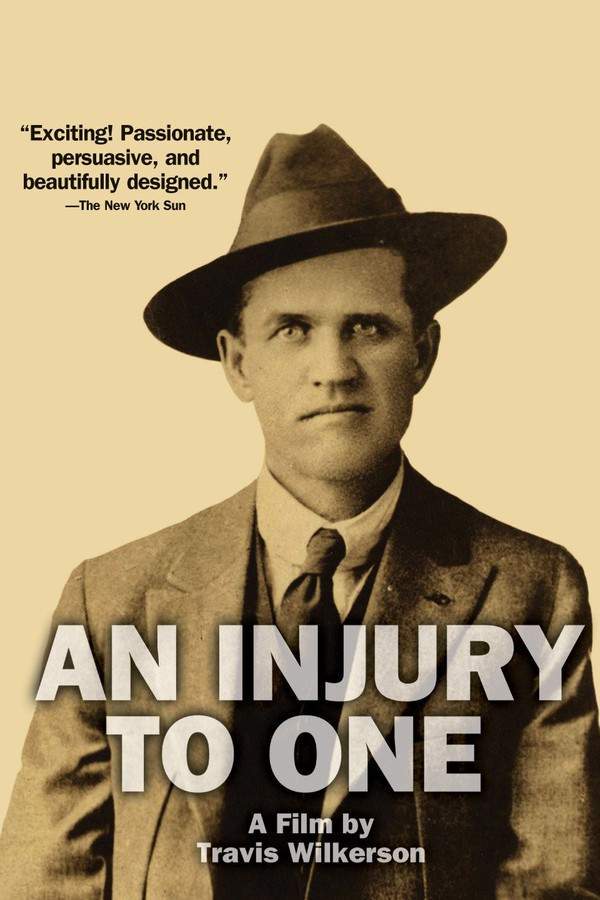
An Injury to One (2003) movie poster

Plot Summary

An Injury to One (2003) Plot Summary Explained

Release, runtime and language
2003 · 53 min · English
Directed by
Travis Wilkerson

Filmmaker Travis Wilkerson explores the complex history of Butte, Montana, a town shaped by copper mining and fierce labor disputes. The documentary examines the rise and fall of Anaconda Mining’s dominance, tracing the town’s journey from gold rush excitement to violent conflicts born from class struggle. Through personal reflection and historical accounts, Wilkerson reveals the darker consequences of industrial ambition and the human cost of American progress.

On this page (6)
  1. 1 Where to watch
  2. 2 What happens: full plot
  3. 3 Plot questions answered
  4. 4 Movie threads
  5. 5 Movies like An Injury to One
  6. 6 Every angle

Where to watch

Where to Watch An Injury to One (2003)

Where can you watch An Injury to One? Stream, rent or buy it in the US, including on OVID, Hoopla and Amazon Video: current JustWatch availability with up-to-date prices.

Streaming availability powered by JustWatch

Full plot summary · contains spoilers

What Happens in An Injury to One: Full Plot Summary

The whole story of An Injury to One (2003) explained, from the opening scene to the final frame: every key event, every twist and what it all adds up to. Read it as a quick recap before the sequel, to check a scene you missed, or to finally understand what really happened.

AN INJURY TO ONE, directed by Travis Wilkerson, is a compelling documentary that delves into the unsolved murder of Frank Little, a union organizer, and offers a vivid portrayal of a turbulent chapter in American labor history. The film closely investigates the shocking events surrounding Little's death in Butte, Montana, intertwining it with the area’s industrial past, particularly the Anaconda Mining Company, which significantly impacted the local community, especially during World War I when it produced a large portion of the world’s copper.

The narrative unfurls against the backdrop of Butte’s mining landscape, highlighting the treacherous conditions miners endured and the desperate circumstances that led them to rally behind Little's radical ideas. These included advocating for the abolition of the wage system and the establishment of a socialist commonwealth. In August 1917, Frank Little met a grim fate when he was abducted and brutally lynched, with a note pinned to his chest that read “3’-7’-77”, the dimensions of a Montana grave. This gruesome incident not only shocked the local populace but also drew a record crowd of 8,000 attendees at his funeral, marking it as the largest in Butte’s history.

Wilkerson artfully employs archival footage, music, and narrative voiceovers to create an atmosphere that melds history with emotional resonance. Through this approach, the film explores broader themes, including McCarthyism, the genesis of the environmental movement, and even the legacy of detective fiction, acknowledging the involvement of former Pinkerton detective Dashiell Hammett, who later fictionalized the incident in his renowned novel Red Harvest. The film is notable for its use of traditional mining songs, interspersed with contemporary music from artists such as Jim O’Rourke and Will Oldham, contributing to a poignant, dynamic soundtrack.

Wilkerson's distinctive style, characterized by his meticulous historical research and artistic visuals, positions AN INJURY TO ONE as a significant piece of political cinema. The film is as much about reclaiming forgotten histories as it is about reflecting on the implications of capitalism and labor struggles today. Described as a profound and aesthetic exploration of a lost radical past, the documentary serves as both an elegy for Frank Little and a critique of the socio-economic factors that led to his demise. It illustrates a landscape scarred by industrial exploitation and environmental degradation, urging viewers to confront the historical narratives that shape our understanding of labor and justice in America.

In crafting this powerful film, Travis Wilkerson challenges conventional narratives surrounding labor history, showcasing how the past continues to resonate with present social struggles. AN INJURY TO ONE ultimately provides a vital discourse on the complexities of American labor movements, making it a must-watch for anyone interested in the intertwined fates of individuals and the economic systems they navigate.

Last updated: May 21, 2025 at 07:30

Was this helpful?

Plot questions answered

An Injury to One Plot Explained: Your Questions Answered

The questions people ask most about An Injury to One (2003): what happens in the confusing scenes, why the characters do what they do, the twists, hidden details and what the ending means. Each answer contains spoilers.

Q1

Why was Frank Little killed in Butte, Montana?

Frank Little was killed because he was a union organizer who aggressively advocated for miners to strike against the Anaconda Mining Company during World War I. He challenged the capitalist wage system and pushed for a socialist commonwealth, which threatened corporate interests. His abduction and lynching on August 1, 1917, was meant to silence his growing influence over the miners and deter the labor movement.

  • frank little
  • murder
  • union organizer
  • labor movement
  • anaconda mining
Q2

What does the note '3-7-77' pinned to Frank Little's body mean?

The note '3-7-77' refers to the dimensions of a Montana grave - 3 feet wide, 7 feet deep, and 7 feet long. This chilling message was a threat not only to Little but to all labor activists, indicating that anyone who continued fighting for workers' rights would meet the same fate. It turned his body into a warning to the labor movement.

  • 3-7-77
  • grave dimensions
  • threat
  • note
  • warning
Q3

Who killed Frank Little?

Frank Little's murder was never solved. While the film explores possible perpetrators, including paid gunmen working for mining interests, no one was ever convicted. The film also raises questions about Dashiell Hammett, who worked as a Pinkerton detective during this period and allegedly was offered money to participate in the murder, though his exact involvement remains unclear.

  • unsolved murder
  • who killed frank little
  • dashiel hammett
  • pinkerton
Q4

Why is Dashiell Hammett mentioned in the film?

Dashiell Hammett is mentioned because he worked as a Pinkerton detective during the same period when Frank Little was murdered. The film suggests he was offered money to participate in Little's killing, though he reportedly refused. Hammett later became famous for detective novels like 'The Maltese Falcon' and 'Red Harvest,' with the latter reportedly fictionalizing the Butte mining conflict. The connection highlights how real-life labor violence inspired American fiction.

  • dashiel hammett
  • pinkerton
  • detective fiction
  • red harvest
  • labor violence
Q5

What was the Anaconda Mining Company's role in Butte's history?

The Anaconda Mining Company dominated Butte's copper mining industry, particularly during World War I when it produced a large portion of the world's copper. The company created extreme wealth for its owners while subjecting miners to dangerous conditions and poverty wages. Its aggressive anti-union tactics and exploitation of workers directly fueled the labor conflicts that led to Frank Little's murder and shaped the town's turbulent history.

  • anaconda mining company
  • copper mining
  • Butte Montana
  • labor conflict
  • exploitation
Q6

Why did the miners support Frank Little's socialist ideas?

Miners supported Little's socialist ideas because they endured brutal working conditions, extremely low wages, and deadly hazards in the mines while the Anaconda Mining Company profited enormously. Little advocated for abolishing the wage system entirely and establishing a socialist commonwealth where workers would own the means of production. His radical message resonated deeply with men who saw no other way out of their desperate circumstances.

  • socialism
  • socialist commonwealth
  • miners
  • wage system
  • labor organizer
Q7

Why was Frank Little's funeral significant?

Frank Little's funeral attracted approximately 8,000 attendees, making it the largest funeral in Butte's history. This massive turnout demonstrated the profound impact Little had on the mining community and the widespread sympathy for the labor movement, despite the violent message sent by his killers. The attendance proved that fear tactics failed to silence support for workers' rights.

  • funeral
  • 8000 attendees
  • Butte history
  • labor support
  • commemoration
Q8

How does the film connect Frank Little's death to McCarthyism?

The film connects Little's murder to McCarthyism by examining how the broader American left was suppressed throughout the 20th century. Little was killed for his socialist beliefs decades before McCarthy's Red Scare, and the film argues that the same corporate and political forces that silenced him later targeted other radical activists during the 1950s. The film frames McCarthyism as a continuation of the violent anti-labor tactics used in Butte.

  • mccarthyism
  • red scare
  • socialism
  • american left
  • suppression
Q9

Why does the film discuss the environmental movement?

The film links Butte's environmental destruction from open-pit mining to the origins of the modern environmental movement. The Anaconda Mining Company left behind a scarred landscape of toxic waste and polluted waterways, demonstrating the human and ecological cost of industrial exploitation. The film argues that the same corporate greed that killed Frank Little continues to harm communities and the environment today.

  • environmental movement
  • mining pollution
  • Butte
  • anaconda
  • ecological damage
Q10

What does the film say about capitalism and labor?

The film presents Frank Little's murder as a consequence of capitalism's exploitation of workers. By examining the violent suppression of labor organizers and the corporate greed of the Anaconda Mining Company, the documentary critiques how economic systems can dehumanize workers and perpetuate inequality. The film suggests that Little's fight remains relevant to contemporary struggles against corporate power.

  • capitalism
  • labor rights
  • exploitation
  • corporate greed
  • workers rights

Movie threads

More Movies Like An Injury to One, by Mood & Story

Curated lists built around what makes An Injury to One tick: the same mood, the same kind of story or the same emotional payoff. Each list explains why these movies belong together.

Dark Investigative Documentaries Like An Injury to One

Documentaries that uncover dark truths about systemic oppression and forgotten crimes. For viewers who appreciated the investigative approach of An Injury to One, this section features movies that methodically uncover historical injustice. If you like somber documentaries exploring political corruption, labor history, or unsolved crimes, you'll find similar stories here.

  • investigative
  • somber
  • political
  • thought-provoking
  • gritty
  • atmospheric
  • Tone: dark, investigative, somber
  • Pacing: steady, methodical
Why these movies?

The story pattern: Films in this thread typically follow a journalistic or personal quest to piece together a complex historical puzzle. The narrative structure is often non-linear, moving between past and present to reveal how a specific event reflects broader societal patterns of exploitation and power imbalance. The journey is driven by a search for truth in the face of official silence or obstruction.

Why they belong together: These movies are grouped by their shared commitment to unearthing difficult truths and their use of a detective-like narrative structure. They connect through a dark, politically charged tone, a steady, methodical pace that builds a case, and a focus on themes of accountability and the human cost of progress.

Movies About Industrial Decay Like An Injury to One

Somber stories set in communities scarred and defined by industry. If the elegiac portrait of Butte, Montana in An Injury to One resonated with you, explore these films about communities shaped by industry. Find similar movies that capture the bleak atmosphere and heavy emotional weight of towns scarred by mining, manufacturing, or corporate dominance.

  • somber
  • melancholic
  • atmospheric
  • oppressive
  • gritty
  • thought-provoking
  • Tone: bleak, melancholic, atmospheric
  • Pacing: steady, reflective
Why these movies?

The story pattern: The narrative is less about a single protagonist's arc and more about painting a collective portrait of a community. It explores how identity, culture, and trauma are intertwined with the local industry. The story often moves between the heyday and the painful aftermath, creating a sense of loss and critiquing the myths of progress.

Why they belong together: These films are united by their atmospheric focus on industrial settings as sources of both identity and trauma. They share a bleak, melancholic tone, a steady, reflective pace, and a heavy emotional weight derived from exploring environmental degradation, class struggle, and the ghosts of a economic past.

If you liked this

Movies Like An Injury to One

Similar movies to An Injury to One: the same genre, themes or kind of story. Each one comes with its own plot summary, timeline and ending explained.

Browse all movie summaries

Every angle

An Injury to One (2003) Explained: Plot, Timeline & Characters

Everything about An Injury to One in one place: what happens in the plot summary, the timeline in chronological order, the characters and meaning and a spoiler-free summary. What's After the Movie adds the cast, box office and post-credit scenes.

Coming soon on iOS and Android

The Plot Explained Movie Summary App

Plot summaries, endings explained and timelines on your phone. Catch up on any movie in minutes, save your favorites and never miss a twist again.

Be the first to know when we launch. Your email stays private, always.

Learn more about the app