Plot Explained Spoilers guaranteed!
Plot Explained

Browse by genre

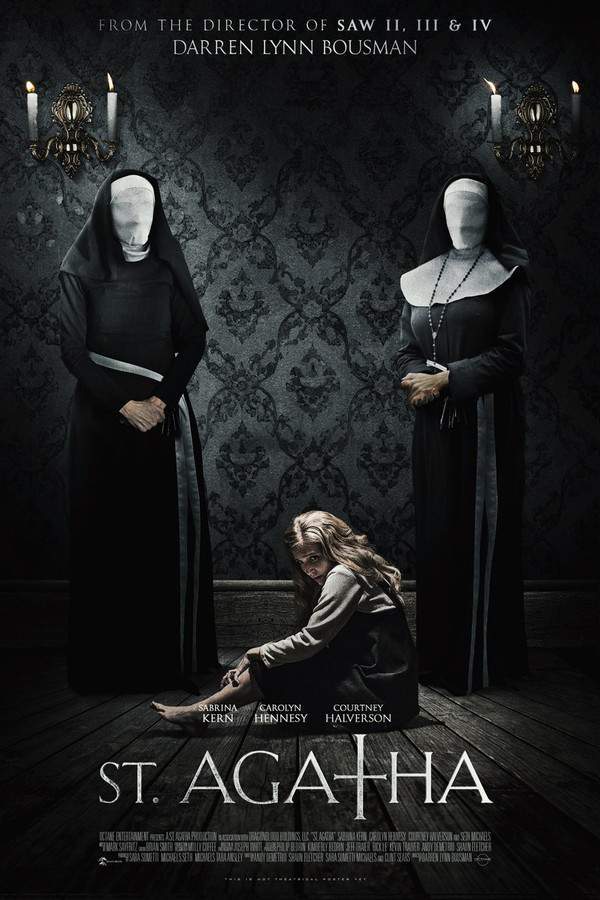
St. Agatha (2019) movie poster

Plot Summary

St. Agatha (2019) Plot Summary Explained

Release, runtime and language
2019 · 103 min · English
Echo score 68
JustWatch #10,645 20
Directed by
Darren Lynn Bousman
Starring
Seth Michaels, Carolyn Hennesy, Jayson Warner Smith, Courtney Halverson, Trin Miller, Lindsay Seim

In 1950s Georgia, a resourceful woman seeking a fresh start finds herself seeking sanctuary in a secluded convent. However, she soon realizes the silence within the walls is maintained through more than just devotion; secrets are deeply buried, and her resolve is severely tested. As she explores the unsettling environment, Agatha uncovers a disturbing truth about the nuns and their hidden agenda, forcing her to fight for her own freedom and protect her infant from a predetermined and troubling fate.

On this page (6)
  1. 1 Where to watch
  2. 2 What happens: full plot
  3. 3 Plot questions answered
  4. 4 Movie threads
  5. 5 Movies like St. Agatha
  6. 6 Every angle

Where to watch

Where to Watch St. Agatha (2019)

Where can you watch St. Agatha? Stream, rent or buy it in the US, including on Amazon Prime Video, Fawesome and Amazon MX Player: current JustWatch availability with up-to-date prices.

Streaming availability powered by JustWatch

Full plot summary · contains spoilers

What Happens in St. Agatha: Full Plot Summary

The whole story of St. Agatha (2019) explained, from the opening scene to the final frame: every key event, every twist and what it all adds up to. Read it as a quick recap before the sequel, to check a scene you missed, or to finally understand what really happened.

In 1957, a homeless, pregnant Mary, Sabrina Kern, flees her abusive father, Jayson Warner Smith, after the accidental death of her younger brother, Maximus Murrah, who plays William. With her boyfriend Jimmy on tour, she heads to a soup kitchen where a nun offers refuge in a convent, but the arrangement comes with hard rules enforced by the stern Mother Superior, Carolyn Hennesy.

Inside the convent, Mary is subjected to a tightening system of control. When she attempts to leave, she is drugged and renamed “Agatha,” and she is locked in a coffin that is opened only to be fed and to reinforce the nuns’ brainwashing. The atmosphere is claustrophobic, ritualistic, and designed to strip her autonomy away while presenting a facade of care.

During a donor breakfast, where the convent is judged by its patrons, Mary makes a daring escape and roams the woods until a bear trap injures her arm. The Wrights, a donor couple, retrieve her and bring her back to the house, where Mother Superior orders her wounded arm to be soaked in saltwater as punishment for her “rebellion.”

Jimmy tracks Mary down and visits the convent, but he is warned by Mother Superior that he will be killed if he remains. When Mary insists that she is now “Agatha” and that he is not the father of her unborn child, Jimmy leaves, broken and distraught.

In the same house, Sarah—a fellow resident—tells Mary that she believes the nuns took her healthy baby boy David at birth, lying that he had been stillborn. Mother Superior rebukes Sarah for speaking, then offers a grim path to safety: take a vow of silence and cut out her tongue to stay as a nun. Sarah agrees, sealing her vow.

Doris, another resident, goes into labor. Mary and Doris attempt a forced escape, but the pair are knocked unconscious by Mother Superior. Mary wakes later with unsettling dreams of her younger brother William and finds herself in the attic beside the corpse of her boyfriend, Jimmy. She threatens Mother Superior with a shard of glass to gain access to a telephone to call for help, but when a deputy arrives, the body has vanished.

Catherine, another resident, is killed after giving birth, and her child is handed over to the Wrights to be raised as their own. Mary confronts Mother Superior, who admits she was expelled from the Catholic Church but continues “God’s work” for the donors, profiting from the convent’s operation. Mary is offered a position as a nun, which she pretends to accept, but later returns to Mother Superior’s office to tear out a page of a book that reveals David’s whereabouts, passing it to Sarah.

In a bold move, Mary steals money to bribe three other nuns and the visiting doctor to aid her. The plan succeeds in locking Mother Superior away in a coffin. Sarah uses rat poison to incapacitate the remaining nuns, while Sister Paula, Trin Miller, chases Mary out of the house.

As Mary goes into labor, Sister Paula helps with the birth but then tries to seize the baby. Mary fights back, choking Paula with the umbilical cord and reclaiming her child. The final scene shifts to a sheriff’s operation outside the house, with officers preparing to open Mother Superior’s coffin. After the credits roll, Mother Superior’s voice is heard screaming, “Agatha!” adding a chilling coda to the tale.
Last updated: February 03, 2026 at 07:41

Was this helpful?

Plot questions answered

St. Agatha Plot Explained: Your Questions Answered

The questions people ask most about St. Agatha (2019): what happens in the confusing scenes, why the characters do what they do, the twists, hidden details and what the ending means. Each answer contains spoilers.

Q1

Why does Mary start calling herself Agatha at the convent?

When Mary attempts to leave the convent, she is drugged by the nuns and renamed Agatha. This is part of the systematic brainwashing process designed to erase her identity and make her compliant. She is locked in a coffin and only opened to be fed, with the nuns reinforcing this new identity until she internalizes it.

  • agatha name
  • brainwashing
  • identity
  • convent control
Q2

Why does Mary tell Jimmy he's not the father of her baby?

Mary has been heavily brainwashed by the nuns through isolation and drugging. When Jimmy confronts Mother Superior, she warns him he will be killed if he stays. Mary, now believing she is Agatha, denies Jimmy is the father to protect him and push him away, ensuring his safety by forcing him to leave.

  • jimmy
  • baby father
  • brainwashing
  • agatha identity
Q3

What happens to Jimmy's body in the attic?

After Mary wakes in the attic beside Jimmy's corpse, she threatens Mother Superior with glass to use the phone. When the deputy arrives, the body has vanished. This suggests the nuns quickly removed it to cover up the murder, though the film leaves the exact timing ambiguous.

  • jimmy death
  • attic
  • body
  • cover up
Q4

What happened to Sarah's baby David?

Sarah reveals she believes her healthy baby boy David was taken at birth and told he was stillborn. Mary later tears out a page from Mother Superior's book containing information about David's whereabouts, which she passes to Sarah, indicating the babies were being given to donors rather than killed.

  • sarah
  • david
  • baby
  • adoption
  • donors
Q5

Why does Sarah agree to cut out her tongue?

After Sarah reveals what she knows about the babies being taken, Mother Superior offers her a grim choice: take a vow of silence and cut out her tongue to remain as a nun, or face worse consequences. Sarah agrees to the mutilation as the only way to survive and stay within the convent to potentially find her son.

  • sarah
  • tongue
  • vow of silence
  • mutilation
Q6

Why does Mother Superior punish Mary by soaking her arm in saltwater?

After Mary's failed escape attempt during the donor breakfast, she injures her arm in a bear trap while running through the woods. The Wrights bring her back, and Mother Superior punishes her wounded arm by having it soaked in saltwater as further torture for her rebellion.

  • saltwater
  • punishment
  • bear trap
  • arm injury
Q7

What is the Wrights' role with the convent babies?

The Wrights are a wealthy donor couple who support the convent. When Catherine gives birth, her baby is handed over to the Wrights to be raised by their daughter. The donors profit from this arrangement, the convent essentially sells the babies to wealthy families who pose as charitable patrons.

  • wrights
  • donors
  • babies
  • adoption
  • profit
Q8

Why does Mother Superior run the convent if she was expelled from the Catholic Church?

Mother Superior admits she was expelled from the Catholic Church but continues operating the convent for profit. She manipulates wealthy donors into supporting the institution while using the guise of religious piety to control the residents and sell their babies.

  • mother superior
  • expelled
  • church
  • profit
  • donors
Q9

What does Mary tear out of Mother Superior's book?

During her confrontation with Mother Superior, Mary tears out a page from a book in the office that contains information about David's whereabouts. She passes this page to Sarah, giving her the location needed to find her stolen baby and plan their escape.

  • page
  • book
  • david
  • sarah
  • rescue plan
Q10

Why does Sister Paula try to take Mary's baby after helping her give birth?

Sister Paula initially helps Mary deliver her baby, but then attempts to seize the child following the convent's standard practice of taking newborns from the mothers. Mary fights back, choking Paula with the umbilical cord to protect her baby and escape.

  • sister paula
  • birth
  • baby
  • betrayal
  • umbilical cord
Q11

What happens to Mother Superior at the end of the movie?

Mary successfully locks Mother Superior in a coffin as part of her escape plan. At the end, sheriff's deputies arrive and begin opening the coffin. After credits roll, Mother Superior's voice is heard screaming "Agatha," suggesting she may still be alive or the nightmare is not truly over.

  • mother superior
  • coffin
  • sheriff
  • ending
  • agatha scream

Movie threads

More Movies Like St. Agatha, by Mood & Story

Curated lists built around what makes St. Agatha tick: the same mood, the same kind of story or the same emotional payoff. Each list explains why these movies belong together.

Sinister Religious Horror Movies like St. Agatha

Stories where sacred places hide unspeakable terrors and abuse of power. If you liked the oppressive atmosphere and corrupt convent of St. Agatha, you'll find similar chills in these movies. This section features horror films where religious settings become prisons of terror, exploring themes of abuse, hidden agendas, and the struggle for survival against a twisted faith.

  • claustrophobic
  • oppressive
  • religious horror
  • brutal
  • suspenseful
  • bleak
  • Tone: dark, oppressive
  • Pacing: steady, deliberate
Why these movies?

The story pattern: The narrative typically follows an outsider or vulnerable individual who seeks refuge in a religious institution, only to discover it is a prison run by a fanatical or cruel leader. The story unfolds as a tense uncovering of secrets, leading to a desperate battle for escape against overwhelming and sadistic opposition.

Why they belong together: These films are grouped together for their shared setting of a corrupted religious space, their oppressive and claustrophobic mood, and their thematic focus on the hypocrisy and terror that can fester behind closed doors of faith. They create a specific, intense brand of horror rooted in betrayal and institutional abuse.

Brutal Captivity and Survival Horror like St. Agatha

Intense stories of psychological and physical torment with a desperate fight for freedom. For viewers who appreciated the harrowing survival struggle in St. Agatha, this section features movies with similar high-intensity plots. These stories focus on protagonists enduring extreme confinement and abuse, fighting against their tormentors in a desperate bid for freedom against overwhelming odds.

  • brutal
  • suspenseful
  • claustrophobic
  • desperate
  • anxious
  • horrifying
  • Tone: dark, desperate
  • Pacing: steady, relentless
Why these movies?

The story pattern: The plot follows a protagonist who is trapped in an inescapable situation controlled by a powerful, often sadistic, antagonist. The narrative is a linear escalation of torment and resistance, where the protagonist's will and body are tested to the limit, culminating in a violent and costly bid for freedom that often leaves deep scars.

Why they belong together: These movies share a core experience of high-tension survival horror. They are united by their focus on confinement, the dynamic between torturer and victim, graphic intensity, and a heavy emotional weight derived from the protagonist's brutal ordeal and desperate fightback.

If you liked this

Movies Like St. Agatha

Similar movies to St. Agatha: the same genre, themes or kind of story. Each one comes with its own plot summary, timeline and ending explained.

Browse all movie summaries

Every angle

St. Agatha (2019) Explained: Plot, Timeline & Characters

Everything about St. Agatha in one place: what happens in the plot summary, the timeline in chronological order, the characters and meaning and a spoiler-free summary. What's After the Movie adds the cast, box office and post-credit scenes.

Coming soon on iOS and Android

The Plot Explained Movie Summary App

Plot summaries, endings explained and timelines on your phone. Catch up on any movie in minutes, save your favorites and never miss a twist again.

Be the first to know when we launch. Your email stays private, always.

Learn more about the app