












Plot Explained Spoilers guaranteed!
Plot Explained

Browse by genre

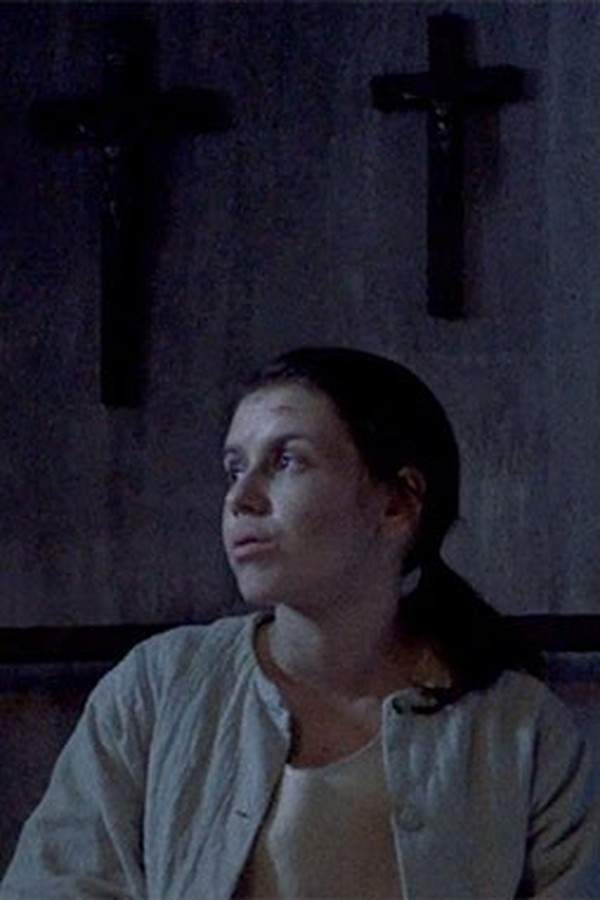
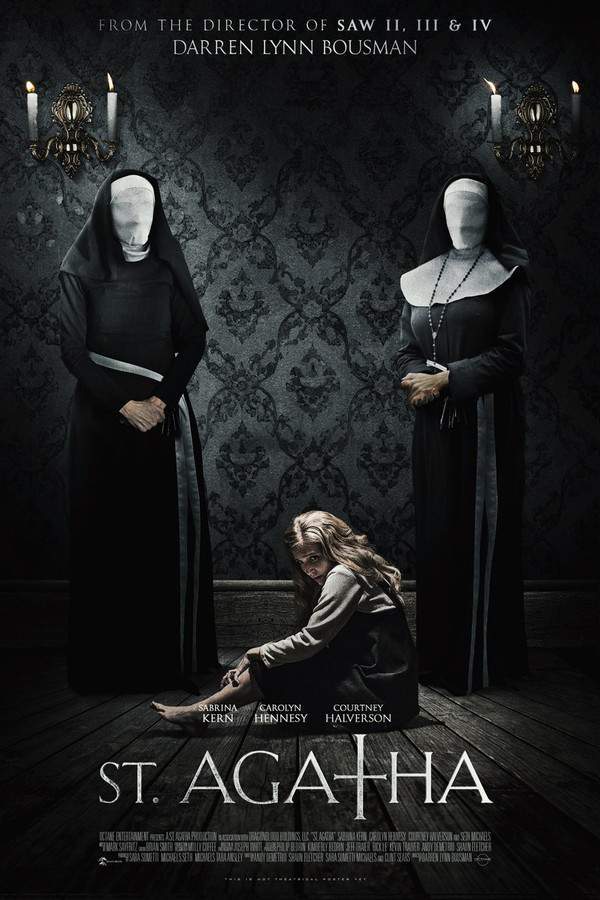
St. Agatha (2019) movie poster

Characters & Themes

St. Agatha (2019) Characters, Setting & Themes Explained

Release, runtime and language
2019 · 103 min · English
Echo score 68
JustWatch #10,626 11
Directed by
Darren Lynn Bousman
Starring
Seth Michaels, Carolyn Hennesy, Jayson Warner Smith, Courtney Halverson, Trin Miller, Lindsay Seim

In 1950s Georgia, a resourceful woman seeking a fresh start finds herself seeking sanctuary in a secluded convent. However, she soon realizes the silence within the walls is maintained through more than just devotion; secrets are deeply buried, and her resolve is severely tested. As she explores the unsettling environment, Agatha uncovers a disturbing truth about the nuns and their hidden agenda, forcing her to fight for her own freedom and protect her infant from a predetermined and troubling fate.

On this page (8)
  1. 1 Where to watch
  2. 2 Characters explained (12)
  3. 3 Where & when it takes place
  4. 4 Themes & meaning (3)
  5. 5 Character & meaning questions
  6. 6 Movie threads
  7. 7 Movies like St. Agatha
  8. 8 Every angle

Where to watch

Where to Watch St. Agatha (2019)

Where can you watch St. Agatha? Stream, rent or buy it in the US, including on Amazon Prime Video, Fawesome and Amazon MX Player: current JustWatch availability with up-to-date prices.

Streaming availability powered by JustWatch

12 main characters · contains spoilers

St. Agatha Characters Explained: Who Is Who

The main characters of St. Agatha (2019), heroes and villains: what drives them, how they change over the course of the story and what each of them reveals about the film's bigger ideas.

  • Mary / Agatha (Sabrina Kern)

    A homeless, pregnant woman who seeks refuge in the convent but is subjected to strict confinement and brainwashing. She demonstrates resilience and a willingness to break the system to protect her unborn child. Her arc centers on reclaiming her identity from the name 'Agatha' imposed by the Mother Superior.

    • 🏷️ Woman
    • 🧭 Survivor
    • 👶 Motherhood
  • Mother Superior

    played by Carolyn Hennesy

    The primary antagonist who rules the convent with an iron fist and profits from the girls’ confinement. She justifies her cruelty by claiming a warped sense of divine mission. Her backstory reveals a defection from the Catholic church and a willingness to do whatever it takes to maintain control.

    • 🕯️ Authority
    • 🧭 Cruelty
    • 💰 Manipulation
  • Father Andrew

    played by Seth Michaels

    A priest figure in the story who embodies religious authority but is drawn into the conflict surrounding Mary and the convent. He represents the ecclesiastical side of the regime, balancing spiritual language with the grim realities of the nuns’ power.

    • ✝️ Authority
    • 🤝 Transparency
  • Catherine

    played by Courtney Halverson

    One of the girls in the convent who becomes a witness to the cruelty around her. Her interactions with Mary reveal the social dynamics among the housed girls and the way the nuns enforce silence.

    • 👧 Peer
    • 🗣️ Silence
  • Doris

    played by Lindsay Seim

    Another resident of the convent who endures the confinement and participates in a failed escape attempt. Her presence highlights the shared fear and camaraderie among the girls.

    • 👭 Ally
    • 🫀 Resilience
  • Sister Susan

    played by Marsha Fee Berger

    A nun who enforces the rules and participates in the internal power structure of the convent. Her role showcases the internalization of discipline within the community.

    • 🙏 Religion
    • 🗡️ Discipline
  • William

    played by Maximus Murrah

    Mary’s younger brother who dies, an event that intensifies the stakes and drives Mary’s motivation to escape and expose the truth.

    • 👶 Loss
    • 🧭 Motivator
  • Mary's Father

    played by Jayson Warner Smith

    An abusive father figure whose actions precipitate Mary’s departure from home, setting the entire ordeal in motion.

    • 👊 Abuser
    • 🧭 Trigger
  • Sister Paula

    played by Trin Miller

    A nun who aids Mary during labor but also embodies the conflicting loyalties within the convent. She is both an ally and an antagonist in different moments.

    • 🤝 Ally
    • 🕊️ Mercy
  • Deputy Earl

    played by Shaun Fletcher

    Law enforcement figure who becomes involved at the end when the authorities prepare to confront the convent.

    • 👮 Authority
    • 🕯️ Revelation
  • Jimmy

    Mary’s former boyfriend; his pursuit to locate Mary drives action and complications within the story.

    • 💔 Love
    • 🚶 Pursuit
  • Sarah

    A fellow resident who hints at the loss of her own child and the brutal treatment by the nuns; she serves as a quiet counterpoint to Mary’s rebellion.

    • 👩‍👧 Sorrow
    • 🗣️ Silence

Last updated: February 03, 2026 at 07:31

Was this helpful?

Setting

Where and When Does St. Agatha Take Place?

The setting of St. Agatha (2019): the year and time period, the places and locations, and how they shape the characters, the mood and the tension of the story.

Time period

1957

Set in 1957, the story sits in a mid-20th-century rural/small-town American milieu. The period is characterized by strict religious authority, gendered expectations, and social surveillance, which shape Mary’s limited options. The convent's authority and donor influence reflect the era's institutional power dynamics.

Location

Convent, Woods, Wrights' House, Soup Kitchen, Donor Breakfast

The events unfold primarily at a Catholic convent in 1950s America, with scenes also taking place in the surrounding woods and in the Wrights' donor house. The convent is depicted as a tightly controlled space where discipline and obedience are enforced. The woods serve as a liminal area for escape and pursuit, while the donor breakfasts show the era's social rituals.

  • 🏰 Convent
  • 🌲 Woods
  • 🏠 Wrights' House
  • 🍽️ Soup Kitchen
  • 🗳️ Donor Breakfast

Last updated: February 03, 2026 at 07:31

Was this helpful?

3 major themes

St. Agatha Meaning: Themes & Message Explained

What is St. Agatha (2019) really about? The emotional, social and philosophical themes the film keeps returning to, its symbolism and the message beneath the surface.

  • Control

    The Mother Superior exercises rigid control over the girls, enforcing obedience and punishing rebellion. The confinement of Mary in the coffin and the brainwashing illustrate how institutions can shape identity and limit freedom. The film uses control as a driving force that motivates Mary’s desperate attempts to escape and reclaim autonomy.

  • Motherhood

    Mary’s pregnancy becomes a battleground where maternal instincts clash with the convent's coercive rule. Her determination to protect her child drives her to plot escapes and dangerous actions. The film frames motherhood as both a source of vulnerability and a source of power in reclaiming her life.

  • Religion & Exploitation

    The donors and Mother Superior manipulate faith for profit, calling their actions “God’s work” while profiting from the girls’ confinement. Religious imagery and ritual are used as tools of control rather than salvation. The story critiques how institutions can exploit belief to maintain authority.

Last updated: February 03, 2026 at 07:31

Was this helpful?

Character & theme questions

St. Agatha Characters & Meaning: Your Questions Answered

The questions people ask about St. Agatha (2019): who the characters really are, their relationships, what the symbols mean, where it takes place and what the movie is really about. Each answer contains spoilers.

Q1

Where is St. Agatha set?

The movie takes place primarily at a Catholic convent in 1950s America, specifically in rural Georgia. Additional scenes occur in the surrounding woods, at a donor house where wealthy supporters host breakfasts, and at a soup kitchen. The convent itself is depicted as a tightly controlled, isolated environment where discipline and obedience are strictly enforced.

  • convent
  • setting
  • location
  • Catholic convent
  • rural Georgia
Q2

What time period does St. Agatha take place in?

St. Agatha is set in 1957, placing it squarely in the mid-20th century. This era was characterized by strict religious authority, rigid gendered expectations, and pervasive social surveillance. The period context is important because it explains Mary's limited options as a woman and the institutional power dynamics that the Mother Superior exploits.

  • 1957
  • time period
  • 1950s
  • era
  • historical setting
Q3

What is the main theme of St. Agatha?

The central theme of St. Agatha is control. The Mother Superior exercises rigid authority over the girls in the convent, enforcing obedience through punishment and brainwashing. The film illustrates how institutions can shape identity and strip away freedom, particularly through the confinement of Mary in a coffin and the psychological manipulation she endures. Mary's desperate attempts to escape represent a fight to reclaim her autonomy.

  • control
  • theme
  • institutional control
  • brainwashing
  • obedience
  • freedom
Q4

How does St. Agatha explore motherhood?

Motherhood is a major theme in St. Agatha, depicted as both a source of vulnerability and a source of strength. Mary's pregnancy makes her a target for the convent's control, but her maternal instincts drive her to plot escapes and take dangerous actions to protect her unborn child. The film presents motherhood as a powerful motivating force that compels her to fight back against her captors.

  • motherhood
  • pregnancy
  • maternal instincts
  • protection
  • mother child
Q5

What does St. Agatha say about religion?

St. Agatha presents a critical view of religion as a tool of exploitation. The Mother Superior and her donors manipulate faith for profit, claiming their actions are "God's work" while actually profiting from the girls' confinement. Religious imagery and ritual are used as instruments of control rather than salvation. The film critiques how institutions can exploit religious belief to maintain authority over vulnerable people.

  • religion
  • exploitation
  • faith
  • religious control
  • corruption
  • Catholic church
Q6

Who is the main character in St. Agatha?

The main character is Mary, played by Sabrina Kern, who arrives at the convent seeking refuge as a homeless, pregnant woman. She is given the name Agatha by the Mother Superior, and much of her arc involves reclaiming her identity from this imposed name. Mary demonstrates remarkable resilience and is willing to break the system to protect her unborn child.

  • Mary
  • Agatha
  • protagonist
  • Sabrina Kern
  • main character
Q7

Who is the antagonist in St. Agatha?

The primary antagonist is the Mother Superior, played by Carolyn Hennesy. She rules the convent with an iron fist and profits from the girls' confinement. She justifies her cruelty through a warped sense of divine mission. Her backstory reveals she defected from the Catholic church and will do whatever necessary to maintain control over the convent and its residents.

  • Mother Superior
  • antagonist
  • villain
  • Carolyn Hennesy
  • antagonist role
Q8

What motivates Mary in St. Agatha?

Mary is primarily motivated by the desire to protect her unborn child and escape the oppressive control of the convent. Her backstory includes fleeing an abusive father, and the loss of her younger brother William intensifies her determination to survive and expose the truth about the convent's operations. She seeks to reclaim her identity and autonomy from the system that imprisoned her.

  • motivation
  • escape
  • survival
  • protect child
  • autonomy
  • identity
Q9

What is the atmosphere like at the convent in St. Agatha?

The convent in St. Agatha is depicted as a terrifying, controlling environment where silence is maintained through fear and punishment. The Mother Superior enforces strict discipline and obedience, using both psychological manipulation and physical punishment to maintain control. The atmosphere balances表面的 religious piety with sinister exploitation, creating a deeply unsettling environment that traps its residents.

  • atmosphere
  • convent life
  • fear
  • punishment
  • oppression
  • psychological horror
Q10

How does the 1950s setting affect St. Agatha's story?

The 1950s setting is crucial to St. Agatha because it establishes the social constraints that make Mary vulnerable. As a pregnant, homeless woman in 1957, her options were extremely limited. The era's strict religious authority and gendered expectations created institutions like the convent that could operate with little oversight. The donor system and social rituals of the time also show how the convent maintains its power through wealthy supporters.

  • 1950s society
  • gender roles
  • social constraints
  • institutional power
  • historical context

Movie threads

More Movies Like St. Agatha, by Mood & Story

Curated lists built around what makes St. Agatha tick: the same mood, the same kind of story or the same emotional payoff. Each list explains why these movies belong together.

Sinister Religious Horror Movies like St. Agatha

Stories where sacred places hide unspeakable terrors and abuse of power. If you liked the oppressive atmosphere and corrupt convent of St. Agatha, you'll find similar chills in these movies. This section features horror films where religious settings become prisons of terror, exploring themes of abuse, hidden agendas, and the struggle for survival against a twisted faith.

  • claustrophobic
  • oppressive
  • religious horror
  • brutal
  • suspenseful
  • bleak
  • Tone: dark, oppressive
  • Pacing: steady, deliberate
Why these movies?

The story pattern: The narrative typically follows an outsider or vulnerable individual who seeks refuge in a religious institution, only to discover it is a prison run by a fanatical or cruel leader. The story unfolds as a tense uncovering of secrets, leading to a desperate battle for escape against overwhelming and sadistic opposition.

Why they belong together: These films are grouped together for their shared setting of a corrupted religious space, their oppressive and claustrophobic mood, and their thematic focus on the hypocrisy and terror that can fester behind closed doors of faith. They create a specific, intense brand of horror rooted in betrayal and institutional abuse.

Brutal Captivity and Survival Horror like St. Agatha

Intense stories of psychological and physical torment with a desperate fight for freedom. For viewers who appreciated the harrowing survival struggle in St. Agatha, this section features movies with similar high-intensity plots. These stories focus on protagonists enduring extreme confinement and abuse, fighting against their tormentors in a desperate bid for freedom against overwhelming odds.

  • brutal
  • suspenseful
  • claustrophobic
  • desperate
  • anxious
  • horrifying
  • Tone: dark, desperate
  • Pacing: steady, relentless
Why these movies?

The story pattern: The plot follows a protagonist who is trapped in an inescapable situation controlled by a powerful, often sadistic, antagonist. The narrative is a linear escalation of torment and resistance, where the protagonist's will and body are tested to the limit, culminating in a violent and costly bid for freedom that often leaves deep scars.

Why they belong together: These movies share a core experience of high-tension survival horror. They are united by their focus on confinement, the dynamic between torturer and victim, graphic intensity, and a heavy emotional weight derived from the protagonist's brutal ordeal and desperate fightback.

If you liked this

Movies Like St. Agatha

Similar movies to St. Agatha: the same genre, themes or kind of story. Each one comes with its own plot summary, timeline and ending explained.

Browse all movie summaries

Every angle

St. Agatha (2019) Explained: Plot, Timeline & Characters

Everything about St. Agatha in one place: what happens in the plot summary, the timeline in chronological order, the characters and meaning and a spoiler-free summary. What's After the Movie adds the cast, box office and post-credit scenes.

Coming soon on iOS and Android

The Plot Explained Movie Summary App

Plot summaries, endings explained and timelines on your phone. Catch up on any movie in minutes, save your favorites and never miss a twist again.

Be the first to know when we launch. Your email stays private, always.

Learn more about the app