













Plot Explained Spoilers guaranteed!
Plot Explained

Browse by genre

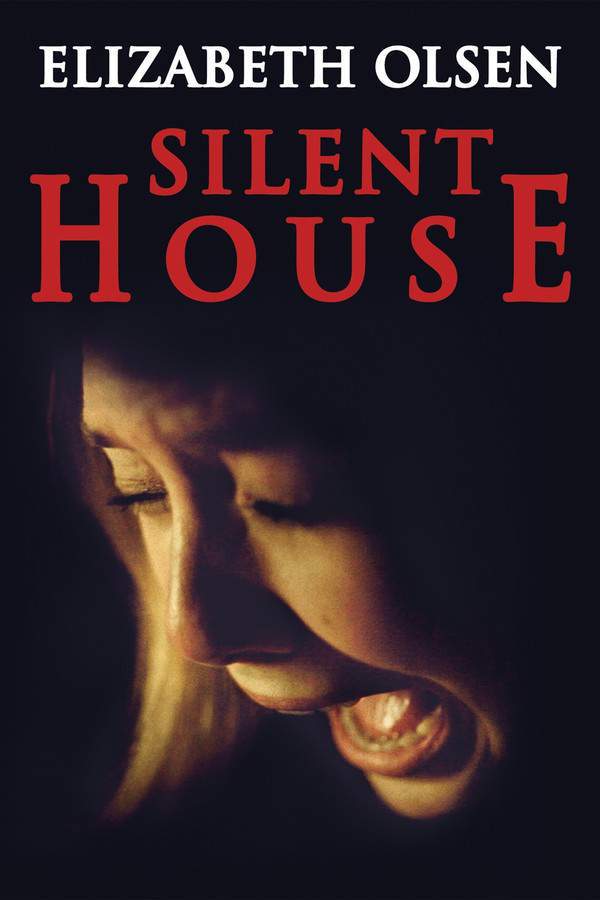
Silent House (2012) movie poster

Timeline

Silent House (2012) Timeline Explained – Every Event in Order

Release, runtime and language
2012 · 85 min · English
JustWatch #5,159 66
Directed by
Chris Kentis, Laura Lau
Starring
Elizabeth Olsen, Julia Taylor Ross, Adam Trese, Eric Sheffer Stevens

During a home renovation, Sarah becomes separated from her family inside an old house lacking basic utilities. As night falls and she loses contact with the outside world, a growing sense of isolation transforms into escalating terror. Unexplained and disturbing events occur, leaving Sarah to confront a horrifying ordeal within the decaying house.

On this page (6)
  1. 1 Where to watch
  2. 2 Events in order (13)
  3. 3 Timeline questions answered
  4. 4 Movie threads
  5. 5 Movies like Silent House
  6. 6 Every angle

Where to watch

Where to Watch Silent House (2012)

Where can you watch Silent House? Stream, rent or buy it in the US, including on Peacock Premium, Peacock Premium Plus and The CW: current JustWatch availability with up-to-date prices.

Streaming availability powered by JustWatch

13 events in order · contains spoilers

Silent House Timeline: Events in Chronological Order

Every key event of Silent House (2012) in order, scene by scene, with when and where it takes place. Use it to untangle flashbacks, time jumps and parallel storylines, to refresh your memory before the sequel or to find the exact scene you are thinking of.

  1. Arrival at the fixer-upper

    Sarah arrives at the dilapidated Victorian house in the countryside with her father John and uncle Peter to help fix it for sale. The setting establishes isolation and decay, hinting at the dark events to come. The family dynamic is the frame for the creeping suspense.

    When
    Daytime
    Where
    Victorian house, countryside
  2. Petty argument and departure

    John and Peter clash over a petty disagreement, and Peter leaves the house to fetch extra tools in town. The tension lingers as Sarah watches the argument unfold. With Peter gone, the household feels thinner and more exposed to danger.

    When
    Evening
    Where
    Living room
  3. Sophia at the door

    Sarah meets a woman named Sophia at the front door who claims to be a long-lost childhood friend. Sarah does not remember Sophia, which creates unease and doubt about what is real. The encounter blurs the line between memory and illusion.

    When
    Evening
    Where
    Front door
  4. John falls, exits blocked

    Soon after, John falls down the stairs, and it seems exits are blocked, trapping the family inside. Sarah panics and tries to flee, but she cannot leave the house. She finds herself hiding from an unseen perpetrator, heightening the sense of danger.

    When
    Evening
    Where
    Stairwell / inside house
  5. Basement discovery and escape

    John lies unconscious with a head wound as Sarah searches the basement for a way outside. She discovers bedding and signs that someone else has been living there, suggesting squatters. She escapes through the cellar door to return to the night outside.

    When
    Night
    Where
    Basement / cellar
  6. Road encounter and missing body

    Outside, Peter returns and they see a young girl on the road who disappears. The sighting adds a haunting layer to the night and deepens the mystery surrounding the house. They sense a larger danger at play beyond the immediate conflict.

    When
    Night
    Where
    Road outside house
  7. John’s body missing; power cut

    Back inside, they notice that John's body is missing from the house. The power then cuts out, leaving them with only the flash of a Polaroid camera to light their surroundings. The eerie moment raises questions about what is real and what is not.

    When
    Night
    Where
    Living room / inside house
  8. Polaroid flashes reveal intruders

    With the power out, Sarah uses the Polaroid flash to glimpse a young girl and a man in the room. The eerie images intensify her fear and blur the line between memory and presence. When the power returns, Peter is missing, deepening the mystery.

    When
    Night
    Where
    Living room
  9. Two men and a hidden girl

    The power returns to reveal the house occupied by two men who take pictures of an unseen girl. Sarah tries to intervene by using Peter's gun, but the threat inside the house remains unresolved. The scene emphasizes predatory danger hidden within the home.

    When
    Night
    Where
    Living room
  10. Paranoia and childhood visions

    Sarah begins showing signs of paranoia and psychosis, driven by traumatic childhood memories. She experiences vivid hallucinations, including a bloodstain on a bed and a girl in a bathtub with beer bottles and bloody water. The boundary between memory and current reality becomes increasingly unstable.

    When
    Night
    Where
    Bedroom / bathroom
  11. Repressed memory surfaces

    Sophia hands Sarah a key to a box containing pedophilic pictures of Sarah as a little girl, implying that John abused her. The revelation suggests the trauma is resurfacing as memory rather than new events. This memory acts as a catalyst for Sarah's ensuing actions.

    When
    Night
    Where
    Living room
  12. Intruder twist and climactic turn

    The 'intruder' is revealed to be Sarah herself, with Sophia confirmed as a figment of her imagination. The sequence includes a struggle as the house grows increasingly chaotic. The revelation sets up the final confrontation and the unraveling of the household's secrets.

    When
    Night
    Where
    Living room / throughout house
  13. Final confrontation and murder

    John confronts Sarah and attempts to control her, but the tension explodes as Sarah bludgeons him to death with a sledgehammer. Peter’s fate after the attack remains unknown, and Sarah leaves the house in silence, carrying the consequences of what has unfolded.

    When
    Night
    Where
    Living room / hallway

Last updated: October 09, 2025 at 16:17

Was this helpful?

Timeline questions answered

Silent House Timeline Explained: Your Questions Answered

When does it happen, and why in that order? The questions people ask about the chronology of Silent House (2012): time jumps, flashbacks, cause and effect between scenes and the correct order of events, each answered with spoilers.

Q1

Why did Sarah see Sophia in the house?

Sophia was a figment of Sarah's imagination, a projection created by her dissociative state. She appeared as a supposed childhood friend to guide Sarah through the traumatic memories surfacing from her repressed past. Once Sarah's memories fully emerged, Sophia vanished, confirming she was never a real person present in the house.

Foreshadowing: Sophia's claim of being a childhood friend plants the seed of memory distortion early in the film.

  • sophia
  • imaginary friend
  • hallucination
  • dissociation
  • psychological horror
Q2

Why did Sarah kill John with the sledgehammer?

Sarah discovered that her father John had sexually abused her as a child, evidence shown through photographs in a box Sarah found. This repressed memory, triggered by returning to the house where the abuse occurred, drove her to attack John in a moment of overwhelming trauma and rage.

Foreshadowing: The childhood visions of bloodstains and the bathtub scene foreshadow the abuse Sarah suffered.

  • sledgehammer
  • patricide
  • childhood abuse
  • murder
  • repressed memory
Q3

What caused the disturbances in the house?

The disturbances were not caused by external intruders but by Sarah herself. Due to dissociative identity disorder triggered by repressed trauma, she entered altered states where she unconsciously moved through the house, appeared to others as a threatening figure, and created the illusion of danger. The 'intruder' hunting her was her own displaced identity.

Foreshadowing: Sarah's paranoia and the mysterious figure roaming the house set up the twist that she was the threat.

  • intruder
  • hallucination
  • dissociative identity disorder
  • trauma
  • psychological break
Q4

Why did the exits seem blocked when Sarah tried to escape?

The exits appeared blocked because Sarah was in a dissociative state that distorted her perception of reality. She was unconsciously preventing herself from leaving the house, which served as the setting where her childhood trauma occurred. Her mind was trapping her there to confront the repressed memories.

Foreshadowing: The argument between John and Peter creates tension, but Sarah's inability to leave hints at psychological rather than physical barriers.

  • trapped
  • exits blocked
  • dissociation
  • psychological imprisonment
Q5

What happened to John's body when it went missing?

John was never actually dead when he fell down the stairs. Sarah experienced fragmented perceptions where she saw him wrapped in plastic and sitting rigid in the living room. This was part of her traumatic breakdown, John was alive throughout much of the night, ultimately confronting Sarah before she killed him.

Foreshadowing: The missing body raises questions about what is real versus what Sarah perceives.

  • john missing
  • body
  • confusion
  • perception
  • trauma
Q6

What did the Polaroid flashes reveal in the dark house?

The Polaroid flashes revealed glimpses of Sarah herself as a child, as well as images of a man, representations of her repressed memories of abuse surfacing. The flashes also showed the present danger of two men in the house who were taking pictures, suggesting predatory behavior toward a hidden girl.

Foreshadowing: The young girl on the road and in Polaroid flashes connects to Sarah's childhood self.

  • polaroid
  • flash
  • childhood memory
  • abuse
  • repression
Q7

Why did Sarah see visions of bloodstains and a bathtub?

Sarah's visions were traumatic childhood memories flooding back due to the psychological trigger of being in the house where abuse occurred. The bloodstain on the bed and the bathtub scene with bloody water represent the abuse she suffered as a child, memories her mind had suppressed for years.

Foreshadowing: These disturbing images escalate as the night progresses, signaling deeper trauma surfacing.

  • hallucinations
  • childhood memories
  • blood
  • trauma
  • bathroom scene
Q8

Who was living in the basement of the house?

The basement showed signs of recent habitation, bedding and belongings, suggesting squatters had been using the space. However, in the film's psychological reality, this detail may have been another element of Sarah's distorted perception, or it represented her mind creating false evidence of external threats to explain her own frightening presence in the house.

Foreshadowing: The basement discovery adds to the sense of danger lurking within the house.

  • basement
  • squatter
  • decay
  • house
  • threat
Q9

Why couldn't Peter help Sarah during the attack?

Peter was unaware of the abuse Sarah suffered as a child. His pleas for Sarah to stop during the murder reveal his guilt for not recognizing the signs or intervening earlier. His role as a passive bystander in the family allowed the abuse to continue unchecked, leaving him helpless to stop the violent climax.

Foreshadowing: Peter's departure to town and his absent role throughout the night foreshadow his inability to protect Sarah.

  • peter
  • uncle
  • guilt
  • bystander
  • family abuse
Q10

What happened to Peter at the end of Silent House?

Peter's fate after Sarah kills John remains deliberately unclear and ambiguous. He is left alone in the house to face the aftermath of the murder and the dark secrets revealed that night. The bleak ending shows Sarah walking away in silence, leaving Peter to deal with the consequences alone.

Foreshadowing: Peter's pleas for mercy go unanswered, emphasizing his helplessness.

  • peter ending
  • aftermath
  • ambiguous
  • bleak ending
  • consequences
Q11

Why was the house so terrifying for Sarah specifically?

The house was terrifying for Sarah because it was the site of her childhood abuse. Returning to the Victorian house triggered suppressed traumatic memories, causing her to experience dissociation, hallucinations, and a breakdown of reality. The physical decay of the house mirrors the decay of her mental state as past trauma resurfaces.

Foreshadowing: The house's dilapidated condition mirrors Sarah's fractured psyche.

  • house
  • trauma trigger
  • ptsd
  • repressed memory
  • childhood abuse

Movie threads

More Movies Like Silent House, by Mood & Story

Curated lists built around what makes Silent House tick: the same mood, the same kind of story or the same emotional payoff. Each list explains why these movies belong together.

Subjective psychological horror movies like Silent House

Stories that trap you inside a character's unraveling perception of reality. If you were captivated by the claustrophobic, first-person terror of Silent House, this list features movies that trap you inside a character's mind. These films use immersive techniques to blur reality and delusion, creating similar experiences of psychological unraveling and nightmarish terror.

  • subjective
  • unreliable narrator
  • paranoid
  • disorienting
  • traumatic
  • nightmarish
  • Tone: dark, paranoid, unsettling
  • Pacing: fast, relentless, immersive
Why these movies?

The story pattern: These narratives often begin with a character in a vulnerable or isolated state, where a seemingly external threat gradually reveals itself to be an internal one. The story unfolds through their distorted perspective, using visual and auditory cues to sow doubt, forcing the audience to question what is real until a traumatic truth is violently uncovered.

Why they belong together: Movies in this thread share a commitment to subjective storytelling, using techniques like continuous shots, unreliable narration, and surreal imagery to mirror a character's mental state. They prioritize psychological dread over jump scares, building tension through ambiguity and a shared sense of paranoia with the protagonist.

Claustrophobic single location horror movies like Silent House

Tense stories of confinement where the setting itself becomes the antagonist. Fans of the trapped-in-a-house terror of Silent House will find more chilling tales of confinement here. This list gathers horror movies that use a single, isolated location to create maximum claustrophobia and relentless tension, where the walls feel like they are closing in.

  • claustrophobic
  • confined
  • trapped
  • anxious
  • tense
  • survival
  • Tone: tense, anxious, bleak
  • Pacing: fast, steady, unrelenting
Why these movies?

The story pattern: The plot is typically simple and direct: a character or group becomes trapped in a confined space with a growing threat. The narrative is driven by escalating events and the exploration of the location's secrets, with pacing that offers little respite, constantly raising the stakes as escape seems increasingly impossible.

Why they belong together: This thread groups films where the setting is a primary source of horror. The shared elements are intense claustrophobia, a fast or steady pacing that maintains high tension, and a focus on survival within severely limited boundaries, creating a visceral and anxiety-inducing experience.

If you liked this

Movies Like Silent House

Similar movies to Silent House: the same genre, themes or kind of story. Each one comes with its own plot summary, timeline and ending explained.

Browse all movie summaries

Every angle

Silent House (2012) Explained: Plot, Timeline & Characters

Everything about Silent House in one place: what happens in the plot summary, the timeline in chronological order, the characters and meaning and a spoiler-free summary. What's After the Movie adds the cast, box office and post-credit scenes.

Coming soon on iOS and Android

The Plot Explained Movie Summary App

Plot summaries, endings explained and timelines on your phone. Catch up on any movie in minutes, save your favorites and never miss a twist again.

Be the first to know when we launch. Your email stays private, always.

Learn more about the app