Plot Explained Spoilers guaranteed!
Plot Explained

Browse by genre

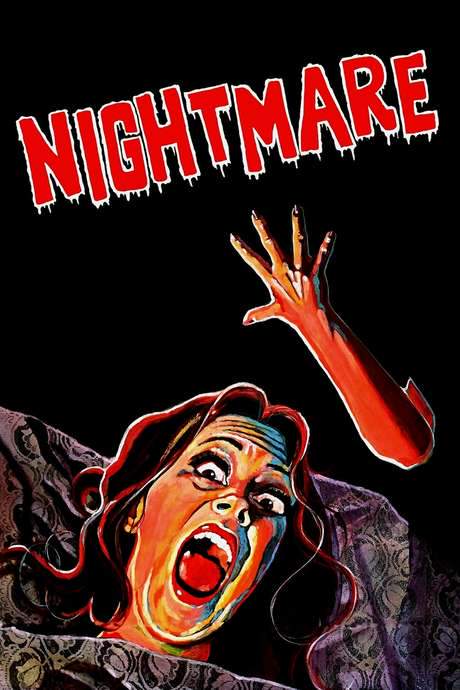
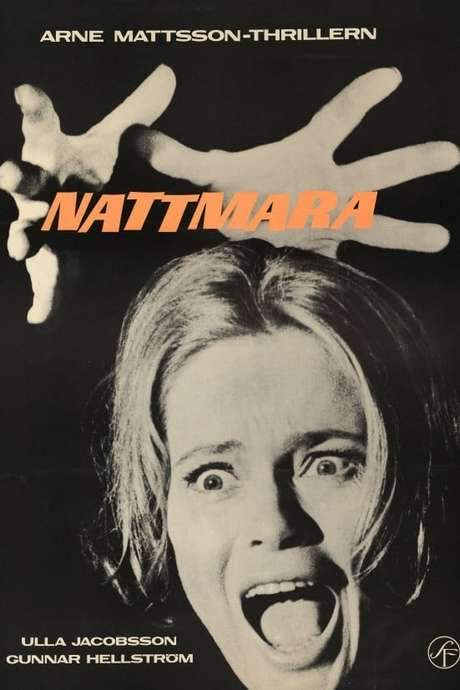
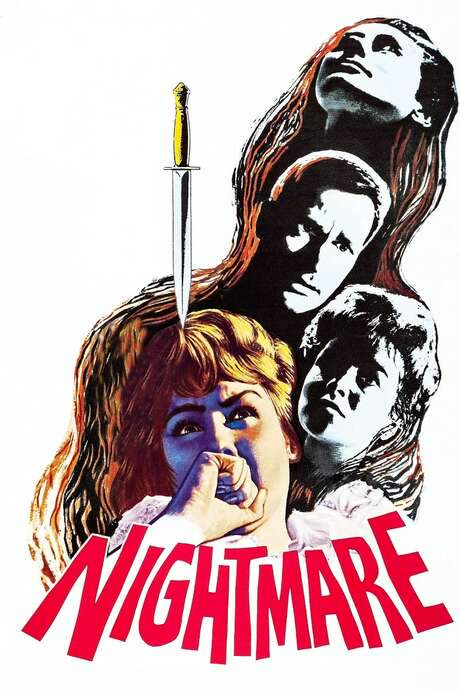
Nightmare (1964) movie poster

Plot Summary

Nightmare (1964) Plot Summary Explained

Release, runtime and language
1964 · 83 mins · English
Directed by
Freddie Francis
Starring
Moira Redmond, John Welsh, Timothy Bateson, David Knight, Brenda Bruce, George A. Cooper

A young student is tormented by vivid, recurring dreams in which her mother murders her father. When three shocking murders mirror the pattern of her nightmares, she becomes desperate to convince friends and family that the horrors are real and not delusions, fearing she is losing her sanity.

On this page (5)
  1. 1 What happens: full plot
  2. 2 Plot questions answered
  3. 3 Movie threads
  4. 4 Movies like Nightmare
  5. 5 Every angle

Full plot summary · contains spoilers

What Happens in Nightmare: Full Plot Summary

The whole story of Nightmare (1964) explained, from the opening scene to the final frame: every key event, every twist and what it all adds up to. Read it as a quick recap before the sequel, to check a scene you missed, or to finally understand what really happened.

Six years after Janet Freeman witnessed her mother stab her father to death, she is plagued by nightmares that blur the line between sleep and waking. A poised finishing-school girl, Janet is brought home by Miss Mary Lewis to recover, while her guardian Henry Baxter is away. Upon arrival, they are greeted by John, the cheery chauffeur, Mrs. Gibbs, the housekeeper, and Grace Maddox, a poised nurse-companion Henry has hired to help. Miss Lewis leaves Janet in the care of Grace, setting in motion a tense dance of trust, secrecy, and fragile sanity.

The nightmares grow harder to ignore: a white-shrouded woman wanders the corridors, inviting Janet to burst into her parents’ room, where the same figure lies on the bed with a knife in her chest. When Henry returns, he finds Janet under sedation, and doctors urge psychiatric care, though he refuses to surrender his ward to that route. Janet’s fear deepens into despair, and she makes a desperate, doomed attempt at self-destruction as the shadows press in from every corner of the house.

One afternoon, Henry’s wife arrives for tea, and Janet, convinced by the resemblance, believes the visitor is the woman from her nightmares. In a surge of terror and confusion, Janet stabs the woman to death and is immediately committed to an asylum. The true identity of the woman in white is soon revealed to beGrace, dressed in disguise with a wig and mask, secretly conspiring with Henry to manipulate Janet. The revelation frays Grace’s sense of control, and she and Henry marry, even as Grace grows increasingly convinced that Henry is trying to drive her mad.

The marriage does not bring peace. Believing that Janet has escaped the asylum, Grace believes she must protect herself by silencing Henry, and she stabs him to death, hoping the crime will be laid at Janet’s door. But the loyal circle around Janet—Miss Lewis, [Mrs. Gibbs], and [John]—is not fooled. They have been onto Grace and Henry’s scheme all along and decide to turn the tables, exposing their plot and proving that Janet is slowly recovering under careful watch. In the aftermath, Grace’s grip on reality shatters as she confronts the consequences of her deception, and justice closes in as Janet moves toward a fragile, hopeful recovery.

Last updated: March 05, 2026 at 18:41

Was this helpful?

Plot questions answered

Nightmare Plot Explained: Your Questions Answered

The questions people ask most about Nightmare (1964): what happens in the confusing scenes, why the characters do what they do, the twists, hidden details and what the ending means. Each answer contains spoilers.

Q1

Why did Janet stab Henry's wife during tea?

Janet mistook Henry's wife for the white-shrouded woman from her recurring nightmares. The visual resemblance between the visitor and the figure in her dreams triggered a traumatic flashback, causing her to react in panic and stab the woman. This event occurred because Janet's nightmares had blurred the line between dreams and reality, leaving her terrified that the nightmare figure was actually in the house.

Foreshadowing: The earlier nightmares consistently showed a white-robed woman in the house, priming Janet to see the figure everywhere.

  • janet
  • henry's wife
  • stabbing
  • nightmares
  • mistaken identity
Q2

What was Grace's conspiracy with Henry?

Grace Maddox and Henry Baxter plotted to drive Janet insane. Grace disguised herself as the white-shrouded woman from Janet's nightmares, wearing a wig and mask to terrorize her. The goal was to manipulate Janet's fragile mental state, though the exact motive remains ambiguous, possibly to gain control over Janet's inheritance or guardianship.

Foreshadowing: Grace was hired as a nurse-companion specifically by Henry, establishing their prior connection.

  • grace maddox
  • henry
  • baxter
  • conspiracy
  • gaslighting
  • manipulation
Q3

Why did Grace dress as the woman in white?

Grace deliberately disguised herself as the nightmare figure to intensify Janet's psychological distress. By appearing as the exact image from Janet's traumatic dreams, she aimed to collapse Janet's perception of reality, making her appear insane to outsiders and solidify control over her situation.

Foreshadowing: Janet's nightmares depicted a specific white-shrouded woman that Grace recreated exactly.

  • grace maddox
  • woman in white
  • disguise
  • nightmares
  • psychological torture
Q4

Why did Henry refuse to send Janet to psychiatric care?

Henry refused psychiatric treatment for Janet despite doctors' recommendations, likely to keep her under his direct control and within the household where his scheme with Grace could continue uninterrupted. Sending her away would have exposed or derailed their plot to manipulate her.

Foreshadowing: Henry's quick return and his insistence on home care suggested he had vested interests in keeping Janet close.

  • henry baxter
  • psychiatric care
  • janet
  • refusal
  • control
Q5

Why did Grace kill Henry after marrying him?

Grace killed Henry because she became paranoid that he was trying to drive her insane, mirroring the tactics he had used against Janet. Believing Janet had escaped from the asylum, Grace panicked and murdered Henry, hoping to frame Janet for the crime and eliminate what she saw as her own greatest threat.

Foreshadowing: The marriage itself was built on mutual deception, setting the stage for mutual destruction.

  • grace maddox
  • henry baxter
  • murder
  • paranoia
  • escape
  • frame
Q6

How did Miss Lewis, Mrs Gibbs, and John know about the conspiracy?

The loyal trio, Miss Lewis, Mrs Gibbs, and John, suspected something was wrong from the beginning and quietly observed Grace and Henry's behavior. Their combined observations revealed the pattern of manipulation and allowed them to gather enough evidence to expose the scheme when the time was right.

Foreshadowing: Miss Lewis left Janet in Grace's care but remained vigilant, and the household staff had eyes throughout the residence.

  • miss lewis
  • mrs gibbs
  • john
  • conspiracy
  • exposed
  • loyalty
Q7

Why did Janet's nightmares start after returning home?

Janet's nightmares began after returning to the Baxter residence because the house itself triggered suppressed memories of witnessing her mother's murder. Being back in the same environment where she experienced childhood trauma reactivated her psychological wounds, manifesting as the recurring nightmares about the white-shrouded woman.

Foreshadowing: Janet had witnessed her mother stab her father to death six years prior in the family home.

  • janet
  • nightmares
  • trauma
  • family home
  • childhood
  • triggered
Q8

Why did Grace and Henry get married after the plot was revealed?

Grace and Henry married despite their scheme being exposed because their criminal partnership had become binding. They shared secrets and a mutual interest in maintaining control over Janet and the household. Their marriage solidified their alliance and made them less vulnerable to exposure by external parties.

Foreshadowing: The revelation of their conspiracy tied them together in guilt and mutual dependence.

  • grace maddox
  • henry baxter
  • marriage
  • conspiracy
  • partnership
Q9

What happened to Janet after she was committed to the asylum?

Janet was wrongfully committed to an asylum after stabbing Henry's wife, but she slowly recovered under careful watch. The loyal household staff eventually exposed the truth, proving her innocence and allowing her to move toward recovery. Her mental state improved once the real conspirators were brought to justice.

Foreshadowing: Miss Lewis, Mrs Gibbs, and John were secretly working to prove Janet's innocence throughout her institutionalization.

  • janet
  • asylum
  • recovery
  • innocent
  • justice
  • proved
Q10

What was the significance of Janet witnessing her mother kill her father?

The original murder, watching her mother stab her father, is the foundational trauma that shapes the entire story. It explains Janet's fragile mental state, her susceptibility to nightmares, and her constant fear of inheriting her mother's madness. This childhood event is the engine driving all subsequent psychological tension.

Foreshadowing: The film opens with this event as the root cause of Janet's suffering.

  • janet's mother
  • father
  • murder
  • witnessed
  • trauma
  • childhood
Q11

Why did Grace finally break down and get arrested?

Grace's breakdown occurred because the weight of her crimes, the failed attempt to frame Janet, and her paranoid belief that Henry was turning against her became unbearable. When her scheme collapsed and justice closed in, the mental toll of sustained deception and murder shattered her grip on reality, leading to her arrest.

Foreshadowing: Grace's growing paranoia about Henry mirrored the psychological deterioration she inflicted on Janet.

  • grace maddox
  • breakdown
  • arrest
  • collapse
  • justice
  • confession

Movie threads

More Movies Like Nightmare, by Mood & Story

Curated lists built around what makes Nightmare tick: the same mood, the same kind of story or the same emotional payoff. Each list explains why these movies belong together.

Psychological Gaslighting Thrillers like Nightmare

When your reality is manipulated and everyone thinks you're losing your mind. Discover more movies like Nightmare where protagonists are systematically gaslit, making them question their own sanity. If you enjoyed the intense psychological manipulation and conspiracy in Nightmare, these films deliver a similarly unsettling and paranoid viewing experience.

  • paranoid
  • claustrophobic
  • unsettling
  • anxious
  • suspenseful
  • oppressive
  • Tone: dark, paranoid, unsettling
  • Pacing: steady, deliberate
Why these movies?

The story pattern: These narratives center on a protagonist who is the target of a deliberate, often intimate, conspiracy to undermine their perception of reality. The story unfolds through their increasingly desperate point of view, as they struggle to prove the truth of their experiences to a world that dismisses them as delusional, culminating in a fight for their sanity and survival.

Why they belong together: These films are grouped by their core theme of psychological manipulation and the shared mood of intense paranoia. They feature a steady, dread-filled pacing, a dark and complex tone, and a heavy emotional weight, creating a cohesive experience of being trapped in a nightmare designed by others.


Movies with Prophetic Nightmares like Nightmare

Where the terror of sleep becomes the horror of waking life. If you liked the recurring nightmare plot in Nightmare, explore these other films where dreams foretell dark realities. These movies blend psychological horror with supernatural dread, perfect for viewers who enjoy stories where sleep is no escape from terror.

  • dreamlike
  • anxious
  • unsettling
  • suspenseful
  • psychological
  • supernatural
  • Tone: dark, dreamlike, suspenseful
  • Pacing: steady, building dread
Why these movies?

The story pattern: The narrative follows a character plagued by vivid, recurring dreams that are more than just bad nights. These nightmares either predict future events, reveal hidden truths, or are a symptom of a deeper psychological or supernatural disturbance. The plot hinges on the protagonist's race to decipher the meaning of their dreams before the horror they foretell becomes inescapable reality.

Why they belong together: This thread connects films through their central use of dreams as a narrative device and a source of horror. They share a dreamlike, anxious mood, a complex structure that blends reality and illusion, and a dark tone that explores the fragility of the human psyche when the subconscious takes over.

If you liked this

Movies Like Nightmare

Similar movies to Nightmare: the same genre, themes or kind of story. Each one comes with its own plot summary, timeline and ending explained.

Browse all movie summaries

Every angle

Nightmare (1964) Explained: Plot, Timeline & Characters

Everything about Nightmare in one place: what happens in the plot summary, the timeline in chronological order, the characters and meaning and a spoiler-free summary. What's After the Movie adds the cast, box office and post-credit scenes.

Coming soon on iOS and Android

The Plot Explained Movie Summary App

Plot summaries, endings explained and timelines on your phone. Catch up on any movie in minutes, save your favorites and never miss a twist again.

Be the first to know when we launch. Your email stays private, always.

Learn more about the app