Plot Explained Spoilers guaranteed!
Plot Explained

Browse by genre

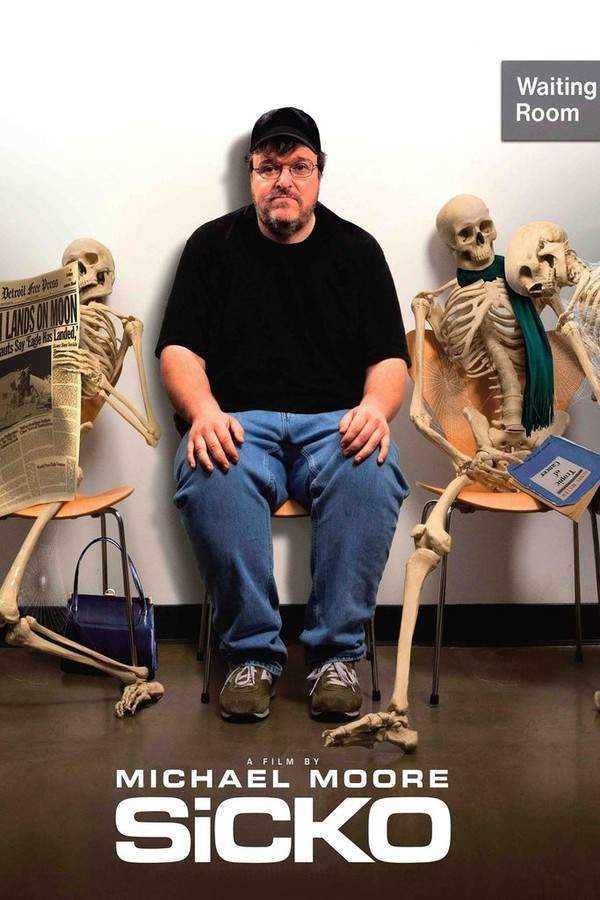
Sicko (2007) movie poster

Timeline

Sicko (2007) Timeline Explained – Every Event in Order

Release, runtime and language
2007 · 123 min · English
Loading streaming availability…
Directed by
Michael Moore
Budget
$9M

Michael Moore’s documentary investigates the flaws within America’s healthcare system and the struggles faced by those without coverage. Through compelling personal stories, the film highlights the difficulties and financial strain experienced by individuals navigating a complex and often inadequate system. Moore contrasts the American experience with the universal healthcare models in Canada, France, and the UK, revealing alternative approaches to providing care for all citizens.

On this page (6)
  1. 1 Where to watch
  2. 2 Events in order (10)
  3. 3 Timeline questions answered
  4. 4 Movie threads
  5. 5 Movies like Sicko
  6. 6 Every angle
Loading streaming availability…

10 events in order · contains spoilers

Sicko Timeline: Events in Chronological Order

Every key event of Sicko (2007) in order, scene by scene, with when and where it takes place. Use it to untangle flashbacks, time jumps and parallel storylines, to refresh your memory before the sequel or to find the exact scene you are thinking of.

  1. Michael Moore's Journey Begins

    Writer and producer Michael Moore embarks on a journey to uncover the harsh realities faced by Americans without access to vital medical treatments. His exploration highlights the struggles and frustrations individuals experience when health care insurance companies prioritize profits over essential services.

  2. The Consequences of Denied Care

    Moore presents heart-wrenching stories of individuals who have faced bankruptcy and even lost loved ones due to the denial of necessary medical treatments. These narratives serve to illustrate the devastating emotional and financial toll inflicted by the insurance industry.

  3. Exploring Universal Health Care

    Shifting his focus, Moore evaluates universal free health care systems in countries like Canada, France, Britain, and Cuba. He contrasts their models with the U.S. system, revealing how these countries successfully prioritize health care access over corporate profits.

  4. Dismantling Fears of Universal Care

    In his examination, Moore addresses the deep-seated fears that have prevented Americans from advocating for universal health care. He counters misconceptions about quality of care and government oversight, demonstrating through examples that such systems can function effectively.

  5. Historical Context of HMOs

    Moore traces the roots of the current health care debate back to the policies of President Richard Nixon. He outlines how Nixon's support for managed care organizations aimed to benefit corporate interests rather than the health needs of the American populace.

  6. The 911 Ground Zero Volunteers

    One poignant segment features Americans who fell ill after volunteering at the 911 Ground Zero site. These individuals, who selflessly helped during a national tragedy, find themselves denied coverage for their subsequent health issues, highlighting a heartbreaking injustice.

    Where
    911 Ground Zero
  7. Trip to Cuba for Medical Care

    In a striking demonstration, Moore takes the sick 911 volunteers to Cuba, where they receive exceptional, free medical treatment. This stark contrast showcases the accessibility and quality of health care abroad, underscoring the failings of the American system.

    Where
    Cuba
  8. Critique of Pharmaceutical Companies

    Through interviews and research, Moore delivers scathing critiques of American health insurance and pharmaceutical companies. He exposes how these entities profit substantially at the expense of public health, emphasizing the ethical dilemmas embedded in the system.

  9. Politicians and Corporate Interests

    The film also scrutinizes politicians who have profited from aligning with corporate interests in the health sector. Moore argues that such alliances have hampered meaningful health care reform, perpetuating a system that benefits a few at the cost of many.

  10. Lessons from Other Nations

    Moore emphasizes the troubling tendency of Americans to overlook successful health care models from other countries. By comparing international systems to the U.S., he calls for a serious reevaluation of the American approach to health care coverage.

Last updated: November 03, 2024 at 21:12

Was this helpful?

Timeline questions answered

Sicko Timeline Explained: Your Questions Answered

When does it happen, and why in that order? The questions people ask about the chronology of Sicko (2007): time jumps, flashbacks, cause and effect between scenes and the correct order of events, each answered with spoilers.

Q1

Why did Nixon support HMOs and managed care organizations?

Nixon supported HMOs as a way to maximize corporate profits in the healthcare industry. Moore traces how Nixon's policies deliberately favored insurance company interests over public health needs, establishing the foundation for the profit-driven system that exists today. This historical context shows how the current healthcare crisis was created by deliberate political choices rather than inevitable market forces.

Foreshadowing: The film sets up this historical context early in Moore's investigation of denied claims and bankruptcies.

  • nixon
  • hmo
  • managed care
  • healthcare policy
  • insurance industry
Q2

Why were 9/11 Ground Zero volunteers denied health coverage?

The 9/11 volunteers who became ill from exposure to toxins at the site were denied coverage by American insurance companies despite their service during the national emergency. Their denied claims illustrate how the insurance industry prioritizes profit over recognition of genuine health needs, even for heroes who served during a disaster.

Foreshadowing: This story serves as a devastating example of the consequences established in earlier segments about denied care.

  • 911 volunteers
  • ground zero
  • denied coverage
  • health insurance denial
Q3

How does Cuba provide free healthcare for American patients?

Cuba offers universal free healthcare through a government-funded system that prioritizes preventive care and accessibility over profit. When Moore brought the sick 9/11 volunteers to Cuba, they received comprehensive treatment at no cost, demonstrating that the country successfully maintains a healthcare system centered on patient welfare rather than financial gain.

Foreshadowing: Moore builds toward this solution after showing the failures of the American system.

  • cuba healthcare
  • free healthcare
  • universal care
  • medical treatment abroad
Q4

Why do health insurance companies deny necessary medical treatments?

Insurance companies deny treatments because their primary obligation is to shareholders, not patients. Moore presents cases where insurers refused to cover life-saving procedures, demonstrating how profit motives directly lead to denied care, bankruptcy, and in some cases, preventable deaths.

Foreshadowing: The film opens with these denial stories to establish the human cost of the system.

  • insurance denial
  • denied treatment
  • claim rejection
  • profit over patients
Q5

What fears prevent Americans from supporting universal healthcare?

Moore addresses common fears about universal healthcare including concerns about reduced quality of care, lower doctor salaries, and excessive government oversight. Through examples from Canada, France, Britain, and Cuba, he demonstrates these fears are largely unfounded, as these countries maintain high-quality care with satisfied medical professionals.

Foreshadowing: This section directly counters the propaganda discussed earlier in the film.

  • universal healthcare fears
  • socialized medicine
  • healthcare reform
  • public option
Q6

What happens to Americans who cannot afford medical treatment?

Americans who cannot afford treatment often face bankruptcy from medical bills or, worse, suffer preventable deaths. Moore presents heartbreaking stories of individuals who lost loved ones because insurance companies refused to cover necessary care, illustrating the life-or-death consequences of the profit-driven system.

Foreshadowing: These tragic stories open the film and establish the stakes of the investigation.

  • medical bankruptcy
  • unaffordable treatment
  • death due to denial
  • healthcare costs
Q7

How do Canada, France, and Britain provide universal healthcare?

These countries fund healthcare through taxes and government programs that prioritize access over profit. Moore shows how their systems cover all citizens regardless of income, maintain quality care, and often produce better health outcomes than the United States at a fraction of the cost.

Foreshadowing: Moore uses these comparisons throughout the film to illustrate viable alternatives.

  • canada healthcare
  • france healthcare
  • britain healthcare
  • universal coverage comparison
Q8

Why is healthcare more expensive in the United States than other countries?

Healthcare costs more in the United States because insurance companies, pharmaceutical firms, and healthcare administrators add profit margins and administrative overhead that don't exist in single-payer systems. The lack of government negotiation on prices allows medical costs to spiral beyond what citizens in other developed nations pay.

Foreshadowing: This explains why the American system costs more while covering fewer people.

  • healthcare costs
  • medical prices
  • insurance profit
  • pharmaceutical pricing
Q9

Why do politicians protect insurance company interests over healthcare reform?

Politicians protect insurance company interests because these corporations pour massive amounts of money into political campaigns and lobbying. Moore shows how lawmakers who accept campaign contributions from health industry donors consistently block meaningful healthcare reform, prioritizing their corporate benefactors over constituent needs.

Foreshadowing: This political corruption is revealed as a main obstacle to reform throughout the film.

  • political lobbying
  • campaign contributions
  • healthcare legislation
  • corporate influence
Q10

How do pharmaceutical companies profit from the American healthcare system?

Pharmaceutical companies charge significantly higher prices for medications in the United States than they do in other countries, where governments negotiate drug prices. This disparity allows pharmaceutical companies to reap enormous profits while many Americans cannot afford essential medications.

Foreshadowing: Moore highlights this profit-seeking as a key component of the broken system.

  • drug prices
  • pharmaceutical profit
  • medication costs
  • insulin prices
Q11

What solutions does the film present for America's healthcare problems?

The film presents universal healthcare systems in Canada, France, Britain, and Cuba as proven alternatives to America's profit-driven model. These countries demonstrate that government-funded healthcare can provide better outcomes at lower costs, offering a clear path to reform if Americans choose to learn from other nations.

Foreshadowing: The hopeful ending emphasizes that viable solutions already exist.

  • healthcare reform solutions
  • universal healthcare alternatives
  • lessons from other countries

Movie threads

More Movies Like Sicko, by Mood & Story

Curated lists built around what makes Sicko tick: the same mood, the same kind of story or the same emotional payoff. Each list explains why these movies belong together.

Righteous Outrage Documentaries like Sicko

Films that channel anger into a powerful, compassionate call for systemic change. If you were moved by the investigative power and moral urgency of Sicko, explore more documentaries like it. These films tackle pressing social issues with a similar blend of outrage, compassion, and a clear argument for change, offering a powerful viewing experience.

  • urgent
  • outraged
  • compassionate
  • investigative
  • critical
  • sobering
  • Tone: dark, critical, hopeful
  • Pacing: steady, investigative
Why these movies?

The story pattern: These films typically follow an investigative structure, starting with a clear problem statement illustrated by human suffering. They systematically deconstruct the causes, often contrasting the failing system with working alternatives, building towards a hopeful conclusion that change is not only necessary but achievable.

Why they belong together: Movies in this thread share a high emotional weight, a dark yet hopeful tone, and a steady, methodical pacing. They are united by their purpose: to inform, outrage, and inspire action on critical social and political issues.
Movies about Hopeful System Critique like Sicko

Stories that expose deep flaws in society while arguing a better way is possible. For viewers who appreciated Sicko's balance of harsh critique with a hopeful vision, this section highlights similar stories. These films and dramas explore broken systems with a compassionate eye, arguing that understanding the problem is the first step toward building a better solution.

  • critical
  • compassionate
  • sobering
  • hopeful
  • righteous
  • urgent
  • Tone: dark, sobering, hopeful
  • Pacing: steady, methodical
Why these movies?

The story pattern: The narrative pattern involves a deep dive into a complex, flawed system, highlighting its human cost through empathetic character journeys. The conflict is not just personal but ideological, pitting individuals against impersonal institutions. The resolution often comes from discovering or proposing alternative models, providing a sense of possibility rather than defeat.

Why they belong together: These films are grouped by their unique tonal blend: a dark, heavy examination of serious problems paired with a ultimately hopeful or happy ending feel. They share a straightforward complexity in presenting their argument and a steady pacing that allows the message to resonate.

If you liked this

Movies Like Sicko

Similar movies to Sicko: the same genre, themes or kind of story. Each one comes with its own plot summary, timeline and ending explained.

Browse all movie summaries

Every angle

Sicko (2007) Explained: Plot, Timeline & Characters

Everything about Sicko in one place: what happens in the plot summary, the timeline in chronological order, the characters and meaning and a spoiler-free summary. What's After the Movie adds the cast, box office and post-credit scenes.

Coming soon on iOS and Android

The Plot Explained Movie Summary App

Plot summaries, endings explained and timelines on your phone. Catch up on any movie in minutes, save your favorites and never miss a twist again.

Be the first to know when we launch. Your email stays private, always.

Learn more about the app