Year: 2009
Runtime: 85 min
Language: English
Directors: Emily Kunstler, Sarah Kunstler
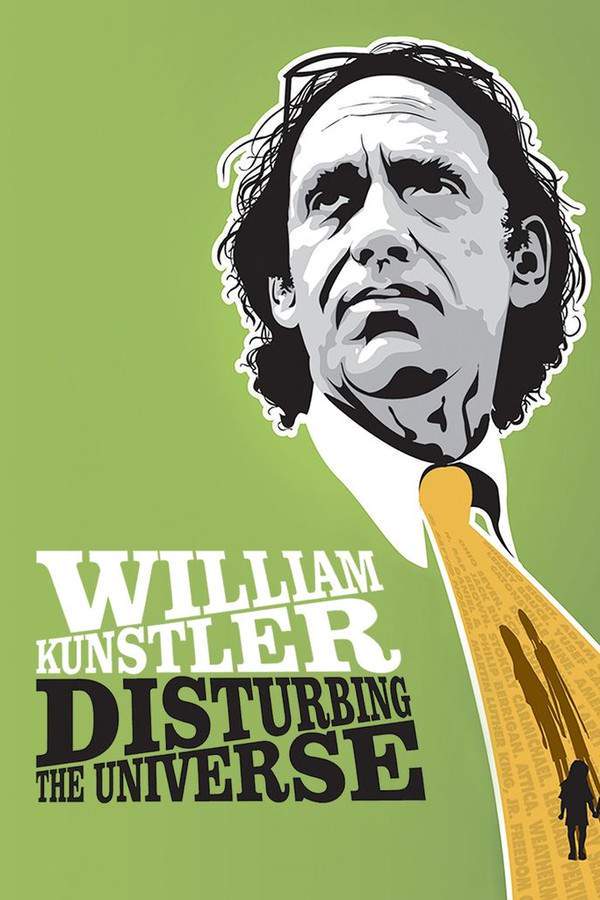
This film presents a revealing portrait of William Kunstler, as seen through the eyes of his daughters, Emily and Sarah Kunstler. The documentary explores the life of this controversial and passionate lawyer, known for his unwavering commitment to social justice. He worked closely with Martin Luther King Jr. and famously defended the "Chicago 8," challenging government policies and advocating for those marginalized by society. The film examines his career and the impact he had on the legal landscape.
Find where to stream, rent, or buy William Kunstler: Disturbing the Universe (2009) in the US with current JustWatch availability, up-to-date pricing, and platform listings for subscription, rental, and digital purchase options.
Warning: spoilers below!
Haven’t seen William Kunstler: Disturbing the Universe yet? This summary contains major spoilers. Bookmark the page, watch the movie, and come back for the full breakdown. If you're ready, scroll on and relive the story!
Read the complete plot breakdown of William Kunstler: Disturbing the Universe (2009), including all key story events, major twists, and the ending explained in detail. Discover what really happened, and what it all means.
William Kunstler was a prominent lawyer in the 20th Century, known for his unwavering fight for civil rights alongside figures like Martin Luther King Jr. He took on the case of the Chicago 8, who were charged for protesting the Vietnam War, showcasing his commitment to justice. When the inmates in Attica prison staged a takeover, or when Native Americans stood up against federal authority at Wounded Knee, they sought out Kunstler as their legal defender. To his daughters, Emily and Sarah, he was a legendary figure, a father who stood at the forefront of significant societal events.
However, by the time the girls were born in the late 1970s, Kunstler was no longer in his prime. The father they knew had already entered into murky waters, being photographed kissing a Mafia client and defending actions he considered politically motivated assassinations. His controversial clientele included an Islamic fundamentalist charged with the murder of a rabbi, a terrorist implicated in the World Trade Center bombing, and a young man accused of a brutal gang rape. As Kunstler passed away in 1995, both Emily and Sarah began to feel that he had strayed from ideals worth fighting for, transforming from an idol into a seemingly embattled and isolated man.
The documentary Disturbing the Universe: Radical Lawyer William Kunstler, directed by his daughters, delves into their father’s dramatic evolution from a conventional family man to a courageous figure willing to risk everything for his beliefs. Kunstler’s journey took a pivotal turn in the 1960s when he, a 40-year-old attorney with a steady practice in estate and divorce law, decided to leave his suburban life to immerse himself in the civil rights movement.
His rise to international recognition came swiftly when he chose to defend the Chicago 8, individuals facing charges for inciting riots at the 1968 Democratic National Convention. In an audacious act, he challenged the judicial process, putting the Vietnam War and the issue of American racism under scrutiny. However, this trial altered Kunstler’s perception; he transitioned from viewing the law as a tool for justice to recognizing it as a means for those in power to maintain control over society.
Kunstler’s firsthand experiences at Attica Prison during the 1971 rebellion solidified this revelation. As an observer for the inmates, he witnessed the tragic aftermath of a violent state assault that resulted in the deaths of 29 inmates and 9 hostages, alongside hundreds of injuries. The film presents archival footage that captures the brutality of the incident, addressing both the harshness of the state’s actions and ongoing debates about Kunstler’s role, with some arguing that he only fueled the inmates’ unrealistic hopes of amnesty.
Through a combination of interviews and historical footage, the documentary portrays divergent opinions about Kunstler’s influence—some accused him, while others credited him with saving lives. Although his numerous high-profile trials and victories bolstered his confidence as a skilled and passionate lawyer, he struggled to balance his professional life with fatherhood. His daughters, concerned for their father’s reputation, urged him against defending Yusef Salaam, a black teenager wrongfully accused in a notorious case. The media demonized him, branding him a monster, only for the narrative to shift years later when Salaam, now an innocent man, was exonerated after DNA evidence proved his innocence.
In Kunstler’s own words during the Chicago 8 trial, > “I suspect that more people have gone to their deaths through a legal system than through all the illegalities in the history of man: 6 million people in Europe during the Third Reich. Legal. Sacco and Vanzetti. Legal. The hundreds of great trials throughout the South where black men were condemned to death. All legal. Jesus. Legal. Socrates. Legal. …All tyrants learn that it is far better to do this thing through some semblance of legality than to do it without that pretense.”
The essence of the film underscores Kunstler’s resolve to prioritize justice over mere legalities, defending those cast aside by society simply because they required advocacy the most, all while skillfully maintaining media attention. Ultimately, Emily and Sarah conclude their exploration of Kunstler’s multidimensional character, weaving together his complex legacy into a relatable and human narrative.
Last updated: October 25, 2024 at 11:34
Explore frequently asked questions about William Kunstler: Disturbing the Universe (2009) with spoiler-rich answers covering the full plot summary, major story beats, character motivations, hidden details, and ending meaning. This movie summary FAQ helps explain confusing scenes, plot twists, and narrative decisions in clear, searchable detail.
Kunstler took on the Chicago 8 case in 1968 because he believed the charges against them were unjust. The group was accused of inciting riots during the 1968 Democratic National Convention protests against the Vietnam War. Kunstler saw the trial as an opportunity to challenge the government's prosecution and put the Vietnam War and American racism on trial. This case marked his transition from a conventional estate and divorce lawyer to a nationally known civil rights attorney willing to risk his career for controversial defendants.
Earlier in his career, Kunstler had grown dissatisfied with the limitations of practicing standard family law and felt compelled to address broader societal injustices.
In 1971, Kunstler went to Attica Prison as an observer during the inmate rebellion, where prisoners demanded better conditions and human treatment. The state violently cracked down, resulting in 29 inmates and 9 hostages dead, with hundreds injured. This experience profoundly changed Kunstler. He witnessed the brutal reality of state violence and came to see the law not as a tool for justice but as a mechanism by which those in power maintain control over marginalized people. Some credited him with saving lives, while others argued he fueled unrealistic hopes of amnesty among the inmates.
The Chicago 8 trial had already begun shaping Kunstler's skepticism of the judicial system as a neutral force.
Kunstler believed that everyone deserved a legal defense, regardless of how heinous the accusations against them. He argued that the legal system often convicts innocent people through so-called legal proceedings, pointing to instances like the Holocaust, Sacco and Vanzetti, and racist Southern trials as examples. To him, defending those society deemed monstrous was precisely when a lawyer was most needed. His philosophy prioritized justice over public opinion, though this approach increasingly isolated him from his daughters and the broader public.
His experience at Attica hardened his view that the law could be used as a tool of oppression.
Kunstler defended Yusef Salaam, a Black teenager wrongfully accused in a notorious gang rape case. The media heavily criticized Kunstler for taking the case, branding him a monster for representing Salaam. However, years later, DNA evidence exonerated Salaam, proving his innocence and vindicating Kunstler's decision to defend him. The case became an example of how public outrage and media bias could lead to wrongful convictions, and why Kunstler believed controversial defenses were sometimes most necessary.
Earlier in his career, Kunstler had already faced intense public criticism for defending the Chicago 8.
Emily and Sarah Kunstler created this documentary because they struggled to reconcile the father they knew, a controversial, often absent figure who defended people society vilified, with the legendary civil rights lawyer remembered by the public. By the time he died in 1995, they felt he had strayed from the ideals worth fighting for. The film was their attempt to understand his choices, examine his complex legacy, and present him as a multidimensional human being rather than either a hero or a villain.
Their concerns about his reputation were evident when they urged him not to defend Yusef Salaam.
During the Chicago 8 trial, Kunstler argued that the legal system has been used throughout history to legitimize oppression. He cited examples like the Holocaust in Europe, the execution of Sacco and Vanzetti, and countless racist death penalty sentences in the American South, all carried out through legal procedures. His point was that tyranny often operates more effectively through seemingly legitimate courts than through naked violence, making the pursuit of actual justice different from mere adherence to legal processes.
This philosophy crystallized after his experiences defending protesters and witnessing the Attica rebellion.
In 1973, when Native Americans occupied Wounded Knee in South Dakota to protest federal policies and demand better treatment, they sought Kunstler as their legal defender. He represented them against federal authorities during this historic confrontation. This case further established his reputation as a lawyer willing to take on marginalized groups fighting against government power, joining his earlier work with civil rights activists and his later defense of the Chicago 8.
His involvement in the civil rights movement had positioned him as a go-to lawyer for groups facing federal opposition.
By the time Kunstler's daughters were born in the late 1970s, his public image had shifted significantly from the celebrated civil rights hero. One particularly damaging moment was when he was photographed kissing a Mafia client, a visual that contradicted the noble image his daughters had expected from a civil rights champion. This image, along with his defense of clients like an Islamic fundamentalist charged with killing a rabbi and a terrorist in the World Trade Center bombing, contributed to his transformation in public perception from hero to a more controversial and isolated figure.
This incident occurred during the period when Kunstler's legal philosophy had shifted toward defending anyone he believed needed advocacy most.
Early in his career, Kunstler viewed the law as a tool for achieving justice. However, his experiences, especially defending the Chicago 8 and witnessing the Attica rebellion, fundamentally changed this perspective. He came to see legal systems as instruments that powerful interests use to maintain control over marginalized populations. This shift enabled him to represent clients others considered indefensible, as he believed the real injustice often lay in the system itself rather than in the individuals charged.
His decision to defend the Chicago 8 was the pivotal moment that began this transformation.
Kunstler's controversial career created significant tension with his daughters Emily and Sarah. They grew up watching their father defend people the media demonized, and they often worried about his reputation. At one point, they directly urged him not to defend Yusef Salaam, hoping to protect his legacy. Their relationship was complicated by his absence and the moral complexity of his choices. The documentary itself represents their attempt to understand and ultimately forgive the father they both loved and struggled to comprehend.
The documentary's creation was driven by the daughters' need to reconcile their personal memories with their father's public life.
Discover curated groups of movies connected by mood, themes, and story style. Browse collections built around emotion, atmosphere, and narrative focus to easily find films that match what you feel like watching right now.
Intimate portraits of controversial figures that challenge our easy judgments.Movies like 'William Kunstler: Disturbing the Universe' that examine the difficult lives of controversial historical figures. If you liked this documentary's critical and personal look at a complex legacy, you'll find similar films here exploring figures whose impact is still debated.
These stories typically follow a biographical structure, often through the eyes of family, colleagues, or the subjects themselves. They build a case by presenting both achievements and failings, culminating in a reflective state where the definitive 'truth' about the person remains elusive and open to interpretation.
These films are grouped by their shared goal of critically examining a life without offering simple answers. They share a heavy emotional weight, a dark or bittersweet tone, and a focus on the gray areas of morality and activism that prevent a neat, satisfying conclusion.
Gripping investigative journeys into the flaws of powerful institutions.If you were moved by the critical look at the legal system in 'William Kunstler: Disturbing the Universe', explore similar movies here. These films uncover injustices and challenge authority, sharing a dark tone, heavy emotional weight, and a focus on civil rights and activism.
The narrative pattern involves uncovering a deep-seated problem within a system, often through the journey of an activist, journalist, or lawyer. The story methodically presents evidence and personal testimony, building a case against the institution in question. The ending is often sobering, highlighting the ongoing nature of the struggle rather than a tidy resolution.
They are united by a shared purpose: to critically interrogate power and document the fight for justice. They create a similar viewing experience marked by a dark tone, high intensity due to high-stakes subject matter, and a heavy emotional weight that comes from confronting difficult truths.
Don't stop at just watching - explore William Kunstler: Disturbing the Universe in full detail. From the complete plot summary and scene-by-scene timeline to character breakdowns, thematic analysis, and a deep dive into the ending - every page helps you truly understand what William Kunstler: Disturbing the Universe is all about. Plus, discover what's next after the movie.
Track the full timeline of William Kunstler: Disturbing the Universe with every major event arranged chronologically. Perfect for decoding non-linear storytelling, flashbacks, or parallel narratives with a clear scene-by-scene breakdown.
Discover the characters, locations, and core themes that shape William Kunstler: Disturbing the Universe. Get insights into symbolic elements, setting significance, and deeper narrative meaning - ideal for thematic analysis and movie breakdowns.
Get a quick, spoiler-free overview of William Kunstler: Disturbing the Universe that covers the main plot points and key details without revealing any major twists or spoilers. Perfect for those who want to know what to expect before diving in.
Discover movies like William Kunstler: Disturbing the Universe that share similar genres, themes, and storytelling elements. Whether you’re drawn to the atmosphere, character arcs, or plot structure, these curated recommendations will help you explore more films you’ll love.
William Kunstler: Disturbing the Universe (2009) Scene-by-Scene Movie Timeline
William Kunstler: Disturbing the Universe (2009) Movie Characters, Themes & Settings
William Kunstler: Disturbing the Universe (2009) Spoiler-Free Summary & Key Flow
Movies Like William Kunstler: Disturbing the Universe – Similar Titles You’ll Enjoy
King in the Wilderness (2018) Film Overview & Timeline
The Trial of the Chicago 7 (2020) Full Movie Breakdown
MLK/FBI (2021) Story Summary & Characters
American Radical: The Trials of Norman Finkelstein (2010) Film Overview & Timeline
Who Gets to Call It Art? (2006) Plot Summary & Ending Explained
Strange Culture (2007) Full Movie Breakdown
Trudell (2006) Story Summary & Characters
The Untold Story of Emmett Louis Till (2005) Full Movie Breakdown
Killing Kasztner (2009) Film Overview & Timeline
I Am MLK Jr. (2018) Film Overview & Timeline
Citizen King (2004) Movie Recap & Themes
Warrior: The Life of Leonard Peltier (1991) Full Movie Breakdown
In the King of Prussia (1983) Complete Plot Breakdown
In the King of Prussia (1983) Plot Summary & Ending Explained
Troublemakers (1966) Plot Summary & Ending Explained