Year: 2023
Runtime: 90 mins
Language: English
Director: Bat Dor Ojalvo
This film offers a rare glimpse into one of Israel’s most secluded Hasidic communities. It explores the scandal that arose following the death of the rabbi who founded and led the community. The story delves into the complexities of faith, power, and secrets within this close-knit and traditionally observant group, revealing a surprising criminal element.
Find where to stream, rent, or buy In the Name of the Father (2023) in the US with current JustWatch availability, up-to-date pricing, and platform listings for subscription, rental, and digital purchase options.
Warning: spoilers below!
Haven’t seen In the Name of the Father yet? This summary contains major spoilers. Bookmark the page, watch the movie, and come back for the full breakdown. If you're ready, scroll on and relive the story!
Read the complete plot breakdown of In the Name of the Father (2023), including all key story events, major twists, and the ending explained in detail. Discover what really happened, and what it all means.
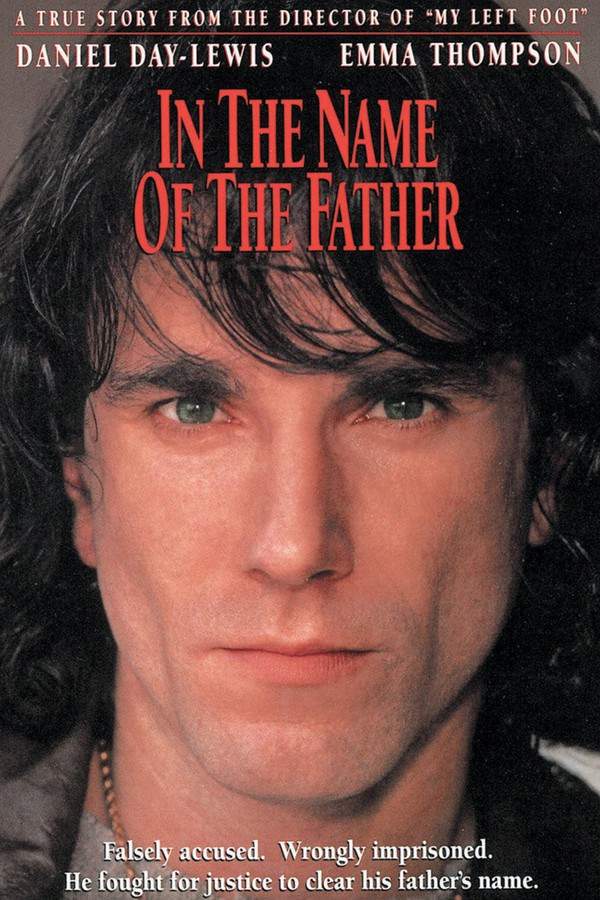
In a stark, restrained drama set against the Troubles-era backdrop of Britain, the narrative follows Gerry Conlon as he becomes enmeshed in a case of catastrophic injustice. The film opens with a grievous mix of mistaken identity and fear: Gerry is misidentified by British security forces as an IRA sniper, sparking a relentless pursuit that crescendos into a riot. To avert an IRA reprisal against him, Gerry is sent from Belfast to London by his father, Giuseppe, a move that sets the stage for a case that will unfold with devastating consequences for their family.
One night, a desperate act lands Gerry in deeper trouble: he breaks into a prostitute’s flat and steals £700. The sequence that follows pulls Gerry into a web of marginal lives—his friend Paul Hill, and a homeless Irishman named Charlie Burke—who share a moment of risk in a park where they use drugs. The Guildford bombing of Guildford soon erupts in the background: four off-duty soldiers and a civilian are killed, and many are wounded. This atrocity becomes the catalyst that drives Gerry back to Belfast, where the authorities seize him on terrorism charges.
Gerry is flown to England, where he, Paul Hill, and two others are branded the Guildford Four. From the outset, the interrogation is marked by coercive pressure, and the suspects are subjected to harsh methods that many would later describe as torture. Gerry vehemently asserts his innocence, yet under the threat of violence toward his father, he signs a confession. The consequence ripples through the Conlon family: Giuseppe is arrested as part of the broader Maguire Seven inquiry. Although Gerry’s defense highlights numerous inconsistencies in the police investigation, the courtroom decision follows a familiar pattern of conviction, and the Guildford Four receive life sentences.
Behind the walls of prison, the story takes a sharper turn. A new inmate, Joe McAndrew, reveals a troubling truth: he was the actual bomber, and he had confessed to the police. The authorities apparently withheld this crucial information in an effort to preserve their narrative and “save face.” The relationship between Gerry and Joe becomes complicated; Gerry’s opinion wavers when Joe escalates a riot by setting a prison guard on fire, an act that hardens Gerry’s mistrust even as new truths begin to surface.
Giuseppe’s death in custody from tuberculosis compounds the family tragedy, and Gerry inherits the long, patient campaign for justice that his father began. Giuseppe’s lawyer, Gareth Peirce, intensifies efforts and uncovers vital new evidence about Gerry’s alibi. A note attached to this evidence reads, “Not to be shown to the defence,” underscoring the procedural failure at the heart of the case. A court appeal, driven by a testimony from Charlie Burke, finally exonerates Gerry and the others, exposing the deep flaws in the original investigation.
The film closes with an unflinching epilogue that traces the ongoing lives of the wrongfully accused and documents the aftermath of the inquiry. The police who investigated the Guildford bombing are never prosecuted, and Giuseppe Conlon is laid to rest in Milltown Cemetery in Belfast. The real perpetrators of the Guildford bombing—despite the mounting evidence—have never been charged, leaving a solemn note about accountability and the limits of justice in a system under stress. Through its careful, unflinching narration, the film portrays how a single misjudgment can cascade into years of imprisonment and family hardship, while also honoring those who fight to overturn a devastating error.
Last updated: October 01, 2025 at 10:22
Explore frequently asked questions about In the Name of the Father (2023) with spoiler-rich answers covering the full plot summary, major story beats, character motivations, hidden details, and ending meaning. This movie summary FAQ helps explain confusing scenes, plot twists, and narrative decisions in clear, searchable detail.
Giuseppe Conlon sent Gerry to London to prevent an IRA reprisal against the family. After Gerry was mistaken for an IRA sniper in Belfast, the family faced danger from both British security forces and potential IRA retaliation. The move was intended to protect Gerry from the escalating violence in Belfast during the Troubles.
Earlier in the film, Gerry's misidentification as an IRA sniper creates the initial conflict that forces his relocation.
Gerry signed a confession under extreme coercion. During interrogation, he was threatened that his father Giuseppe would be harmed if he didn't cooperate. This psychological pressure, combined with the harsh torture-like methods used by authorities, led Gerry to sign a false confession to protect his father.
The interrogation scene establishes early that authorities prioritized obtaining a confession over finding the truth.
Joe McAndrew, a new inmate in prison, revealed to Gerry Conlon that he was the actual bomber of the Guildford pub. McAndrew claimed he had already confessed to the police, but authorities withheld this crucial information to avoid admitting their mistake and to preserve their narrative.
The film hints early at police misconduct when inconsistencies in the investigation are raised during the trial.
Giuseppe Conlon was arrested as part of the broader Maguire Seven inquiry, which was an extension of the Guildford Four case. Even though there was no direct evidence linking him to the bombing, he was swept up in the widespread arrests that followed the explosion, convicted on circumstantial evidence and association.
The arrest of family members foreshadows how the wrongful conviction affected not just Gerry but his entire family.
Gareth Peirce, Giuseppe's lawyer, discovered vital evidence related to Gerry's alibi that proved he was not at the Guildford pub on the night of the bombing. Crucially, a note attached to this evidence read 'Not to be shown to the defence,' revealing that authorities deliberately suppressed exculpatory information that could have exonerated the accused.
The trial scene earlier highlights numerous inconsistencies that hint at a flawed investigation.
Despite the wrongful convictions being overturned and the miscarriage of justice exposed, the police officers involved in the original investigation were never prosecuted. The film depicts this as a systemic failure where those responsible for the injustice faced no accountability, even after the truth emerged.
The film's ending explicitly highlights this lack of accountability as a central theme.
Charlie Burke, who was with Gerry in the park on the night of the Guildford bombing, provided crucial testimony during the appeal. His statement confirmed Gerry's whereabouts that night, supporting the alibi evidence that had been suppressed during the original trial. This testimony was pivotal in overturning the convictions.
Earlier scenes show Charlie Burke with Gerry in the park, establishing their connection before its legal significance becomes clear.
During a prison riot, Joe McAndrew set a hated prison guard on fire, an act that escalated the violence significantly. This violent outburst complicated Gerry's view of Joe, as Gerry had initially hoped Joe might help prove his innocence. The incident made Gerry more distrustful of Joe's intentions and motivations.
This event tests the moral complexity of seeking truth within a corrupt system.
Giuseppe Conlon died in prison from tuberculosis, having contracted the disease while incarcerated. His death represented a devastating consequence of the wrongful imprisonment, as he never lived to see his son's exoneration. Gerry inherited his father's fight for justice after Giuseppe's death.
The film earlier shows the harsh prison conditions that would contribute to Giuseppe's declining health.
Despite Joe McAndrew's confession and other evidence emerging, the actual bombers of the Guildford pub were never charged. The authorities chose not to pursue charges against the real perpetrators, leaving the bombing unresolved and the victims without justice. This reflects the film's critique of systemic failure and priority placed on protecting institutional reputation over truth.
The suppressed evidence and withheld confessions hint at this institutional cover-up throughout the film.
Discover curated groups of movies connected by mood, themes, and story style. Browse collections built around emotion, atmosphere, and narrative focus to easily find films that match what you feel like watching right now.
Documentaries exposing systemic failures and the human cost of institutional corruption.If you were gripped by the institutional failure in 'In the Name of the Father', explore more documentaries and dramas about systemic corruption and miscarriages of justice. These movies share a dark tone, heavy emotional weight, and a focus on the long, hard fight for truth against a powerful system.
Stories in this thread typically begin with a profound injustice—a wrongful conviction, a covered-up crime, or an abuse of power. The narrative follows the victim's struggle against a monolithic institution, filled with tense confrontations, legal battles, and personal suffering. The journey is arduous, often ending with a partial victory that is tainted by the lasting scars of the ordeal.
Movies are grouped here because they share a core theme of fighting a powerful, corrupt system. They create a similar viewing experience characterized by feelings of righteous anger, frustration, and empathy for those wronged. The tone is consistently dark and somber, with a steady pacing that allows the weight of the injustice to fully sink in.
Revealing the hidden scandals and power dynamics within insulated societies.If you found the exploration of a secluded Hasidic community in 'In the Name of the Father' compelling, you'll appreciate these other films that delve into the hidden worlds of insular groups. These stories uncover scandal, power struggles, and the complex relationship between faith, tradition, and human frailty.
The narrative pattern involves an external event or internal revelation that cracks the facade of a seemingly harmonious, closed community. The story delves into the power structures, unspoken rules, and personal sacrifices required to maintain order. Conflict arises as individuals challenge authority or secrets come to light, leading to a crisis that forces the community to confront its own contradictions.
These films are grouped together because they share a specific setting and thematic focus: the inner workings of a secluded world. They create a similar mood of oppressive tension and somber revelation, often with a steady, observational pacing that makes the unfolding drama feel both intimate and profound.
Don't stop at just watching - explore In the Name of the Father in full detail. From the complete plot summary and scene-by-scene timeline to character breakdowns, thematic analysis, and a deep dive into the ending - every page helps you truly understand what In the Name of the Father is all about. Plus, discover what's next after the movie.
Track the full timeline of In the Name of the Father with every major event arranged chronologically. Perfect for decoding non-linear storytelling, flashbacks, or parallel narratives with a clear scene-by-scene breakdown.
Discover the characters, locations, and core themes that shape In the Name of the Father. Get insights into symbolic elements, setting significance, and deeper narrative meaning - ideal for thematic analysis and movie breakdowns.
Discover movies like In the Name of the Father that share similar genres, themes, and storytelling elements. Whether you’re drawn to the atmosphere, character arcs, or plot structure, these curated recommendations will help you explore more films you’ll love.
In the Name of the Father (2023) Scene-by-Scene Movie Timeline
In the Name of the Father (2023) Movie Characters, Themes & Settings
In the Name of the Father (2023) Spoiler-Free Summary & Key Flow
Movies Like In the Name of the Father – Similar Titles You’ll Enjoy
Our Father (2022) Spoiler-Packed Plot Recap
In the Name of the Father (1993) Full Movie Breakdown
Trembling Before G-d (2001) Detailed Story Recap
Defamation (2009) Full Summary & Key Details
Hiding and Seeking: Faith and Tolerance After the Holocaust (2004) Full Movie Breakdown
Menashe (2017) Movie Recap & Themes
One of Us (2017) Movie Recap & Themes
Show Me the Father (2021) Story Summary & Characters
Sabbath Queen (2024) Story Summary & Characters
M (2018) Story Summary & Characters
In the Name of the Father (2002) Plot Summary & Ending Explained
Hiding and Seeking (2004) Full Summary & Key Details
My Father My Lord (2007) Plot Summary & Ending Explained
The Forgotten Ones (2021) Ending Explained & Film Insights
A Life Apart: Hasidism in America (1997) Ending Explained & Film Insights