Plot Explained Spoilers guaranteed!
Plot Explained

Browse by genre

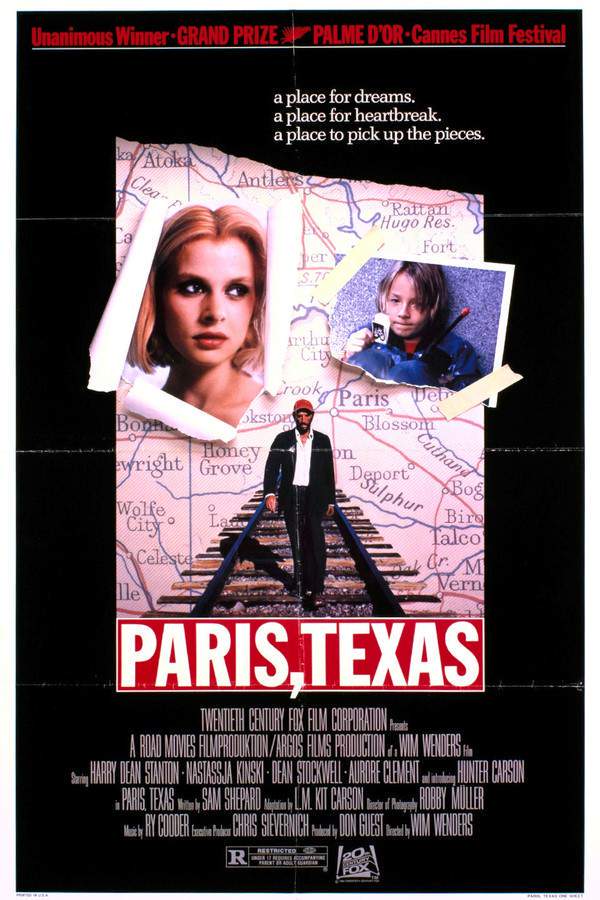
Paris, Texas (1984) movie poster

Plot Summary

Paris, Texas (1984) Plot Summary Explained

Release, runtime and language
1984 · 145 min · English
Loading streaming availability…
Directed by
Wim Wenders
Starring
Dean Stockwell, Aurore Clément, Bernhard Wicki, Claresie Mobley, Edward Fayton, Harry Dean Stanton

A man wanders out of the desert, his identity and past lost to him. Known only as Travis Henderson, he’s found by his brother Walt, who attempts to help him recover his memories. As Travis pieces together his past, he confronts the reasons for his disappearance and the impact it had on his family, particularly his young son Hunter and his estranged wife Anne. The journey is a poignant exploration of loss, regret, and the enduring bonds of family.

On this page (6)
  1. 1 Where to watch
  2. 2 What happens: full plot
  3. 3 Plot questions answered
  4. 4 Movie threads
  5. 5 Movies like Paris, Texas
  6. 6 Every angle
Loading streaming availability…

Full plot summary · contains spoilers

What Happens in Paris, Texas: Full Plot Summary

The whole story of Paris, Texas (1984) explained, from the opening scene to the final frame: every key event, every twist and what it all adds up to. Read it as a quick recap before the sequel, to check a scene you missed, or to finally understand what really happened.

The film begins with expansive visuals of the desolate Texas desert, showcasing a man wandering through the unforgiving terrain. This man stumbles into a dilapidated bar and collapses from exhaustion. The next day, a doctor treating the mute traveler contacts his family, specifically his brother Walt, suggesting he come to collect his ailing sibling. As Walt sets out from Los Angeles to fetch Travis, the wanderer silently continues his aimless trek across the barren landscape. Eventually, Walt locates Travis in South Texas and informs his brother about their journey back to Southern California. Despite Travis's silence, Walt reflects on how he hasn't heard from Travis in four long years.

Their journey begins at a motel, although Travis once again vanishes when left alone. Walt manages to track him down not far from the motel, ultimately persuading him to return to the car. At a diner, Walt presses Travis with questions about his long disappearance and the son, Hunter, he left behind when he was just three years old. This revelation visibly strikes a chord with Travis, as he sheds tears, yet remains unable to articulate a response. The next day's trip continues, with Travis finally breaking his silence to reveal a faded photograph of a vacant lot bearing a "For Sale" sign. He tells Walt he has bought this property in Paris, Texas — a location he holds significance, believing it to be where he was conceived.

Despite Walt's curiosity about his brother's new endeavor, he insists that they must return to bring Travis to Hunter. When they arrive, Travis meets Walt's wife, who has taken care of Hunter during Travis's absence. The meeting with Hunter is strained; the boy is understandably timid around the unfamiliar man. To ease the tension, Walt decides to show old home movies that capture heartwarming moments between Travis, Hunter as a baby, and their mother, Jane. That evening, Travis engages in household chores, restless and confused about his role in the home.

The next day, Travis attempts to walk Hunter home from school, only for the boy to shrink away and hop into a friend's car. Later, Hunter expresses to Walt's wife his reluctance to walk home with Travis, but she encourages him to give his father a chance. Travis persists, and eventually, he and Hunter begin walking home together in a growing, silent companionship. As they grow closer, Walt's wife discreetly informs Travis of Jane's ongoing presence in Hunter's life, revealing that she deposits money for him monthly in a bank in Houston, Texas.

Determined to reconnect with Jane, Travis shares his plan with Hunter, who expresses a desire to join his father on the journey. The following day, without notifying Walt or his wife, the duo sets out for Texas. Once they’ve distanced themselves enough, Hunter calls home to inform his caregivers about their departure, leaving Walt and his wife devastated but understanding they couldn’t hold onto the boy indefinitely. The journey reinforces the bond between Travis and Hunter, filled with shared experiences, school lessons, and tender moments as they travel together.

They eventually arrive at the bank in Houston on the scheduled deposit day and split up, armed with walkie-talkies, to spot Jane's car. When Hunter finally identifies her vehicle, Travis enters a nearby establishment that turns out to be a peep-show parlor. Shocked, he requests to see a blonde, hoping it might be Jane. His encounter with Jane is filled with silent confusion, culminating in his inability to speak. After returning to the car with an angry yet vague explanation, Travis's frustrations surface at a bar where he drinks, growing irritable as Hunter expresses his dislike for this new side of his father.

The following day, Travis drops Hunter off at a hotel, instructing him to wait while he takes another trip to see Jane. In a room designed for observational intimacy, Travis recounts the story of a "man" and a "girl" who fell in love, had a child, and faced a turbulent relationship. As the tale unfolds, the realization dawns on Jane as she recognizes the truth of their past. Tears stream down her face as Travis reveals that Hunter is waiting for her in a hotel room. In an emotional climax, Jane agrees to reunite with her son, leading to the poignant final scene of her entering the hotel room and embracing Hunter, solidifying the familial connection that had eluded them for years.
Last updated: November 09, 2024 at 11:27

Was this helpful?

Plot questions answered

Paris, Texas Plot Explained: Your Questions Answered

The questions people ask most about Paris, Texas (1984): what happens in the confusing scenes, why the characters do what they do, the twists, hidden details and what the ending means. Each answer contains spoilers.

Q1

Why did Travis leave his family for four years?

Travis disappeared for four years, leaving his wife Jane and young son Hunter. While the exact reasons are never fully explained, his amnesiac state and mute condition upon emerging from the desert suggest a psychological break. The film implies his inability to cope with whatever troubled his marriage and his sense of failure as a husband and father drove him to wander aimlessly through the Texas desert.

Foreshadowing: Walt mentions that Travis hasn't contacted anyone in four years, hinting at a long period of emotional absence before his physical disappearance.

  • travis Henderson
  • disappearance
  • family abandonment
  • amnesiac
Q2

Why does Travis go to a peep-show parlor to find Jane?

Travis tracks Jane to a peep-show parlor in Houston because that's where she works. When he first arrives, he's in shock seeing her in that setting. He asks to see a blonde, hoping it might be her, but becomes too overwhelmed to speak when he realizes it's actually Jane. This painful discovery explains why he was unable to confront her directly and why helater sends Hunter to meet her instead.

Foreshadowing: Walt's wife reveals that Jane has been sending money for Hunter monthly from Houston, establishing she's in the city but disconnected from the family.

  • peep show
  • Houston
  • Jane
  • adult theater
  • finding Jane
Q3

What is the significance of the Paris, Texas lot that Travis buys?

Travis buys a vacant lot in Paris, Texas because he believes it's the place where he was conceived. This property represents his attempt to reclaim something lost, to connect with his own origins and create a tangible legacy for his family. The faded photograph of the "For Sale" sign symbolizes his hope of starting over and rebuilding what he destroyed.

Foreshadowing: The film opens with Travis wandering the Texas desert, suggesting his deep, almost primal connection to the Texas landscape.

  • Paris Texas
  • vacant lot
  • property
  • family legacy
  • origins
Q4

Why does Travis leave at the end after reuniting Jane and Hunter?

Travis departs after facilitating the reunion between Jane and Hunter because he recognizes he cannot be part of their healing. His four-year absence has made him a stranger to his son, and his own emotional wounds are too deep. The bittersweet ending shows him driving away alone into the desert, the same desolate landscape where he started, implying he must continue his own journey of self-understanding before he can truly reconnect with his family.

Foreshadowing: Travis's repeated disappearances throughout the film (leaving the motel, wandering off) establish his pattern of running away from intimate relationships.

  • ending
  • Travis departure
  • self exile
  • desert
  • resolution
Q5

Why is Travis mute when he emerges from the desert?

Travis emerges from the desert unable or unwilling to speak, a condition that persists for much of the film. This muteness appears to be psychological, a manifestation of his trauma, shame, and inability to articulate what he's experienced. His silence reflects his emotional isolation and the weight of secrets he's carrying about his past. He only begins speaking again gradually, and his most emotional revelations come through telling a story rather than directly.

Foreshadowing: The doctor identifies Travis as a mute traveler, confirming this isn't a physical condition but a psychological one.

  • muteness
  • trauma
  • silence
  • psychological break
  • desert
Q6

How does Travis rebuild his bond with his son Hunter?

Travis and Hunter gradually reconnect during their unsanctioned road trip from California to Houston. Travis persists in walking Hunter home from school despite the boy's initial resistance. The journey itself, sharing meals, hotel stays, and the collaborative mission to find Jane, creates opportunities for father-son bonding. The walkie-talkies they use to coordinate at the bank become a symbol of their new communication and partnership.

Foreshadowing: Walt shows home movies of Travis, Hunter as a baby, and Jane together, revealing what once was and setting up the possibility of rebuilding that connection.

  • Hunter
  • father son relationship
  • road trip
  • bonding
  • family reunion
Q7

What does Travis's wandering in the desert represent?

Travis's aimless wandering through the vast Texas desert represents his emotional and psychological state, lost, disconnected, and searching for something he cannot name. The barren landscape mirrors his internal emptiness after abandoning his family. The desert's harshness also symbolizes the difficulty of self-discovery; he must traverse this emptiness before he can begin to understand himself and make amends.

Foreshadowing: The film opens with expansive visuals of the desolate Texas desert, establishing it as the visual and thematic center of the story.

  • desert symbolism
  • wandering
  • emptiness
  • search
  • Texas landscape
Q8

Why does Travis cry at the diner when Walt mentions his son?

At the diner, Walt confronts Travis about leaving his son Hunter when the boy was only three years old. This question deeply affects Travis, causing him to cry for the first time. The tears reveal his buried guilt and grief over abandoning his child. Though he cannot yet speak about his past, his emotional response shows he hasn't lost his capacity for feeling, he's simply unable to express it verbally.

Foreshadowing: This is the first time Travis shows visible emotion, breaking his long silence with tears.

  • diner scene
  • tears
  • guilt
  • Hunter
  • emotional breakdown
Q9

Why does Travis tell Jane their story as a parable about a man and a girl?

In the peep-show room, Travis recounts his and Jane's story by describing it as a man and a girl who fell in love, had a child, and destroyed each other. This distancing technique allows him to finally confront their painful history without the direct blame that might make conversation impossible. When Jane realizes he's describing their actual relationship, she breaks down crying, and Travis reveals that Hunter is waiting for her.

Foreshadowing: Travis's muteness throughout the film builds to this moment where he can finally express his deepest feelings only through metaphor.

  • parable
  • story telling
  • Jane
  • emotional confession
  • peep show room
Q10

Why does Jane send money for Hunter from Houston?

Jane has been depositing money monthly for Hunter in a Houston bank throughout her absence. This reveals that while she left the family, she still feels responsible for her son's welfare. Her financial support represents an unspoken bond she maintained despite living separately and working in the peep-show parlor. It shows she never fully abandoned her maternal role, even from a distance.

Foreshadowing: Walt's wife quietly informs Travis of Jane's ongoing support, setting up the moral complexity of Jane's character.

  • child support
  • Houston bank
  • Jane
  • financial support
  • maternal love
Q11

What does the faded photograph of the For Sale sign represent?

The faded photograph Travis carries shows a vacant lot in Paris, Texas with a For Sale sign, the property he has purchased. The photo's worn condition suggests he's kept it for a long time, possibly throughout his wandering. It represents his hope and his attempt to create something meaningful despite his broken past. The act of buying land is his way of claiming a future and proving he can provide for his family.

Foreshadowing: Travis keeps this photograph hidden until he finally reveals it to Walt, suggesting it's deeply personal and tied to his sense of purpose.

  • faded photograph
  • For Sale sign
  • Paris Texas lot
  • hope
  • property
Q12

What role does Walt play in helping Travis recover his memories?

Walt serves as Travis's caregiver and intermediary throughout the film, making the initial contact with the desert, bringing him home, and facilitating his reintroduction to family. He shows home movies to help Travis remember, encourages Hunter to give his father a chance, and provides patient support despite Travis's difficult behavior. Walt represents loyalty and family commitment, embodying the familial bonds that Travis abandoned.

Foreshadowing: Walt travels from Los Angeles to South Texas specifically to retrieve his brother, showing his dedication from the start.

  • Walt
  • brother
  • caregiver
  • support
  • family bonds

Movie threads

More Movies Like Paris, Texas, by Mood & Story

Curated lists built around what makes Paris, Texas tick: the same mood, the same kind of story or the same emotional payoff. Each list explains why these movies belong together.

Movies about estranged fathers like Paris, Texas

Stories where estranged fathers search for family and a second chance. If you were moved by Travis's search for his family in Paris, Texas, this thread features similar movies about lost fathers seeking redemption. These poignant character studies explore themes of fatherhood, regret, and the difficult road back to those you've left behind.

  • melancholic
  • poignant
  • reflective
  • lonely
  • redemptive
  • quiet
  • Tone: melancholic, poignant, bittersweet
  • Pacing: slow, deliberate, character-focused
Why these movies?

The story pattern: These narratives typically follow a male protagonist, often emotionally damaged or physically distant, as he re-enters the lives of his children or former partner. The plot unfolds slowly, revealing the reasons for his absence and the emotional damage caused. The journey is less about action and more about quiet conversations, unresolved pain, and the bittersweet reality that some wounds never fully heal.

Why they belong together: Movies in this thread are grouped by their shared focus on the paternal redemption arc. They consistently feature a melancholic tone, a slow, reflective pace, and a bittersweet emotional core. The viewing experience is defined by a quiet intensity and a deep exploration of familial fracture and the possibility, however limited, of grace.

Atmospheric movies with a sense of desolation like Paris, Texas

Films where vast, empty settings mirror profound internal loneliness. For viewers who appreciated the haunting desert landscapes and quiet mood of Paris, Texas, this thread collects films where the setting profoundly influences the story. These movies use atmosphere and slow pacing to create a powerful sense of loneliness and reflection.

  • desolate
  • atmospheric
  • lonely
  • contemplative
  • slow burn
  • melancholic
  • Tone: melancholic, desolate, reflective
  • Pacing: slow, atmospheric, immersive
Why these movies?

The story pattern: The narrative in these films is often minimalist, driven more by mood and atmosphere than by complex plotting. Characters are frequently adrift, both literally and figuratively, and the story unfolds through their interaction with an overwhelming and often indifferent environment. The plot progression is gradual, allowing the audience to sink into the feeling of the place and the protagonist's solitude.

Why they belong together: These films are united by their masterful use of atmosphere and setting to convey deep emotion. They share a slow, deliberate pace, a melancholic or bleak tone, and a focus on visual storytelling. The experience is immersive and introspective, prioritizing a consistent, palpable mood over fast-paced action.

If you liked this

Movies Like Paris, Texas

Similar movies to Paris, Texas: the same genre, themes or kind of story. Each one comes with its own plot summary, timeline and ending explained.

Browse all movie summaries

Every angle

Paris, Texas (1984) Explained: Plot, Timeline & Characters

Everything about Paris, Texas in one place: what happens in the plot summary, the timeline in chronological order, the characters and meaning and a spoiler-free summary. What's After the Movie adds the cast, box office and post-credit scenes.

Coming soon on iOS and Android

The Plot Explained Movie Summary App

Plot summaries, endings explained and timelines on your phone. Catch up on any movie in minutes, save your favorites and never miss a twist again.

Be the first to know when we launch. Your email stays private, always.

Learn more about the app