Plot Explained Spoilers guaranteed!
Plot Explained

Browse by genre

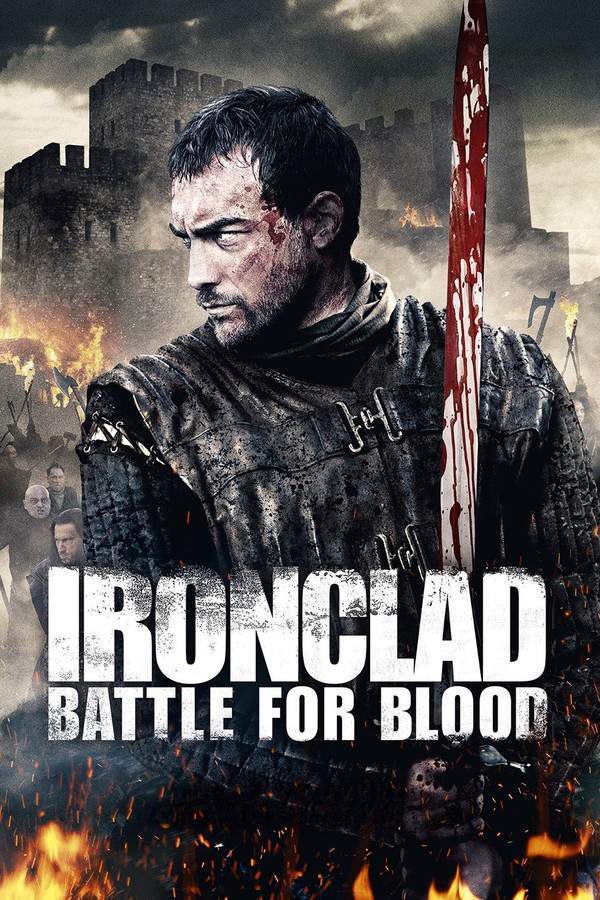
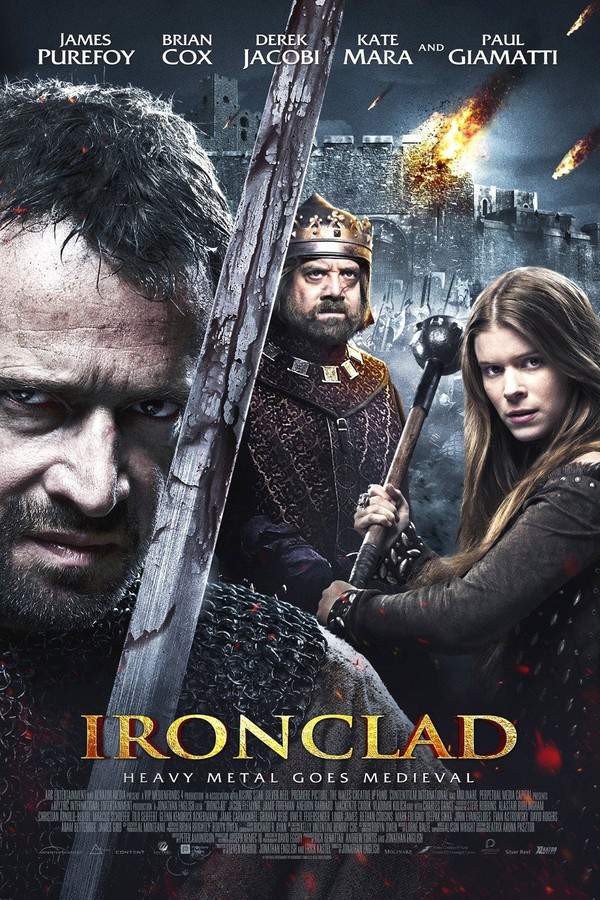
Ironclad (2011) movie poster

Plot Summary

Ironclad (2011) Plot Summary Explained

Release, runtime and language
2011 · 121 min · English
Directed by
Jonathan English
Starring
Brian Cox, Paul Giamatti, Jason Flemyng

During a tumultuous period in medieval England, a group of Knights Templar find themselves defending Rochester Castle against the determined forces of King John. Facing overwhelming odds, they must fight to protect the castle and uphold their principles in a desperate battle for survival, where honor and loyalty are put to the ultimate test.

On this page (6)
  1. 1 Where to watch
  2. 2 What happens: full plot
  3. 3 Plot questions answered
  4. 4 Movie threads
  5. 5 Movies like Ironclad
  6. 6 Every angle

Where to watch

Where to Watch Ironclad (2011)

Where can you watch Ironclad? Stream, rent or buy it in the US, including on Tubi TV, Amazon Video and Apple TV Store: current JustWatch availability with up-to-date prices.

Streaming availability powered by JustWatch

Full plot summary · contains spoilers

What Happens in Ironclad: Full Plot Summary

The whole story of Ironclad (2011) explained, from the opening scene to the final frame: every key event, every twist and what it all adds up to. Read it as a quick recap before the sequel, to check a scene you missed, or to finally understand what really happened.

An epic prologue sets the stage for a brutal clash over power in medieval England, where the barons, aided by the Knights Templar, wage a long, hard-fought war against the tyrannical King John. In the wake of their victory, John signs Magna Carta, a document meant to grant rights to all English freemen. Yet the king soon regrets that concession and retaliates by hiring an army of pagan Danish mercenaries led by the warlord Tiberius to reclaim absolute authority and reshape the realm in his own image.

At Darnay Castle, Abbot Marcus guides three Templar knights on a pilgrimage toward Canterbury, where Marshall, one of the knights, is assured that his release from the Templar Order will be pursued in Canterbury. By dawn, John arrives with a formidable force, and he orders the execution of Baron Darnay for signing Magna Carta. The Abbot tries to intervene, but the king cuts off the Abbot’s tongue. Marshall and his companions fight fiercely against the Danish invaders; in the chaos, the Abbot is mortally wounded, and the two other knights fall. Marshall escapes with the Abbot’s lifeless body, breaking his vow of silence to vow that the sacrifice will not be in vain.

Upon reaching Canterbury, Marshall meets with Archbishop Langton, the champion of Magna Carta, and Baron William d'Aubigny, a former soldier turned wool merchant. Langton reveals that the Pope has sided with King John and that he himself faces excommunication for signing Magna Carta. The trio agrees that John must be halted, and their target becomes Rochester Castle, a strategic fortress that controls access to London and the south. D’Aubigny persuades three men to join the effort—his squire, Guy, and a repentant petty criminal named Jedediah—while a fourth companion declines. Seven riders set out for Rochester, only to discover that Danish mercenaries have already claimed the fortress; the fourth man had betrayed them.

The rebels strike first, killing the Danes and seizing Rochester Castle in the name of rebellion, much to the displeasure of Cornhill, the standing lord of the castle. When John’s army arrives to lay siege, the garrison holds the line and repels the initial assault. In the aftermath, Aubigny offers his men leave, but none accept. A second assault tests the defenders’ resolve, and the Danes’ siege tower is destroyed by a trebuchet crafted from within the castle. John’s forces shift to starvation tactics, while the Archbishop learns that Prince Louis is biding his time in France and negotiating with John, prompting swift action to resolve the crisis.

As winter settles, hunger gnaws at the defenders. Marshall secretly slips out at night, returning with food stolen from the Danish camp and lifting morale. His burgeoning bond with Isabel, Cornhill’s young wife, breaks through his vow of celibacy, changing the dynamics inside the besieged keep and complicating loyalties all around.

Tiberius intensifies the pressure with a bold night raid, slipping a small force over the walls to open the gates from within. Guy discovers the breach and raises the alarm, but Tiberius spearheads a brutal assault that leaves Aubigny wounded and the defenders reeling. Marshall, restored enough to don armor, charges the Danes on his war-horse, buying precious moments for survivors to retreat to the keep.

Aubigny is dragged before the king and witnesses the brutal fates that befall prisoners: hands are chopped off, and after a defiant reply, Aubigny himself suffers the same fate and is hurled by the castle’s trebuchet into a wall. Cornhill attempts to surrender but ends up taking his own life in his upstairs room. Meanwhile, the king’s engineers have been digging a mine beneath the keep. They set a pig-drawn blast and use it to ignite the foundation, crippling the structure and bringing down the walls just as the final assault begins.

The last defenders fall one by one, with Guy and Isabel among the few remaining and Marshall knocked unconscious by falling rubble. Guy goes out to fight, finding Tiberius in the melee, and is nearly killed until a recovered Marshall intervenes for a savage, decisive duel. Horns sound in the distance as the combined English rebel and French army arrives, sending John and the remaining Danes into a panicked retreat. Marshall meets Prince Louis and Langton at the castle gates, where Langton declares that Marshall is now free of the Templar oath. With a solemn nod to England’s evolving future, Marshall rides off with Isabel, while Guy, gazing at his fallen baron, quietly proclaims, “We held.”

> We held

In the closing epilogue, King John dies during his retreat, and Rochester Castle is rebuilt—standing once again as a testament to endurance, as is Magna Carta, a symbol of restraint that continues to shape the land.

The story closes with a note that Rochester Castle’s reconstruction mirrors the enduring legacy of Magna Carta, both of which endure long after the tumult of war, and with the sense that a fragile balance between power and rights remains the defining struggle of the realm.

Last updated: November 22, 2025 at 15:58

Was this helpful?

Plot questions answered

Ironclad Plot Explained: Your Questions Answered

The questions people ask most about Ironclad (2011): what happens in the confusing scenes, why the characters do what they do, the twists, hidden details and what the ending means. Each answer contains spoilers.

Q1

Why does King John hire Danish mercenaries after signing Magna Carta?

King John hires Danish mercenaries because he regrets signing Magna Carta, which limited his royal power and granted rights to freemen. The Pope has sided with John, giving him religious backing to reclaim absolute authority. He hires the pagan Danish warlord Tiberius and his forces to crush the rebellion and restore his tyrannical rule.

Foreshadowing: The prologue establishes John's resentment toward Magna Carta as the driving force behind his retaliatory campaign.

  • king john
  • magna carta
  • danish mercenaries
  • tiberius
  • rebellion
Q2

Why does King John cut out the Abbot's tongue?

King John orders the Abbot's tongue cut out as punishment for intervening on behalf of Baron Darnay, who was executed for signing Magna Carta. The brutal act serves as a warning to anyone who defies the king's authority. It also represents the king's willingness to silence religious opposition to maintain his power.

  • abbot marcus
  • tongue cutting
  • king john
  • baron darnay
  • magna carta
Q3

Why does Marshall break his vow of silence as a Templar?

Marshall breaks his vow of silence when he escapes Darnay Castle carrying the mortally wounded Abbot Marcus. After the Abbot dies from his wounds, Marshall shouts that the Abbot's sacrifice will not be in vain, breaking the Templar code of silence. This moment marks his transformation from a cloistered knight to an active participant in the rebellion.

Foreshadowing: The pilgrimage to Canterbury was meant to secure Marshall's release from the Templar Order, hinting at his internal conflict with his vows.

  • marshall
  • templar vow
  • abbot marcus
  • silence
  • sacrifice
Q4

Who betrays the rebels at Rochester and why?

The fourth man whom Aubigny recruits betrays the rebels by revealing their plan to the Danish mercenaries already inside Rochester Castle. This betrayal explains how the Danes were already positioned at the fortress when the seven rebels arrived. The traitor's motivation is not explicitly stated, but he likely feared King John's retaliation or was bribed.

Foreshadowing: The timeline notes that a fourth companion declines before they set out, suggesting early hesitation that foreshadows the betrayal.

  • betrayal
  • rochester castle
  • fourth man
  • danish mercenaries
  • aubigny
Q5

Why does Aubigny offer his men leave after capturing Rochester?

Aubigny offers his men leave after capturing Rochester because the castle is now held by a small garrison facing the full might of King John's approaching army. He gives them the option to leave freely without shame, acknowledging the desperate odds. None accept, demonstrating their unwavering commitment to the cause and their loyalty to him.

  • aubigny
  • leave
  • rochester garrison
  • loyalty
  • odds
Q6

How does Marshall's relationship with Isabel develop during the siege?

Marshall's relationship with Isabel develops during the harsh winter siege when hunger demoralizes the defenders. Secretly slipping out to steal food from the Danish camp, Marshall returns with provisions that lift morale. During this time, he and Isabel grow close, culminating in a romantic entanglement that breaks his Templar vow of celibacy and complicates the dynamics within the besieged keep.

Foreshadowing: The timeline notes Marshall's forbidden liaison coincides with the winter hunger, showing how desperate circumstances forge unexpected connections.

  • marshall
  • isabel
  • relationship
  • celibacy
  • vows
Q7

Why does Cornhill commit suicide during the siege?

Cornhill commits suicide after King John's forces breach the castle and he attempts to surrender. Rather than face capture and the likely brutal treatment reserved for prisoners, Cornhill chooses to hang himself in his upstairs room. His death reflects the desperate circumstances and the hopelessness of the garrison's situation as the walls crumble around them.

Foreshadowing: Cornhill's displeasure at the rebellion's seizure of his castle foreshadows his inability to survive the consequences of the conflict.

  • cornhill
  • suicide
  • surrender
  • rochester castle
  • capture
Q8

How does King John's army destroy the keep at Rochester?

King John's engineers dig a mine beneath the keep's foundation and fill it with pigs and fat. They set fire to create a massive explosion that destabilizes the structure. The blast brings down the walls just as the final assault begins, collapsing the keep and forcing the remaining defenders into the open.

Foreshadowing: The timeline notes the mine preparation happens during the second assault, building tension toward the final destructive moment.

  • mine
  • keep destruction
  • pigs
  • trebuchet
  • king john
Q9

Why does Prince Louis arrive at Rochester with a combined army?

Prince Louis arrives at Rochester because Archbishop Langton had been negotiating with him in France throughout the siege. Langton sought Louis's support to end John's tyranny, viewing the French prince as a potential replacement for King John. Louis bides his time in France until the moment when the rebellion's victory becomes clear, then dispatches the combined English rebel and French army to relieve Rochester.

Foreshadowing: The Archbishop learns earlier that Prince Louis is waiting in France and negotiating with John, establishing the political backdrop for his eventual arrival.

  • prince louis
  • french army
  • langton
  • relief
  • negotiation
Q10

What happens to King John after the siege at Rochester?

King John dies during his retreat from Rochester Castle. After the combined English rebel and French army arrives, causing his forces to panic and retreat, John flees but succumbs to death along the way. The epilogue explicitly notes his death marks the end of his tyrannical reign, while Rochester Castle is rebuilt as a lasting symbol of the rebellion's success.

  • king john
  • death
  • retreat
  • rebellion
  • epilogue
Q11

Why is Marshall released from his Templar oath at the end?

Marshall is released from his Templar oath at the gates of Rochester by Archbishop Langton, who declares him free of his vows. This release fulfills the promise that was originally meant to be pursued at Canterbury at the start of the journey. Langton's proclamation acknowledges Marshall's transformation from a conflicted knight to a hero who has fought for righteous cause, earning his freedom from the Templar Order.

Foreshadowing: The prologue establishes Marshall's pilgrimage to Canterbury was specifically to seek release from the Templar Order, making this moment the culmination of his journey.

  • marshall
  • templar oath
  • langton
  • release
  • canterbury
Q12

What does Guy's final line 'We held' mean at the end?

Guy's final line 'We held' is a declaration of the defenders' successful resistance against overwhelming odds. Despite the castle's walls being breached, the keep collapsing, and nearly all the garrison falling, the rebels managed to hold Rochester Castle until relief arrived. The line acknowledges the tremendous human cost while affirming their tactical victory, the castle fell, but the cause succeeded.

  • we held
  • guy
  • ending
  • victory
  • cost

Movie threads

More Movies Like Ironclad, by Mood & Story

Curated lists built around what makes Ironclad tick: the same mood, the same kind of story or the same emotional payoff. Each list explains why these movies belong together.

Desperate Last Stand Movies Like Ironclad

Stories of a desperate few holding a fortified position against overwhelming evil. If you enjoyed the intense siege of Rochester Castle in Ironclad, explore more movies featuring desperate last stands. These films focus on small bands of heroes defending forts, outposts, or strongholds against tyrannical forces, sharing a similar vibe of claustrophobic tension, heavy violence, and themes of honor under fire.

  • siege
  • desperate
  • claustrophobic
  • tense
  • brutal
  • heroic
  • Tone: dark, tense, grim
  • Pacing: fast, relentless
Why these movies?

The story pattern: Movies in this thread follow a clear structure: a powerful antagonist lays siege to a position held by a group of defenders who are often outnumbered and outgunned. The narrative tension comes from the relentless assaults, the erosion of the defenders' resources and morale, and the high-stakes decisions made under pressure, often culminating in a pyrrhic victory or noble sacrifice.

Why they belong together: These films are grouped by their core narrative pattern of a defensive siege, which creates a shared atmosphere of claustrophobia, desperation, and relentless high-intensity action. They explore similar themes of loyalty, the cost of defiance, and the physical and psychological extremes of warfare.

Gritty Medieval War Films Similar to Ironclad

Brutally realistic depictions of the violence and chaos of medieval conflict. Fans of Ironclad's brutal and grim portrayal of medieval England will find more like it in this collection of gritty historical action movies. These films share a dark tone, high levels of graphic violence, and a focus on the desperate struggle for survival and power in a realistically harsh historical setting.

  • grim
  • brutal
  • violent
  • oppressive
  • desperate
  • medieval
  • Tone: dark, bleak, oppressive
  • Pacing: fast, driven by action
Why these movies?

The story pattern: The narratives in this thread are often straightforward, driven by conflict and survival. They depict warfare not as glorious, but as chaotic, painful, and morally complex. Character journeys involve grappling with vows, facing betrayal, and enduring immense physical and psychological trauma within a world defined by violence and oppression.

Why they belong together: These movies are united by their commitment to a dark, visceral, and historically grounded aesthetic. They share a high-intensity, fast-paced viewing experience defined by graphic violence, an oppressive atmosphere, and a heavy emotional weight stemming from themes of tyranny, sacrifice, and the brutal cost of war.

If you liked this

Movies Like Ironclad

Similar movies to Ironclad: the same genre, themes or kind of story. Each one comes with its own plot summary, timeline and ending explained.

Browse all movie summaries

Every angle

Ironclad (2011) Explained: Plot, Timeline & Characters

Everything about Ironclad in one place: what happens in the plot summary, the timeline in chronological order, the characters and meaning and a spoiler-free summary. What's After the Movie adds the cast, box office and post-credit scenes.

Coming soon on iOS and Android

The Plot Explained Movie Summary App

Plot summaries, endings explained and timelines on your phone. Catch up on any movie in minutes, save your favorites and never miss a twist again.

Be the first to know when we launch. Your email stays private, always.

Learn more about the app