Year: 1959
Runtime: 123 mins
Language: English
Director: Robert Rossen
A hard‑charging tale of a desert warrior who battles from hellish conditions to triumph. An army major, haunted by his own cowardice, is tasked with recommending soldiers for the Congressional Medal of Honor during the 1916 Mexican Border incursion, forcing him to confront his past and judge true bravery.
Find where to stream, rent, or buy They Came to Cordura (1959) in the US with current JustWatch availability, up-to-date pricing, and platform listings for subscription, rental, and digital purchase options.
Warning: spoilers below!
Haven’t seen They Came to Cordura yet? This summary contains major spoilers. Bookmark the page, watch the movie, and come back for the full breakdown. If you're ready, scroll on and relive the story!
Read the complete plot breakdown of They Came to Cordura (1959), including all key story events, major twists, and the ending explained in detail. Discover what really happened, and what it all means.
In 1916, as U.S. soldiers push after Pancho Villa, Major Thomas Thorn, Gary Cooper, is assigned to serve as a battlefield observer who discerns acts of heroism. His assignment is pushed by Col. Rogers, Robert Keith, a veteran officer who is 63 years old and eager for a promotion before a mandatory retirement a few months away. Rogers leads his regiment in an old-fashioned but poorly planned cavalry charge on Ojos Azules, a villa owned by Adelaide Geary, Rita Hayworth, where Villa’s men had retreated after a victory over Mexican government troops and were enjoying her hospitality. Thorn, excused from the fighting, watches through his binoculars as Lt. William Fowler, Tab Hunter, Sgt. John Chawk, Van Heflin, Cpl. Milo Trubee, Richard Conte, and Pvt. Wilbur James Renziehausen, Dick York, perform acts of bravery that challenge the given narrative of heroism.
Rogers is proud of having personally led the charge, but furious when Thorn will not nominate him for a citation. Thorn insists that leading his regiment in the charge was “in the line of duty”, and refuses to consider a Medal of Honor nomination awarded for heroism “above and beyond the call of duty.” Rogers reminds Thorn that he once protected him from an investigation for cowardice, a move done out of respect for Thorn’s father, but that memory does not move Thorn.
Thorn intends to nominate the four soldiers for the Medal of Honor. He is ordered to take along Mrs. Geary, who is charged with “giving aid and comfort to the enemy.” Private Andrew L. Hetherington, Michael Callan, nominated by Thorn after an earlier battle, rides with them to the expedition’s base in Cordura, Texas. This seems like a straightforward mission, but the journey grows increasingly tangled as Thorn clashes with the men, and tensions rise among the ranks. Thorn finds the men openly hostile toward him, and a string of harrowing incidents reveals that the so-called heroes may have acted from ambition, fear, or mere chance, while Thorn, once disgraced, embodies a different kind of courage.
What starts as a test of military procedure deepens into a test of character. The group’s discipline frays, and the soldiers begin to turn against Thorn, forcing him to defend himself in the face of mutiny. As the conflict escalates, Thorn must rely on quieter virtues rather than sheer force to survive, and the true measure of courage emerges not from physical daring but from moral steadiness under pressure. In the end, the story turns the usual hero-versus-villain motif on its head, showing that personal resolve and moral integrity can outlast bravado and ambition. The climax ties back to Thorn’s example, illustrating that real courage often means choosing to do what is right, even when it puts one at odds with one’s peers.
Last updated: October 09, 2025 at 09:29
Explore frequently asked questions about They Came to Cordura (1959) with spoiler-rich answers covering the full plot summary, major story beats, character motivations, hidden details, and ending meaning. This movie summary FAQ helps explain confusing scenes, plot twists, and narrative decisions in clear, searchable detail.
Thorn refuses because Rogers led the cavalry charge 'in the line of duty,' which Thorn defines as insufficient for the Medal of Honor. The award requires acts 'above and beyond the call of duty,' and Thorn views Rogers' leadership as simply fulfilling his obligation as an officer. This refusal creates conflict because Rogers had previously protected Thorn from a cowardice investigation, a favor he now tries to leverage.
Thorn carries shame from a previous cowardice investigation that Colonel Rogers quietly suppressed out of respect for Thorn's father. This experience shapes Thorn's strict interpretation of heroism, he knows firsthand what it means to fail under fire. His reluctance to award medals casually stems from understanding the difference between actual courage and mere duty performance.
Mrs. Geary is charged with 'giving aid and comfort to the enemy' because Villa's men enjoyed hospitality at her villa Ojos Azules after defeating Mexican government troops. She is ordered to accompany Thorn's group to Cordura, Texas, where she faces potential prosecution. Her presence adds tension to the expedition and creates a moral complication among the soldiers.
The journey reveals that the soldiers' apparent acts of bravery may have been driven by ambition, fear, or chance rather than genuine courage. Lt. Fowler, Sgt. Chawk, Cpl. Trubee, and Pvt. Renziehausen are exposed as men whose heroism was self-serving rather than noble. Their hostility toward Thorn grows as he probes beneath the surface of their deeds.
The soldiers turn against Thorn because his scrutiny threatens their claims to heroism and the medals they expect. As Thorn's observations expose their less-than-noble motivations, resentment builds. The tension escalates into open insubordination, forcing Thorn to defend himself physically and morally. The mutiny represents the collapse of group discipline under the weight of exposed hypocrisy.
The film redefines courage as moral steadiness rather than physical daring. Thorn, once disgraced for cowardice, demonstrates real courage by standing alone against the group, maintaining his principles, and choosing what is right over popularity. His quiet virtues, integrity, patience, and moral resolve, prove more enduring than the soldiers' flashy battlefield heroics.
Private Hetherington, previously nominated for a medal by Thorn after an earlier battle, rides with the group to Cordura. His presence provides additional scrutiny of what constitutes genuine heroism versus claimed heroism. He represents another candidate whose motivations will be judged, further complicating Thorn's mission.
Colonel Rogers leads an old-fashioned cavalry charge against Villa's men at Mrs. Geary's villa, despite being poorly planned. Rogers, eager for a promotion before mandatory retirement, prioritizes glory over tactical soundness. The charge succeeds in capturing the position, but Thorn observes it as a battlefield observer, setting up his role as judge of heroism.
The film turns the usual hero-versus-villain motif on its head by making the 'coward' Thorn the true hero and the 'brave' soldiers the flawed figures. Rather than physical conquest, the story celebrates personal resolve and moral integrity. This inversion challenges traditional Western narratives where bravery is measured by combat prowess.
The ending validates that personal courage, choosing moral integrity over popularity, triumphs over military glory. The soldiers learn from Thorn's example that true bravery means doing what is right even when it puts one at odds with peers. The resolution emphasizes character over conquest, with Thorn's influence permanently changing how the men understand heroism.
Discover curated groups of movies connected by mood, themes, and story style. Browse collections built around emotion, atmosphere, and narrative focus to easily find films that match what you feel like watching right now.
A confined group disintegrates as ethics are tested on a treacherous mission.Explore movies like They Came to Cordura where a perilous journey exposes the fragile morality of a small group. These films feature tense, character-driven narratives about ethics breaking down under pressure, often set in harsh, unforgiving environments.
Stories in this thread typically follow a linear, journey-based structure where external hardship amplifies internal tensions. The narrative revolves around the erosion of authority and group dynamics, building towards a climax where the characters' core values are exposed and challenged, leading to a profound, often bitter, resolution.
These movies are grouped together because they share a focus on the psychological decay of a group under stress. They combine a steady, escalating pace with high intensity and a tense, claustrophobic tone, offering a gripping exploration of human nature when survival instincts override morality.
Stories that peel back the glamorous facade of bravery to examine its uncomfortable truth.Find movies like They Came to Cordura that challenge the idea of traditional heroism. These are psychologically heavy and morally complex stories, often set against a military or survival backdrop, focusing on the difficult truths behind acts of courage and the burden of guilt.
The narrative pattern involves a central character, often flawed or haunted, who is tasked with defining or recognizing bravery. The plot forces them into situations that contradict simple definitions of heroism, leading to an internal crisis and a bittersweet realization about the complex, often selfish, nature of courageous acts.
These films are united by their thematic focus on the ambiguity of courage. They share a heavy emotional weight, a tense and psychologically driven tone, and a commitment to exploring the uncomfortable gap between public perception of heroism and private reality of fear and self-preservation.
Don't stop at just watching - explore They Came to Cordura in full detail. From the complete plot summary and scene-by-scene timeline to character breakdowns, thematic analysis, and a deep dive into the ending - every page helps you truly understand what They Came to Cordura is all about. Plus, discover what's next after the movie.
Track the full timeline of They Came to Cordura with every major event arranged chronologically. Perfect for decoding non-linear storytelling, flashbacks, or parallel narratives with a clear scene-by-scene breakdown.
Discover the characters, locations, and core themes that shape They Came to Cordura. Get insights into symbolic elements, setting significance, and deeper narrative meaning - ideal for thematic analysis and movie breakdowns.
Discover movies like They Came to Cordura that share similar genres, themes, and storytelling elements. Whether you’re drawn to the atmosphere, character arcs, or plot structure, these curated recommendations will help you explore more films you’ll love.
They Came to Cordura (1959) Scene-by-Scene Movie Timeline
They Came to Cordura (1959) Movie Characters, Themes & Settings
They Came to Cordura (1959) Spoiler-Free Summary & Key Flow
Movies Like They Came to Cordura – Similar Titles You’ll Enjoy
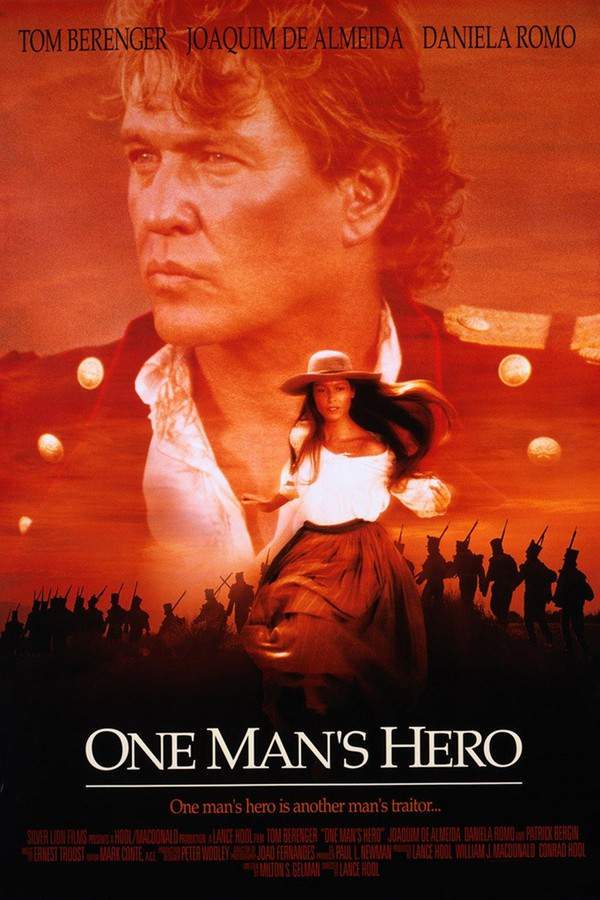
One Man's Hero (1999) Movie Recap & Themes
The Undefeated (1969) Full Summary & Key Details
A Reason to Live, a Reason to Die (1972) Plot Summary & Ending Explained
The Last Frontier (1955) Full Summary & Key Details
Major Dundee (1965) Movie Recap & Themes
Apache Rifles (1964) Plot Summary & Ending Explained
A Distant Trumpet (1964) Ending Explained & Film Insights
Warpath (1951) Film Overview & Timeline
Soldier Blue (1970) Ending Explained & Film Insights
Macho Callahan (1970) Complete Plot Breakdown
The Wonderful Country (1959) Story Summary & Characters
Ulzana’s Raid (1972) Ending Explained & Film Insights
In Pursuit of Honor (1995) Spoiler-Packed Plot Recap
Fort Courageous (1965) Full Movie Breakdown
Cannon for Cordoba (1970) Detailed Story Recap