Plot Explained Spoilers guaranteed!
Plot Explained

Browse by genre

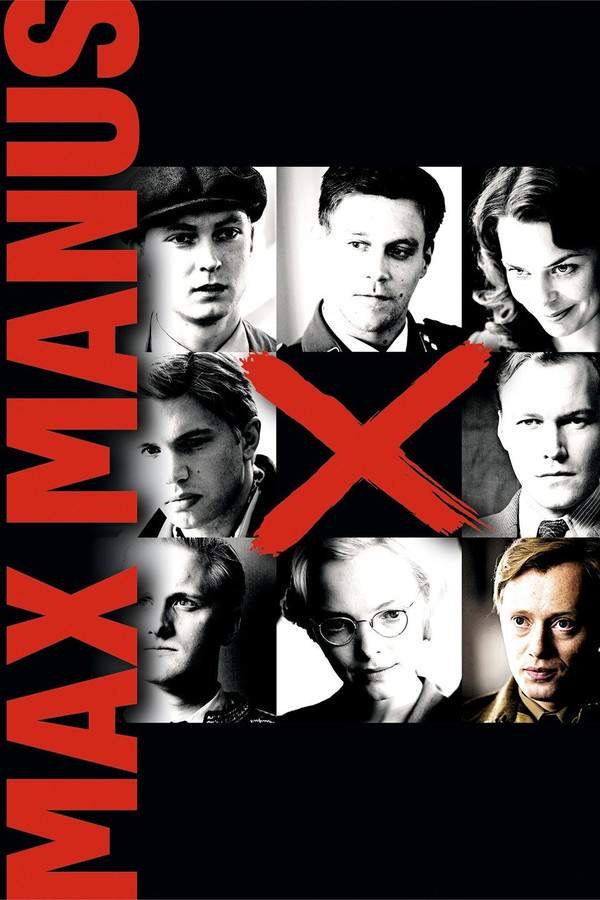
Max Manus: Man of War (2008) movie poster

Plot Summary

Max Manus: Man of War (2008) Plot Summary Explained

Release, runtime and language
2008 · 118 mins · Norwegian
Loading streaming availability…
Directed by
Espen Sandberg, Joachim Rønning
Starring
Aksel Hennie, Christian Rubeck, Jakob Oftebro, Patrick Güldenberg, Viktoria Winge, Rolf Kristian Larsen

The Norwegian 2008 biographical war film dramatizes the real-life exploits of resistance fighter Max Manus (1914–1996). After his participation in the Winter War against the Soviet Union, the narrative traces Manus’s involvement in Norway’s fight from the German invasion at the start of World II through to the country’s liberation and the return to peace in 1945.

On this page (6)
  1. 1 Where to watch
  2. 2 What happens: full plot
  3. 3 Plot questions answered
  4. 4 Movie threads
  5. 5 Movies like Max Manus: Man of War
  6. 6 Every angle
Loading streaming availability…

Full plot summary · contains spoilers

What Happens in Max Manus: Man of War: Full Plot Summary

The whole story of Max Manus: Man of War (2008) explained, from the opening scene to the final frame: every key event, every twist and what it all adds up to. Read it as a quick recap before the sequel, to check a scene you missed, or to finally understand what really happened.

After volunteering in the Winter War against the Soviets in Finland, Max Manus, Aksel Hennie, returns to a Norway occupied by the Nazis and joins the Norwegian resistance, taking part in the fight against the German occupation by helping produce illegal propaganda. His cell is soon detected, and he is arrested after leaping out a window. Hospitalised, he manages a daring escape to Scotland, where he receives British Commando training in sabotage and disinformation, sharpening the skills that will define his wartime work.

Back in Norway with his friend Gregers Gram, Nicolai Cleve Broch, Manus launches his first mission: an audacious attack on German supply ships that proves spectacularly successful. The operation draws the attention of the local Gestapo chief, Siegfried Fehmer, Ken Duken, and Manus soon becomes a high-value target. Yet he avoids capture, and, together with Gram and Gunnar Sønsteby, forms the so‑called “Oslo Gang,” a tight-knit cell that carries out daring acts and earns a medal from the Norwegian king, Kong Haakon VII, Stig Hoffmeyer, for their bravery and contribution to the resistance.

Stockholm, a neutral hub that becomes a meeting point for Norwegians in allied service, plays a crucial role in Manus’s story. Here Gram introduces Manus to “Tikken”, Agnes Kittelsen Lindebrække, a married woman who works as a Norwegian contact for the British consulate, and the two develop a complicated and intimate relationship. As the war grows harsher, Manus watches many friends fall, and he begins to carry a heavy burden of survivor’s guilt, questioning why he lived when so many others did not.

The war’s tempo accelerates toward its end. On 16 January 1945, Manus and Roy Nielsen, Pål Sverre Hagen, plant limpet mines that lead to the sinking of the cargo ship Donau the following day, a mission that epitomizes the sabotage undertakings that helped tilt the balance in favor of the Allies. The daring raid reinforces Manus’s reputation among resistance circles and in the broader narrative of Norwegian resistance.

In the aftermath, with prospects uncertain and the future unclear, Manus encounters an imprisoned Fehmer once more and confronts a stark, unvarnished truth: war creates victims and meaning—if it exists at all—often remains elusive long after the fighting stops. The story closes on a note of quiet reflection, acknowledging the personal toll of wartime heroism and the lingering ache of a conflict that reshaped a nation and its people.

Last updated: February 17, 2026 at 19:56

Was this helpful?

Plot questions answered

Max Manus: Man of War Plot Explained: Your Questions Answered

The questions people ask most about Max Manus: Man of War (2008): what happens in the confusing scenes, why the characters do what they do, the twists, hidden details and what the ending means. Each answer contains spoilers.

Q1

Why did Max Manus join the Norwegian resistance?

Max Manus joined the resistance after volunteering in the Winter War against the Soviets in Finland, where he witnessed the brutal realities of combat and was haunted by those experiences. When he returned to Norway, he found his homeland under Nazi occupation, and the combination of his military experience and desire to fight for his country's freedom drove him to join the underground resistance movement.

Foreshadowing: His earlier combat experience in Finland had already shaped his resolve to fight occupiers.

  • max manus
  • resistance
  • norway
  • nazi occupation
  • volunteer
  • winter war
Q2

How did Max Manus escape from the Gestapo?

After being detected by the Gestapo and arrested, Max Manus attempted to escape by leaping out a window, which resulted in injuries requiring hospitalization. While hospitalized under guard, he managed a daring escape that allowed him to flee to Scotland, where he received British Commando training in sabotage and disinformation.

Foreshadowing: His earlier determination to fight occupiers made escape inevitable.

  • gestapo
  • escape
  • hospital
  • scotland
  • capture
  • arrest
Q3

What was the Oslo Gang?

The Oslo Gang was a tight-knit resistance cell formed by Max Manus, Gregers Gram, and Gunnar Sønsteby in Nazi-occupied Norway. The group carried out daring sabotage operations against German forces and became one of the most effective resistance units in Norway, ultimately earning a medal from King Haakon VII for their bravery.

Foreshadowing: Their successful ship attack earlier had established them as a coordinated unit.

  • oslo gang
  • resistance cell
  • gunnar sønsteby
  • gregers gram
  • sabotage
  • norway
Q4

Why was the Donau attack significant?

On 16 January 1945, Max Manus and Roy Nielsen planted limpet mines on the German cargo ship Donau in Oslofjord, causing it to sink the following day. The mission was one of the resistance's most audacious sabotage operations, successfully disrupting German supply lines and demonstrating the effectiveness of covert resistance work in weakening the occupiers.

Foreshadowing: Earlier successful attacks had established Manus' reputation for effective sabotage.

  • donau
  • limpet mines
  • sabotage
  • 1945
  • roy nielsen
  • cargo ship
  • oslofjord
Q5

Who was Tikken and what was her role?

Tikken (Agnes Kittelsen Lindebrække) was a married Norwegian woman who worked as a contact for the British consulate in Stockholm, a neutral hub for Norwegians in Allied service. She met Max Manus through Gregers Gram and the two developed a complicated, intimate relationship that added emotional complexity to Manus' wartime life.

Foreshadowing: Stockholm had been established as a meeting point for Norwegian resistance contacts.

  • tikken
  • agnes kittelsen
  • stockholm
  • british consulate
  • relationship
  • married
Q6

What caused Max Manus' survivor's guilt?

As the war progressed, Max Manus watched many of his friends and fellow resistance fighters get killed in action. This accumulation of losses weighed heavily on him, causing him to question why he survived when so many others did not. The survivor's guilt became a significant emotional burden throughout his wartime service.

Foreshadowing: The narrative mentions his friends falling as the war grows harsher.

  • survivor guilt
  • friends killed
  • psychological toll
  • war trauma
  • loss
Q7

What happened when Max Manus confronted Fehmer after the war?

After the war ended, Max Manus encountered the imprisoned Gestapo chief Siegfried Fehmer once more. In their confrontation, Manus came to a stark realization: war creates victims, and meaning, if it exists at all, often remains elusive. This encounter prompted somber reflection on fate and humanity, reframing his wartime experiences in an existential light.

Foreshadowing: Fehmer had been pursuing Manus throughout the war as a high-value target.

  • siegfried fehmer
  • gestapo
  • confrontation
  • post-war
  • meaninglessness
  • imprisoned
Q8

How did British Commando training prepare Max Manus?

After escaping to Scotland, Max Manus underwent intensive British Commando training focused on sabotage and disinformation techniques. This training equipped him with the specific skills needed for behind-enemy-lines operations, including demolition, covert movement, and information manipulation, skills that became central to his effectiveness in the resistance.

Foreshadowing: His earlier escape from Norway made this training possible.

  • british commando
  • training
  • scotland
  • sabotage
  • disinformation
  • skills
Q9

Why did the Gestapo target Max Manus?

The Gestapo, led by Siegfried Fehmer, targeted Max Manus specifically after his first major mission, a successful audacious attack on German supply ships along the Norwegian coast. The operation was spectacularly effective and drew significant attention from local German authorities, making Manus a high-value target for the Gestapo.

Foreshadowing: The attack on German supply ships was explicitly described as spectacularly successful.

  • gestapo
  • siegfried fehmer
  • target
  • hunt
  • capture
  • supply ships
Q10

Why did Max Manus fight in the Winter War first?

Max Manus volunteered to fight alongside Finnish forces against the Soviet Union during the Winter War (1939-1940), a conflict triggered by the Soviet invasion of Finland. This experience shaped his understanding of war's costs and strengthened his resolve to fight against occupiers, which later motivated his resistance work against the Nazis in Norway.

Foreshadowing: The narrative establishes his volunteer service as the starting point of his wartime journey.

  • winter war
  • finland
  • soviet union
  • volunteer
  • 1939
  • 1939-1940

Movie threads

More Movies Like Max Manus: Man of War, by Mood & Story

Curated lists built around what makes Max Manus: Man of War tick: the same mood, the same kind of story or the same emotional payoff. Each list explains why these movies belong together.

Movies with high-stakes resistance operations like Max Manus: Man of War

Tense films about underground resistance fighters risking everything for their cause. If you enjoyed the covert missions and constant peril in Max Manus: Man of War, explore these movies about underground fighters. They capture the tension of sabotage, the risk of betrayal, and the heavy psychological burden of fighting a shadow war.

  • tense
  • grim
  • determined
  • sobering
  • suspenseful
  • clandestine
  • Tone: tense, grim, determined
  • Pacing: fast-paced, mission-driven
Why these movies?

The story pattern: These narratives follow individuals or cells operating in secrecy, detailing their daring missions against a powerful enemy. The plot is driven by a series of high-risk operations, often culminating in a final, crucial mission. The journey is marked by sacrifice, loss, and the moral complexities of warfare.

Why they belong together: They are grouped by their intense focus on the mechanics and emotions of resistance. They share a fast-paced, high-tension structure, a dark and sobering tone, and a deep exploration of courage and sacrifice under extreme pressure.

Bittersweet war survivor stories like Max Manus: Man of War

War stories where victory is overshadowed by personal trauma and loss. If you were moved by the bittersweet ending and the theme of survivor's guilt in Max Manus: Man of War, these films explore similar emotional territory. They depict characters grappling with the psychological cost of war long after the fighting has stopped.

  • melancholic
  • resilient
  • sobering
  • traumatic
  • bittersweet
  • psychological
  • Tone: melancholic, bittersweet, resilient
  • Pacing: steady, character-focused
Why these movies?

The story pattern: The narrative follows a character through a harrowing wartime experience, culminating in survival. However, the triumph is deeply undercut by the memory of fallen comrades and traumatic events. The story delves into the long, internal struggle to find meaning and peace after enduring extreme violence.

Why they belong together: These films are connected by their shared exploration of the psychological toll of war, moving beyond battlefield action to the heavy emotional aftermath. They consistently deliver a bittersweet ending feel and a heavy emotional weight, focusing on resilience tempered by melancholy.

If you liked this

Movies Like Max Manus: Man of War

Similar movies to Max Manus: Man of War: the same genre, themes or kind of story. Each one comes with its own plot summary, timeline and ending explained.

Browse all movie summaries

Every angle

Max Manus: Man of War (2008) Explained: Plot, Timeline & Characters

Everything about Max Manus: Man of War in one place: what happens in the plot summary, the timeline in chronological order, the characters and meaning and a spoiler-free summary. What's After the Movie adds the cast, box office and post-credit scenes.

Coming soon on iOS and Android

The Plot Explained Movie Summary App

Plot summaries, endings explained and timelines on your phone. Catch up on any movie in minutes, save your favorites and never miss a twist again.

Be the first to know when we launch. Your email stays private, always.

Learn more about the app